
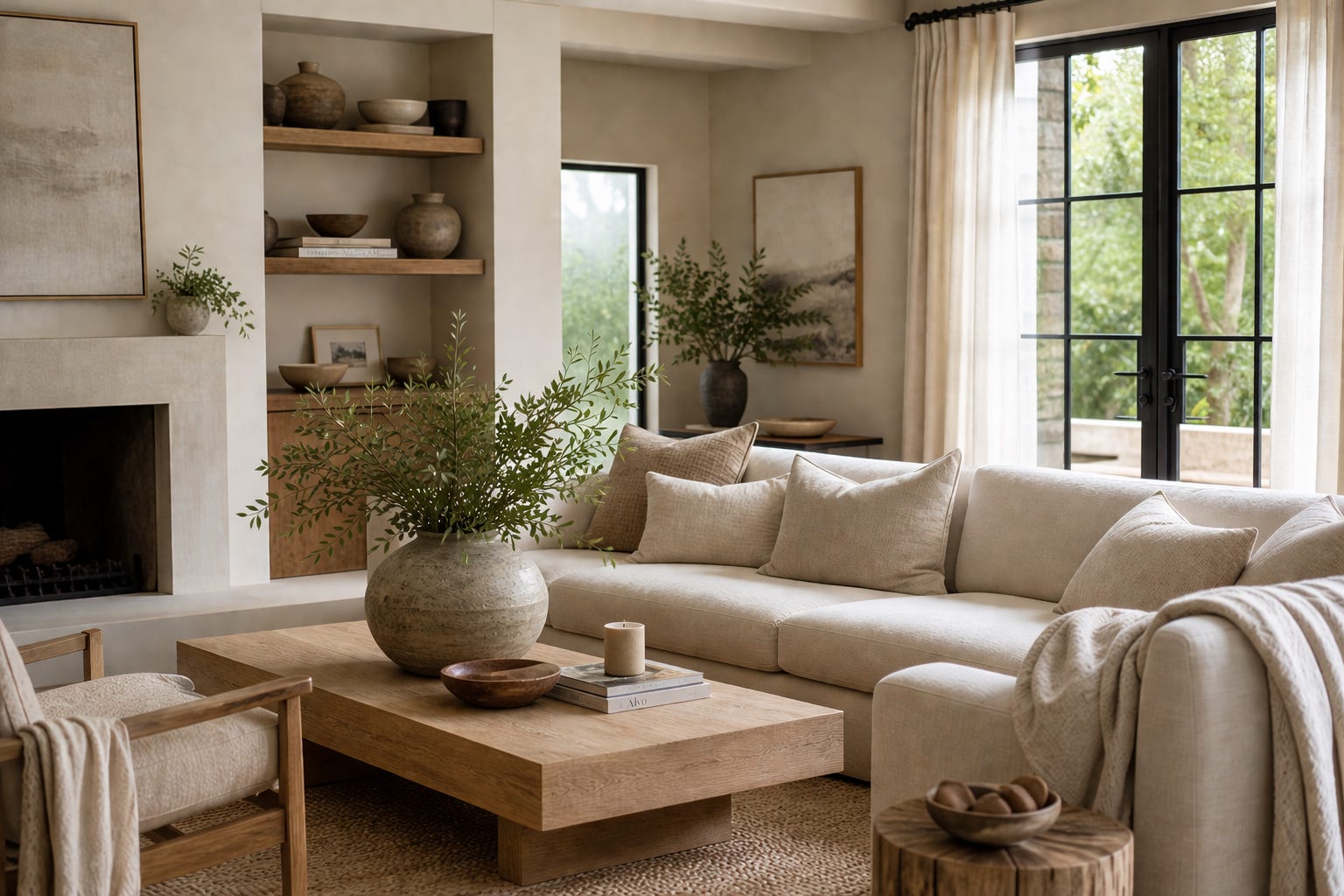
When a Beautiful Space Doesn’t Feel Quite Right
There have been moments when I’ve stepped back and looked at a room in our home and thought, this should feel better than it does.
Everything looked right.
The colors worked together. The furniture felt balanced. The overall design matched what I had envisioned. And yet, something felt slightly off in a way I couldn’t immediately explain.
It wasn’t obvious or dramatic.
It was subtle—a quiet sense of discomfort that showed up when I spent time in the space rather than just looking at it.
That’s when I started to realize that how a home looks and how it feels are not always the same thing.
The Difference Between How a Home Looks and How It Feels
It’s easy to design a room around appearance.
We choose colors that coordinate, shapes that balance, and pieces that visually “fit” together. On paper—and even in photos—the space can feel complete.
But living in a space is different.
I began to notice that certain rooms felt easier to sit in, easier to move through, easier to relax in. Others, even when they were beautifully styled, felt slightly tense.
That difference isn’t always visible.
It’s something you feel in your body. A kind of quiet resistance or ease that builds over time.
And once I started paying attention to that feeling, I couldn’t ignore it anymore.
Materials That Don’t Settle (And Why You Notice It Over Time)
One of the biggest shifts for me came from paying attention to materials.
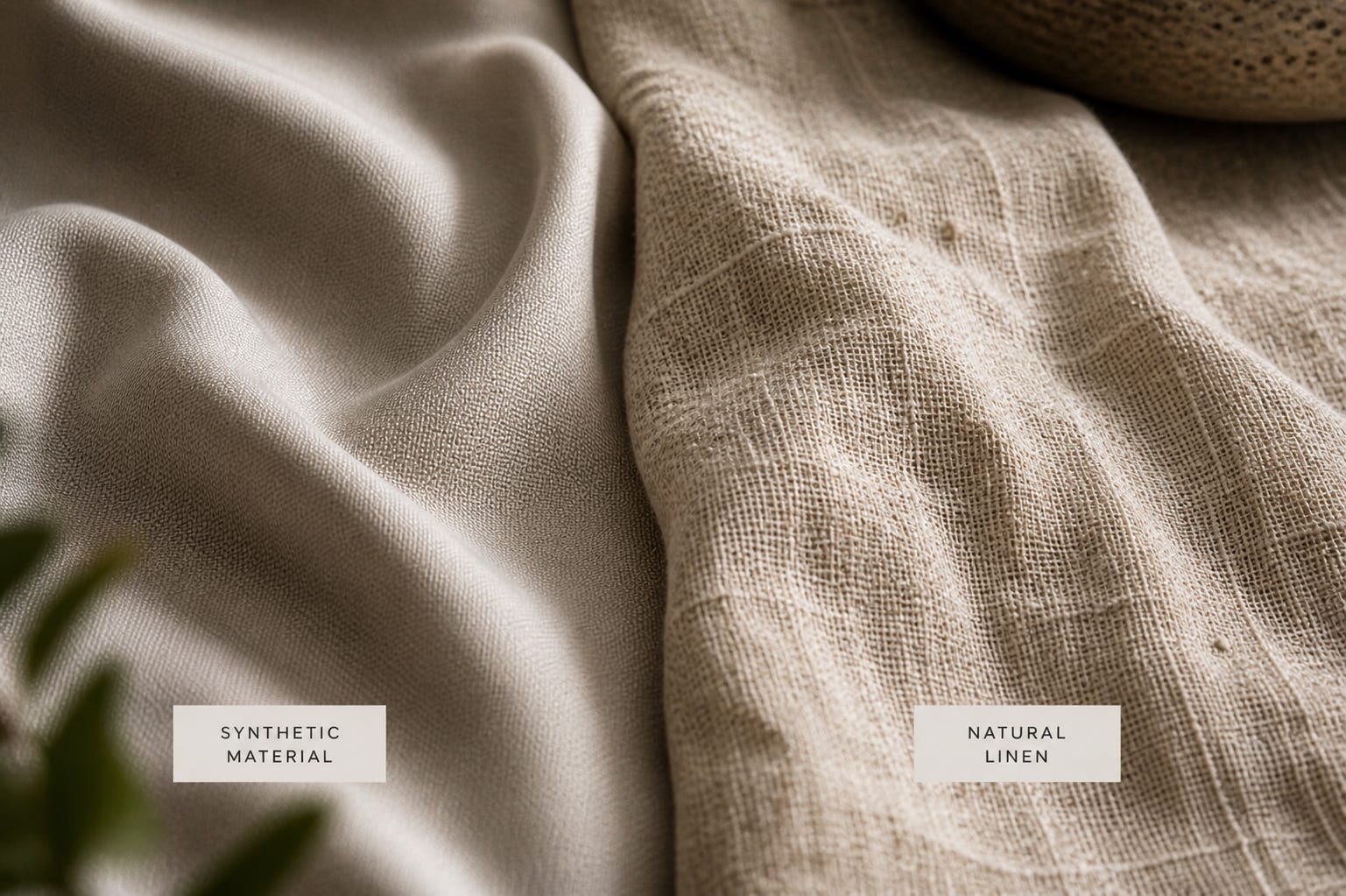
At first glance, many materials look similar. A synthetic fabric can mimic linen. A coated surface can resemble wood. But over time, they behave very differently.
Some materials never seem to settle into a space.
They reflect light in a sharper way. They feel slightly rigid to the touch. They don’t soften with use or adapt to the environment around them.
I started to notice that these materials created a kind of low-level tension in the room.
Not enough to stand out immediately, but enough to make the space feel less comfortable the longer I was in it.
Natural materials, on the other hand, tend to respond.
They soften, they age, and they seem to become part of the room rather than sitting on top of it.
When Light Feels Harsh Instead of Soft
Light plays a bigger role than I realized at first.
There were spaces in our home that were technically “well-lit,” but didn’t feel good to be in. The light felt too direct, too bright, or slightly cold.
Overhead lighting was often the main culprit.
It tends to flatten a room and create a kind of visual pressure that’s hard to relax into. Even when everything else in the space is soft, harsh lighting can override that feeling.
I started paying more attention to how light moved throughout the day.
Natural light feels layered and gradual. It shifts, softens, and warms over time.
When I began to support that instead of competing with it, the entire atmosphere of the room changed.
Too Much Perfection (And Not Enough Texture)
Another thing I noticed was how overly “perfect” spaces can feel.
When everything matches too closely—colors, finishes, materials—the room can start to feel flat.
There’s nothing for your eye or your senses to settle into.
Texture changes that.
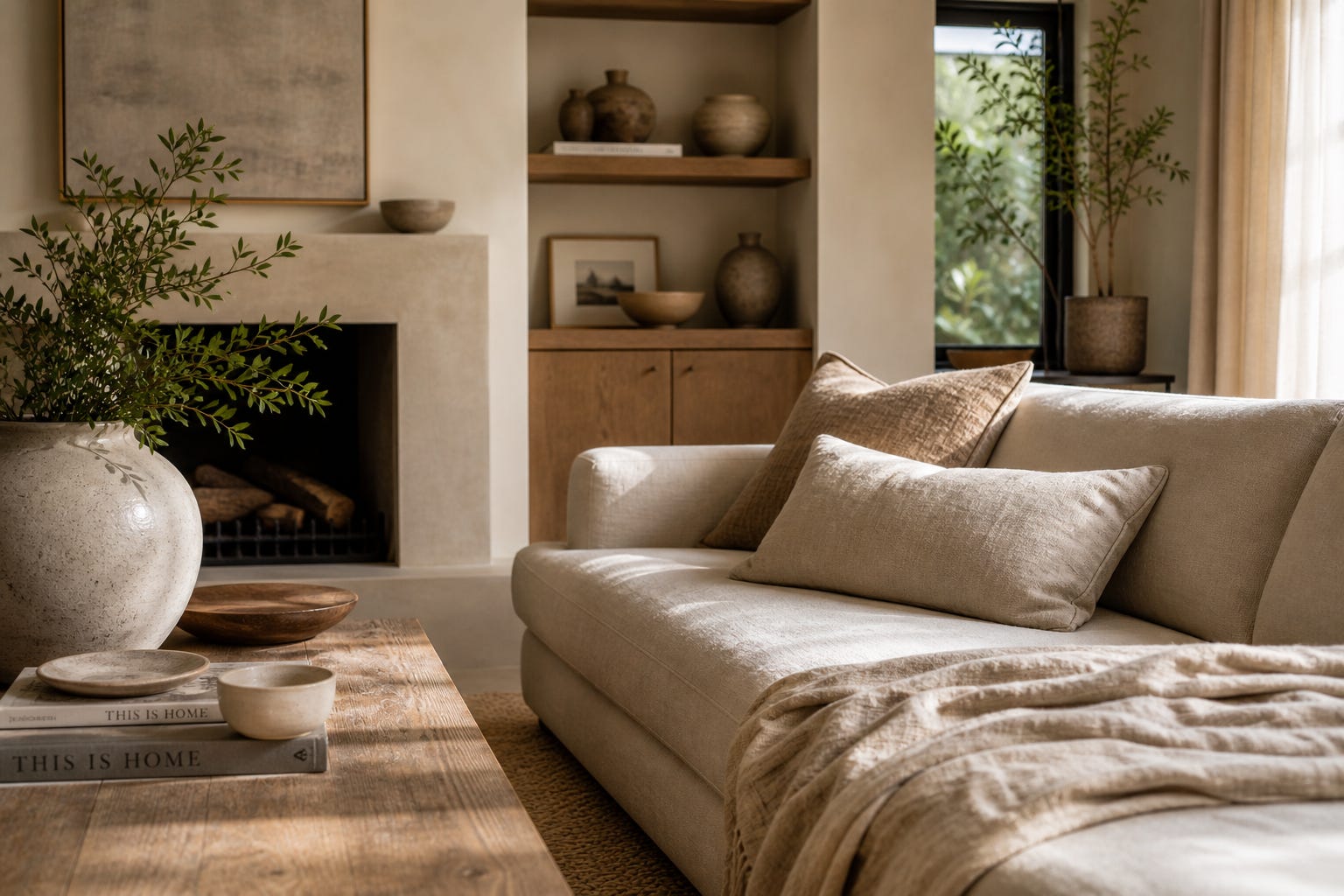
A slightly rumpled linen fabric, a woven basket, a ceramic surface with subtle variation—these small differences create depth in a way that feels natural.
I’ve found that a space feels better when it isn’t trying too hard to be perfect.
A little variation, a little softness, a little imperfection—it all contributes to a more relaxed environment.
The Feeling of Disconnection (Even When Everything Matches)
Sometimes a room looks perfectly coordinated, but still doesn’t feel connected.
I’ve experienced this when everything technically “goes together,” but nothing feels grounded. The pieces exist in the same space, but they don’t quite relate to each other in a meaningful way.
It can feel like the room is assembled rather than lived in.
That sense of disconnection is subtle, but it builds over time. It shows up in small ways—how you move through the space, how often you want to sit there, how long you stay.
When materials, light, and texture begin to work together more naturally, that feeling shifts.
The room starts to feel cohesive in a deeper way.
A Quiet Shift Toward What Actually Feels Good
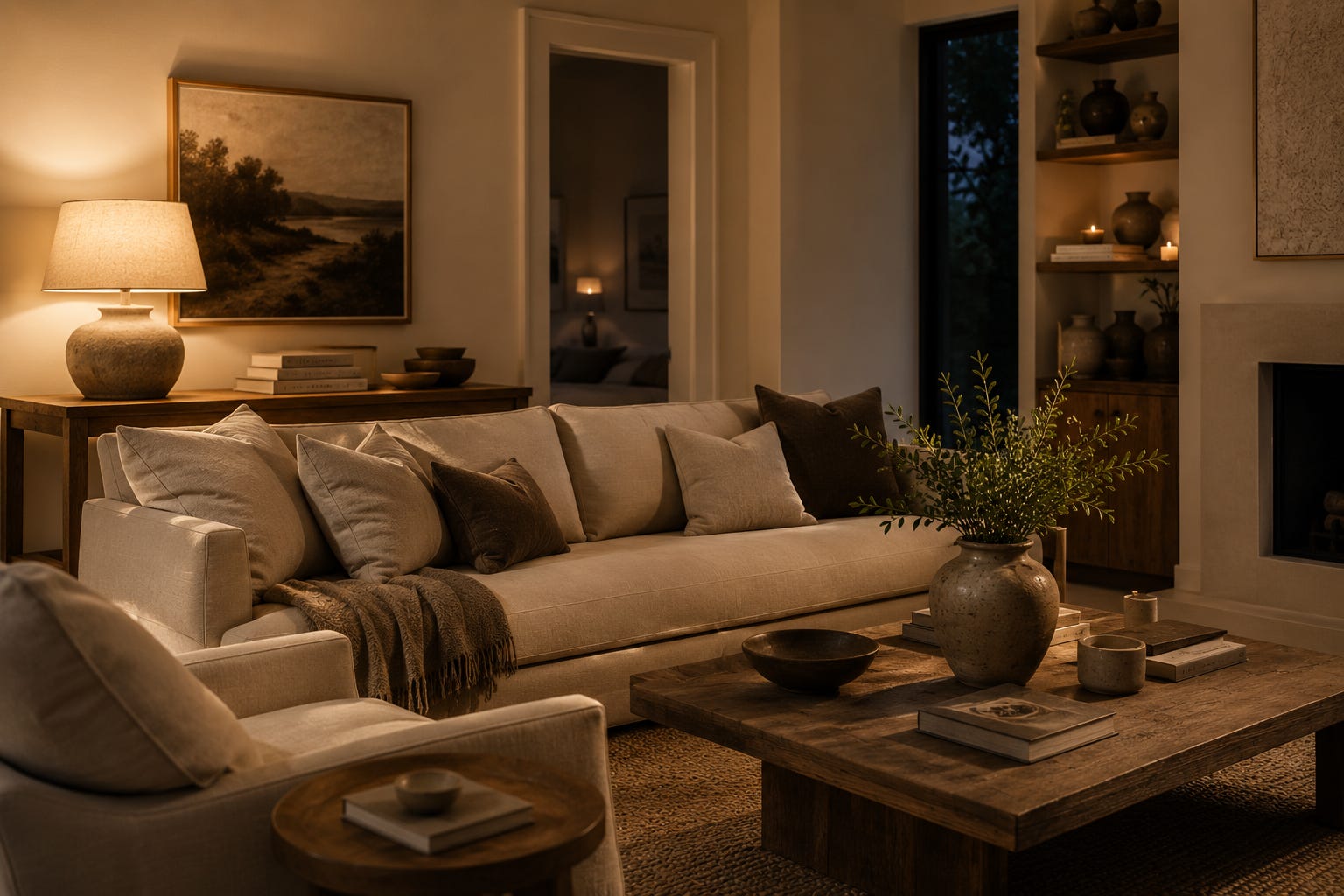
What I’ve learned through all of this is that comfort isn’t always something you can see immediately.
It’s something you experience over time.
When I focus less on making a room look perfect and more on how it feels to live in, the decisions become simpler. Materials matter more. Light matters more. Small details matter more.
And the space begins to feel calmer without forcing it.
It doesn’t happen all at once.
But slowly, the room starts to settle into something that feels more natural, more grounded, and easier to live in every day.
Pieces I Trust in My Own Home
When I’m choosing pieces for our home now, I tend to focus on materials that feel natural, simple, and consistent over time.
• I’m drawn to linen fabrics that soften and become more comfortable with use

 • I prefer wool textiles that add warmth without feeling heavy or synthetic

 • In our home, I would choose solid wood pieces that feel grounded and honest

 • I often reach for ceramic elements that bring quiet texture and variation

 • I’m always drawn to woven materials that add a sense of softness and depth
These choices don’t stand out on their own.
But together, they create a space that feels more settled and connected.
Have you ever noticed a space in your home that looks beautiful but doesn’t feel quite right to live in?
Some links in this article may be affiliate links. By clicking on them, you help support my work. Don’t worry. I only share materials and brands I do/would use in my own home.
Did you like this article? Subscribe for ~free~ and get my next post in your inbox.