

Luxury used to mean shine and abundance.
Glossy finishes, ornate details, and rooms filled with objects were once the markers of a “beautiful” home. The more a space displayed, the more luxurious it seemed.
But over time, that definition began to shift.
Today, many of the most refined interiors feel noticeably quieter. The emphasis is no longer on accumulation but on intention. Materials matter more than decoration. A single well-made piece often replaces an entire collection of trend-driven objects.
This is where the philosophy of a low tox home and the aesthetic of quiet luxury begin to overlap.
Both are rooted in the same idea: fewer, better choices that support long-term living.
The Shift Toward Restraint and Permanence
The idea of luxury has gradually moved away from spectacle.
In the past, high-end interiors often relied on ornate finishes, highly polished surfaces, and decorative abundance. While beautiful in their own way, these environments could also feel busy and temporary, tied to a specific moment in design trends.
Quiet luxury takes a different approach.
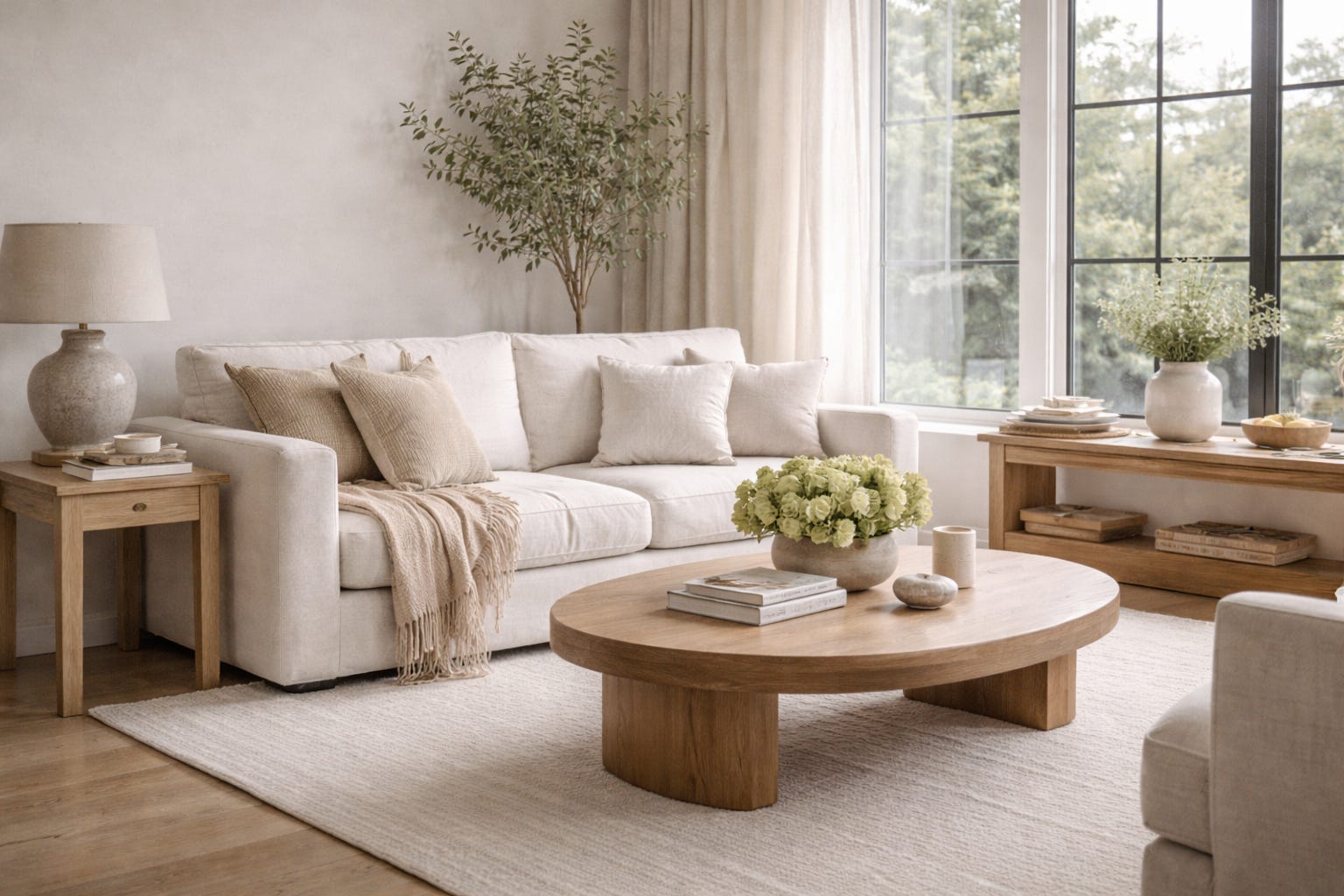
Instead of focusing on visual impact alone, it prioritizes materials that age gracefully. Linen softens with time. Solid wood develops character. Stone surfaces acquire subtle patina through daily use.
These elements don’t chase attention; they settle into the home slowly.
A low-tox philosophy supports this shift naturally. When homeowners begin choosing healthier materials, they often move toward the same timeless elements: natural fibers, solid wood furniture, ceramic, glass, and stone.
The result is a home that feels both simpler and more enduring.
Why Fewer, Better Pieces Matter
One of the defining characteristics of quiet luxury interiors is restraint.
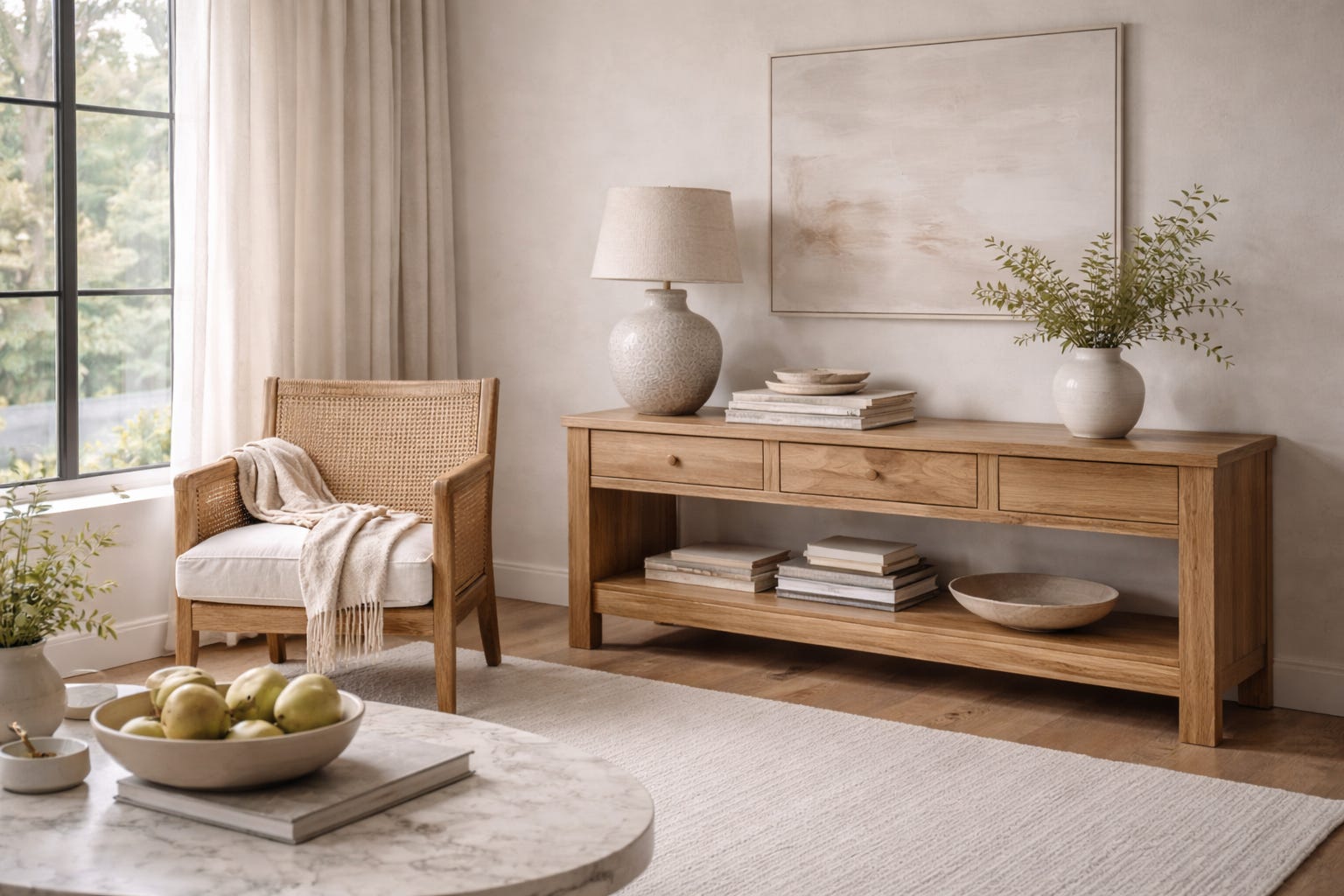
Instead of filling every corner of a room, designers and homeowners allow space for individual pieces to breathe. A carefully chosen armchair, a well-made console table, or a handmade ceramic vase can hold presence without competition.
This approach creates a calmer environment.
It also aligns closely with the principles of a healthier home. Fast decor and disposable furniture often rely on synthetic materials and adhesives that are not designed to last. When these pieces are replaced frequently, the cycle continues.
Choosing fewer, higher-quality items interrupts that pattern.
A single well-crafted wood dresser or solid oak table may remain in a home for decades. Over time, these pieces become part of the home’s story rather than temporary accessories.
How Natural Materials Create Calm Interiors
There is a noticeable difference between a room filled with synthetic finishes and one grounded in natural materials.
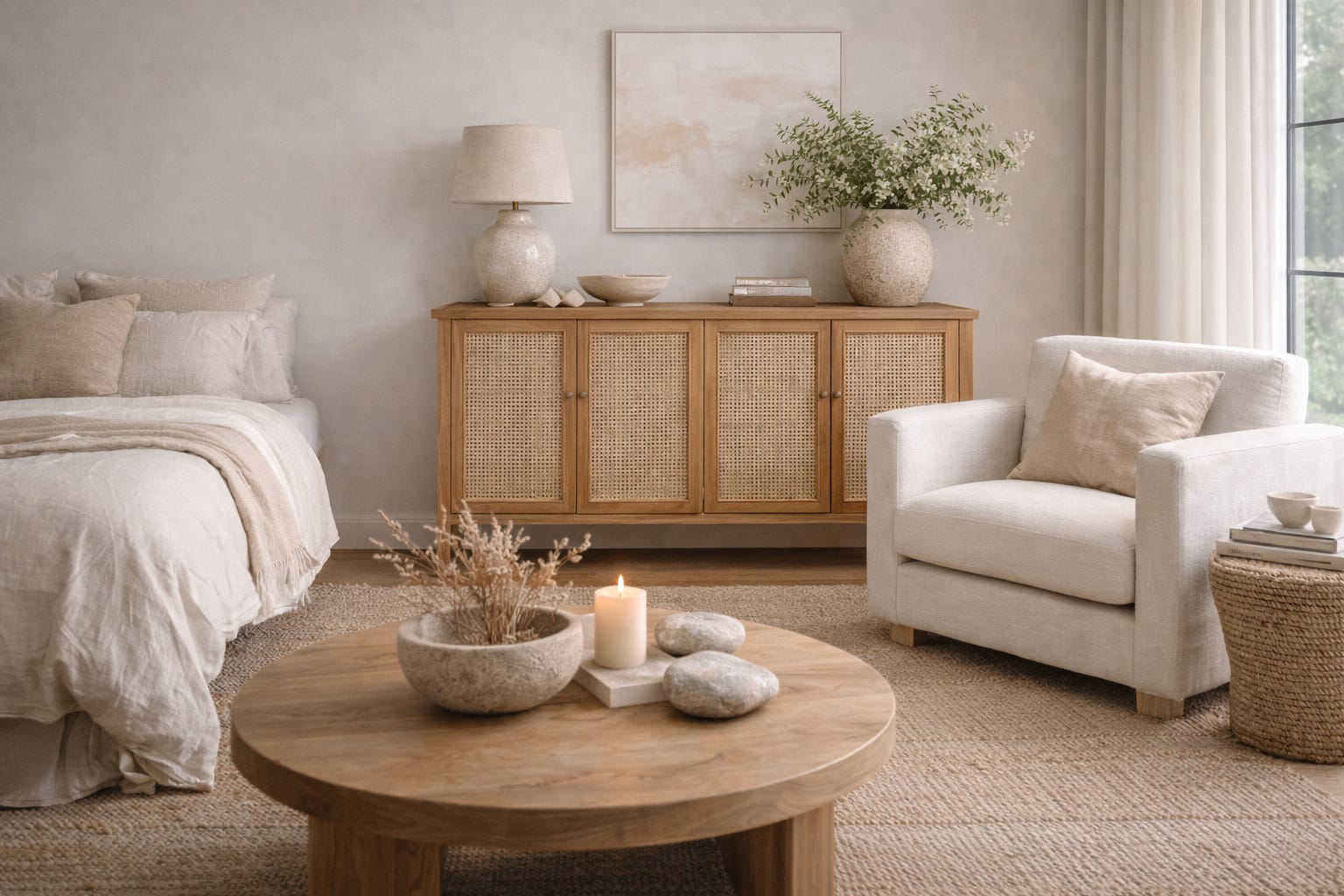
Wood introduces warmth. Linen softens light. Woven textures add subtle depth. Ceramic and stone provide weight and permanence.
Together, these elements shape how a room feels.
Rather than reflecting light sharply, natural materials absorb and diffuse it. The result is a softer visual environment that many people describe as calming.
For families, this matters in practical ways as well. Natural materials often breathe better, age better, and support a healthier indoor environment.
In a low tox home, materials are not simply decorative choices. They are structural decisions that shape the atmosphere of daily life.
Longevity vs Disposable Home Trends
Modern home trends often move quickly.
One season celebrates a particular color palette, another favors a new furniture silhouette, and soon after the cycle repeats. Many products are designed with this pace in mind.
Quiet luxury moves in the opposite direction.
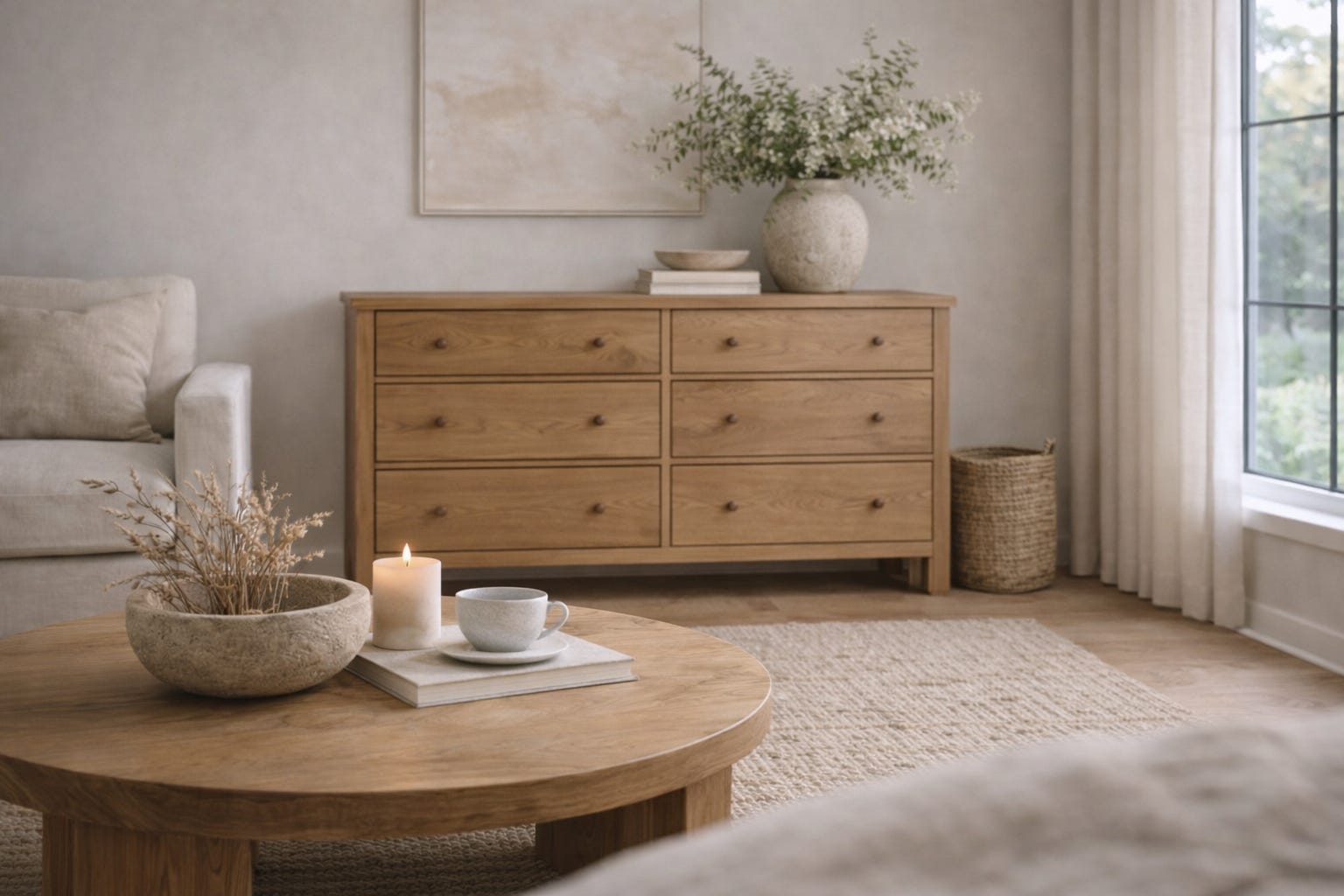
Instead of following rapid design shifts, it focuses on pieces that remain relevant over time. Solid wood furniture, neutral textiles, and natural materials rarely feel dated because they are rooted in centuries of craftsmanship.
This philosophy aligns perfectly with the goals of a low tox home.
Durable materials reduce waste, limit the need for constant replacement, and create interiors that grow more beautiful through use rather than wear.
Closing Reflection
Quiet luxury is not about perfection or minimalism for its own sake.
It is about intention.
One solid wood table.
One linen curtain.
One ceramic lamp.
Over time, these choices shape a home that feels grounded, breathable, and enduring.
Which natural material has made the biggest difference in how your home feels?
Which one item would change the way your house feels?
For many families, this intersection between low tox living and quiet luxury design becomes a natural evolution.
Because the most elevated homes are rarely the loudest ones.
They are simply the ones built to last.
Some links in this article may be affiliate links. I only share materials and brands I do/would use in my own home.