
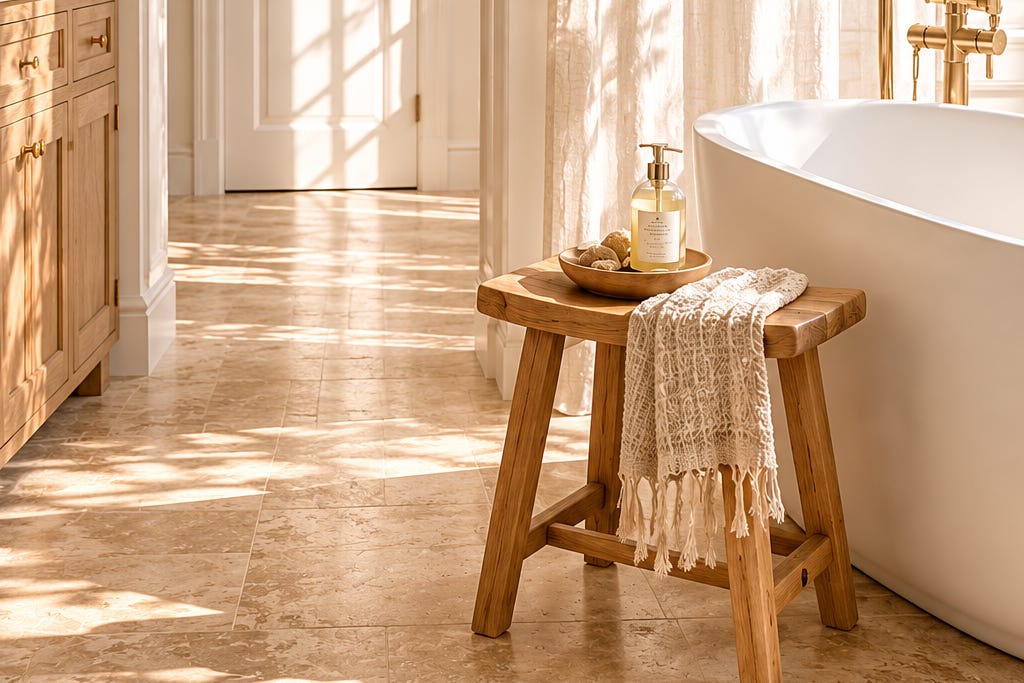
Bathrooms are often one of the first places people begin when creating a healthier home.
We swap personal care products, replace synthetic fragrances, or invest in better towels.
While those changes certainly have their place, I’ve found that some of the most meaningful improvements come from looking beyond the products themselves and paying closer attention to the materials that surround us every day.
The bathroom experiences constant cycles of moisture, warmth, airflow, and daily use.
Every surface contributes to how the room feels, functions, and ages over time.
The materials we choose influence comfort underfoot, the quality of the air we breathe, and even our emotional response to the space.
During my years working in boutique hospitality, I learned that truly restorative spaces rarely relied on grand gestures.
Instead, they were built through thoughtful layers of texture, natural materials, and sensory comfort. Guests often couldn’t explain exactly why a room felt so relaxing. They simply knew it felt good to be there.
I’ve noticed the same principle applies at home.
A healthier bathroom isn’t only about what we remove.
It’s also about what we choose to bring in—materials that feel grounded, breathable, and supportive of everyday wellbeing.
Why Bathroom Materials Matter More Than We Realize
Bathrooms place unique demands on the materials within them.
Humidity rises after showers.
Water splashes onto countertops and floors.
Ventilation fluctuates throughout the seasons.
Unlike many other rooms, bathrooms are constantly interacting with moisture, making material choices especially important.
Yet functionality is only part of the story.
The materials we encounter each morning and evening influence our experience of the space in subtle but meaningful ways. Smooth stone, warm wood, soft linen, and hand-finished ceramics all create sensory cues that signal comfort and calm.
I’ve often noticed that bathrooms dominated by synthetic surfaces can feel visually clean but emotionally cold.
There is a certain softness that natural materials bring to a room—one that cannot always be measured but is easy to feel.
Texture matters.
The grain of wood, the weight of stone, and the relaxed drape of linen all contribute to an atmosphere that feels more welcoming and less clinical.
When thoughtfully layered together, these materials help transform a bathroom from a purely functional room into a space that supports restoration.
Solid Wood Bath Stools Are One of the Most Overlooked Upgrades
When people think about healthier bathroom materials, they often focus on countertops, tile, or towels.
Yet one of the simplest upgrades can be a small piece of solid wood.
A wooden bath stool, bench, or storage ladder introduces warmth that many bathrooms are missing.
Surrounded by porcelain, glass, metal, and stone, even a modest wood accent creates visual balance and softness.
I often gravitate toward solid wood stools because they are both beautiful and practical. They can hold folded towels, support a bath tray, or simply create a quiet moment of texture in the room.
What I appreciate most is how natural wood feels alive.
The grain patterns, subtle imperfections, and tactile surface create character in a way manufactured materials rarely achieve.
White oak, teak, and cedar are particularly popular choices because they can handle humidity well when properly cared for.
The effect is never dramatic.
But it is noticeable.
A simple wooden stool beside a tub often makes a bathroom feel less like a utility space and more like a place designed for comfort.
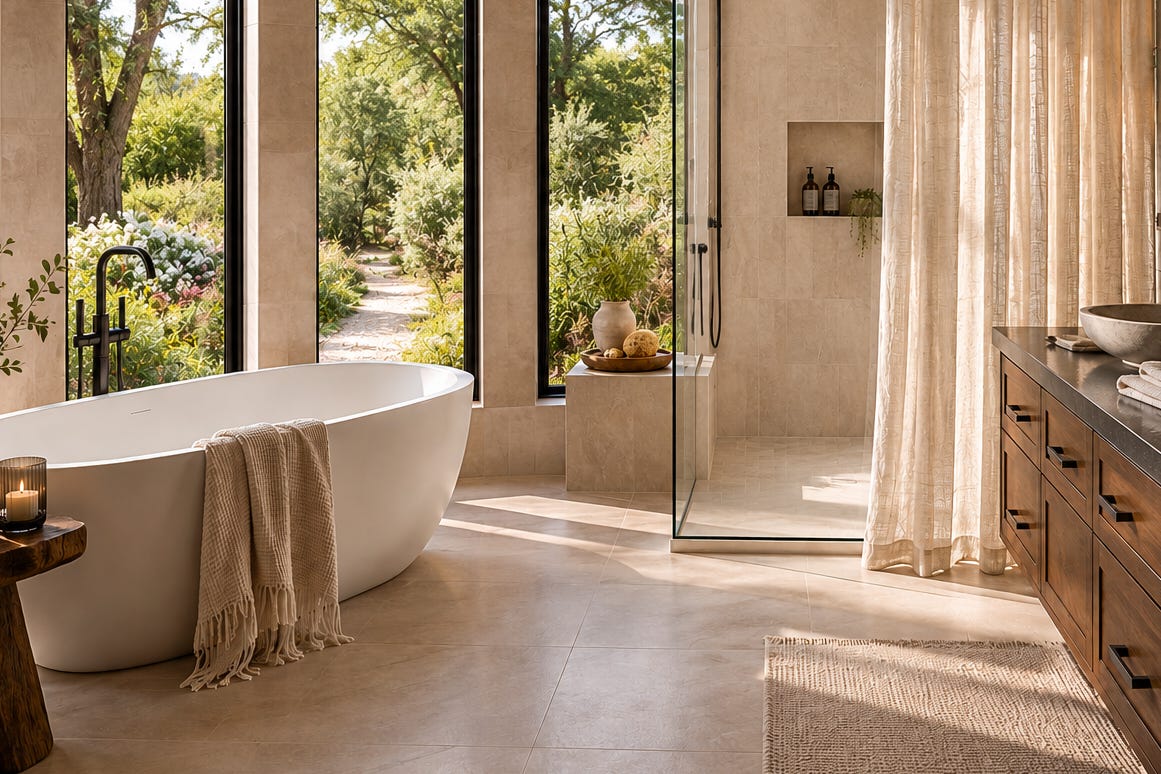
Stone Soap Dishes and Ceramic Accessories Quietly Elevate Daily Rituals
Some of the most overlooked materials in a bathroom are also the ones we touch most often.
Stone soap dishes, ceramic dispensers, catchall trays, toothbrush holders, and storage vessels may seem like small details, but they shape everyday routines in meaningful ways.
I often think about how much visual noise disposable packaging creates in a bathroom.
Plastic bottles, mismatched containers, and cluttered surfaces can make even a beautiful room feel unsettled.
Natural stone and ceramic help create a different experience.
A stone soap dish feels substantial in the hand. A ceramic dispenser introduces texture and permanence. These materials age gracefully and tend to feel timeless rather than trend-driven.
One of the things I love most about ceramic is that it can be both functional and beautiful at the same time. Hand-finished pieces often carry slight variations that make a room feel more personal and lived-in.
The goal isn’t perfection.
It’s creating small moments of calm within everyday routines.
Sometimes the materials we use several times a day have the greatest influence on how a room feels.
Linen Shower Curtains Are One of the Most Overlooked Bathroom Upgrades
When people think about healthier bathroom materials, shower curtains rarely become part of the conversation.
Yet this is one of the largest pieces of fabric in the room.
Many conventional shower curtains are made from synthetic materials that can feel stiff, overly processed, or visually cold. A linen shower curtain creates an entirely different experience.
The texture immediately softens the space.
Natural linen has a relaxed elegance that feels both elevated and approachable. It diffuses light beautifully, adds movement to the room, and introduces a layer of warmth that many bathrooms are missing.
I’ve found that replacing a synthetic shower curtain with linen often creates a bigger visual impact than replacing several smaller accessories combined.
The change isn’t dramatic.
It’s simply calming.
Bathrooms tend to contain hard surfaces everywhere we look—tile, mirrors, porcelain, stone, and glass. Linen helps balance those elements, creating a room that feels more welcoming and less rigid.
For readers looking for one overlooked upgrade that quietly changes the entire atmosphere of a bathroom, this is often where I suggest starting.
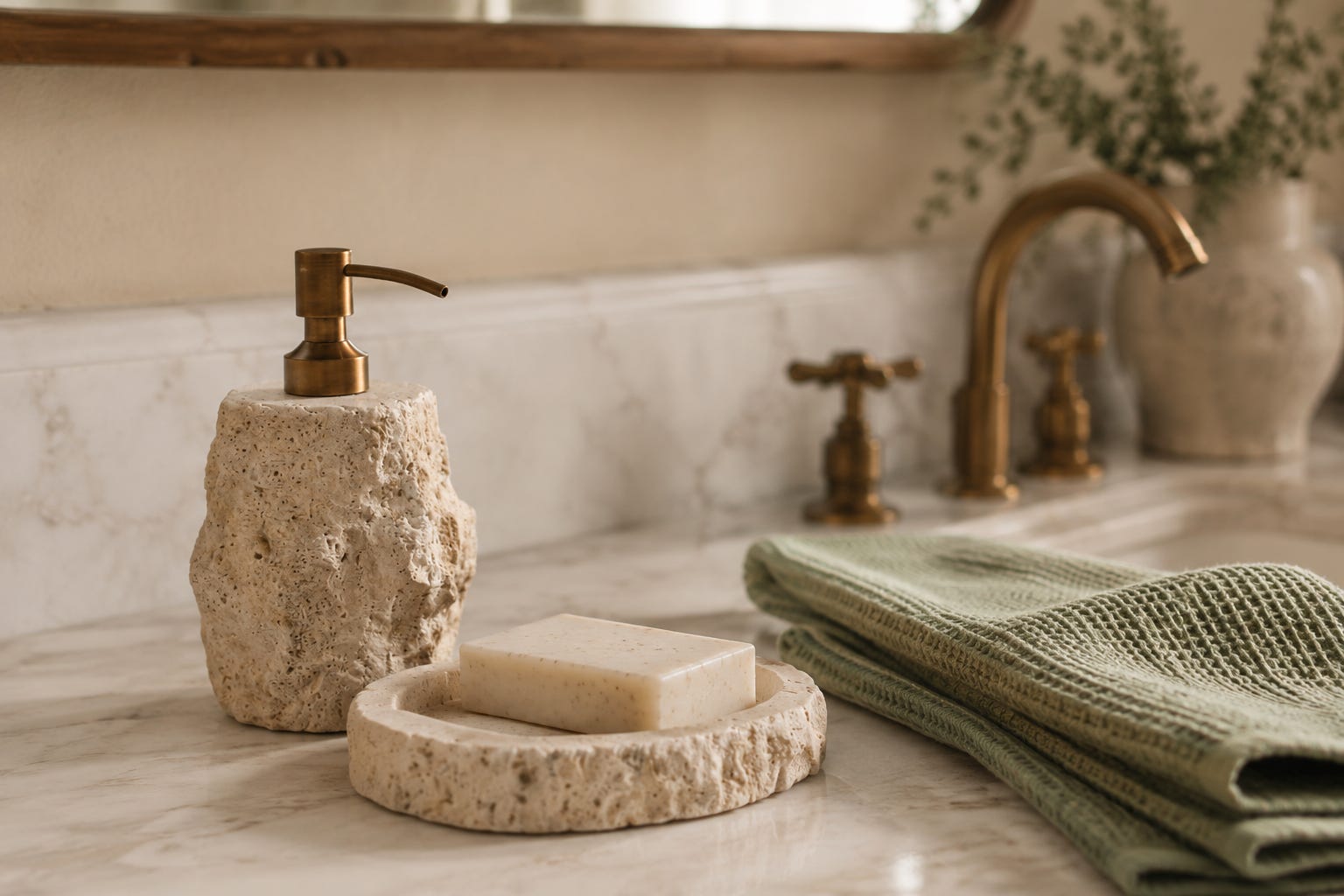
Woven Storage Baskets Create Beauty Without Clutter
Storage rarely receives much attention in wellness conversations.
Yet the way we store everyday items can significantly influence how a bathroom feels.
Woven baskets made from natural materials like seagrass, water hyacinth, or rattan offer practical storage while contributing warmth and texture. Unlike plastic bins, they introduce an organic quality that helps soften the room.
I’ve found that baskets are one of the easiest ways to make a bathroom feel more intentional.
Extra towels, toiletries, and daily essentials remain accessible without adding visual clutter. At the same time, the natural texture creates a sense of layering that feels calm rather than chaotic.
This is particularly important in smaller bathrooms where every surface tends to work harder.
A thoughtfully placed basket can provide both function and beauty.
And often, that’s the sweet spot.
The most restorative spaces are rarely filled with more things. They’re simply arranged with greater intention.
A Healthier Bathroom Begins with Thoughtful Materials
Creating a healthier bathroom doesn’t require a complete renovation.
In fact, some of the most meaningful changes happen gradually.
A solid wood stool replaces a plastic one. A linen shower curtain takes the place of synthetic fabric. A ceramic dispenser replaces disposable packaging. A woven basket creates order while adding warmth and texture.
Small decisions begin to accumulate.
What I love most about natural materials is that they support both function and feeling. They help manage moisture, bring visual calm, and create spaces that feel more grounded and restorative.
The healthiest bathrooms are rarely the most expensive or the most elaborate.
They are simply designed with intention.
When materials are chosen thoughtfully, the room becomes more than a place to get ready for the day. It becomes a place where routines feel more enjoyable, the atmosphere feels calmer, and everyday life feels just a little more settled.
To me, that is the essence of quiet luxury.
And it’s often found in the materials we overlook the most.
A Few Questions I’m Often Asked
Can natural materials really work in a humid bathroom?
Yes. Many natural materials perform beautifully in bathrooms when paired with proper ventilation and routine care.
Solid wood species like teak, white oak, and cedar have been used in moisture-prone spaces for generations.
Linen, ceramic, and natural stone are also excellent choices because they tend to age gracefully and support a more breathable, layered environment.
If I only make one change, what natural material should I start with?
For the biggest visual and emotional impact, I usually recommend a linen shower curtain.
It introduces softness, texture, and warmth while helping balance the hard surfaces found in most bathrooms. It’s a relatively simple upgrade that can completely change the atmosphere of the room.
Are woven baskets actually a healthier storage option?
While their primary benefit is organization, natural fiber baskets can help reduce reliance on plastic storage containers while bringing texture and warmth into the space.
They also encourage a more intentional approach to storing everyday essentials, which can make a bathroom feel calmer and less cluttered.
Is solid wood practical for everyday bathroom use?
Absolutely. The key is choosing quality wood and allowing it to dry between exposures to moisture.
Small pieces such as bath stools, trays, and storage ladders are often an easy and beautiful way to introduce natural materials without committing to a larger renovation.
Why do natural materials make a bathroom feel calmer?
Part of it is sensory. Natural materials introduce warmth, texture, and visual variation that our eyes and hands tend to respond to positively.
They help soften spaces filled with hard surfaces and create an atmosphere that feels more grounded, comfortable, and restorative.
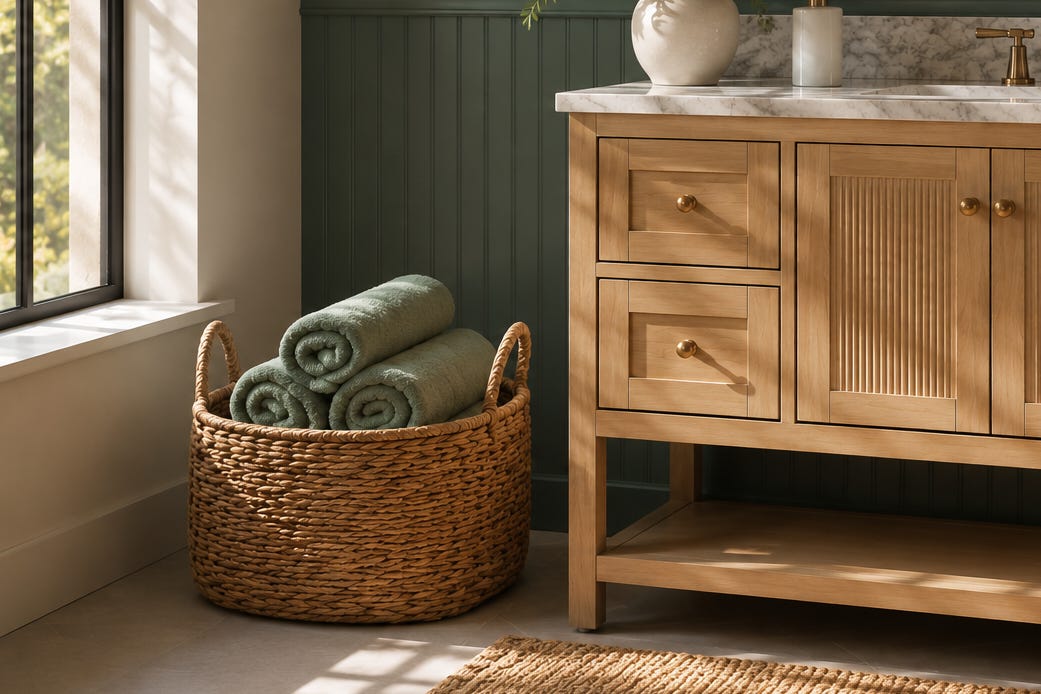
Pieces I Trust
When I’m helping create a bathroom that feels healthier, calmer, and more restorative, these are often the categories I focus on first:
European flax linen shower curtains
Solid wood bath stools and benches
Handmade ceramic soap dispensers
Stone soap dishes and catchall trays
Organic cotton bath towels and hand towels
Woven seagrass or water hyacinth storage baskets
Low-tox cotton bath mats
Warm layered bathroom lighting
Natural wood bath brushes and accessories
These pieces aren’t about creating a perfect bathroom.
They’re about creating a bathroom that feels better to live with every day.
What is one overlooked material you could bring into your bathroom this season? Whether it’s a linen shower curtain, a woven basket, or a simple wooden stool, I’d love to know what would make your home feel a little calmer and more restorative.
Some links in this article may be affiliate links. By clicking on them, you help support my work. Don’t worry. I only share materials and brands I do/would use in my own home.
Did you like this article? Subscribe for ~free~ and get my next post in your inbox.