
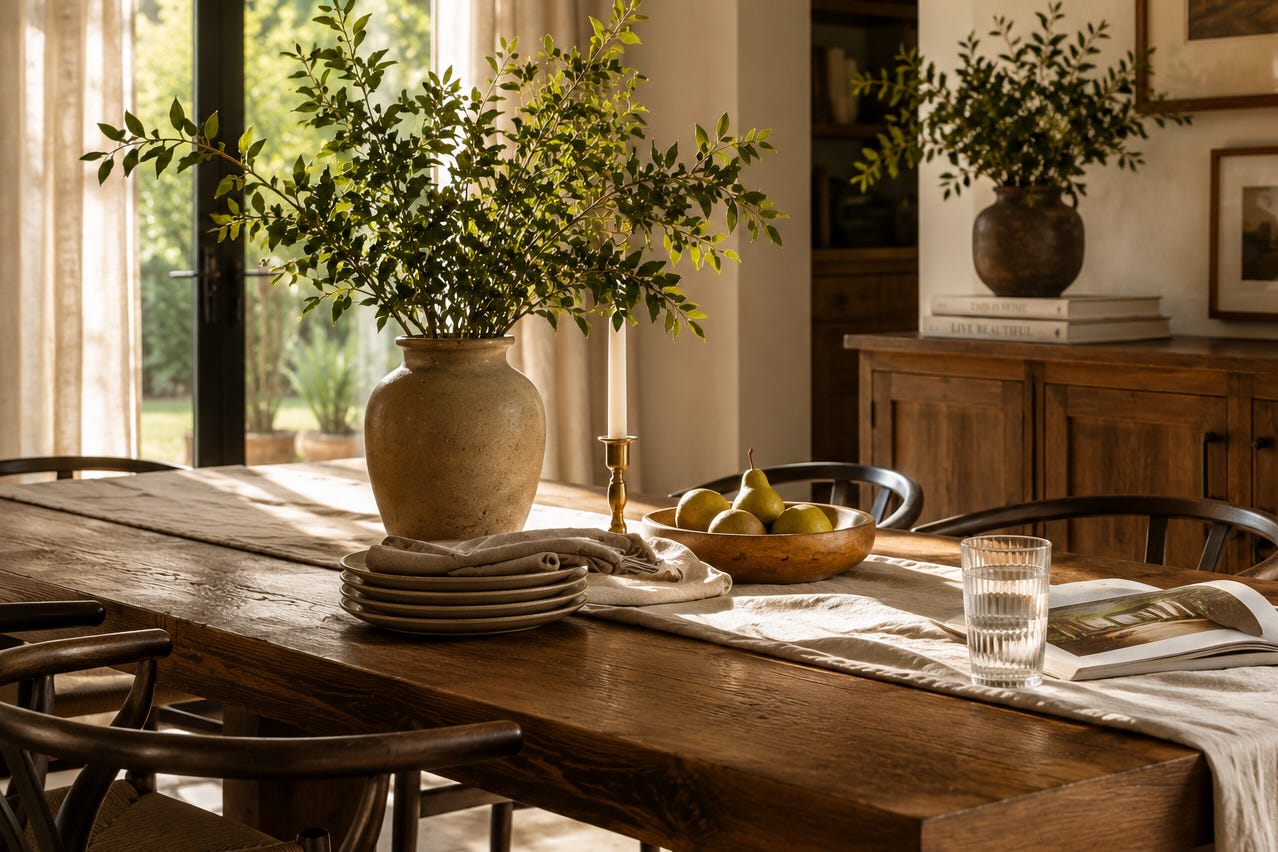
Some things become more valuable as the years pass.
Not because they’re rare.
Because they’ve been part of our lives.
A favorite quilt.
A handwritten recipe card.
A dining table that’s hosted decades of ordinary evenings and holiday gatherings.
I’ve always been drawn to homes that feel lived in rather than perfectly preserved.
The rooms feel warmer.
The materials feel more honest.
And often, the pieces that leave the deepest impression aren’t the newest ones.
They’re the ones with a story.
Over time, I’ve realized that some materials seem to welcome this process.
They soften.
They develop character.
They become more beautiful through use.
Others do the opposite.
They begin wearing down almost immediately, asking to be replaced long before they’ve had a chance to become meaningful.
The difference has changed the way I furnish my home.
And it’s one of the reasons I believe true luxury has less to do with perfection and more to do with longevity.
Why Aging Gracefully Matters in Home Design
When most people think about quality, they think about durability.
Will it last?
Will it hold up?
Those questions matter.
But I’ve found there’s another question that’s just as important.
How will it age?
Not every material improves with time.
Some materials simply survive it.
Others seem to become more beautiful because of it.
I think that’s part of what makes certain homes feel so comforting.
The materials aren’t fighting against life.
They’re participating in it.
When I think about the homes I loved visiting as a child, I rarely remember specific decorating choices.
I remember the worn wood dining table at my grandparents’ house.
The one that somehow felt enormous when I was little.
I remember the smooth armrests on chairs that had been touched thousands of times.
I remember hardwood floors that creaked in familiar places.
Those details created a feeling.
A sense of permanence.
A sense that people had lived there, gathered there, and built memories there.
Years later, those are still the things I remember.
Not because they were perfect.
Because they were meaningful.
I’ve noticed the same pattern in many of the boutique hospitality spaces I once worked on.
Guests rarely commented on whether a piece looked brand new.
They responded to warmth.
Texture.
Authenticity.
They were drawn to materials that felt grounded and real.
A beautiful home shouldn’t only look good today.
It should become more beautiful as life unfolds within it.
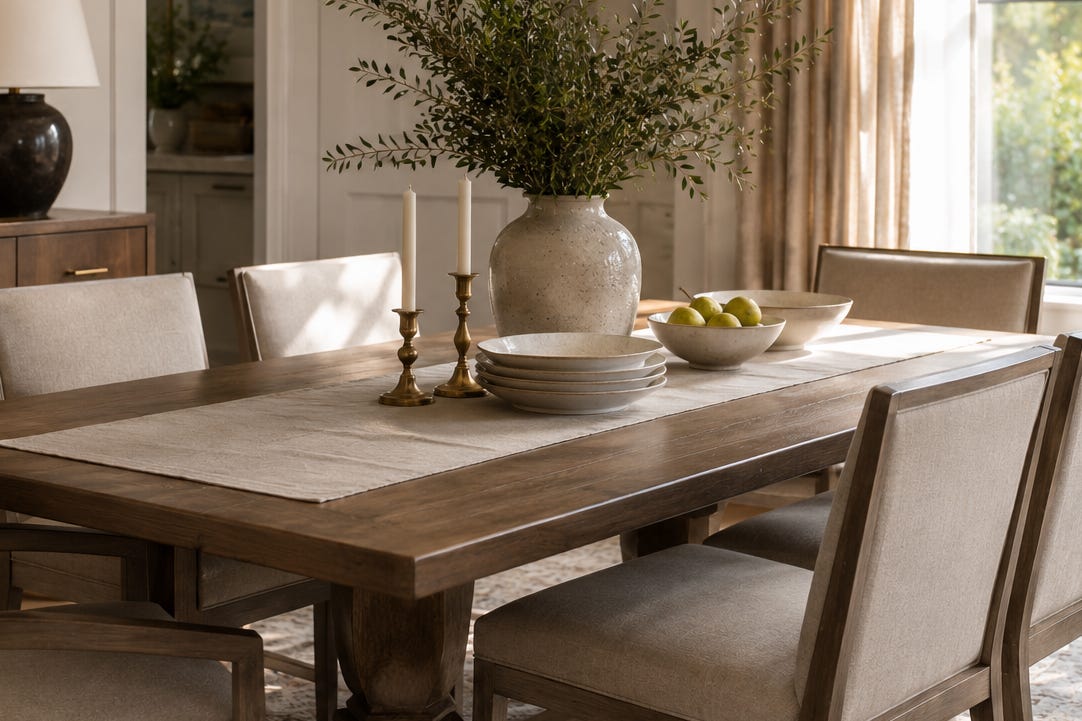
Solid Wood: The Material I Return to Again and Again
If there’s one material I trust almost without hesitation, it’s solid wood.
Again and again, it proves its value.
Part of that comes from durability.
But that’s only part of the story.
What I appreciate most is the way wood responds to time.
Many materials are designed to look exactly the same for as long as possible.
Wood does something different.
It evolves.
A solid wood dining table doesn’t simply survive years of family dinners.
It often becomes more beautiful because of them.
The surface develops character.
The color deepens.
The subtle marks left behind by daily life begin to tell a story.
I’ve always found that more appealing than a surface that looks untouched.
Not because I dislike beautiful things.
Because I like homes that feel lived in.
Years ago, while working in boutique hospitality, I noticed that guests were often drawn to spaces that felt authentic rather than perfect.
They lingered near worn wood tables.
They gravitated toward natural materials with visible texture.
They responded to spaces that felt collected over time.
I’ve never forgotten that.
Solid wood carries that same feeling into a home.
It feels grounded.
Honest.
Substantial.
And unlike many mass-produced alternatives, it can often be repaired rather than replaced.
A scratch can be sanded.
A finish can be refreshed.
A piece can continue serving a family for decades.
That’s increasingly rare.
I’ve found that some of my favorite pieces in our home aren’t the newest ones.
They’re the pieces that have quietly improved with age.
The materials haven’t remained frozen in perfection.
They’ve matured.
And that’s exactly what makes them beautiful.
Linen, Wool, and Other Natural Fibers
Natural fibers tend to follow a similar path.
They soften.
They relax.
They settle into daily life.
Linen is one of my favorite examples.
When it’s brand new, linen often feels crisp and structured.
Some people are surprised by that.
They expect immediate softness.
But that’s not really the beauty of linen.
The beauty arrives gradually.
After months of washing and everyday use, the fabric begins to relax.
The texture softens.
The folds become more natural.
It starts to feel less like something you’ve purchased and more like something you’ve lived with.
I’ve always loved that transformation.
It feels honest.
Wool follows a similar pattern.
A quality wool rug doesn’t simply sit beneath your feet.
It becomes part of daily routines.
Children stretch out on it to read.
Dogs claim favorite corners.
Families gather around it for movie nights and conversations.
Over time, those experiences become attached to the material itself.
And that’s where beauty begins to deepen.
Not in perfection.
In familiarity.
Materials That Often Decline Faster Than Expected
Unfortunately, not every material tells that kind of story.
Some materials are designed primarily to look good at the beginning.
The problem appears later.
Thin veneers begin peeling.
Particleboard swells when exposed to moisture.
Low-quality laminates chip at corners and edges.
Synthetic upholstery fabrics often lose their texture and softness surprisingly quickly.
At first glance, many of these materials look remarkably convincing.
Sometimes it’s difficult to tell the difference.
For a while.
Then life happens.
Children climb onto furniture.
Pets curl up in favorite spots.
Family dinners become daily routines.
That’s when quality reveals itself.
I’ve learned this lesson more than once.
Something can look beautiful in a showroom.
That doesn’t necessarily mean it will look beautiful five years later.
Longevity has a way of exposing shortcuts.
And rewarding thoughtful choices.
Buying for the Next Decade Instead of Next Season
One of the most useful mindset shifts I’ve made is thinking beyond immediate trends.
Instead of asking whether I love something today, I try to imagine living with it for ten years.
That simple question changes everything.
Will it still function well?
Will it still feel beautiful?
Will it become more comfortable with age?
Or will it simply need replacing?
I’ve found that some of my best purchases weren’t impulse decisions.
They were thoughtful ones.
The purchases I waited for.
Saved for.
Researched carefully.
The goal isn’t to fill a house quickly.
It’s to build a home gradually.
A home filled with things that support daily life in meaningful ways.
My husband has a demanding career, and I’ve always believed home should be the place where our family can finally exhale.
The materials we choose contribute to that feeling more than many people realize.
Comfort isn’t only emotional.
It’s physical.
It’s sensory.
It’s built into the surfaces we touch every day.
Luxury That Lasts
When I think about luxury now, I think about longevity.
I think about comfort.
I think about things that quietly improve life year after year.
The materials that age most beautifully aren’t always the most fashionable.
They’re often the most dependable.
The ones that remain useful.
The ones that develop character.
The ones that become part of family memories.
Years from now, I doubt we’ll remember every decorating trend.
But we’ll remember the table where birthdays were celebrated.
The chair where bedtime stories were read.
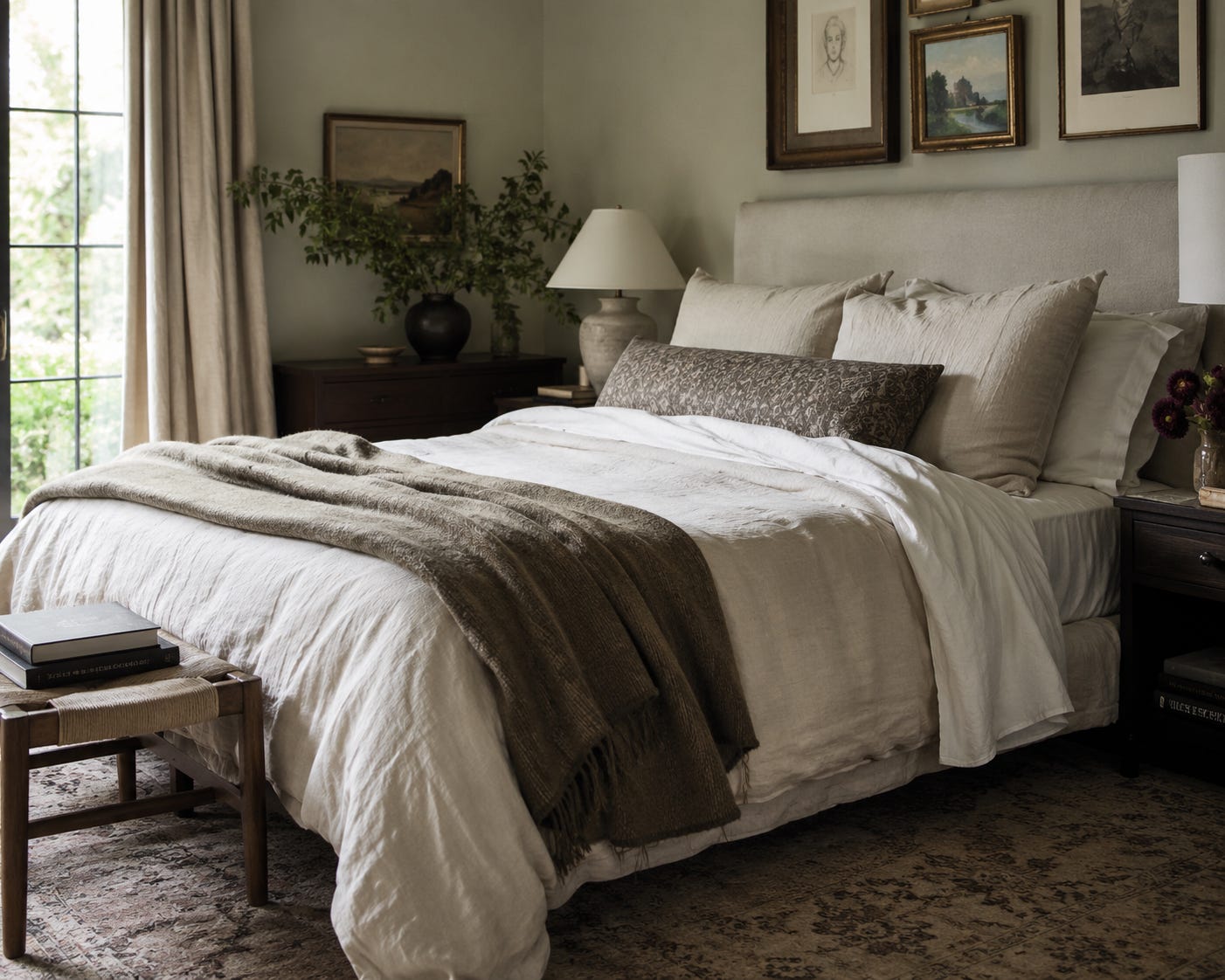
The linen sheets that somehow became softer every year.
Those are the details that stay with us.
Not because they’re expensive.
Because they’re meaningful.
And to me, that’s one of the most beautiful forms of luxury there is.
A Few Questions I’m Often Asked
What material lasts longest for furniture?
Solid wood is often one of the longest-lasting furniture materials available.
With proper care, it can remain beautiful and functional for decades while also being repairable and refinishable.
Is solid wood worth the additional cost?
In many cases, yes.
Solid wood frequently offers better longevity, repairability, and long-term value than particleboard or lower-quality alternatives.
Does linen really improve with age?
Absolutely. Linen typically becomes softer and more comfortable with repeated washing and everyday use while maintaining its breathable qualities.
Which materials should I avoid if longevity is important?
Lower-quality particleboard, thin veneers, and inexpensive laminates often show wear more quickly and can be difficult to repair once damaged.
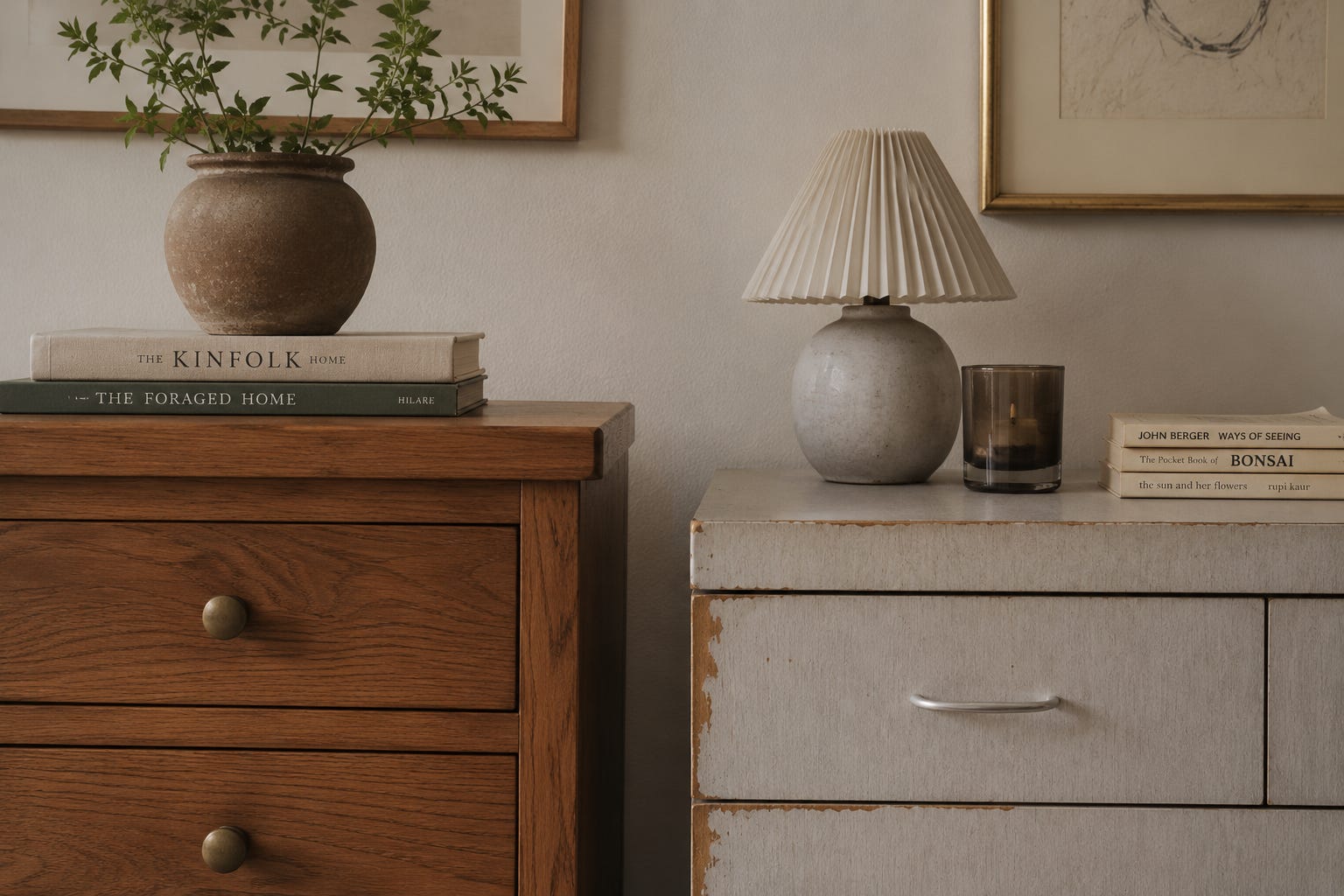
Pieces I Trust
Solid wood dining tables
Hardwood bedroom furniture
Linen bedding
Wool area rugs
Organic cotton textiles
Ceramic table lamps
Natural fiber baskets
Quality wood storage pieces
Which material in your home has become more beautiful with time? I’d love to hear about the pieces that have earned a permanent place in your family’s story.
Some links in this article may be affiliate links. By clicking on them, you help support my work. Don’t worry. I only share materials and brands I do/would use in my own home.
Did you like this article? Subscribe for free and get my next post in your inbox.