
For a long time, I thought better sleep came down to routines. Going to bed earlier. Turning off screens. Keeping things consistent.
And while those things do help, I eventually realized something else was shaping my sleep just as much: my environment.
The bedroom isn’t just where we sleep. It’s where the body begins to slow down, often without us even noticing. The light, the textures, the materials, the quiet presence of the space itself; all of it plays a role.
When the room feels calm, sleep tends to follow more naturally. When it feels busy or unsettled, that restfulness becomes harder to reach.
Creating a sleep sanctuary doesn’t require perfection. It’s simply a matter of choosing a few elements thoughtfully and allowing the space to support rest in a more natural way.
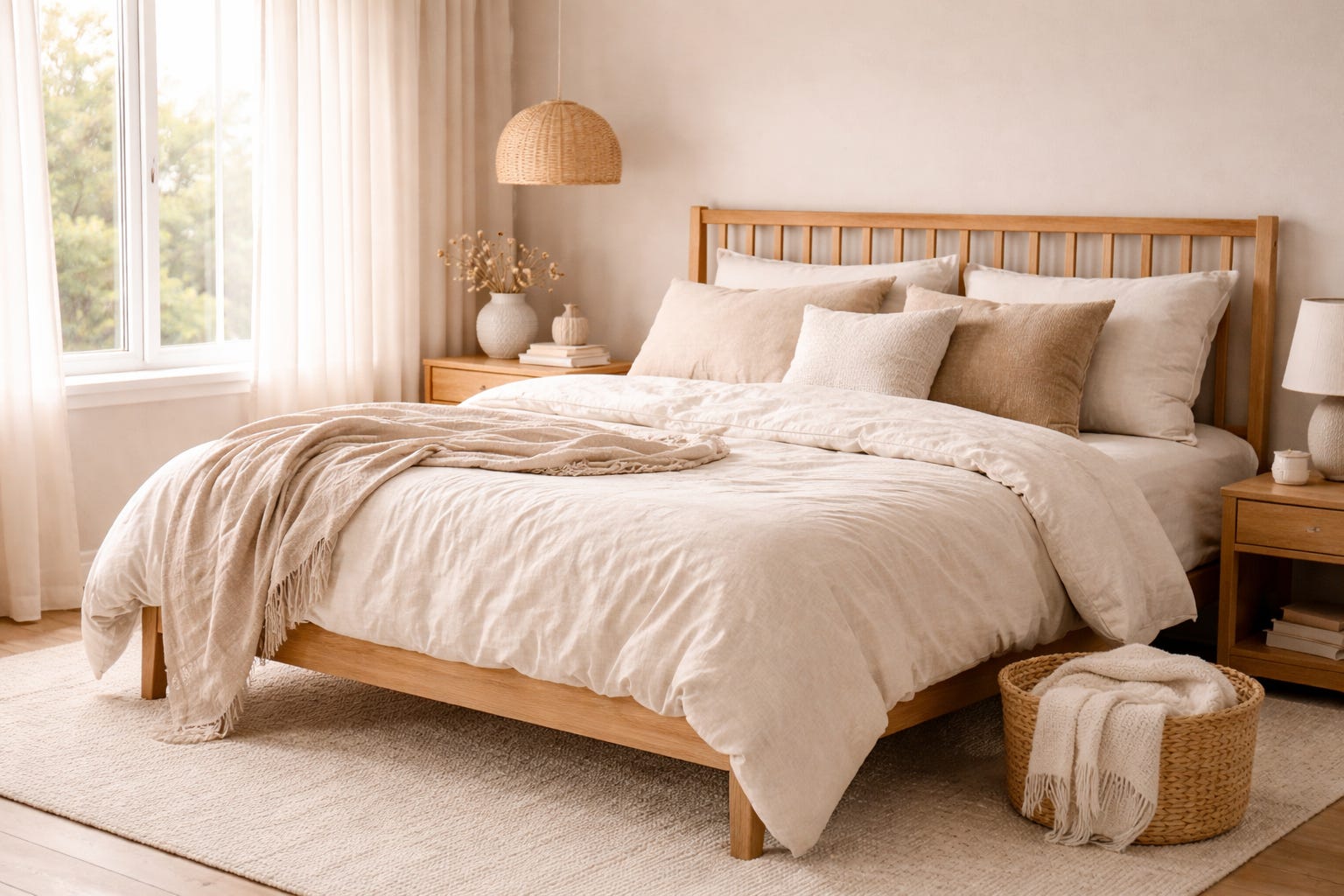
A Calm Foundation: Natural Bedding and Materials
One of the most noticeable shifts I made was changing what I was actually sleeping on.
Natural materials like linen and cotton feel different from synthetic fabrics.
They breathe more easily. They don’t trap heat in the same way. And over time, they soften in a way that feels familiar and comfortable.
Linen, in particular, has a relaxed texture that makes a bed feel inviting rather than overly styled. It doesn’t need to be perfect to feel beautiful.
A wool blanket or duvet can add warmth without heaviness.
These layers help regulate temperature naturally, which can make a surprising difference in how deeply you sleep.
When the materials closest to you feel calm and breathable, the entire experience of rest begins to shift.
The Sleep Sanctuary Checklist
Instead of trying to change everything at once, I found it helpful to think in small, clear elements. A checklist you can return to and adjust over time.
Here are the pieces I come back to:
• Linen or organic cotton sheets
• A breathable duvet (wool or natural fill)
• Solid wood or low-tox bed frame
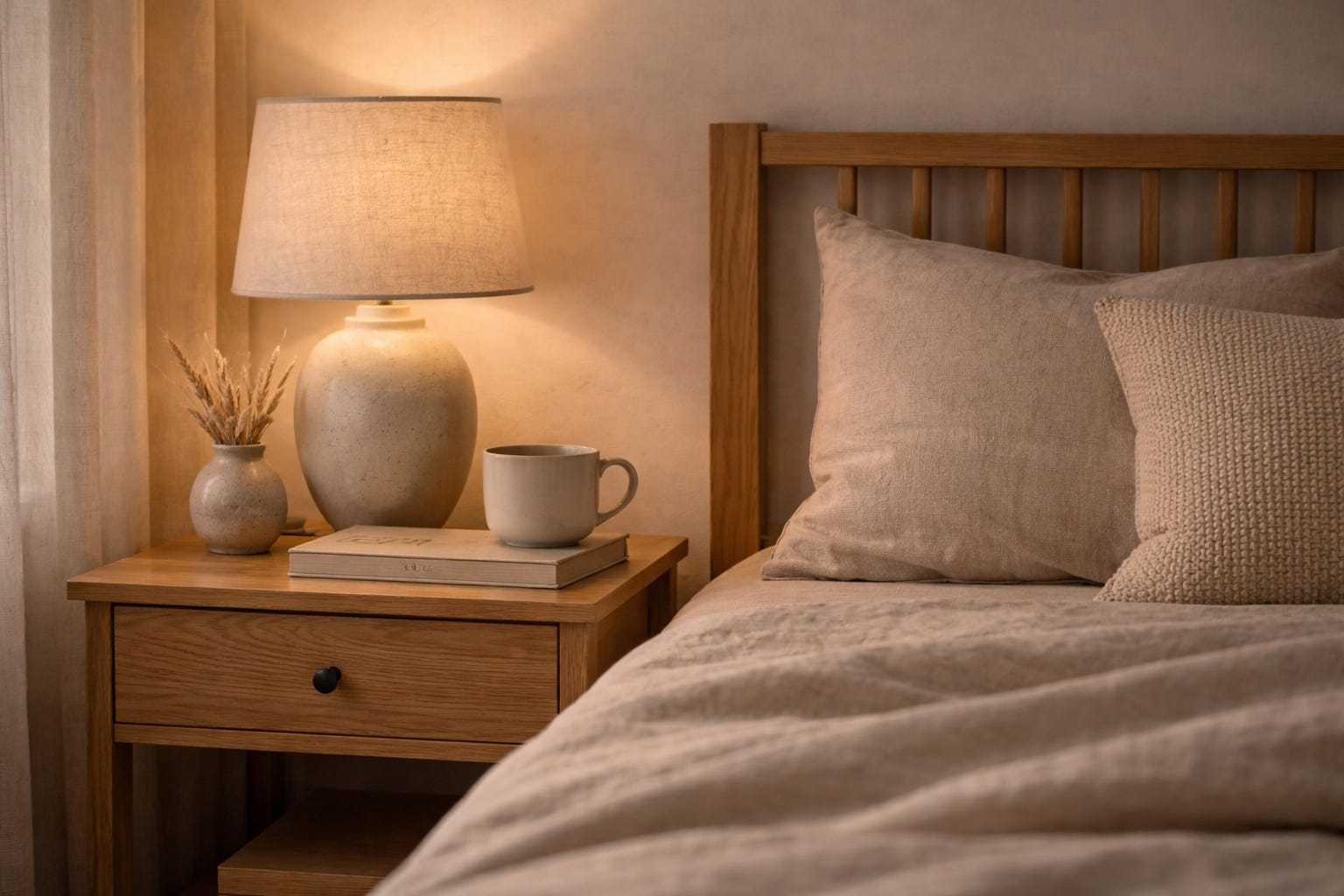
• Soft, warm lighting (lamps instead of overhead lights)
• Minimal clutter on bedside surfaces
• A ceramic or glass water cup nearby
• Natural fiber rug underfoot
• Curtains that soften light rather than block it harshly
• A calm, neutral color palette with gentle variation
• Fresh air when possible, even briefly before sleep
Not every item needs to happen at once. Even one or two changes can begin to shift how the room feels.

Light and Atmosphere: Letting the Room Soften
Light plays a quiet but powerful role in how a bedroom feels at the end of the day.
Bright overhead lighting can keep a space feeling alert and active. Softer, more directional light allows the room to settle.
A bedside lamp, a warm-toned bulb, or even candlelight in the evening can begin to signal that the day is slowing down.
Natural light matters too. During the day, allowing sunlight in helps create a gentle rhythm. At night, reducing harsh light helps the space feel more restful.
It’s not about darkness alone.
It’s about softness.

Clearing Space Without Stripping the Room
There’s a difference between a room that feels empty and one that feels calm.
For me, it wasn’t about removing everything. It was about removing what didn’t need to be there.
When surfaces are crowded, the mind tends to stay a little more alert. There’s more to process, even if we don’t realize it.
Clearing a nightstand down to a few intentional items—a lamp, a book, a small object—can make the entire room feel more settled.
The goal isn’t minimalism.
It’s ease.
Creating a Bedroom That Supports Rest
A sleep sanctuary isn’t something you build all at once. It develops slowly, through small decisions.
A different set of sheets. A softer light. A clearer surface.
Over time, the room begins to feel more aligned with what it’s meant for.
Not productivity. Not storage. Just rest.
And when the environment supports that, sleep often becomes less of a struggle and more of a natural response.
Calming Rest
Sleep isn’t something we can force.
But we can create the conditions that make it easier.
When the materials are natural, the light is soft, and the space is allowed to breathe, the room begins to feel different. Calmer. Quieter.
And in that kind of space, rest doesn’t feel like something to chase.
It feels like something that arrives.
Is there a single calming touch that you could add to your bedroom to make it more restful?
Some links in this article may be affiliate links. By clicking on them, you help support my work. Don’t worry. I only share materials and brands I do/would use in my own home.
Did you like this article? Subscribe for ~free~ and get my next post in your inbox.