

A bedroom should be the softest place in a home.
Not just visually calm, but physically restorative. The materials touching our skin for eight hours every night matter more than we often realize.
For years I thought bedding was simply about thread count or color palettes.
But once I began paying attention to materials, I noticed something remarkable. Natural bedding feels different. The air around it feels different.
Organic fibers breathe. They regulate temperature. They carry none of the plastic-like slickness that synthetic fabrics often bring into a room.
When we choose bedding made from natural materials, we are quietly transforming one of the most intimate spaces in our homes. The bed becomes less of a decorative object and more of a place of restoration.
Here are the organic bedding materials truly worth investing in and a few common options I personally avoid.
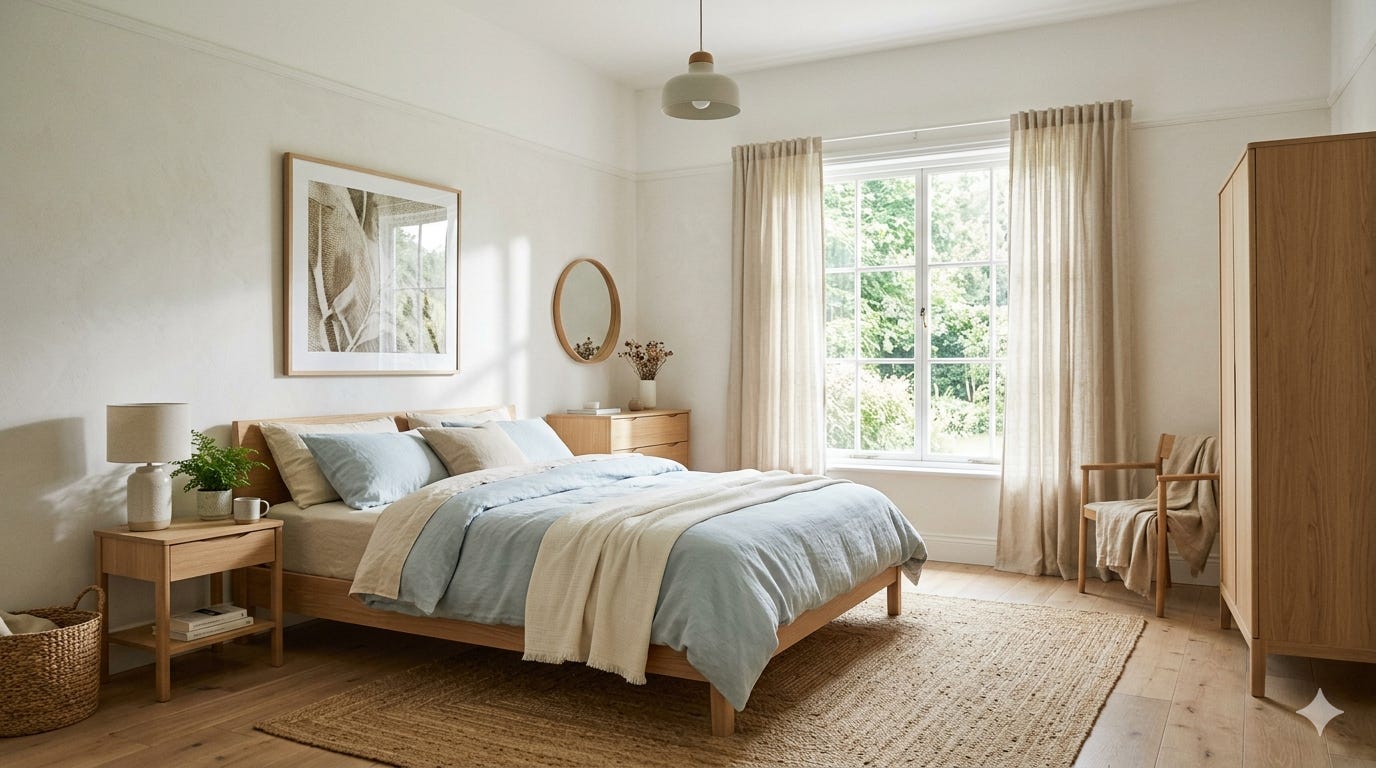
Linen Sheets: The Quiet Luxury Staple
Linen has been used for bedding for centuries, and there is a reason it continues to appear in the calmest, most restful homes.
Made from flax fibers, linen is naturally breathable and remarkably durable. It regulates temperature beautifully, keeping you cool in summer and comfortably warm in winter.
The texture is part of its charm.
Linen has a relaxed softness that improves with every wash. Instead of crisp perfection, it brings a lived-in elegance that feels effortless and timeless.
For those building a Low-tox luxury bedroom, organic linen sheets are often the first upgrade I recommend.
Organic Cotton: Soft, Clean, and Familiar
Organic cotton bedding is often the easiest place to begin.
Unlike conventional cotton, organic cotton is grown without synthetic pesticides or chemical fertilizers. That matters because bedding stays close to our skin for hours every night.
Cotton also offers an approachable softness that many people love.
If linen feels too textured, organic cotton provides a smoother alternative while still keeping the bedroom breathable and comfortable.
When shopping for cotton sheets, I look for:
GOTS certified organic cotton
Percale weave for cool breathability
Moderate thread counts rather than extremely high ones
Thread counts above 600 often rely on multi-ply yarns that can reduce breathability. In a healthy home, airflow matters far more than inflated numbers.
Wool Duvets and Mattress Toppers
Wool is one of the most underrated bedding materials.
Many people associate wool with winter sweaters, but in bedding it performs beautifully year-round. Wool naturally regulates temperature and moisture, helping keep the body comfortable through the night.
It also resists dust mites and mold far better than synthetic fills.
A wool duvet insert or mattress topper adds a gentle loft without the plastic-like feeling common in polyester fills.
Instead of trapping heat, wool quietly balances it.
Organic wool bedding works especially well layered with linen or cotton sheets. Together they create a breathable system that adapts to the seasons.
Materials I Personally Avoid
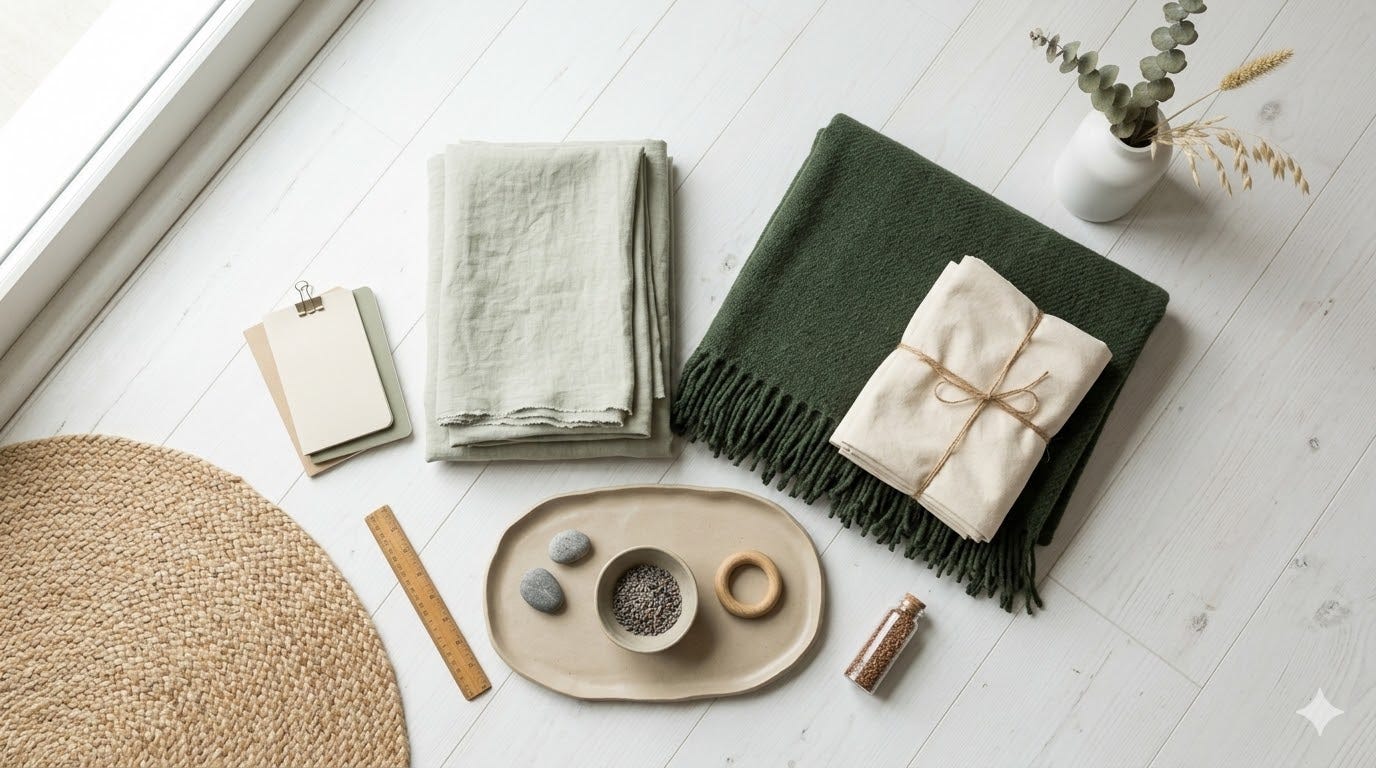
Not every bedding material supports a calm, breathable bedroom.
Many common sheet sets today are made from synthetic fibers designed to mimic softness while keeping costs low. Unfortunately, these fabrics often trap heat and introduce unnecessary plastics into the sleeping environment.
Materials I generally avoid include:
Polyester and microfiber
These fabrics are essentially plastic fibers. They often feel silky at first but tend to trap heat and reduce airflow.
Polyester-filled duvets
These can feel bulky and warm but rarely breathe well. Many people notice night sweating when using them.
Bamboo rayon
While bamboo sounds natural, most bamboo bedding is heavily processed into rayon using chemical solvents. The final fabric behaves more like synthetic material than a natural fiber.
Natural materials like linen, cotton, and wool simply perform better over time. They age gracefully and contribute to a bedroom that feels calm and breathable.
A Simple Organic Bedding Setup
Creating a healthier bed doesn’t require replacing everything at once.
A simple, beautiful setup might include:
Organic linen or cotton sheets
A wool duvet insert
Linen or cotton duvet cover
Wool or cotton pillows
These materials layer naturally and create a sleep environment that feels airy rather than sealed.
In a Low-tox luxury home, comfort isn’t just visual. It’s tactile, breathable, and quietly supportive of rest.
When the materials are right, the bedroom becomes something more than a decorated space.
It becomes a place where the body truly relaxes.
Why Natural Bedding Feels Different
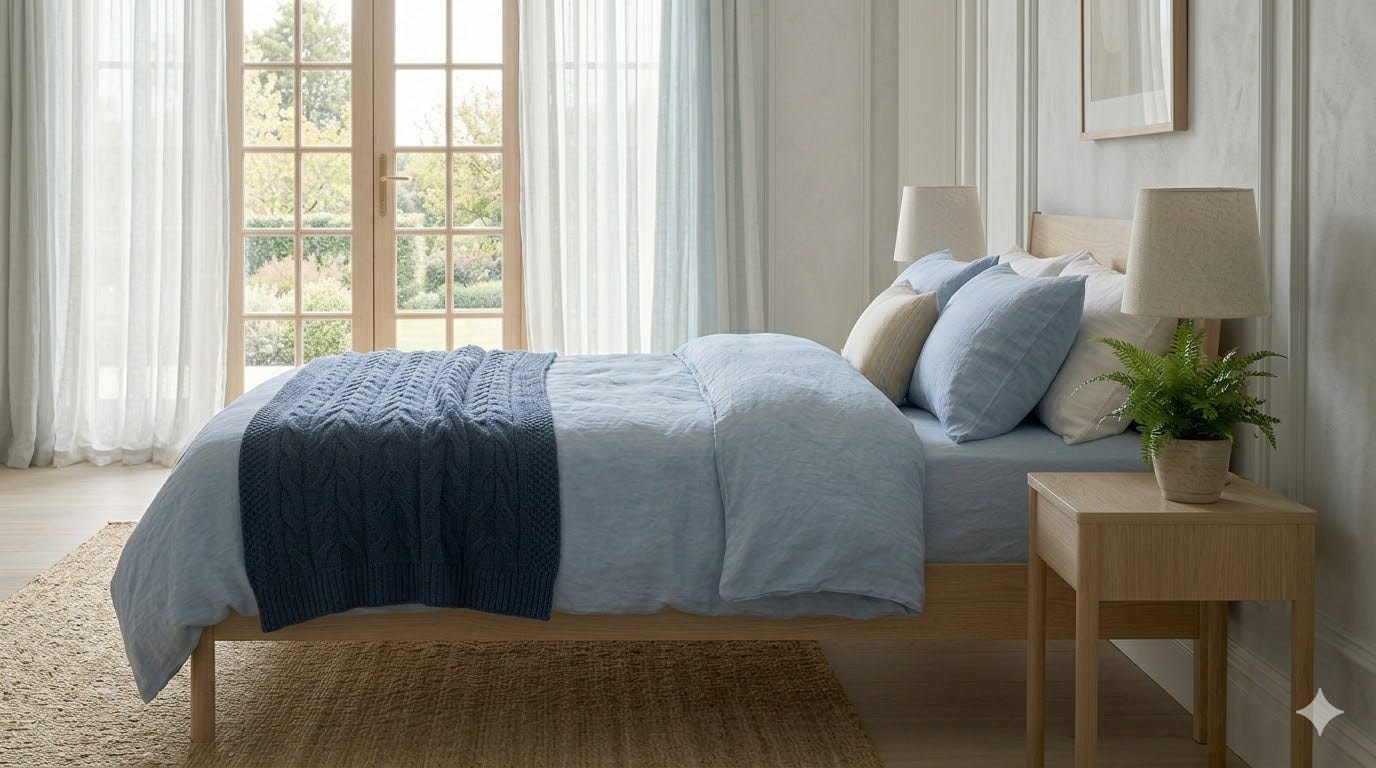
There is something quietly transformative about sleeping in natural materials.
It is not just about avoiding synthetics. It is about how the room itself begins to feel when the bed is layered with breathable fibers.
Linen softens the light. Cotton brings familiarity and comfort. Wool adds warmth without heaviness.
Instead of trapping heat or creating that slightly slick feeling synthetic fabrics often have, natural bedding allows air to move. The bed feels lighter, calmer, and more grounded.
Many people notice the change immediately. Nights feel cooler. Sleep feels deeper. The bedroom itself seems more peaceful.
This is the subtle power of natural materials. They support rest without drawing attention to themselves.
In a low-tox luxury home, the goal is not perfection. It is creating an environment where the body can fully relax.
Often, the bed is the most meaningful place to begin.
A Bedroom That Truly Restores
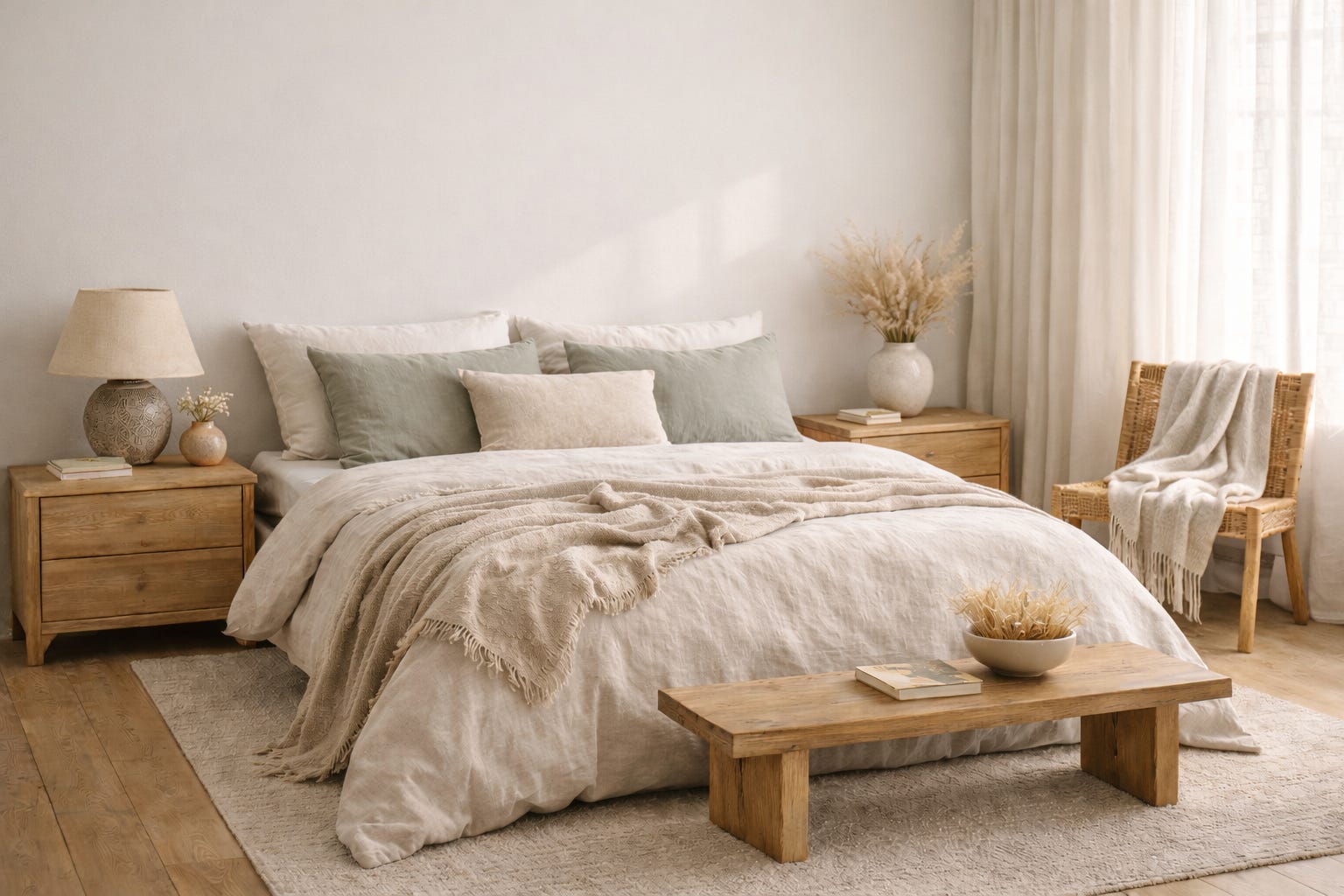
The bedroom is one of the most personal spaces in a home. It is where we begin and end each day, where the body restores itself quietly through the night.
Choosing natural bedding is a small shift, but it carries surprising impact.
Breathable fabrics improve comfort, reduce unnecessary synthetics, and create a calmer sleeping environment.
Over time, these choices add up.
A linen sheet set that grows softer every year.
A wool duvet that quietly regulates temperature through every season.
A bed that feels welcoming the moment you step into the room.
Low-tox luxury is not about perfection or replacing everything overnight.
It is about slowly surrounding ourselves with materials that support well-being and timeless comfort.
Which one item would you like to add to your bedding?
Sometimes the most meaningful upgrade in a home is also the simplest. Better sleep begins with what we place closest to our skin.
And the bed, after all, is where we spend a third of our lives.
Some links in this article may be affiliate links. I only share materials and brands I do/would use in my own home.