
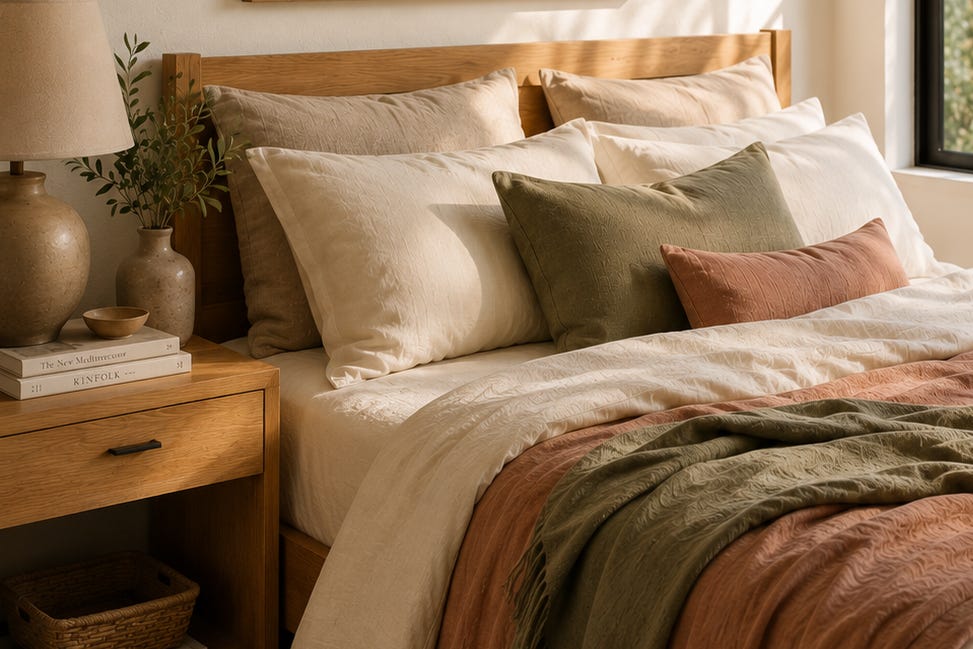
Why I Started Paying Attention to Pillow Materials
For years, I barely thought about what our pillows were actually made from.
I focused more on mattress comfort, bedding colors, or how a bedroom looked visually. Pillows felt like a minor detail.
But eventually, I started noticing small things that affected my sleep almost every night. I would wake up warm even when the room itself felt cool.
Some pillows flattened too quickly, while others felt strangely dense and synthetic beneath my head. Even freshly washed bedding sometimes carried a lingering chemical scent I could not ignore once I noticed it.
The more I simplified our home, the more aware I became of how materials affect comfort.
That awareness slowly extended into the bedroom.
I began paying attention to how bedding felt against the skin, how breathable the room felt at night, and whether certain materials created a calmer sleep environment overall.
Cool linen sheets, open windows, soft natural fabrics, and quieter textures all started to matter more than decorative trends.
And honestly, sleep began feeling different once I made those shifts.
I think pillows are often overlooked in conversations about healthier homes because they seem so ordinary.
But they are one of the few materials we spend hours against every single night. Texture, airflow, and comfort become surprisingly important when you start noticing how your body responds to them over time.
For me, the difference was gradual but unmistakable.
The bedroom started feeling softer, lighter, and much more restful.
How Natural Pillows Feel Different to Me
Once I started trying natural pillow materials, I noticed the difference almost immediately.
The first thing I noticed was breathability.
Natural pillows simply felt less heat-trapping to me. Instead of waking up searching for the cool side of the pillow repeatedly, the temperature stayed much more balanced through the night.
That alone changed my sleep more than I expected.
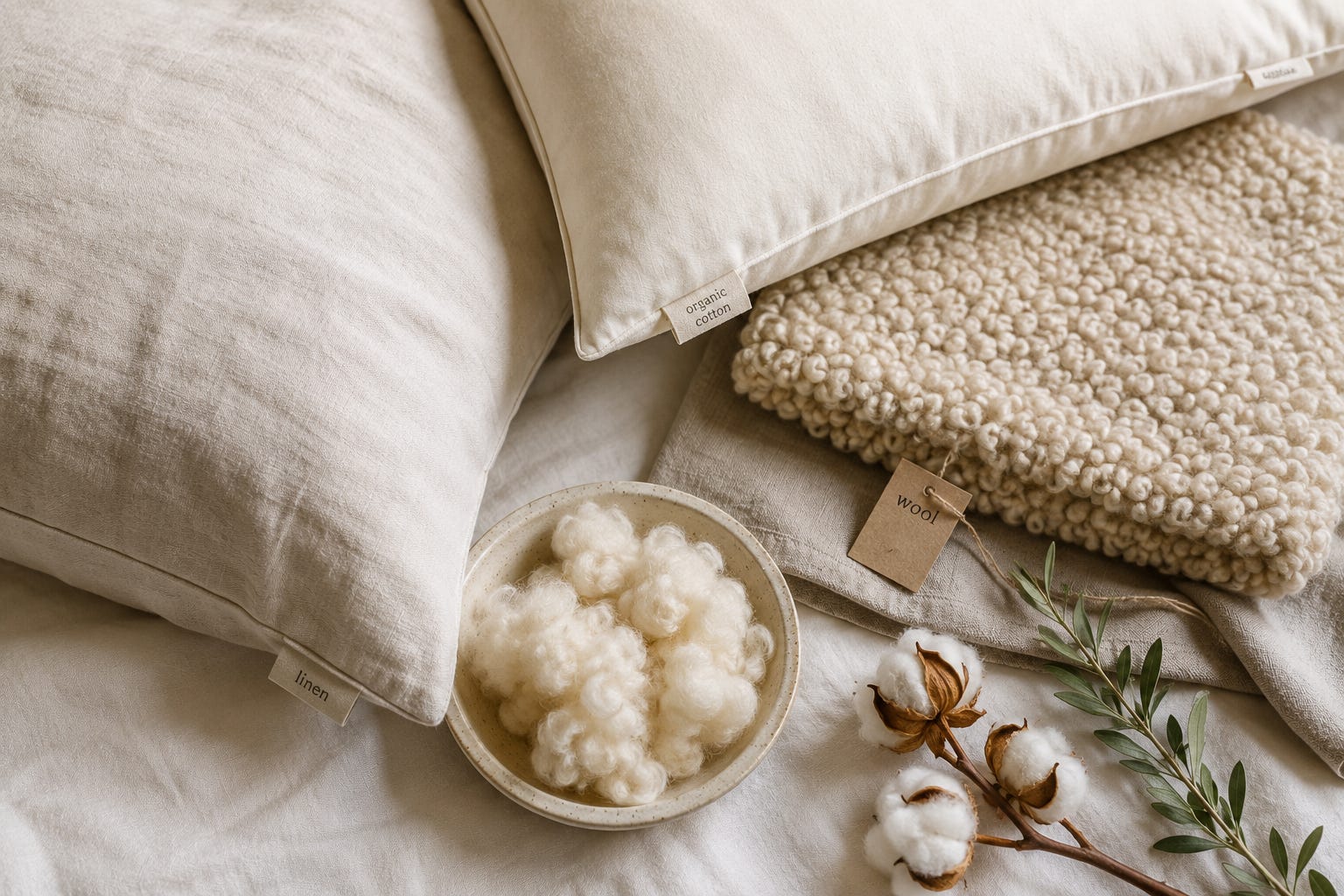
I’ve tried several natural materials over time, including wool, organic cotton, natural latex, and kapok blends. Each one feels slightly different, but they all share a softer, more breathable quality that synthetic pillows often lack.
Wool pillows, for example, feel supportive without becoming stiff.
Organic cotton has a lighter, cleaner feel that works especially well in warmer weather.
Natural latex offers more structure while still feeling breathable and responsive rather than dense.
Even the textures feel calmer somehow.
Synthetic pillows often have a slick or overly uniform texture that can feel artificial once you compare them side by side.
Natural materials tend to feel more relaxed and lived-in. The fabrics soften over time instead of breaking down quickly.
I also think texture affects us emotionally more than we realize.
At the end of the day, a bedroom should feel restorative.
Crisp breathable sheets, soft layered bedding, and a pillow that stays comfortable through the night all contribute to that feeling. I’ve noticed I fall asleep more easily when the room feels physically lighter and less overstimulating.
For me, natural pillows are less about luxury and more about comfort that quietly supports better rest.
Where Synthetic Pillows Often Fall Short
I do not think synthetic pillows are automatically “bad,” and I try to avoid approaching healthy home conversations from a place of fear.
But after comparing different materials over time, there are a few consistent differences I keep noticing.
The biggest one is heat retention.
Many synthetic pillows seem to trap warmth instead of allowing airflow naturally. Even expensive synthetic options sometimes feel heavy or overly insulated after a few hours of sleep. I noticed this especially during warmer months when the bedroom already felt slightly warmer overnight.
Another issue is how quickly many synthetic pillows flatten.
Some lose shape within months, becoming uneven or compressed in ways that affect comfort and neck support. I found myself replacing them more often, which eventually made the cheaper price feel less worthwhile long term.
There is also the issue of odor.
I became much more sensitive to strong chemical smells in bedding once we started simplifying our home overall.
Some synthetic pillows arrived with a noticeable scent that lingered for days, even after airing them out. Natural materials generally felt cleaner and quieter in comparison.
What surprised me most was how much these small details affected the atmosphere of the bedroom.
A bed layered with breathable natural materials simply feels different at night. The room feels less visually heavy.
The fabrics move more naturally.
The entire environment feels calmer.
I think mass-produced bedding has conditioned many of us to prioritize convenience and price over actual sensory comfort. But once I started paying attention to how materials truly felt night after night, it became difficult to ignore those differences.
Especially because sleep affects nearly everything else in daily life.
What Actually Matters Most for Better Sleep
The older I get, the more I think comfort is about balance rather than perfection.
I no longer believe there is one “best” pillow material for everyone. Sleep preferences are deeply personal.
But I do think breathability matters far more than most people realize.
For me, the best pillows are the ones that disappear into the background while I sleep. They support comfortably without trapping heat or creating tension.
The room feels cool, fabrics feel breathable, and nothing feels overly synthetic or distracting.
That quiet comfort makes a bigger difference than trends ever do.
I’ve also realized that pillows work best as part of the overall bedroom atmosphere. Breathable sheets, low lighting, cleaner air, and natural textures all work together.
A bedroom filled with visual clutter or harsh synthetic fabrics never feels fully restful to me now, even if individual products are technically comfortable.
At night, I notice small sensory details much more than I used to.
The cool side of a linen pillowcase.
Fresh air moving through slightly open windows.
The softness of washed cotton bedding after a long day. Those things shape the emotional feeling of sleep just as much as physical support does.
And honestly, I think many of us are more overstimulated than we realize.
Bedrooms filled with heat-retaining fabrics, synthetic fragrance, electronics, and visual clutter can subtly affect how deeply we rest.
Simplifying the environment creates a quieter atmosphere both physically and mentally.
That shift has mattered more for my sleep than any trend-driven “sleep hack” ever has.
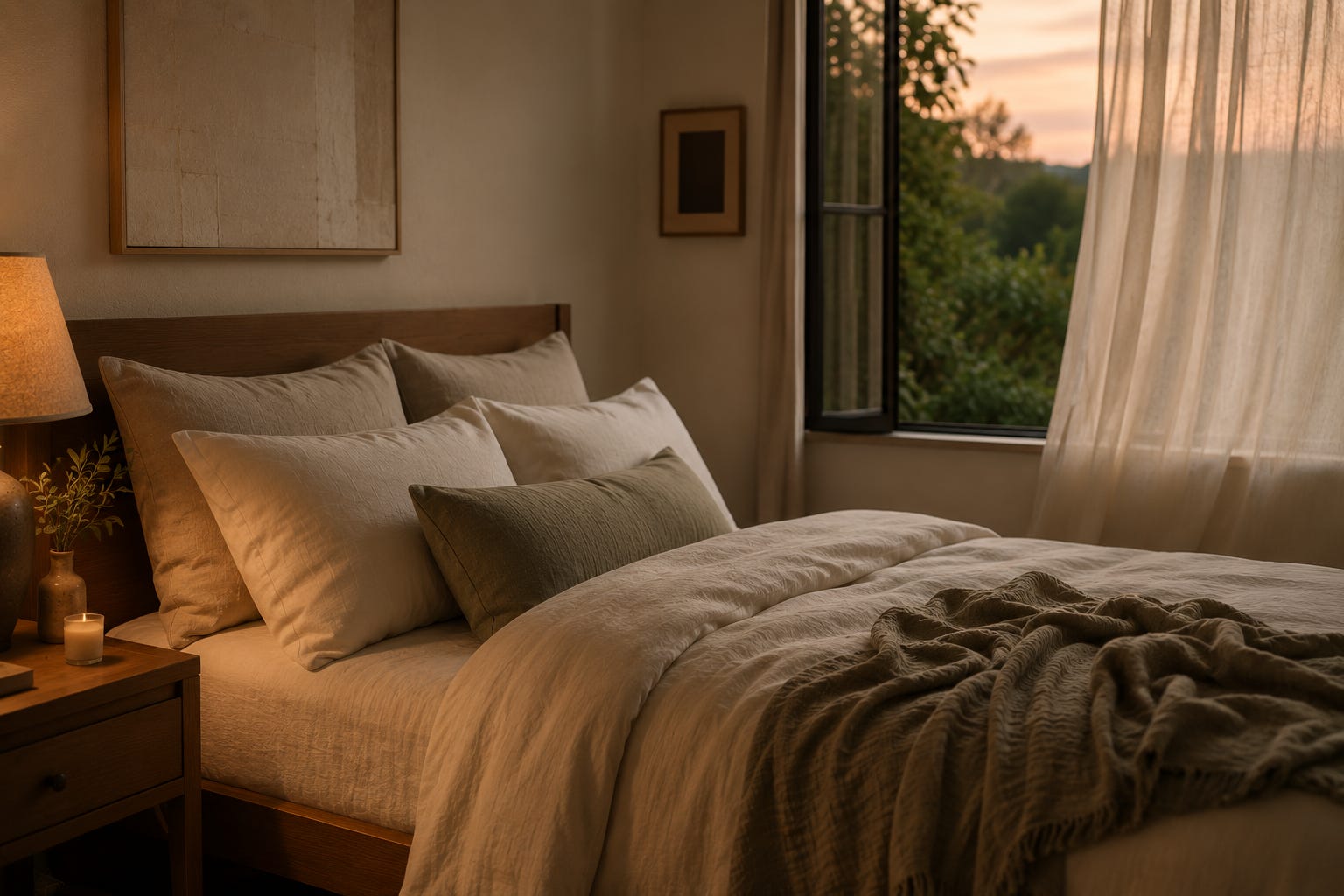
Choosing Pillows More Thoughtfully Over Time
One thing I always remind people is that you do not need to replace everything overnight.
Our own home evolved gradually. I tested materials slowly, paid attention to how they felt, and upgraded pieces over time as older bedding wore out naturally.
That slower approach felt much more sustainable financially and emotionally.
I also think thoughtful purchasing creates a calmer home overall.
Instead of constantly cycling through inexpensive pillows that flatten quickly, I would rather choose fewer pieces that feel supportive, breathable, and built to last.
Natural materials often age more beautifully as well.
Linen softens.
Wool settles comfortably.
Organic fabrics develop a relaxed texture that feels lived-in rather than worn out.
That quieter sense of longevity matters to me now.
I’ve become much less interested in trendy bedding that looks good online but feels uncomfortable after a few nights of actual use. A healthy bedroom should support rest first. Everything else comes second.
And honestly, I think many people already know intuitively what feels better.
Most of us naturally gravitate toward cooler fabrics, softer textures, and spaces that feel visually calm. Natural materials simply support that atmosphere more easily. They help create a bedroom that feels breathable rather than overly processed or artificial.
For me, that feeling is what quiet luxury actually means.
Not excess.
Just comfort, simplicity, and materials that make everyday life feel gentler.
A Bedroom Should Feel Restful, Not Overstimulating
The more I simplify our bedroom, the better I sleep.
That realization sounds obvious now, but it took me years to fully notice how much materials, textures, and atmosphere affect rest.
Pillows may seem like a small detail, yet they shape the feeling of sleep every single night.
For me, natural pillows simply feel calmer.
They breathe better, feel softer, and create a bedroom environment that supports deeper rest instead of sensory overload. The difference is not dramatic in a flashy way. It is quieter than that.
But sometimes the quietest changes affect daily life the most.
I no longer want a bedroom that feels overly styled or filled with synthetic comfort marketed as luxury.
I want a room that feels breathable, soft, and emotionally restful at the end of the day.
And increasingly, I think that feeling matters far more than perfection ever could.
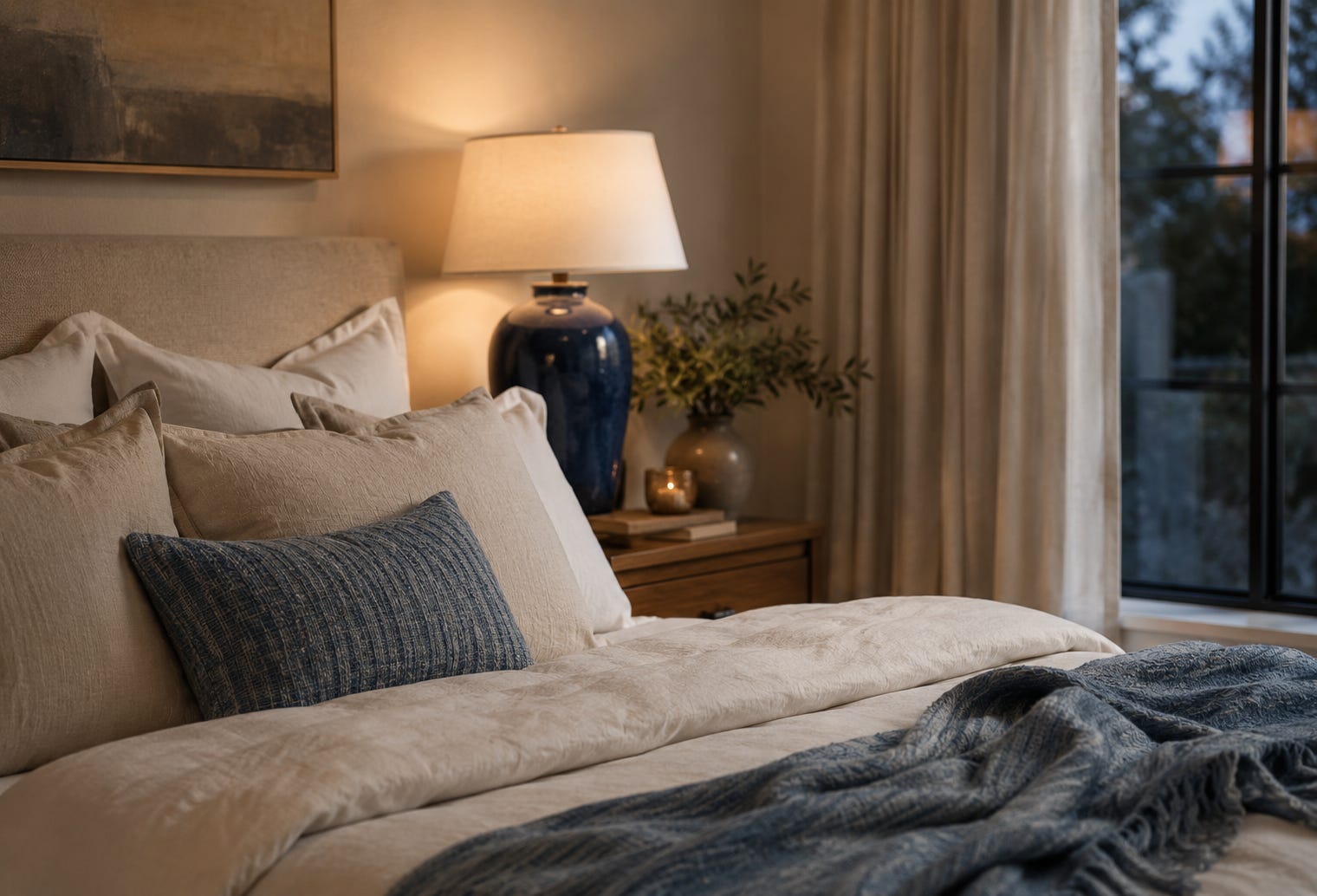
Pieces I Trust
Over time, I’ve found myself returning to the same breathable, natural bedding materials again and again:
Organic cotton pillow covers that feel soft and clean without trapping heat
Wool pillows that stay supportive while still feeling naturally breathable
Natural latex pillows for structure that does not feel stiff or overly dense
Linen bedding that becomes softer and more relaxed with every wash
Breathable mattress protectors that protect the bed without changing how it feels
Organic cotton sheets that feel crisp, airy, and comfortable year-round
Unscented laundry detergent that keeps fabrics feeling fresh without heavy fragrance lingering in the room
Silk pillowcases that add softness without making the bed feel overly styled
None of these pieces transformed our sleep overnight.
But together, they changed the overall feeling of the bedroom in a very quiet way.
The space feels calmer now.
Cooler.
Softer.
And much more restful to come home to at the end of the day.
Better Sleep Often Begins With Softer Surroundings
I used to think better sleep came mostly from routines or schedules.
But increasingly, I think atmosphere matters just as much.
The textures we sleep against, the air inside the room, the softness of the lighting, and the breathability of the materials around us all shape how deeply we rest.
Once I started paying attention to those details, I noticed how dramatically they affected the emotional feeling of our bedroom.
I no longer want a bedroom that simply looks beautiful.
I want one that feels calm enough to fully exhale inside.
And honestly, some of the smallest material changes have created the biggest sense of comfort over time.
Cooler fabrics.
Softer textures.
Less visual and sensory heaviness.
A room that feels quieter the moment the lights go down.
Have you ever changed a bedding material that noticeably improved your sleep or the feeling of your home?
Some links in this article may be affiliate links. By clicking on them, you help support my work. Don’t worry. I only share materials and brands I do/would use in my own home.
Did you like this article? Subscribe for ~free~ and get my next post in your inbox.