
For a long time, rugs felt like a finishing touch to me.
Something chosen for color, pattern, or how it tied a room together.
But over time, I started to think about what they’re actually made of—and how much contact we have with them every day. Walking barefoot, sitting on the floor, children playing, pets resting.
A rug isn’t just something we look at. It’s something we live on.
And when I began to compare natural fiber rugs with synthetic ones, the differences felt quieter than I expected—but more meaningful over time.
It’s not just about aesthetics. It’s about materials, durability, and how a space feels beneath your feet.
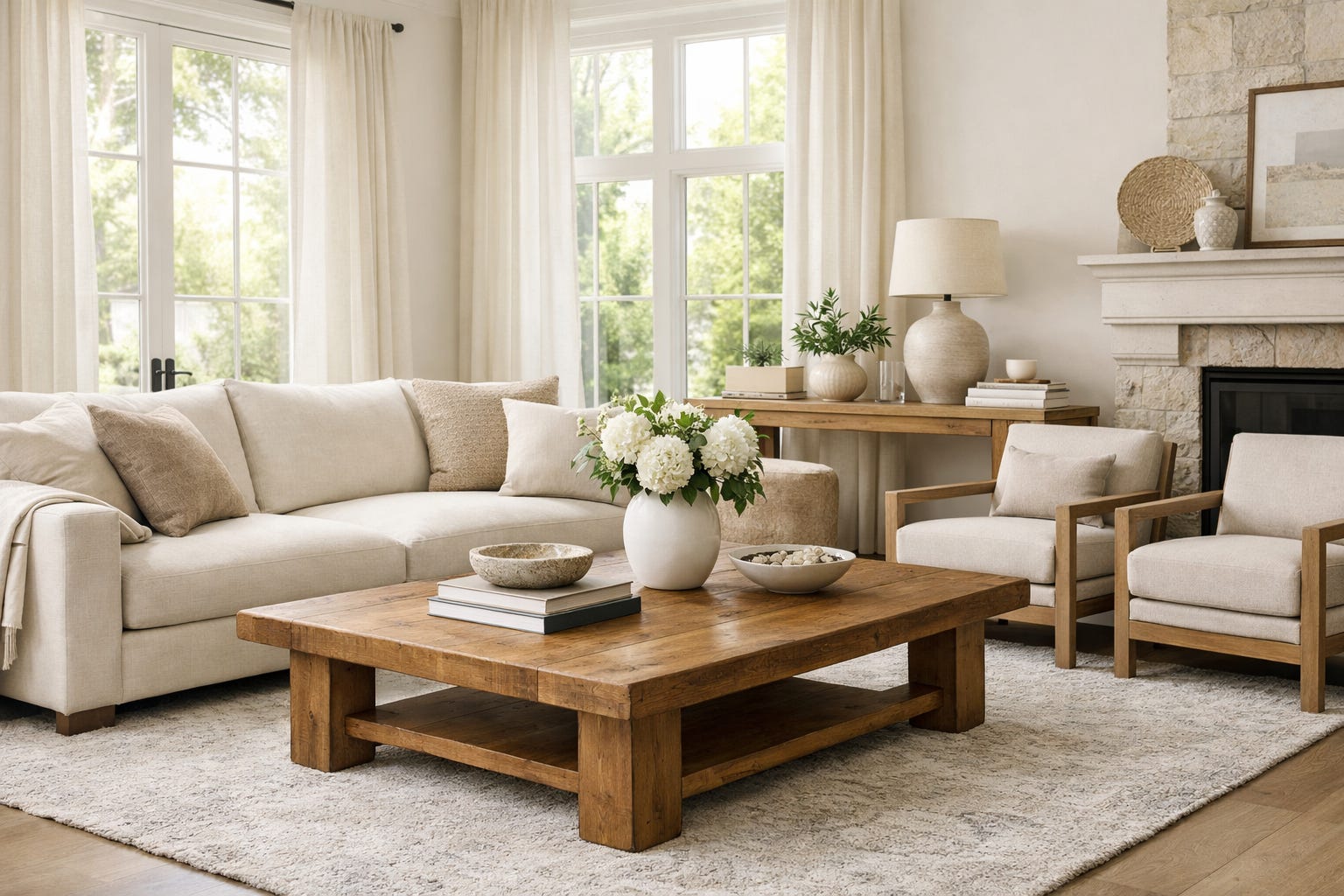
What Natural Fiber Rugs Are Made Of
Natural fiber rugs are made from materials that come directly from plants or animals.
Common options include wool, jute, sisal, cotton, and seagrass. Each has its own texture and feel, but they all share a certain grounded quality.
Wool tends to feel soft and resilient underfoot. It has a natural elasticity that helps it maintain its shape over time. Jute and sisal are more textured, bringing a subtle, earthy character to a room.
These materials don’t try to imitate anything. They are what they are—simple, tactile, and often quietly beautiful.
And because they are less processed than synthetic alternatives, they tend to feel more breathable and natural within a space.
How Synthetic Rugs Differ in Material and Feel
Synthetic rugs are typically made from materials like polyester, nylon, or polypropylene.
They’re designed to be durable, stain-resistant, and often more affordable. In many cases, they can mimic the appearance of natural fibers quite convincingly at first glance.
But the feel is usually different.
Synthetic fibers tend to have a smoother, sometimes slightly slick texture. Over time, they can flatten or lose structure in ways that feel less organic.
There’s also a difference in how they interact with the environment.
Synthetic materials are more processed and often treated, which can be something to consider when thinking about the overall materials in your home.
That doesn’t make them inherently wrong; it simply means they serve a different purpose.
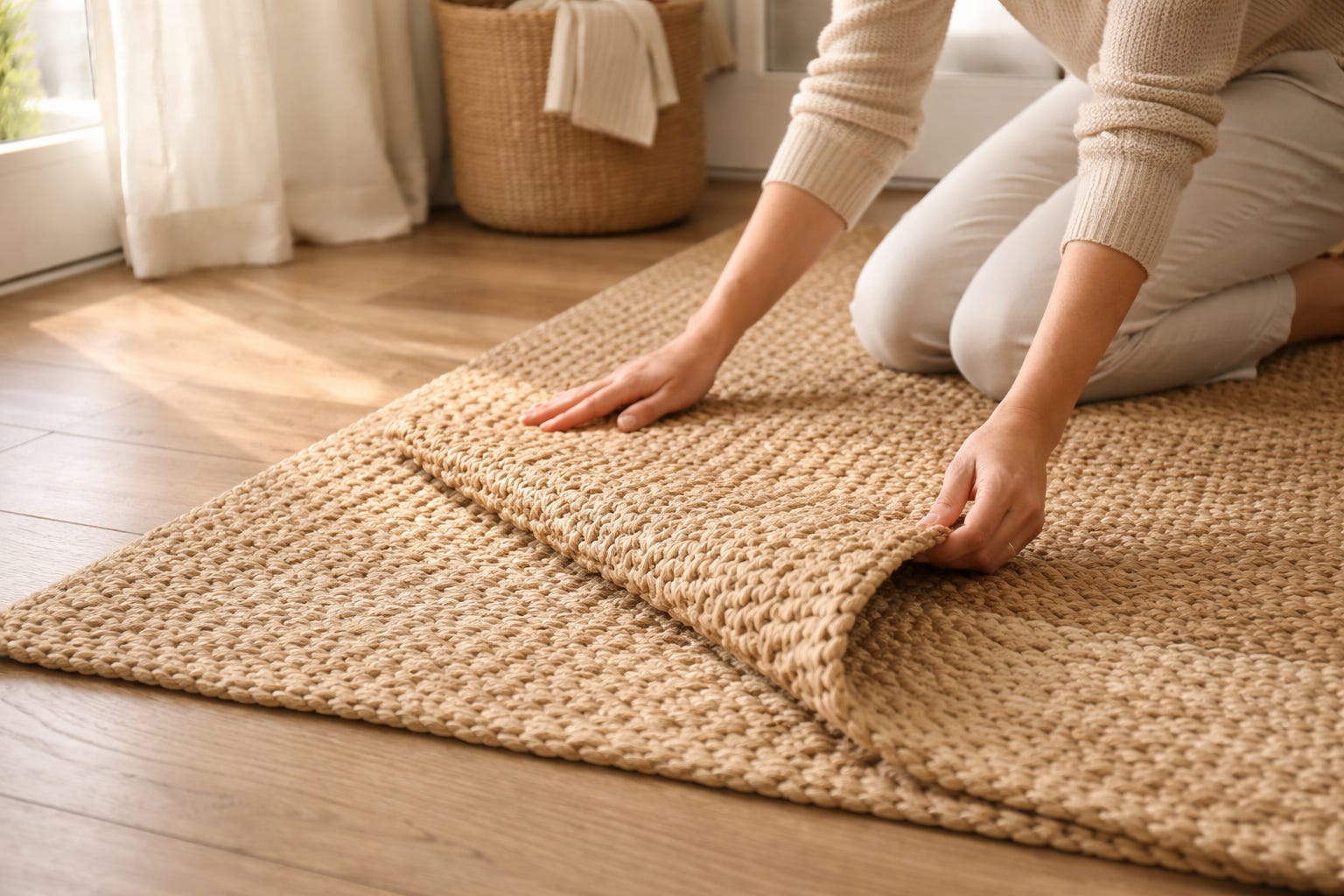
Durability, Aging, and Long-Term Use
One of the most noticeable differences between natural and synthetic rugs appears over time.
Wool rugs, in particular, tend to age gracefully. They can resist wear, bounce back from compression, and develop a kind of lived-in softness.
Natural plant fibers like jute or sisal may show wear differently, but they often maintain their character even as they age.
Synthetic rugs, on the other hand, are often designed for short- to medium-term use. They can be very practical, especially in high-traffic or spill-prone areas.
But when they wear down, the change can feel more abrupt—flattened fibers, visible matting, or loss of texture.
If you’re choosing with longevity in mind, natural fibers often offer a quieter, more gradual aging process.
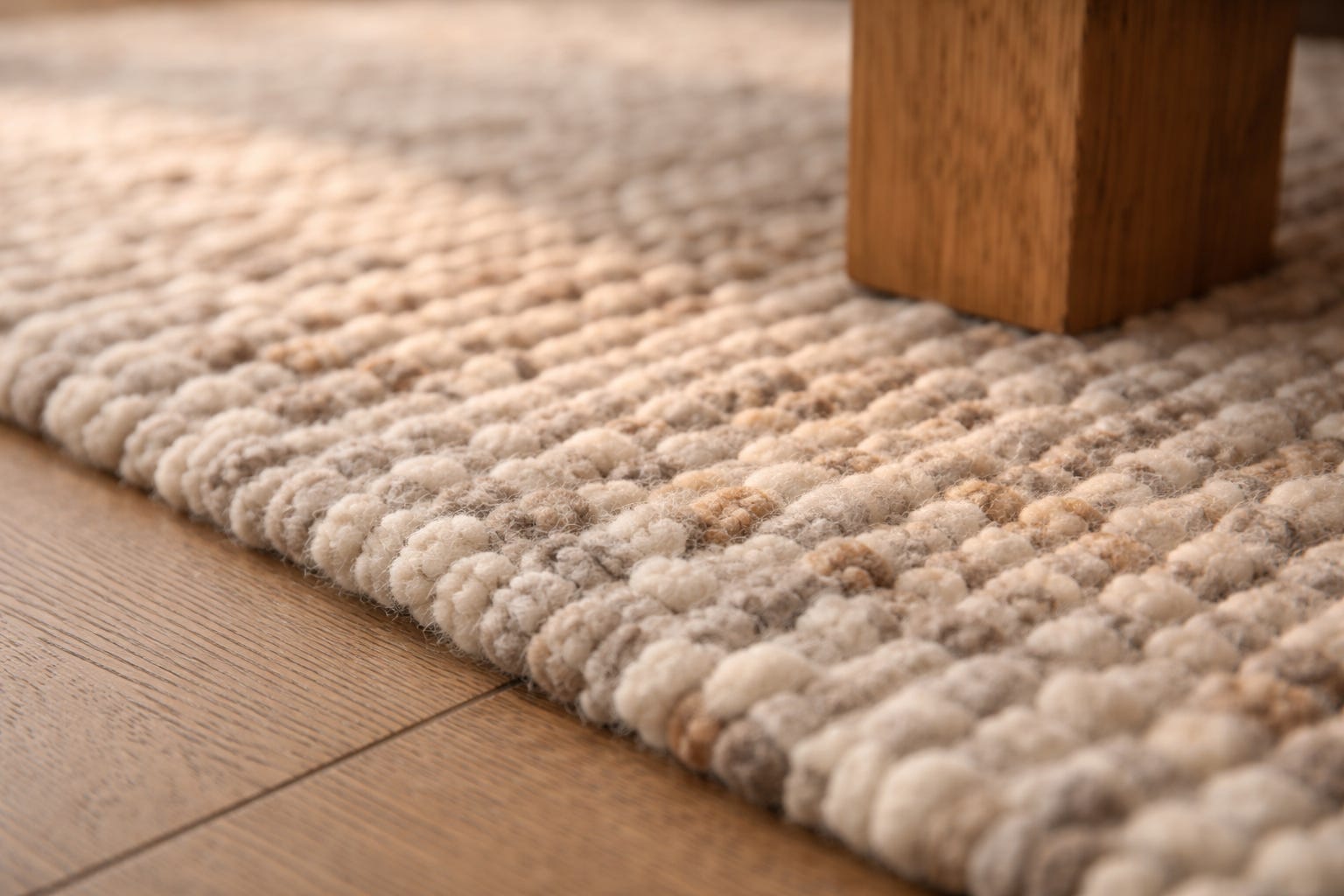
Comfort, Air Quality, and Everyday Living
A rug changes how a room feels—not just visually, but physically.
Natural fibers tend to regulate temperature well. Wool, for example, can feel warm in cooler months and still comfortable in warmer seasons. It also has natural properties that help resist odor and wear.
There’s also a subtle difference in how natural materials interact with indoor air. Simpler materials often mean fewer added treatments or coatings.
Underfoot, the experience matters too. A natural rug can feel more grounded, slightly varied in texture, and less uniform in a way that feels real.
Synthetic rugs can feel softer initially, especially with plush styles, but that softness can change over time depending on the material.
Choosing between them often comes down to how you want the space to feel day after day.
Choosing the Right Rug for Your Home
There isn’t a single right answer for every space.
In some areas, like living rooms or bedrooms, a natural fiber rug can add warmth, texture, and a sense of calm that builds over time.
In more practical spaces—entryways, play areas, or places with frequent spills—a synthetic option might make sense for ease and durability.
For me, the shift has been less about replacing everything and more about choosing more intentionally.
Understanding the materials helps you decide where to invest, where to simplify, and how to create a home that feels both comfortable and considered.
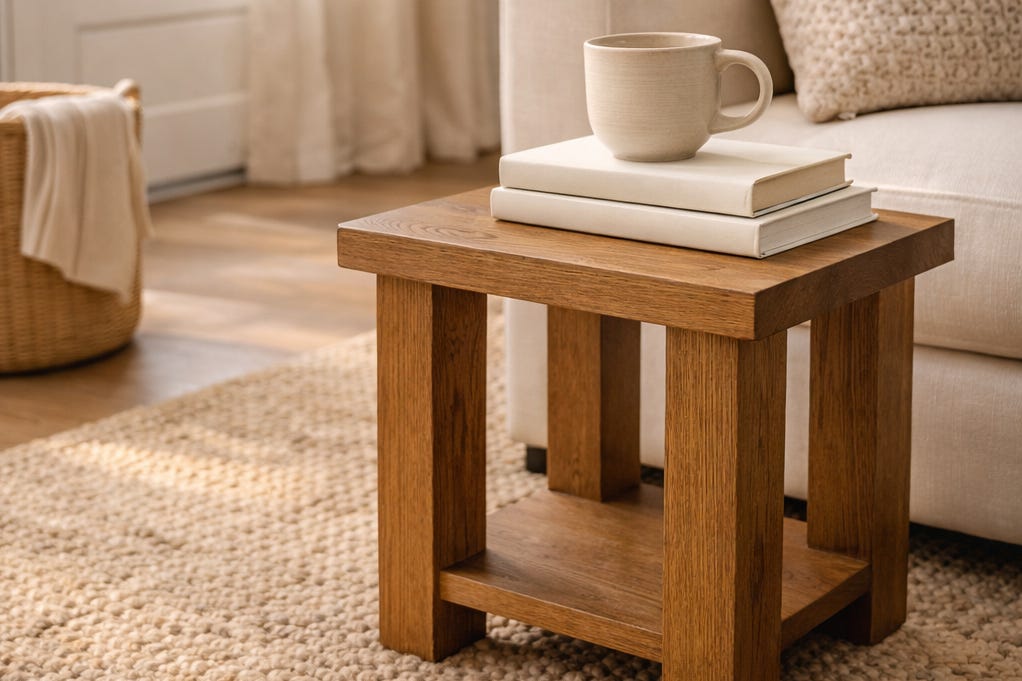
Natural Details
A rug might seem like a small detail in a room.
But it shapes how a space feels in ways that are easy to overlook.
When the materials are natural, the texture is real, and the surface beneath your feet feels grounded, the room begins to settle differently.
Not more styled. Not more complicated.
Just a little calmer. A little more connected.
And often, that’s enough.
Are the rugs in your home made of natural material or are they synthetic?
Some links in this article may be affiliate links. By clicking on them, you help support my work. Don’t worry. I only share materials and brands I do/would use in my own home.
Did you like this article? Subscribe for ~free~ and get my next post in your inbox.