

How Curtains Quietly Shape a Room
Curtains are easy to overlook.
They sit at the edges of a room, often chosen for color or privacy, and then left to do their job without much thought.
But over time, I’ve come to see them differently. Curtains shape the light that enters a space. They soften it, filter it, and gently influence how a room feels throughout the day.
When I first began paying attention to materials in our home, curtains weren’t the first thing I changed.
But once I did, the difference was immediate.
The room felt calmer. The light felt softer. And everything else seemed to settle into place more naturally.
Natural vs Synthetic Curtains (What’s the Difference)
At first glance, natural and synthetic curtains can look very similar.
But the difference becomes more noticeable over time, especially in how they interact with light and air.
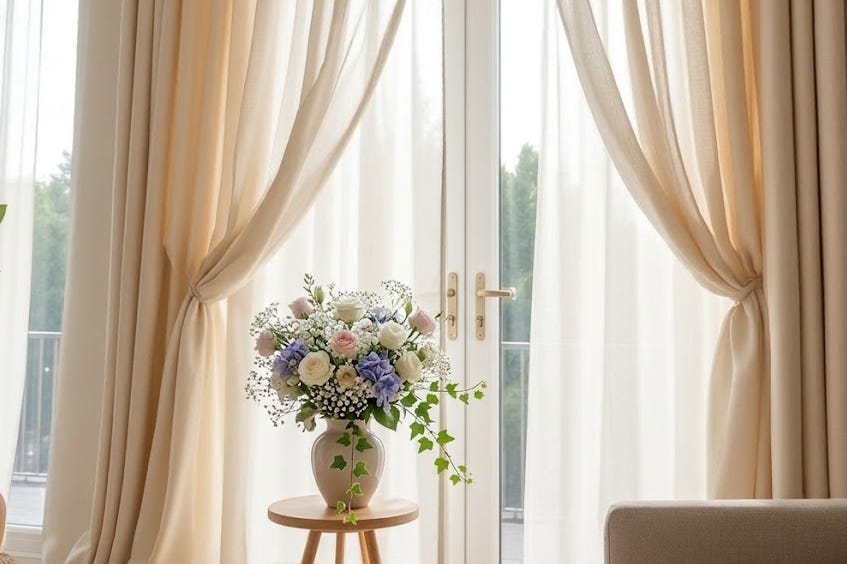
Natural fabrics like linen and cotton tend to diffuse light rather than block or reflect it. They allow a soft glow to move through the room, creating a more relaxed atmosphere.
Synthetic fabrics, on the other hand, often feel more sealed.
They can reflect light in a sharper way or block it more completely, depending on the weave.
I’ve found that the difference isn’t just visual.
It’s something you feel when you spend time in the space.
Best Natural Curtain Materials (What to Look For)
When I choose curtains now, I focus on materials that feel breathable, soft, and easy to live with.
• Linen Curtains
Light, airy, and naturally textured
Softly diffuses sunlight without blocking it completely
Becomes more relaxed and beautiful over time
• Cotton Curtains
Slightly more structured but still breathable
Easy to care for and widely available
Works well in both casual and more tailored spaces
• Lightweight Wool or Blends
Adds subtle warmth and softness
Works well in cooler spaces or layered designs
Brings quiet depth without heaviness
These materials don’t try to control the room. They simply support it.
How Curtains Affect Light and Atmosphere
One of the biggest shifts I noticed was how curtains changed the quality of light in the room.
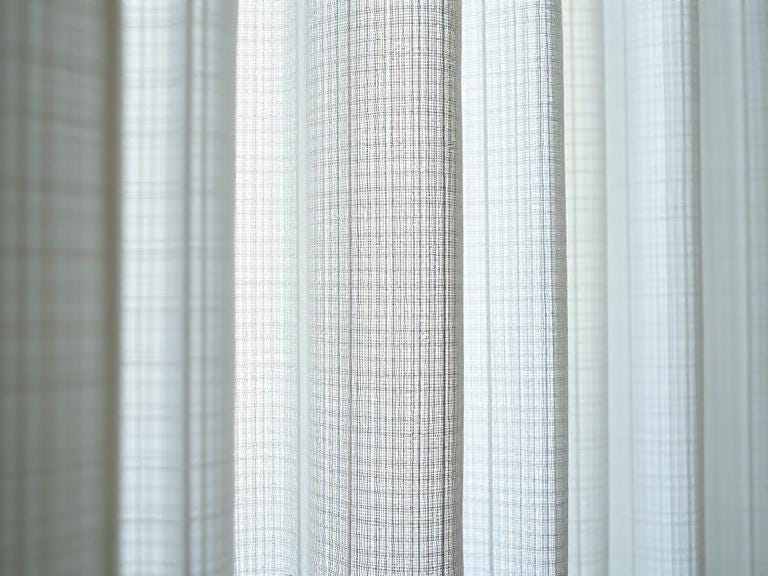
With linen curtains, light doesn’t enter in a harsh or direct way.
It filters through softly, creating a kind of gentle brightness that feels easier on the eyes.
I’ve found that this kind of light changes how the entire room feels. It softens edges, reduces contrast, and creates a sense of calm that’s hard to replicate with anything else.
In both our living room and bedroom, this became one of the most noticeable improvements.
The space felt more restful without changing anything else.
When Synthetic Curtains Might Still Make Sense
While I tend to prefer natural materials, there are situations where synthetic curtains can still be useful.
In rooms where you need full blackout conditions, such as a bedroom, some synthetic options provide that level of light control more easily.
The same is true in high-moisture areas where durability matters.
When I do use them, I try to balance them with natural materials elsewhere in the room. This helps maintain a sense of softness and cohesion.
For me, it’s not about strict rules.
It’s about making thoughtful choices based on how the space is used.
The Subtle Shift That Changes Everything
Curtains don’t demand attention, but they influence almost everything around them.
I’ve found that when they’re made from natural materials, the entire room begins to feel more connected.
Light becomes softer.
Air feels easier.
The space settles into itself in a quiet way.
It’s a small change, but one that carries through the entire home. Especially in spaces like the bedroom and living room, where comfort and atmosphere matter most.
Pieces I Trust in My Own Home
When I choose curtains, I focus less on the exact look and more on how the material will shape the space over time. I want something that feels soft, breathable, and easy to live with.
• I tend to look for linen curtains that allow light to filter through gently

 • I prefer cotton curtains when I want a slightly more structured feel

 • I’m drawn to fabrics that feel natural to the touch, never slick or overly polished

 • I often choose neutral tones that work with shifting light throughout the day

 • I like curtains that soften over time rather than holding a rigid shape
These are the kinds of choices that quietly influence how a room feels every day.
A Softer Kind of Light
I don’t think curtains are ever just decorative.
They shape how we experience a space, often without us realizing it.
For me, choosing natural materials has been less about making a visual change and more about creating a softer kind of light. The kind that makes a room feel calm the moment you walk in.
And once that shift happens, everything else seems to follow.
When you look at the light in your home, do your curtains soften it in a way that feels calm to you?
Some links in this article may be affiliate links. By clicking on them, you help support my work. Don’t worry. I only share materials and brands I do/would use in my own home.
Did you like this article? Subscribe for ~free~ and get my next post in your inbox.