
A good towel is something we rarely think about until we experience a truly beautiful one.
Most of us have used towels that feel rough after a few washes, or ones that never seem to fully dry the skin. Others look fluffy at first but lose their softness surprisingly quickly.
Over time I began to realize that towels, like many things in the home, are often made from materials designed for convenience rather than longevity.
Synthetic fibers, chemical finishes, and heavy fabric treatments are common in modern textiles. These additions can make towels appear thicker or softer in stores, but they often prevent the fibers from performing naturally.
When I began exploring more natural materials, I discovered that the best luxury non-toxic towels rely on natural fibers like organic cotton and linen.
Cotton.
Linen.
Natural dyes.
Minimal processing.
These materials have been trusted for generations because they do something beautifully simple: they absorb water, dry well, and feel comfortable against the skin.
And when towels are made thoughtfully, they quietly elevate one of the smallest daily rituals — stepping out of a shower and wrapping up in something soft and clean.
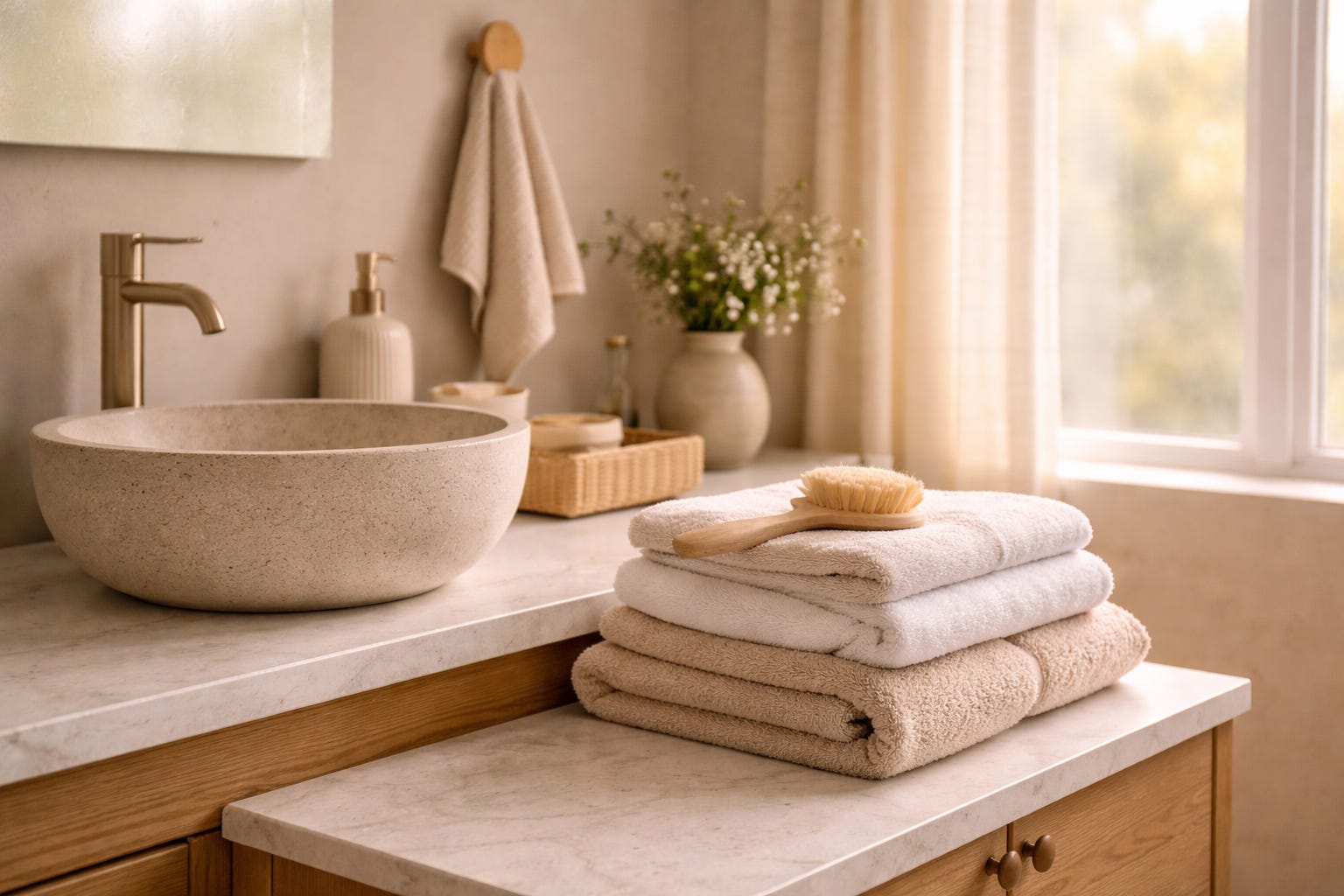
Organic Cotton Towels: Soft, Reliable, and Breathable
Organic cotton remains one of the most trusted materials for luxury non-toxic towels.
Cotton fibers are naturally absorbent, which allows them to draw moisture away from the skin quickly. When grown organically, cotton is cultivated without many of the pesticides and synthetic chemicals used in conventional cotton farming.
This results in a textile that feels gentle both environmentally and physically.
High-quality organic cotton towels often feature longer fibers, sometimes referred to as long-staple cotton. These fibers create stronger threads and a smoother texture, allowing towels to feel soft without relying on chemical fabric softeners.
Another benefit of cotton towels is their familiarity.
They feel comfortable immediately.
They wash easily.
They fit naturally into everyday routines.
For many households, organic cotton towels strike the ideal balance between luxury and practicality.
Linen Towels: Light, Quick-Drying, and Surprisingly Elegant
Linen towels are less common than cotton, but they offer several remarkable advantages.
Made from the fibers of the flax plant, linen is naturally lightweight and highly breathable. This allows linen towels to dry much faster than thicker cotton towels.
Quick drying is more than just convenient.
It also reduces the chance of musty odors developing in damp bathrooms.
At first touch, linen towels can feel slightly textured compared with plush cotton. But like linen bedding, the fabric softens gradually with washing and use.
Many people come to appreciate linen towels for their understated elegance.
They fold neatly.
They take up less storage space.
And they develop a relaxed softness over time.
In homes that favor natural materials and simple routines, linen towels often become a quiet favorite.
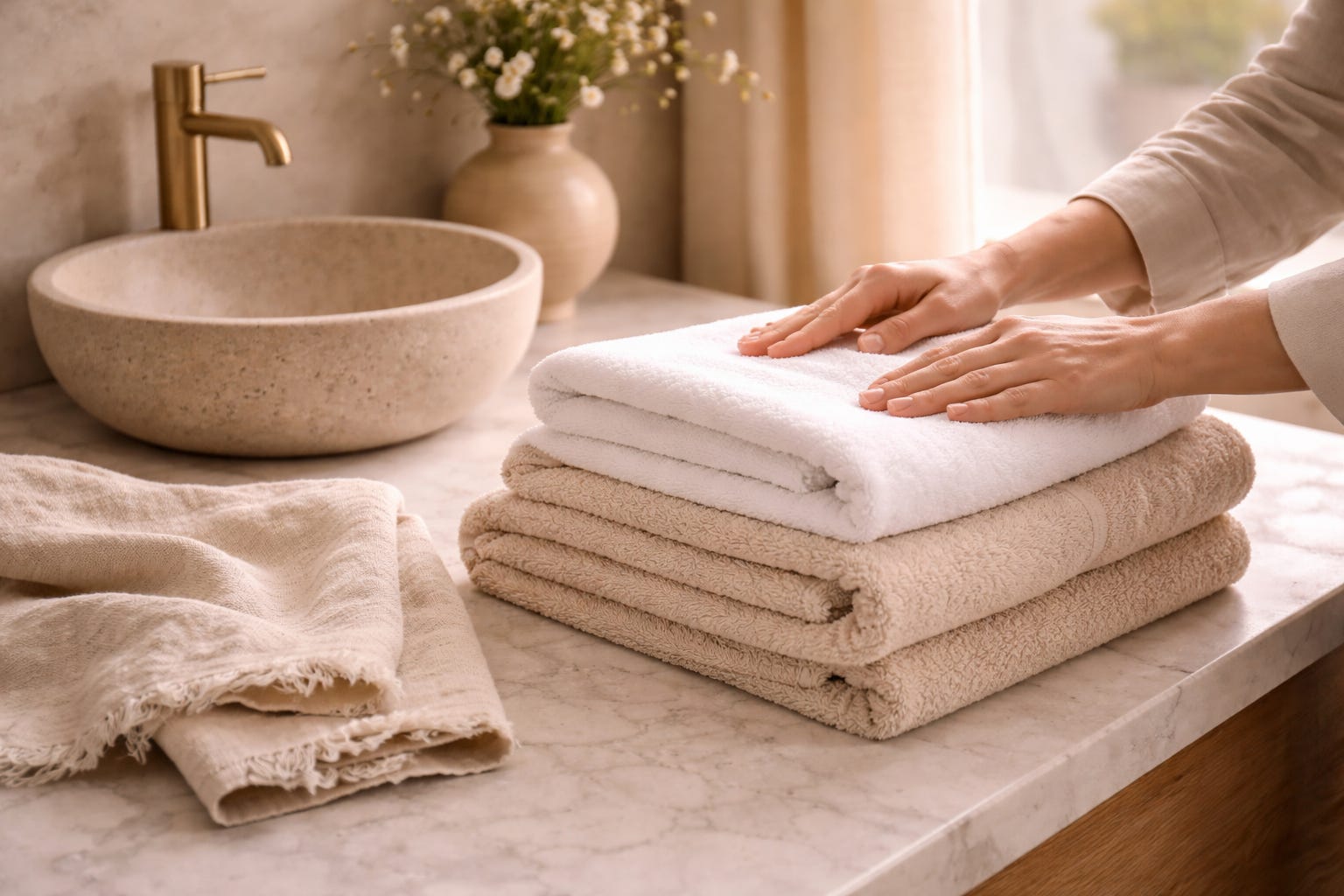
Bamboo and Blended Towels: What to Know
Some modern towels are made from bamboo-derived fibers or cotton blends.
Bamboo fabrics are often praised for their softness and moisture absorption. However, the manufacturing process for bamboo textiles can vary significantly.
Many bamboo fabrics are produced through chemical processing that transforms bamboo pulp into rayon or viscose fibers.
While the resulting towels can feel very soft, the manufacturing process may not always align with the same simplicity found in natural cotton or linen.
Blended towels can still perform well, but understanding the materials behind them helps make more informed choices.
When selecting towels, looking for clear fiber information and minimal processing is often the best approach.
Absorbency and Weight: Finding the Right Balance
Towel thickness is commonly measured by something called GSM — grams per square meter.
Heavier towels with higher GSM numbers tend to feel plush and spa-like, while lighter towels feel thinner and dry more quickly.
Luxury non-toxic towels often fall within the range of 500–700 GSM.
This provides a balance between softness and practical drying performance.
Very heavy towels can feel luxurious but may take longer to dry, especially in humid environments.
Lighter towels dry faster but may feel less plush.
The right choice often depends on personal preference and how towels are used in the home.
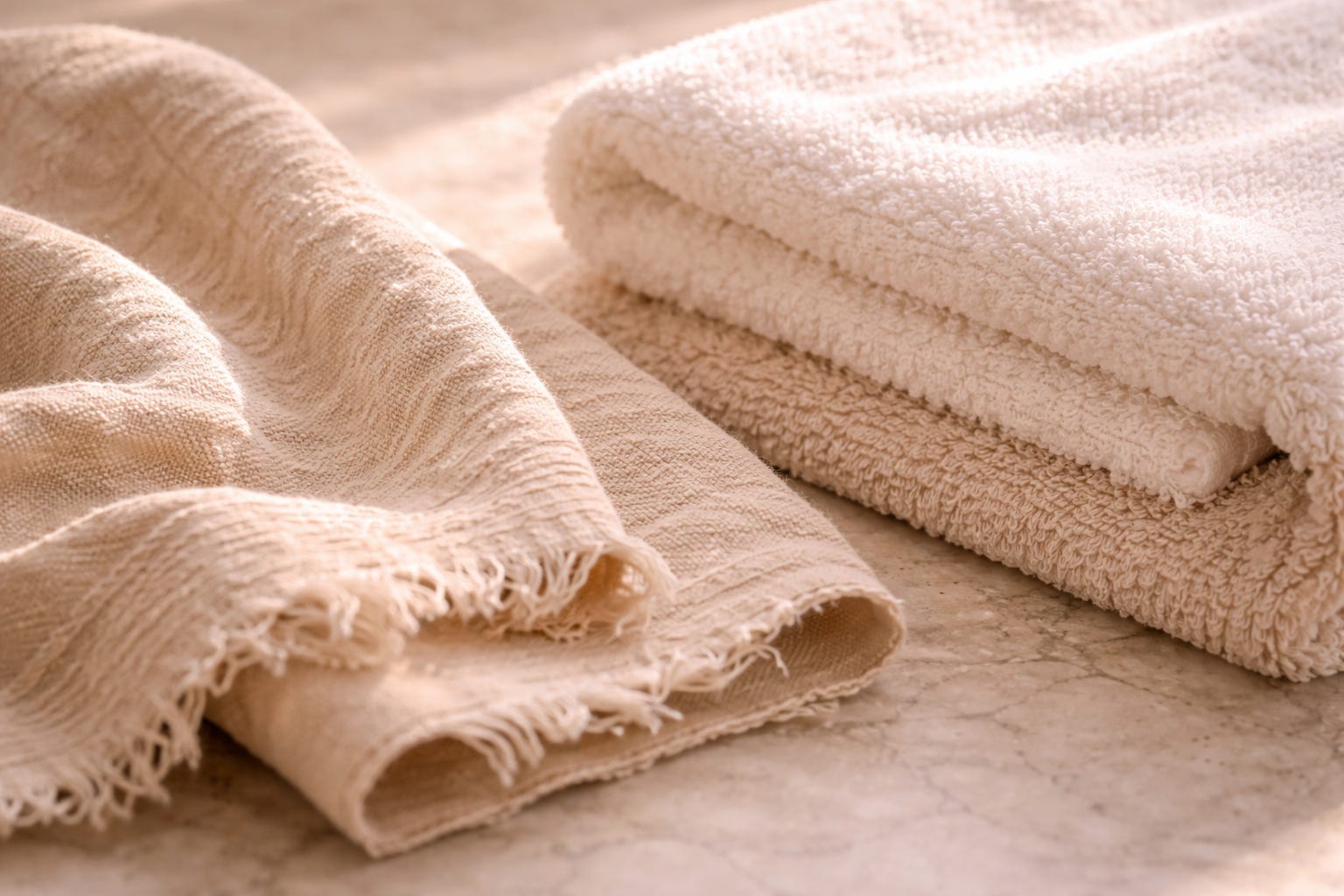
Simple Care for Long-Lasting Towels
Natural towels tend to last longer when cared for gently.
Over time I’ve found a few simple habits make a noticeable difference.
• Wash towels in warm water rather than hot
• Avoid heavy fabric softeners that coat fibers
• Use mild detergents when possible
• Allow towels to dry completely between uses
Fabric softeners may initially make towels feel softer, but they can reduce absorbency by coating the fibers.
Without those coatings, cotton and linen towels gradually become softer through use.
The fibers open and relax naturally.
A towel that has been washed many times often feels better than a brand-new one.
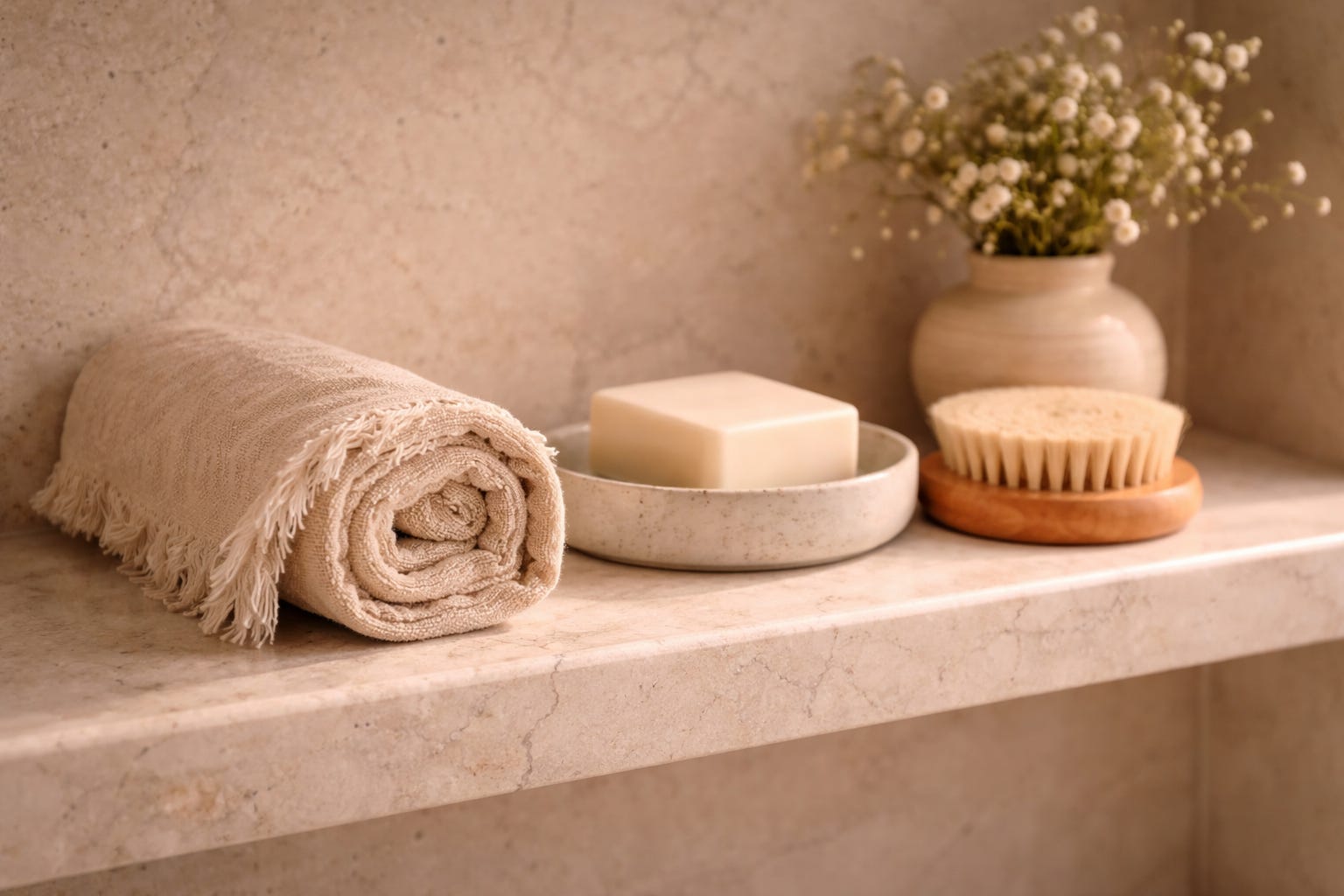
Creating a Bathroom That Feels Restful
Luxury in the bathroom rarely comes from elaborate decoration.
Instead, it often emerges from the materials we touch every day.
Soft towels.
Natural soaps.
Wooden brushes.
Stone surfaces warmed by sunlight.
When these elements work together, the room begins to feel calmer.
The morning routine becomes a little slower, a little more intentional.
Choosing luxury non-toxic towels isn’t really about replacing every towel in the house overnight.
It’s about gradually introducing materials that feel better, feel softer, simpler, more natural.
Because a bathroom should be one of the quietest places in the home.
A place where the air feels clean, the textures feel gentle, and the day begins or ends with a small moment of comfort.
Sometimes the most meaningful luxuries are the ones we use every single day.
Are the towels you use everyday luxuriously natural or dye free?
Some links in this article may be affiliate links. By clicking on them, you help support my work. Don’t worry. I only share materials and brands I do/would use in my own home.
Did you like this article? Subscribe for ~free~ and get my next post in your inbox.