
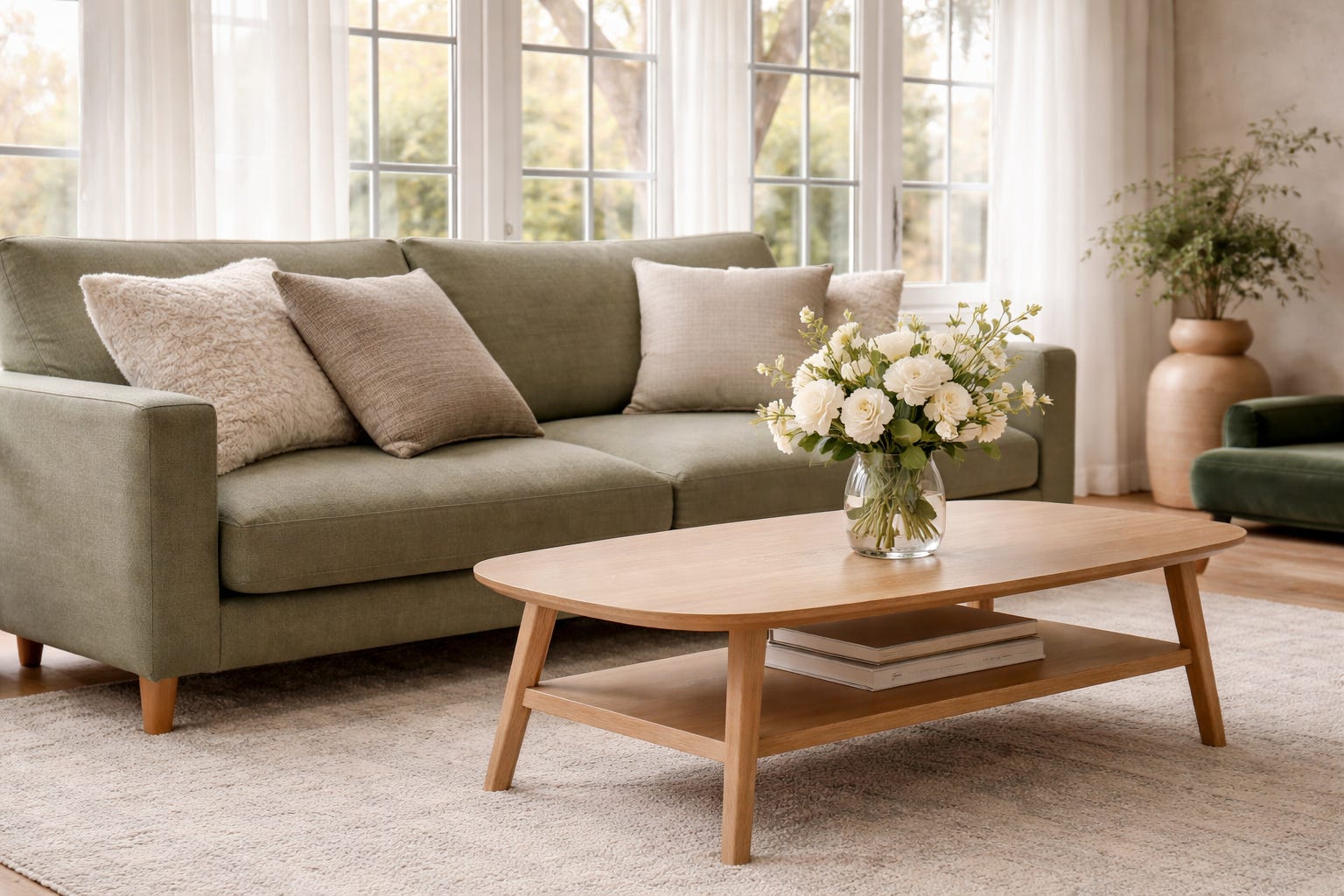
Where I Begin When a Living Room Feels Off
There was a point when I couldn’t quite explain why certain living rooms felt unsettled to me, even when they looked beautifully styled. Everything seemed right on the surface, but something underneath felt slightly off.
Over time, I realized it wasn’t about layout or color. It was about materials. The way certain fabrics felt sealed instead of breathable. The way some surfaces reflected light too sharply or felt disconnected from the rest of the space.
When I began shifting toward a lower-tox home, I didn’t try to change everything at once. I started by noticing what I touched the most, what I sat on, what I walked across every day.
This checklist is the order I naturally came to follow. Not rigid, not overwhelming, just a calm way to decide what to replace first based on what makes the biggest difference.
Why Some Living Room Materials Matter More Than Others
When I first started, I assumed every item in the room carried equal importance. But I quickly learned that some pieces influence the atmosphere far more than others.
The items we use constantly, like sofas, rugs, and textiles, tend to shape both comfort and air quality in a steady, quiet way. These are the materials that surround us for hours at a time.
I’ve found that when I focus on these high-contact elements first, the entire room begins to shift more quickly. The changes feel noticeable, not dramatic, but deeply supportive.
From there, everything else becomes easier to refine.
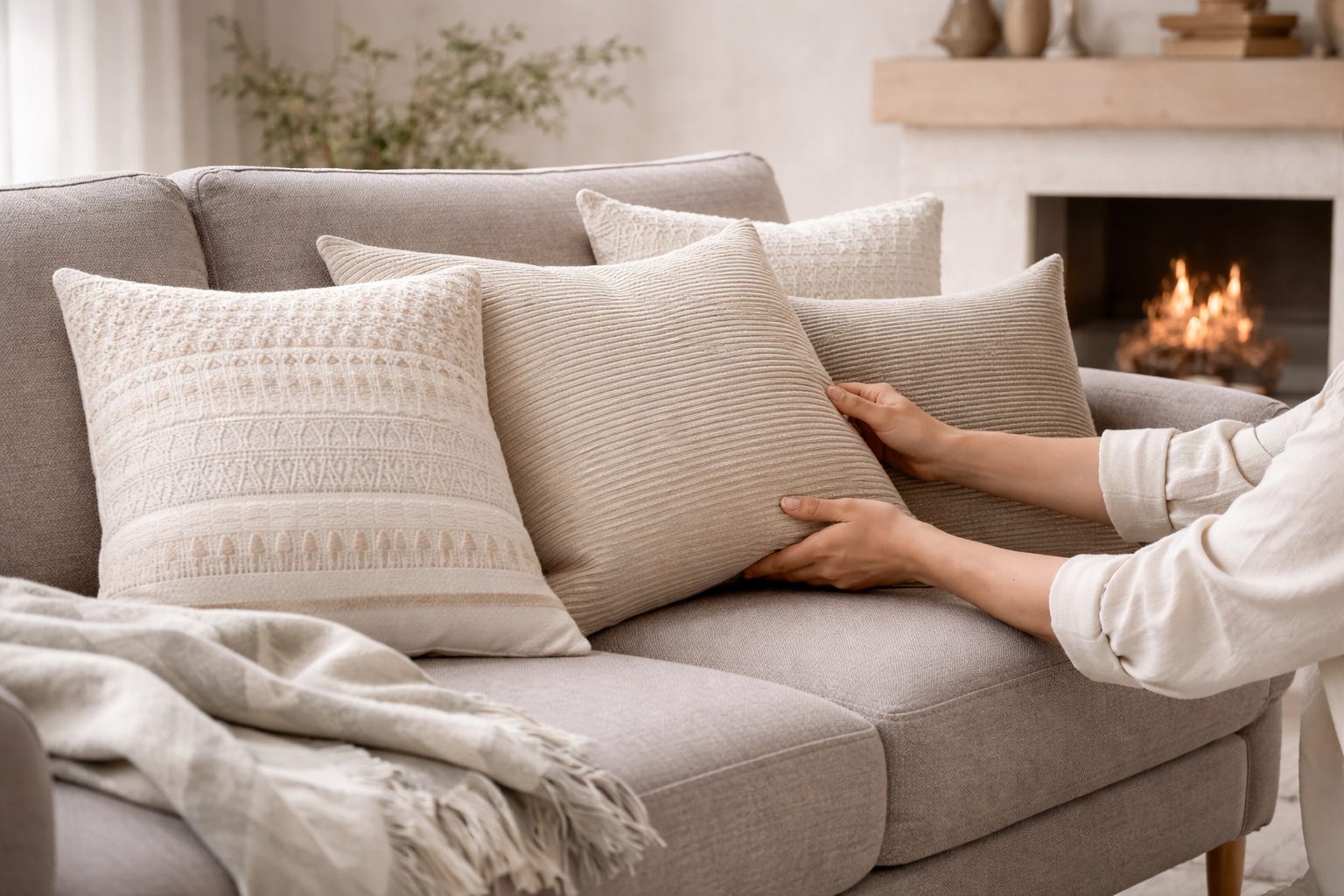
Low-Tox Living Room Checklist (What to Replace First)
When I look at a living room now, this is the order I tend to follow. I don’t rush through it. I move through it as pieces naturally need replacing or updating.
• Sofa and Upholstery (Highest Impact)
Replace synthetic-heavy fabrics with linen, cotton, or natural blends
Look for cushions that feel breathable rather than sealed or overly dense
Avoid heavily treated or glossy finishes
• Rugs (Large Surface Area)
Swap synthetic rugs for wool, cotton, or jute
Choose textures that feel soft but grounded underfoot
Avoid rubber-backed or plastic-based materials when possible
• Throw Blankets and Pillows (Daily Contact)
Replace polyester fills and covers with cotton, linen, or wool
Look for pieces that feel soft without being overly slick
Keep layering simple and breathable
• Coffee Tables and Side Tables (Material Presence)
Choose solid wood over veneer or composite materials when possible
Look for finishes that feel matte and natural rather than glossy
Avoid overly synthetic coatings
• Decorative Objects (Low Impact, But Visible)
Replace plastic decor with ceramic, glass, or stone
Choose fewer, more meaningful pieces
Let texture, not shine, carry the design
After working through this list in our own home, I noticed that the room didn’t just look different. It felt quieter, more settled, and easier to be in.
Starting with the Sofa (The Piece You Live On)
If I had to begin in one place, it would always be the sofa.
It’s the piece we use the most, and the one that quietly shapes the entire room. I’ve found that when the sofa feels breathable and comfortable, everything else begins to settle around it.
Linen and cotton upholstery have a way of softening over time rather than breaking down in a way that feels artificial. There’s a visual ease to them as well. They absorb light gently instead of reflecting it.
In our home, changing the sofa created the most noticeable shift. The room didn’t just look better. It felt more livable, more relaxed, and more aligned with how we actually use the space.
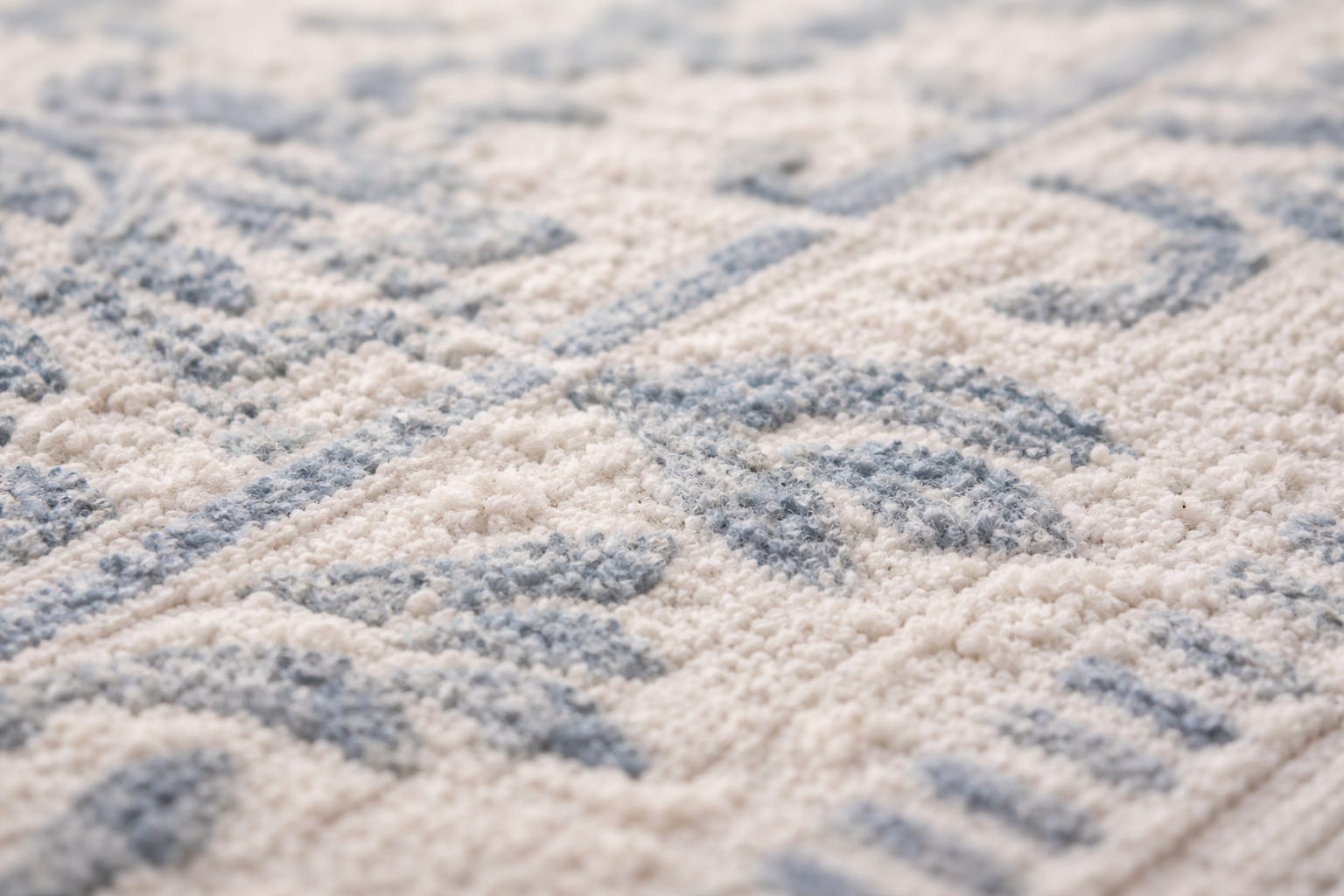
Rugs and Soft Layers (Where Comfort Meets the Ground)
Rugs are one of the most overlooked elements in a living room, but they hold everything together in a quiet way.
When I replaced a synthetic rug with a wool one, the change was immediate. The room felt softer underfoot, but also more grounded overall. The materials began to feel like they belonged together.
Layering also became easier. Cotton and wool textiles seemed to settle more naturally once the foundation was right. Nothing felt forced.
I’ve come to see rugs as more than just decor. They’re part of how a room supports you, every time you walk into it.
The Smaller Swaps That Quietly Change Everything
Once the larger pieces are in place, the smaller swaps begin to shape the atmosphere in a more subtle way.
I’ve found that materials like ceramic, glass, and stone add a kind of quiet depth to a room. They don’t demand attention, but they change how the space feels in use.
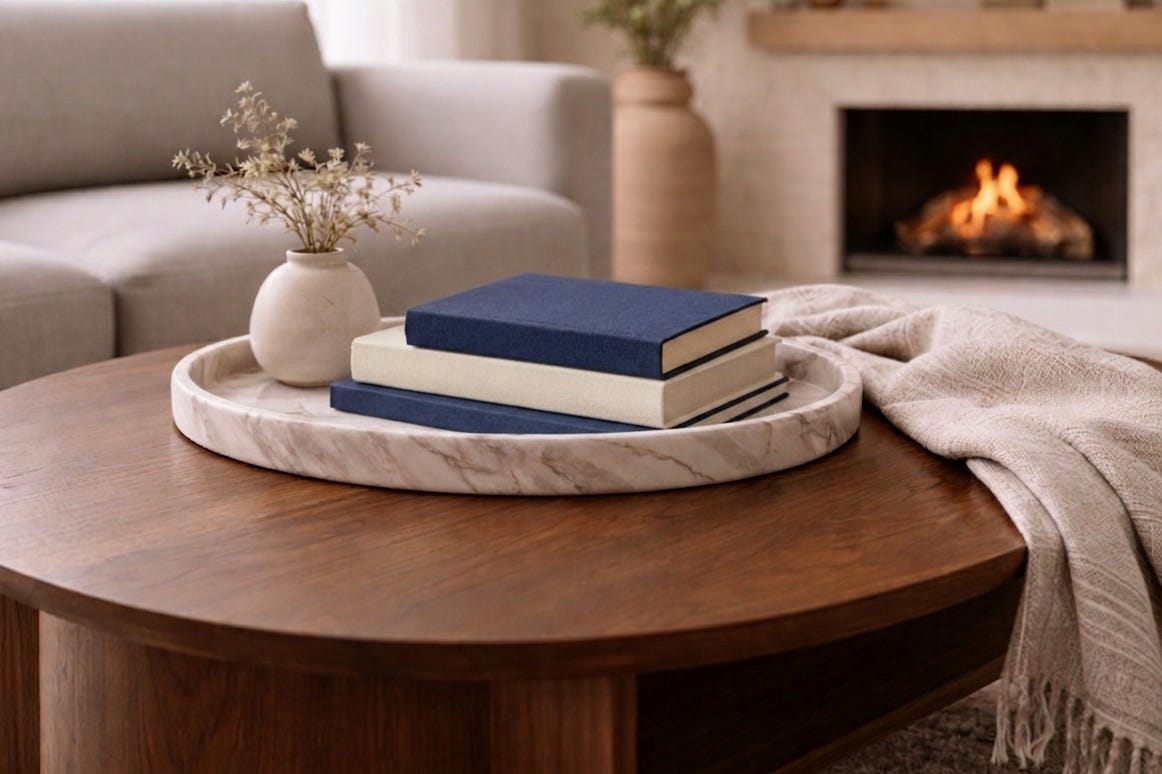
Even something as simple as replacing a plastic tray with a stone or wood one can shift the tone of a surface. It’s a small change, but those small changes build over time.
Gradually, the room begins to feel less like a collection of items and more like a cohesive space that supports daily life.
Pieces I Trust in My Own Home
When I make changes in our living room, I find myself returning to the same kinds of materials again and again.

I’m less interested in replacing everything and more focused on choosing pieces that feel right over time.
• I tend to look for sofas upholstered in linen or cotton that feel breathable and softly structured

 • I prefer wool rugs with a natural, slightly imperfect texture that wears in beautifully

 • I’m drawn to solid wood tables with simple, matte finishes that let the grain show

 • I often choose linen or cotton throws that feel relaxed rather than overly polished

 • I like ceramic or stone decor that adds texture without shine
These are the pieces that quietly shape how a room feels, without ever needing to stand out.
A Living Room That Feels Lighter Over Time
I don’t think creating a low-tox living room is about doing everything at once.
It’s something I’ve moved toward gradually, one decision at a time.
For me, it became less about replacing things and more about noticing what I use every day.
What I sit on.
What I reach for.
What surrounds me without much thought.
Over time, those choices begin to add up. And the room starts to feel lighter. Not empty, but easier.
The kind of space that supports you without asking anything in return.
If you were to start with just one change in your living room, what would you choose to replace first?
Some links in this article may be affiliate links. By clicking on them, you help support my work. Don’t worry. I only share materials and brands I do/would use in my own home.
Did you like this article? Subscribe for ~free~ and get my next post in your inbox.