
Opening
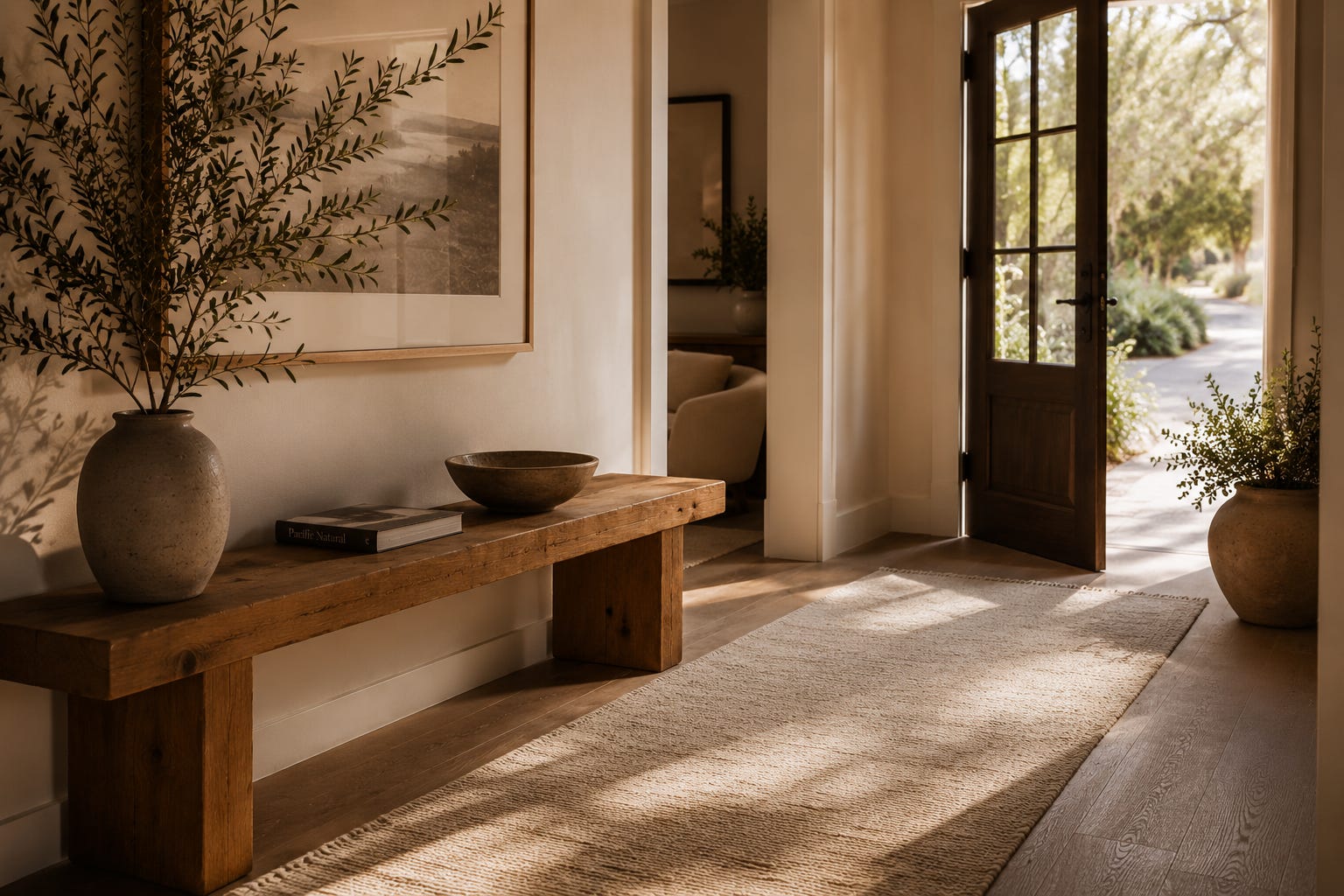
I’ve come to believe the entryway holds more emotional weight than any other space in the home.
It’s where the outside world lingers for just a moment longer—on your shoes, your shoulders, your breath—before you step fully inside. And I’ve noticed that when this space feels cluttered, synthetic, or overly styled, that tension follows me inward.
A low-tox entryway isn’t just about materials. It’s about how the space allows you to arrive.
I like to think of it as a gentle exhale. A place where nothing competes for attention. Where the air feels clean, the textures feel real, and the experience of entering your home becomes something slower, softer, and more intentional.
When I began shifting this space, I didn’t add more. I removed what didn’t belong, and what remained started to feel like a quiet kind of luxury.
Start With What You Remove, Not What You Add
The most noticeable shift in my entryway didn’t come from buying something new.
It came from taking things away.
Synthetic air fresheners, plastic storage bins, excess décor that served no real purpose—I slowly cleared them out. What surprised me most was how much lighter the space felt, both visually and physically.
There’s a subtle tension that comes from too many materials, especially when they’re artificial. Glossy finishes, chemical scents, and crowded surfaces create a kind of low-level noise that your body registers immediately, even if you can’t name it.
When I simplified the space, I felt it instantly.
The air felt calmer. The light moved more freely. Even the act of walking through the door became less abrupt.
I’ve learned that a low-tox entryway begins with restraint. Not emptiness, but intention. When you remove what overwhelms the senses, what remains has room to breathe—and so do you.
Ground the Space With Natural Materials
Once the visual noise is gone, what you choose to bring back in matters more.
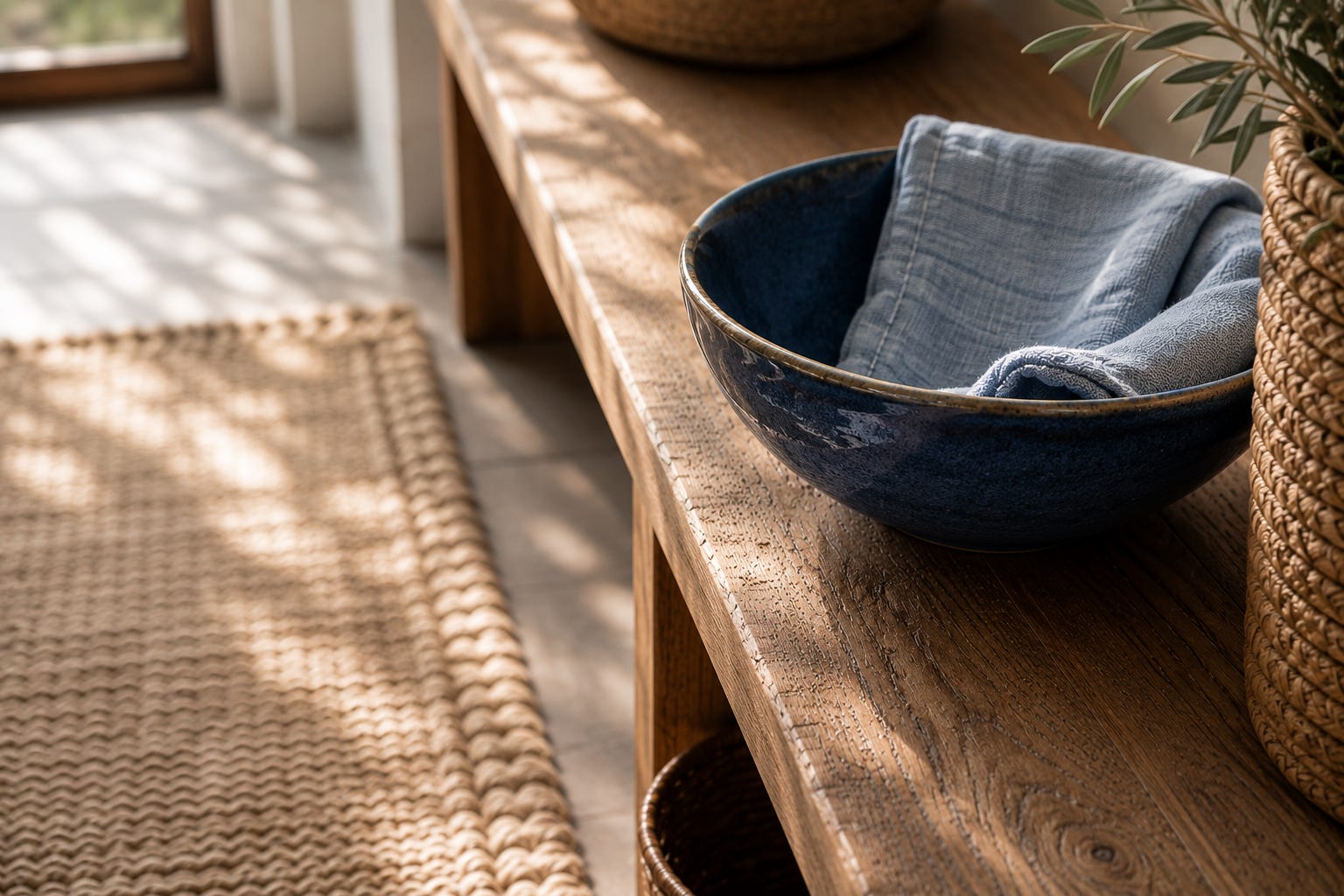
I always return to materials that feel steady and honest—solid wood, stone, linen, woven fibers. There’s a quiet reassurance in them. The way a wood bench holds weight. The softness of a linen runner underfoot. The subtle irregularity of a handmade ceramic bowl.
These aren’t just aesthetic choices.
Natural materials tend to carry fewer synthetic binders, coatings, and off-gassing compounds than mass-produced alternatives like MDF or vinyl. But beyond that, they shift how a space feels on a sensory level.
I notice it most in the mornings.
When I step onto a natural fiber rug instead of a synthetic one, there’s a softness that feels grounding rather than static. When I set my keys into a ceramic dish, there’s a quiet weight and sound that feels intentional, not disposable.
High-end sourcing makes a difference here—not in excess, but in quality. Fewer pieces, better made.
I’ve found that when materials are chosen with care, the entryway starts to feel less like a pass-through and more like a place you actually want to pause.
Create a Soft Landing With Functional Calm
An entryway should work—but it shouldn’t feel like a system.
I used to rely on rigid storage solutions that looked efficient but felt harsh. Plastic bins, overbuilt organizers, too many compartments. It solved clutter, but it didn’t create calm.
Now, I approach functionality differently.
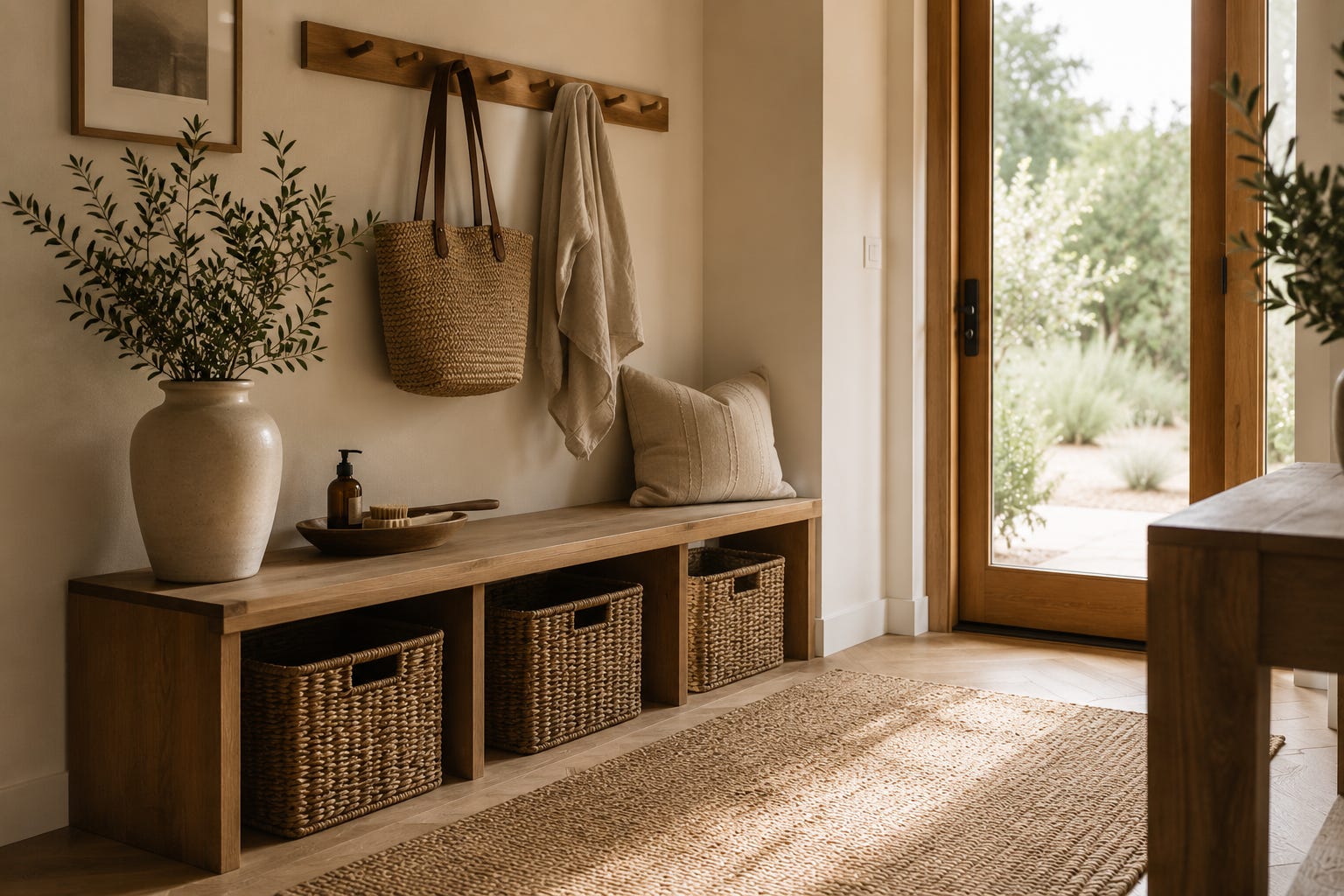
A simple row of wooden hooks. A woven basket for shoes. A shallow bowl for keys. Each piece is open, breathable, and easy to use without thinking.
That’s what I’ve come to value most: frictionless movement.
When I walk in, I don’t want to decide where things go. I want the space to guide me naturally. And when everything has a clear, gentle place, it does.
There’s also something deeply calming about materials that age well. A basket that softens over time. A wood surface that develops subtle marks. These signs of use feel grounding, not messy.
I’ve realized that a truly functional entryway doesn’t just organize your belongings.
It supports your transition from outside to inside in the most effortless way possible.
Let Light and Air Do the Work
Before adding anything decorative, I always pay attention to light and air.
They shape the feeling of a space more than any object can.
If your entryway has access to natural light, even in small amounts, it’s worth preserving. I avoid heavy window coverings and instead lean toward sheer fabrics or nothing at all. Light that moves freely softens edges and makes materials feel more alive.
Air matters just as much.
I stopped using synthetic fragrances entirely in this space. Instead, I rely on something much simpler: fresh air when possible, and neutrality when not.
There’s a clarity that comes from walking into a home that doesn’t smell like anything artificial. It feels clean without announcing itself.
I notice the difference every time I return home.
The space doesn’t try to impress. It just feels open, breathable, and quietly welcoming.
And in a way, that restraint feels more luxurious than any scent or statement piece ever could.
Add One Meaningful, Natural Focal Point
I’ve found that an entryway doesn’t need much to feel complete.
Just one thing that draws you in.
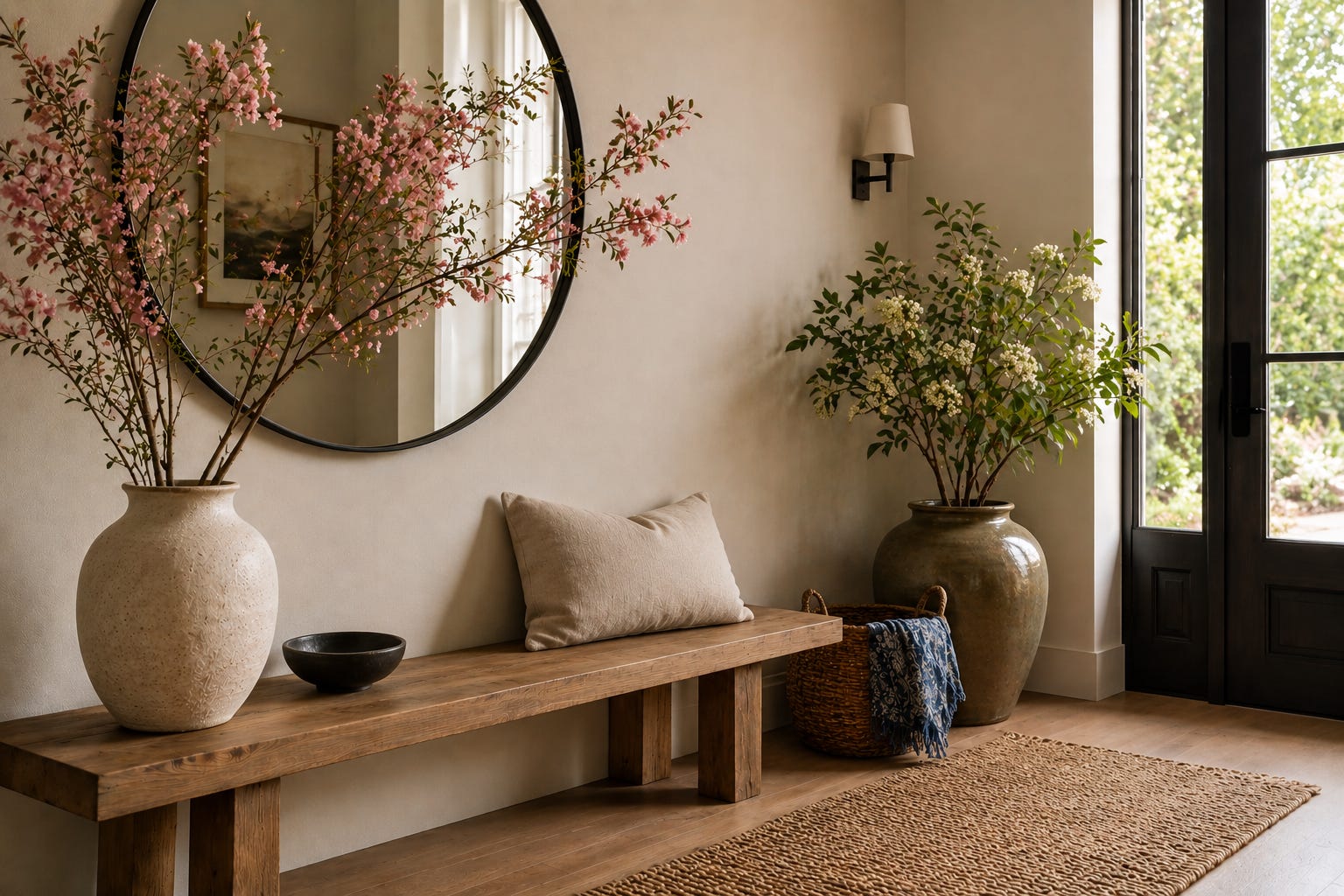
For me, it’s often something simple—a branch in a ceramic vessel, a sculptural stone object, or a small arrangement that feels connected to nature. Not styled to perfection, but placed with intention.
It gives the eye somewhere to rest.
And more importantly, it gives the space a sense of presence without overwhelming it.
There’s a tendency to decorate entryways heavily, as if they need to make an immediate impression. But I’ve learned that restraint creates a deeper kind of impact.
When there’s only one focal point, you notice it more. You experience it more slowly.
I pause, even if just for a second.
And that pause shifts everything.
Design for Stillness, Not Just Style
What I’ve come to appreciate most is that a low-tox entryway isn’t defined by what you can list.
It’s defined by how it feels.
A space that doesn’t rush you. Doesn’t overwhelm you. Doesn’t layer on unnecessary stimulation the moment you walk through the door.
Instead, it offers something quieter.
A transition. A moment to reset. A subtle signal that you’ve arrived somewhere different.
I didn’t create that feeling overnight. It came from small edits, thoughtful choices, and a willingness to leave space where I once felt the need to fill it.
And now, every time I walk in, I feel it.
Not just a well-designed space—but a softer beginning to being home.
Pieces I Trust
When sourcing for a low-tox entryway, I focus on fewer, better pieces that are made to last:
Solid wood entry bench (FSC-certified, low-VOC finish)
Handwoven seagrass or rattan baskets
100% wool or jute rug (undyed when possible)
Handmade ceramic catchall bowl
Linen or organic cotton runner
Minimal wall hooks in wood or unlacquered metal
Natural stone tray or accent piece
These pieces don’t just reduce exposure to synthetic materials—they elevate the entire experience of the space.
Entryways as Beginnings
I no longer see the entryway as just a place to pass through.
It’s where the tone of my home begins.
And when it’s designed with care—when the materials are natural, the air feels clean, and the space is allowed to stay simple—it changes how I arrive every single day.
Not rushed. Not distracted.
Just present.
What would your home feel like if your entryway invited you to slow down the moment you walked in?
Some links in this article may be affiliate links. By clicking on them, you help support my work. Don’t worry. I only share materials and brands I do/would use in my own home.
Did you like this article? Subscribe for ~free~ and get my next post in your inbox.