
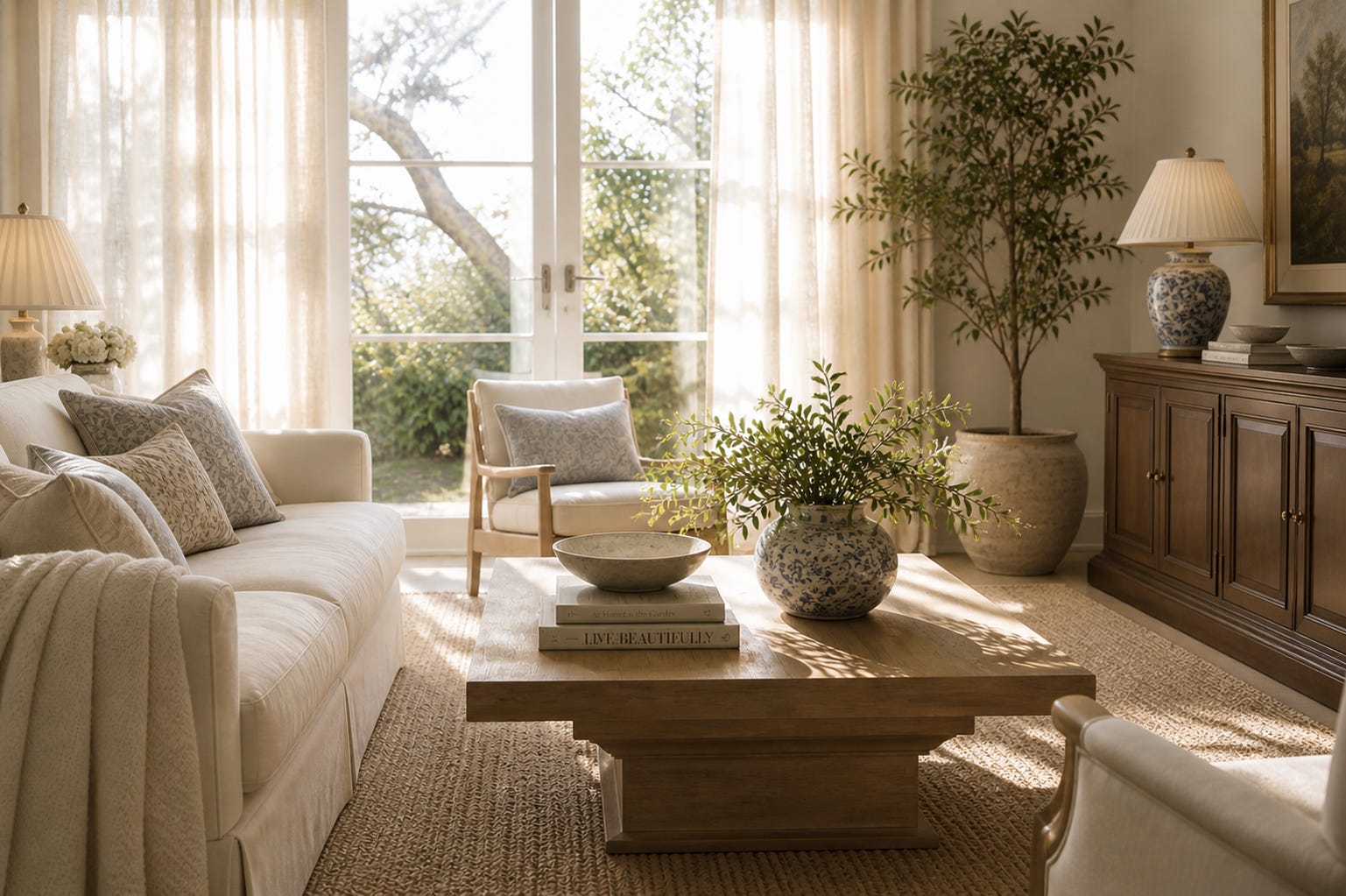
Light as Something You Feel, Not Just See
For a long time, I thought of light as something purely visual.
If a room was bright, I assumed it was working. If it felt dark, I added more lighting. It was a simple equation that didn’t require much thought.
But over time, I began to notice that brightness and comfort weren’t always the same thing.
Some of the brightest spaces in our home felt slightly harsh, while softer, more gently lit areas felt easier to settle into. The difference wasn’t just what I could see—it was something I could feel.
That’s when I started paying closer attention to natural light, and how it moved through our home throughout the day.
Why Natural Light Changes How a Home Feels
Natural light has a rhythm that artificial lighting can’t quite replicate.
It shifts slowly, almost imperceptibly, moving from cool and quiet in the morning to warmer and softer in the afternoon. That subtle change influences how a space feels in ways that are easy to overlook at first.
I began to notice how my energy responded to it.
Rooms that allowed natural light to move freely felt calmer and more grounded. There was less visual strain, less tension in the space. Even simple moments—sitting on the sofa, walking through the room—felt more relaxed.
It’s not about having more light.
It’s about having the right kind of light, at the right time of day.
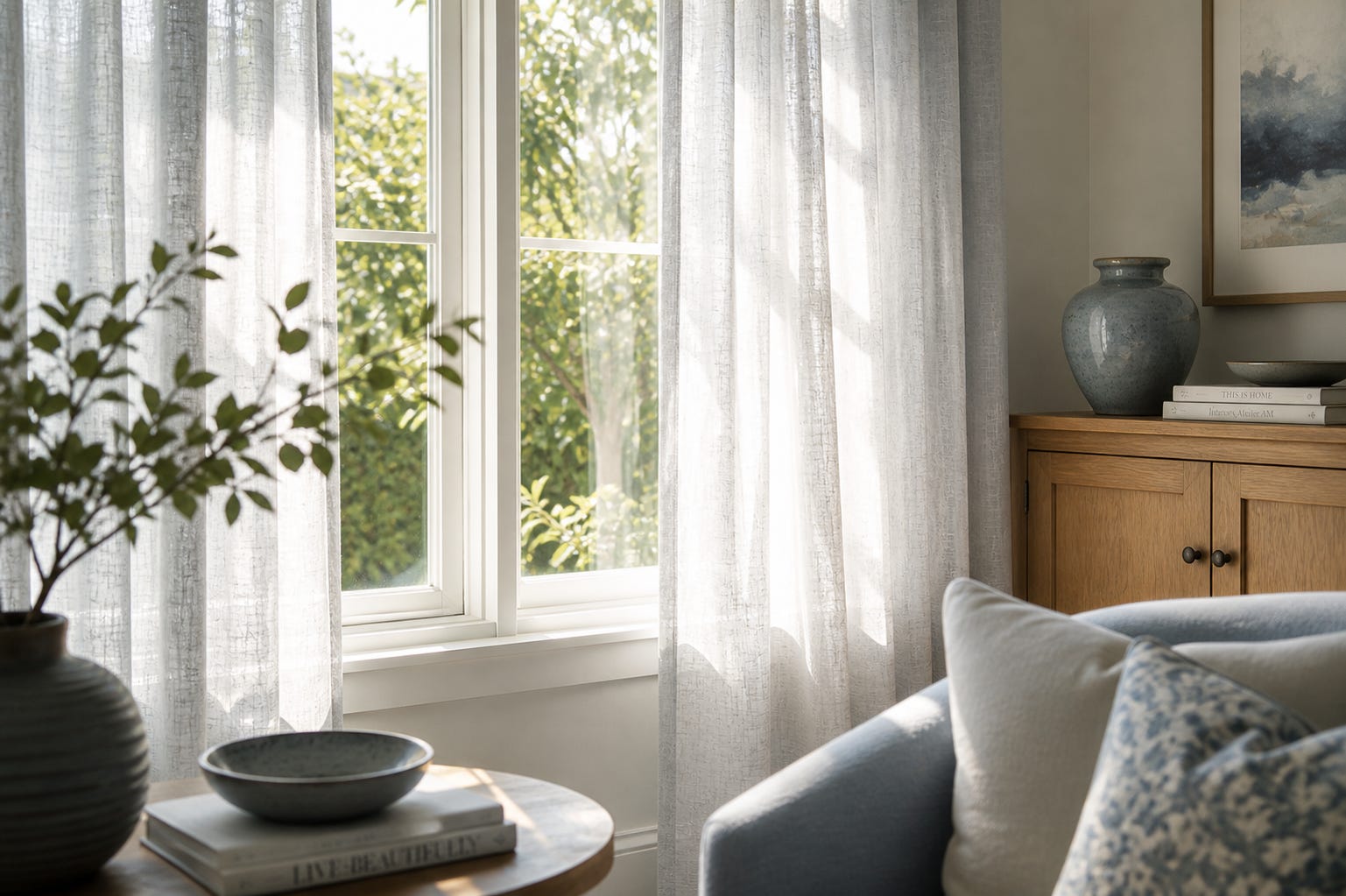
Letting Light Move Naturally Through the Space
One of the first things I changed was how light moved through the room.
I hadn’t realized how much I was blocking it. Heavy curtains, furniture placed too close to windows, and even small objects were interrupting the natural flow.
When I began clearing those paths, the difference was immediate.
Light started to travel further into the room, reaching corners that had always felt slightly dim. The space didn’t feel brighter in a harsh way—it felt more open.
I also moved toward lighter, more breathable window treatments.
Linen curtains, in particular, allow light to filter through softly while still offering a sense of privacy. They don’t stop the light—they shape it.
Softening Light with Natural Materials
Once I started paying attention, I realized that light doesn’t exist on its own.
It interacts with everything around it.
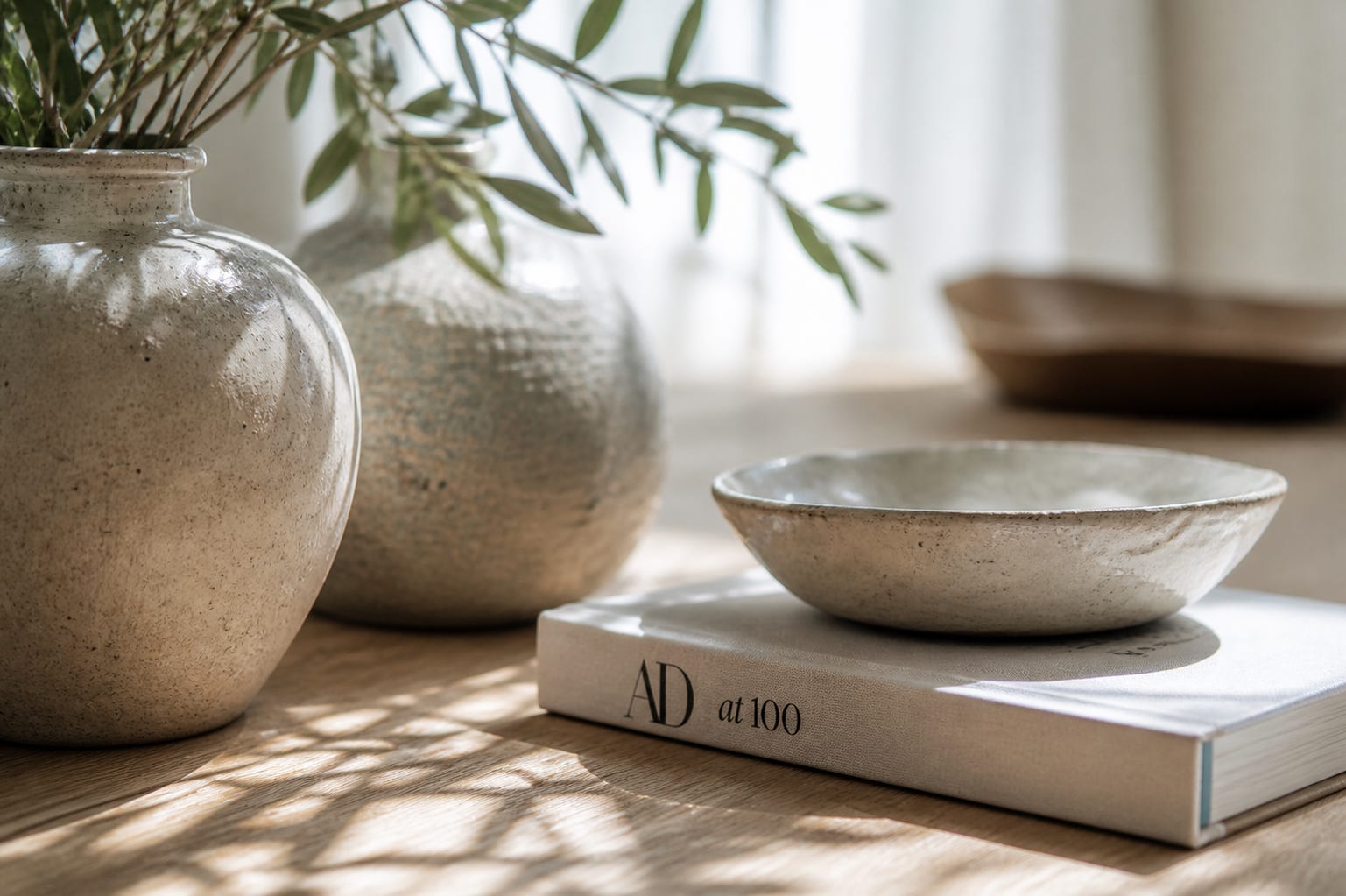
Natural materials play a big role in how light is experienced in a space. Linen diffuses it. Wood absorbs and warms it. Matte surfaces soften reflections in a way that feels easy on the eyes.
I began choosing materials not just for how they looked, but for how they responded to light.
A wooden surface feels warmer in the afternoon sun. A ceramic piece catches light in a softer, more muted way than something glossy or synthetic.
These small shifts add up.
They create a kind of quiet harmony between light and material that makes the entire room feel more settled.
Creating Gentle Light Transitions Throughout the Day
As the day moves on, the quality of light changes.
Morning light feels clear and energizing. Afternoon light becomes warmer and more relaxed. Evening light softens even further, inviting the space to slow down.
I’ve learned to follow that rhythm instead of trying to override it.
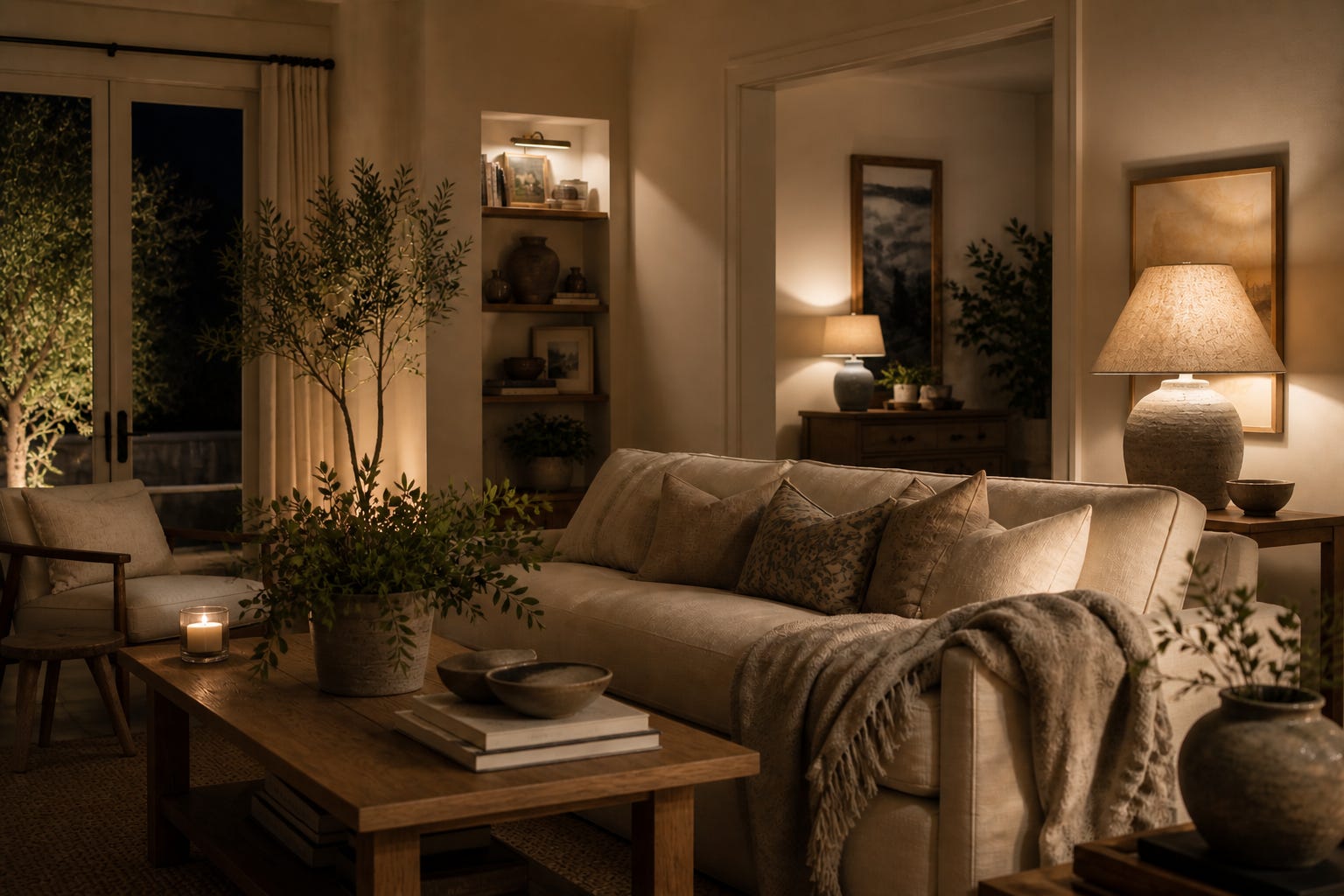
In the evening, I avoid turning on bright overhead lights whenever possible. Instead, I use lamps with warmer tones, placed at lower levels throughout the room.
This creates a softer transition from day to night.
It doesn’t feel like a sudden shift—it feels gradual.
And that gradual change makes it easier to unwind.
What I Avoid Now (Harsh, Overhead, and Artificial Light)
There are a few things I’ve slowly moved away from.
Overhead lighting is one of them.
It often feels too direct, too intense, especially in the evening. Even when the bulb itself is warm, the placement can create a kind of visual pressure that’s hard to ignore.
I’ve also become more aware of overly bright, cool-toned lighting.
It can make a space feel stark, even when everything else is soft.
Now, I use those types of lighting sparingly.
And when I do, I try to balance them with softer layers so the space still feels calm.
A Space That Feels Calm from Morning to Night
What I appreciate most now is how the space shifts naturally throughout the day.
There’s a quiet rhythm to it.
Morning feels light and open. Afternoon feels warm and steady. Evening feels soft and restful.
I don’t have to force those changes anymore.
I just support them.
And that has made our home feel calmer in a way that’s hard to replicate with artificial light alone.
Pieces I Trust in My Own Home
When it comes to shaping light in our home, I tend to choose pieces that feel simple, natural, and easy to live with over time.
• I’m drawn to linen curtains that filter light gently without blocking it completely

 • I prefer warm-toned lamps that create a softer atmosphere in the evenings

 • In our home, I would choose ceramic lamp bases that diffuse light in a quiet, subtle way

 • I often look for wooden elements that help absorb and warm natural light

 • I’m always drawn to candles for their soft, flickering glow in the evening
These pieces don’t control the light.
They simply help shape it in a way that feels calm and natural.
How does the light in your home change the way your space feels throughout the day?
Some links in this article may be affiliate links. By clicking on them, you help support my work. Don’t worry. I only share materials and brands I do/would use in my own home.
Did you like this article? Subscribe for ~free~ and get my next post in your inbox.