
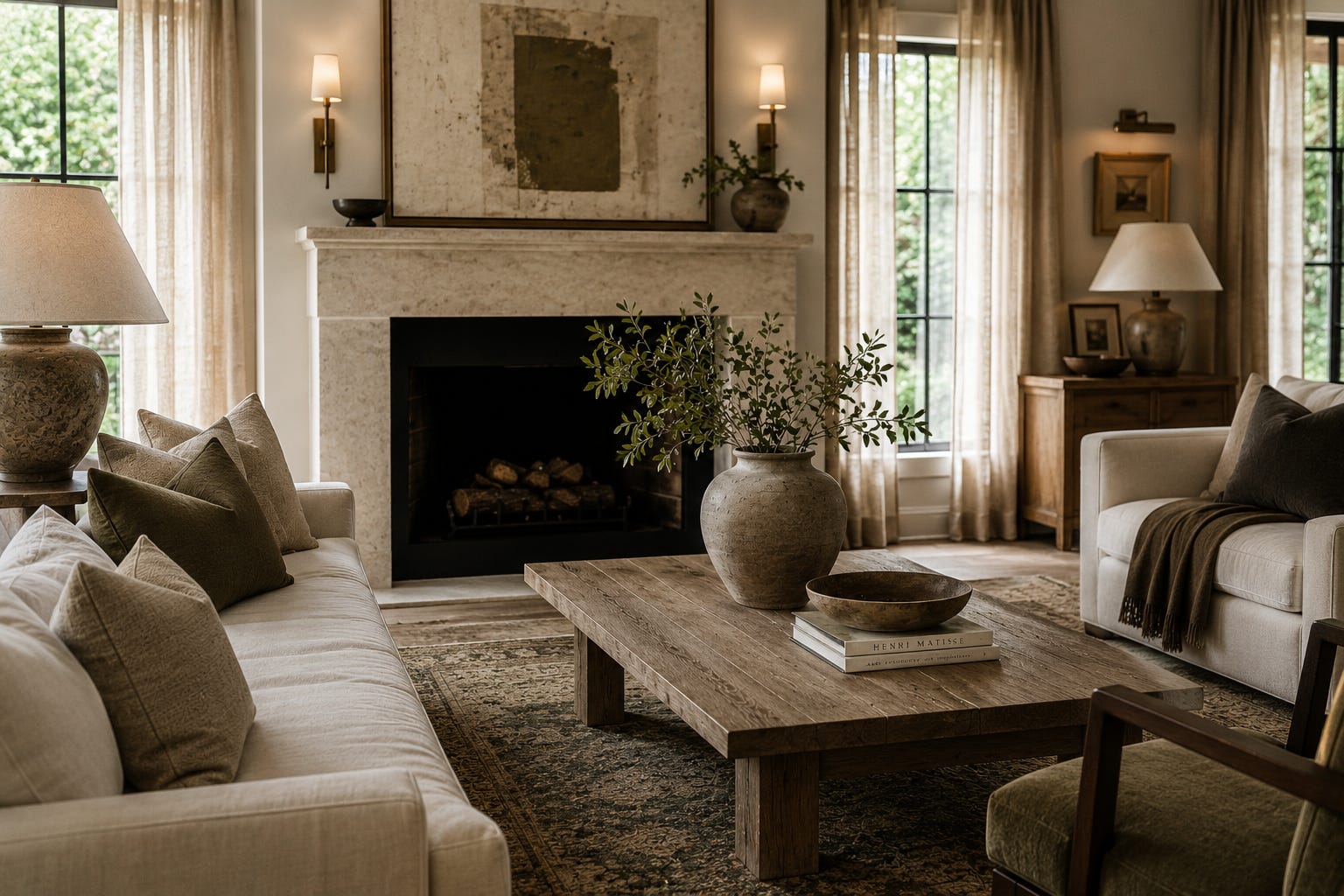
There are homes that look beautiful in photographs, and then there are homes that make you exhale the moment you walk through the door.
The difference isn’t always style.
It isn’t square footage.
And surprisingly often, it isn’t the amount of décor in a room.
Many people assume a home feels warm because it’s filled with decorative objects, layered accessories, and collected treasures.
But I’ve found that some of the most inviting spaces feel remarkably simple. What makes them memorable is how they engage the senses.
The lighting feels gentle.
The materials feel natural.
The atmosphere feels settled.
A warm home isn’t necessarily a fuller home. It’s a home that feels comfortable, grounded, and easy to live in.
If you’ve ever looked around your space and felt like something was missing—even though you don’t want more clutter—there are thoughtful ways to create warmth without adding visual noise.
Warmth Begins With Feeling, Not Filling
When a room feels cold, our first instinct is often to add something.
Another basket. Another pillow. Another decorative object.
But warmth and fullness aren’t the same thing.
In fact, too many items competing for attention can create visual tension rather than comfort. A room begins to feel busy instead of restful.
One of the lessons I carried with me from my years in boutique hospitality is that the most restorative spaces are often carefully edited.
Every element has a purpose.
Nothing feels excessive. The room has space to breathe.
That breathing room matters.
When we reduce unnecessary visual distractions, the details that remain become more meaningful.
Natural wood grain becomes noticeable. Soft textiles feel more inviting. Gentle lighting creates atmosphere rather than competing with clutter.
Warmth isn’t created by adding more.
It’s often revealed when we allow the right elements to stand out.
The Quiet Power of Layered Lighting
Lighting may be the fastest way to change how a home feels.
Many modern homes rely heavily on overhead fixtures, which provide plenty of illumination but often create a flat, sterile atmosphere.
Bright light helps us function during the day, but it rarely helps a room feel relaxing.
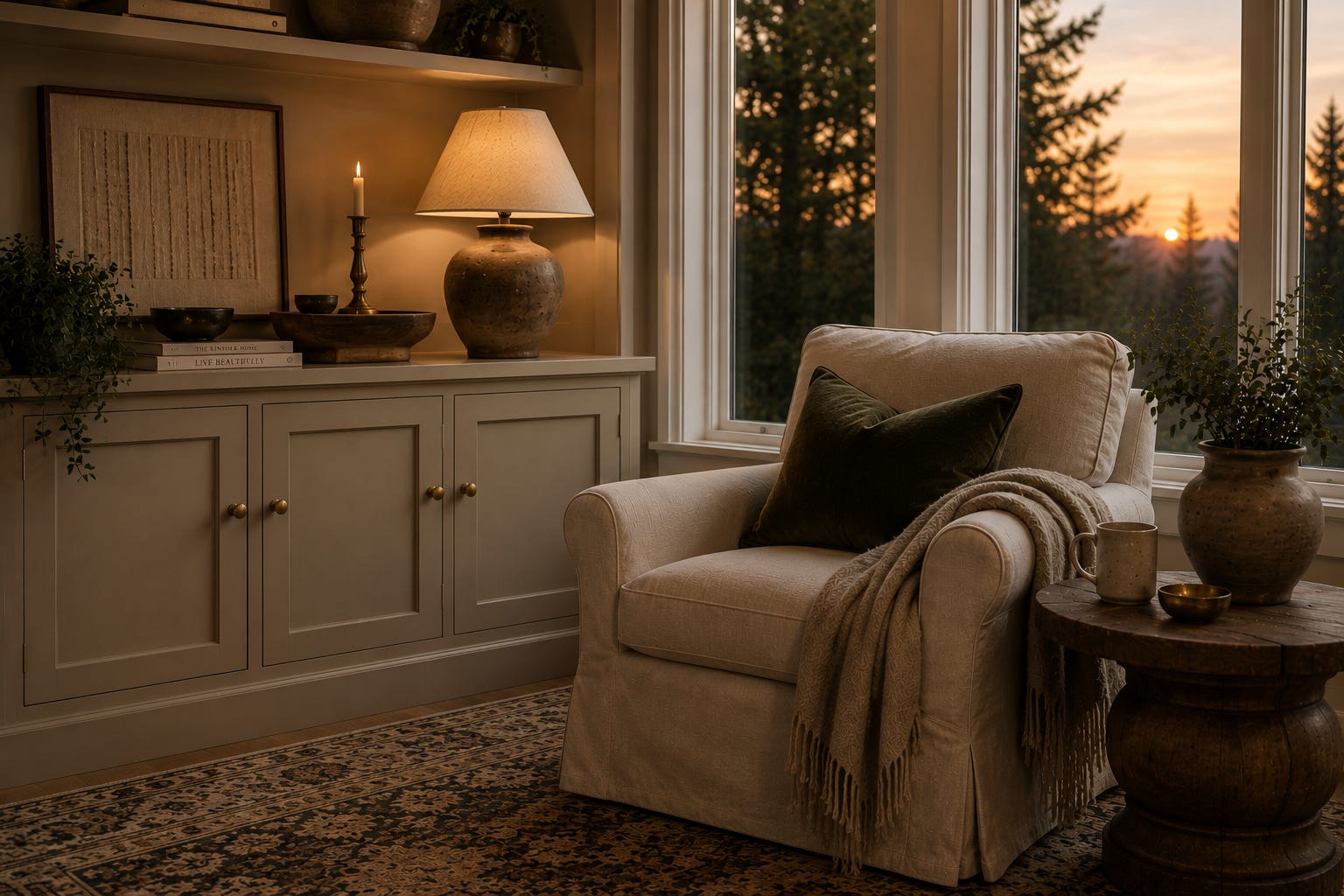
I tend to prefer layers of light throughout a space instead.
A table lamp beside a sofa.
A small lamp on a console.
Soft ambient lighting in corners that would otherwise feel dark.
These smaller pools of light create depth and make a room feel instantly more welcoming.
The color temperature matters too.
Warm-toned bulbs help soften a space and create a calmer atmosphere, particularly in the evening when our bodies naturally begin preparing for rest.
I’ve noticed that even rooms with minimal furnishings feel dramatically different once harsh overhead lighting is replaced with softer layers.
The room itself hasn’t changed.
But the experience of being in it has.
Texture Creates Warmth Without Visual Clutter
One of the simplest ways to make a room feel warmer is to introduce more texture rather than more objects.
Texture creates depth.
It gives the eye something to explore while maintaining a calm, uncluttered appearance.
Natural materials are especially effective because they bring subtle variation that feels organic rather than busy.
Linen curtains filter light differently throughout the day.
A wool rug adds softness underfoot.
Solid wood furniture introduces grain patterns and natural character.
These details create richness without demanding attention.
I often find that a room with a linen throw, a woven basket, and a solid wood coffee table feels warmer than a room filled with decorative accessories.
The visual effect is quieter.
The sensory experience is stronger.
Natural materials contribute not only to aesthetics but also to the feeling of a space.
A room doesn’t have to be crowded to feel layered.
Sometimes texture does the work that clutter cannot.
Softer Color Choices Create a More Settled Atmosphere
Color influences how a room feels far more than many people realize.
This doesn’t necessarily mean painting every wall beige or filling a space with trendy earth tones.
Instead, it’s about understanding undertones and contrast.
A room filled with stark whites and cool grays can sometimes feel visually crisp but emotionally distant.
Adding warmer neutrals often creates a softer atmosphere without dramatically changing the overall design.
Think warm ivory instead of bright white.
Natural oak instead of high-gloss finishes.
Stone, clay, sand, mushroom, and oatmeal tones instead of sharp contrasts.
The goal isn’t to make a room darker.
It’s to make it feel more settled.
Natural wood elements are particularly helpful because they introduce warmth in a way that feels timeless rather than trend-driven.
Even small touches—a wooden stool, a wood-framed mirror, or a natural wood side table—can soften an otherwise cool space.
Warmth often comes from subtle shifts.
Not dramatic transformations.
Comfort Is What People Remember Most
When guests leave your home, they rarely remember every decorative detail.
What they remember is how the space made them feel.
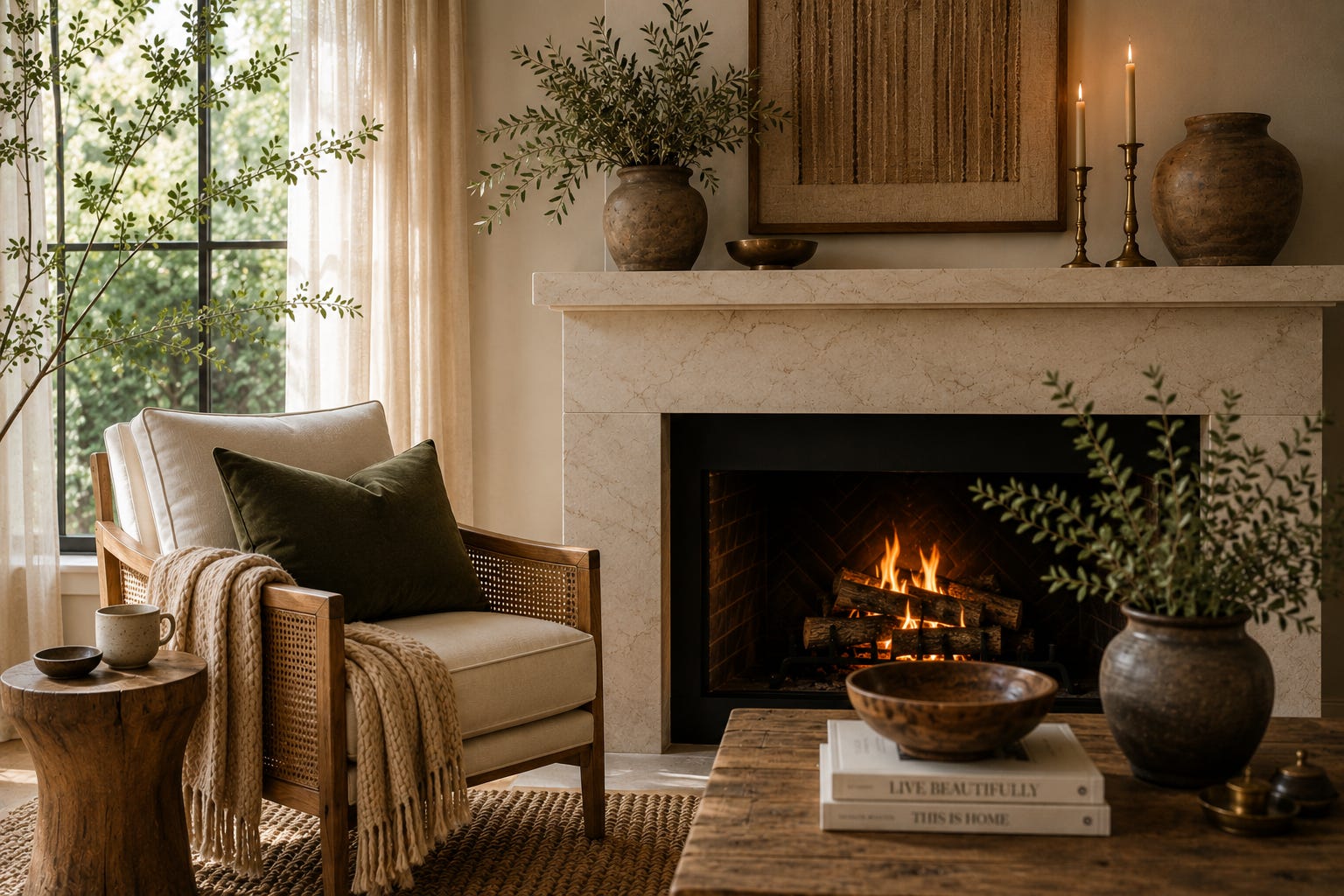
Did the chair feel comfortable?
Was the lighting relaxing?
Did the room encourage conversation?
Did the atmosphere feel calm?
True luxury has very little to do with excess.
For me, luxury equals comfort, wellness, health, and relaxation. It’s choosing things that genuinely improve daily life rather than things designed to impress others.
My husband has a demanding career, and over the years I’ve become increasingly aware of how much our home environment affects everyone’s ability to truly relax.
The spaces my family gravitates toward most aren’t necessarily the most beautifully styled.
They’re the rooms with soft lighting, comfortable seating, and the kind of atmosphere that helps everyone unwind at the end of a busy day.
That insight has shaped the way I think about home design.
The most meaningful upgrades are rarely decorative.
They’re the changes that make everyday life feel easier, healthier, and more restorative.
Creating a Home That Lets You Exhale
A home doesn’t need to be fuller to feel warmer.
Sometimes it simply needs softer light, richer texture, natural materials, and a greater focus on comfort.
When those elements come together, a space begins to feel welcoming in a way that goes beyond appearance.
It feels restorative.
It feels lived in.
It feels like somewhere you genuinely want to be.
The most inviting homes aren’t necessarily the most expensive or the most decorated.
They’re the homes that support the people who live there. They make daily life feel a little calmer, a little softer, and a little easier.
To me, that’s what luxury really means.
A Few Questions I’m Often Asked
Can a minimalist home still feel warm?
Absolutely. Warmth comes from texture, lighting, materials, and atmosphere rather than the number of items in a room.
A minimalist space can feel incredibly welcoming when it includes natural materials, layered lighting, and comfortable furnishings.
What’s the quickest way to make a room feel cozier?
Lighting is usually the fastest place to start.
Replacing harsh overhead lighting with warm-toned lamps often creates an immediate sense of comfort and relaxation.
Which natural materials add the most warmth?
Linen, wool, cotton, solid wood, woven fibers, and natural stone all contribute warmth through texture and visual depth. They create richness without adding unnecessary clutter.
Why do some beautifully decorated rooms still feel cold?
A room can look attractive while lacking sensory comfort. Harsh lighting, synthetic materials, overly cool color palettes, and excessive visual stimulation can make a space feel less inviting despite its appearance.
Pieces I Trust
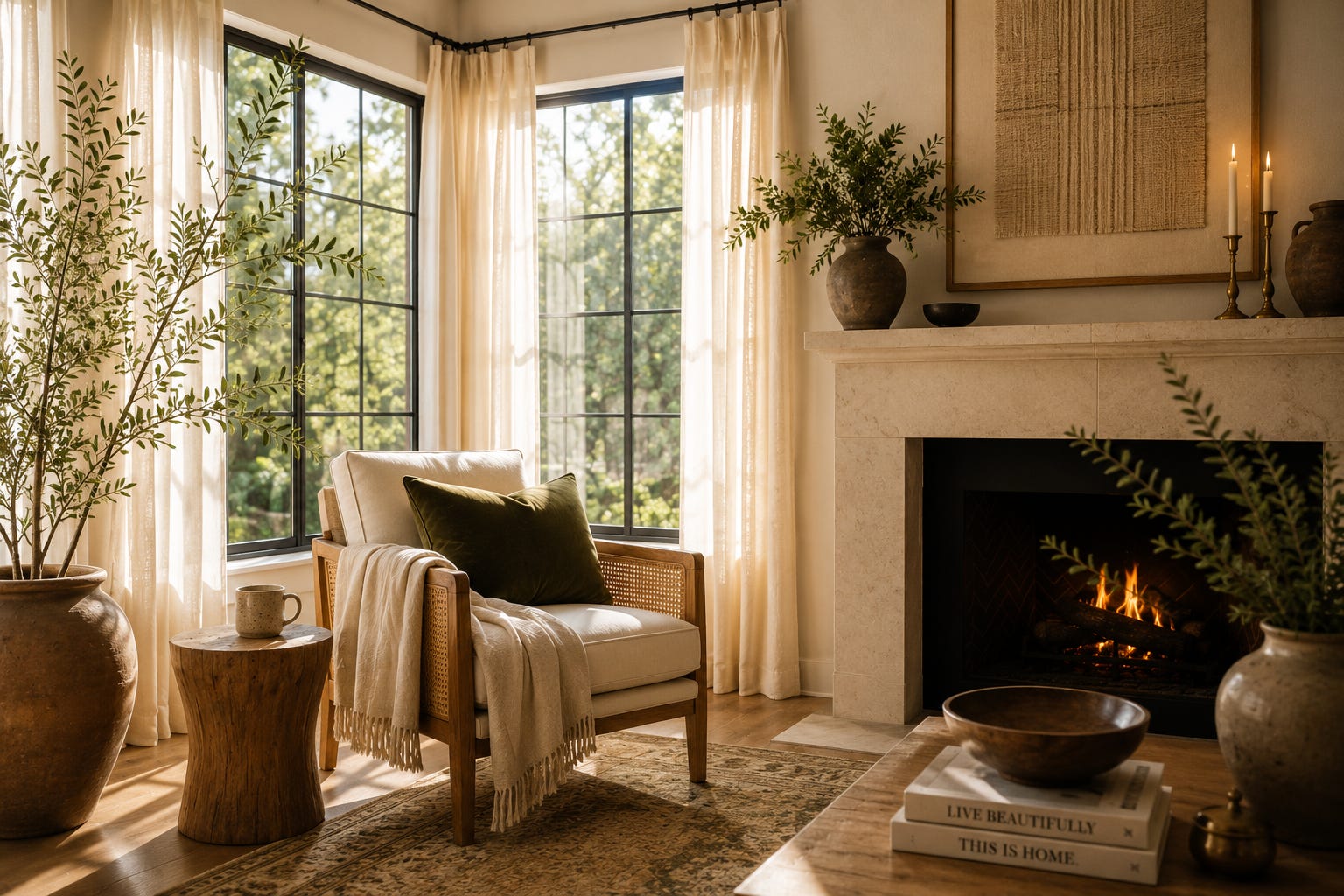
Linen curtains
Solid wood furniture
Wool area rugs
Warm-toned table lamps
Organic cotton bedding
Woven storage baskets
Natural stone accents
What’s one small change you’ve made that instantly made your home feel warmer or more comfortable? I’d love to hear what has helped your home feel calmer, more restorative, and more welcoming for you and your family.
Some links in this article may be affiliate links. By clicking on them, you help support my work. Don’t worry. I only share materials and brands I do/would use in my own home.
Did you like this article? Subscribe for free and get my next post in your inbox.