
Where Comfort Begins Before You Even Lie Down
There’s something about a well-layered bed that changes how a room feels.
I’ve noticed it even before touching it. The way the light settles across the folds.
The softness of the textures.
The quiet invitation it creates.
For a long time, I thought layering was mostly about appearance. Something decorative. Something styled.
But once I began paying attention to materials, I realized layering is actually about function. Each layer plays a role in how the bed breathes, how it holds warmth, and how it supports rest.
When the materials are right, the bed doesn’t just look comfortable.
It becomes a place your body immediately trusts.
Start with Breathable Foundation Layers That Support Rest
The foundation of a layered bed begins with what sits closest to your body.
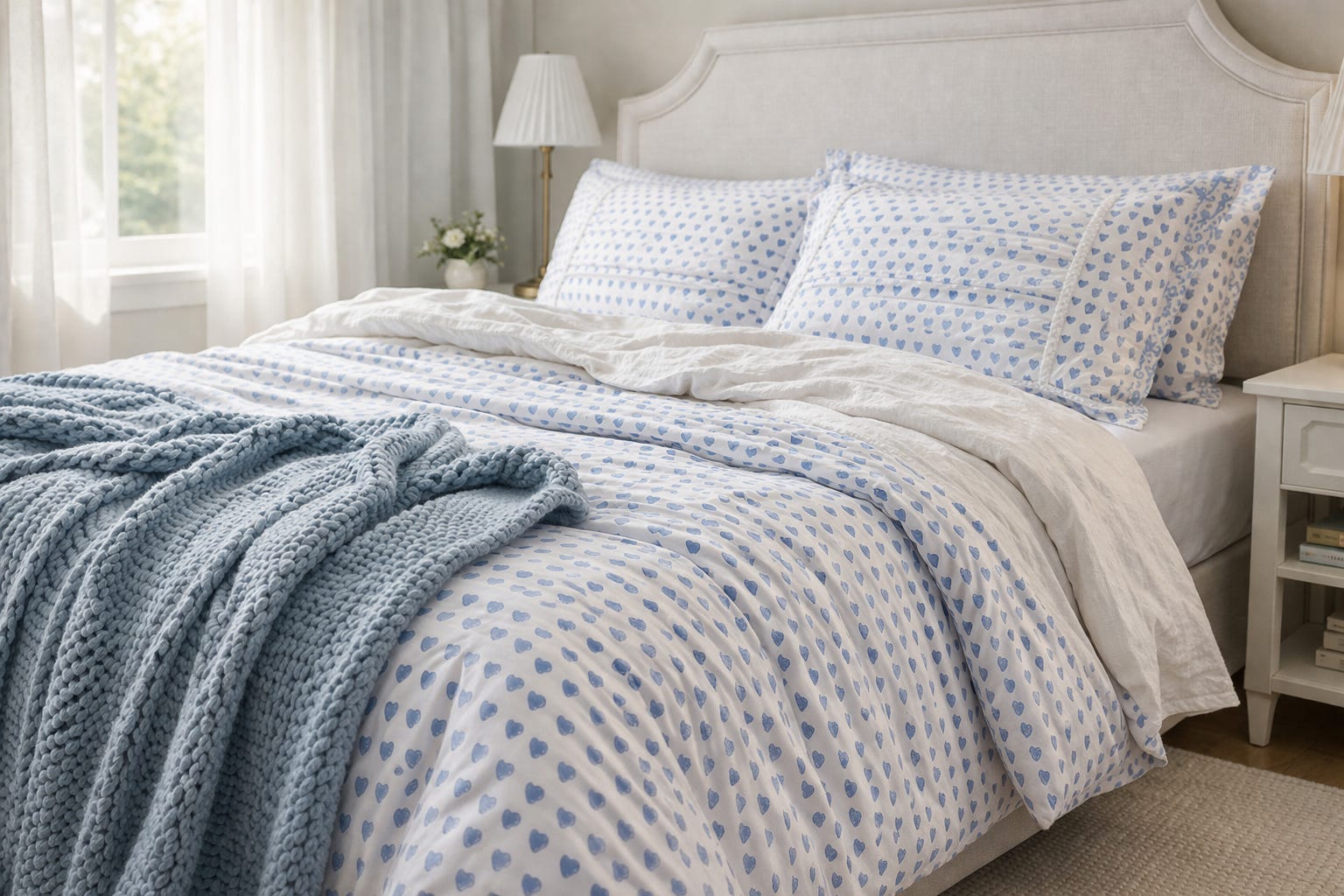
I always start with breathable sheets, usually linen or organic cotton.
These materials allow air to move freely, which helps regulate temperature throughout the night.
When I switched to natural fibers, I noticed how much lighter the bed felt. Not visually, but physically.
The air didn’t feel trapped.
The surface didn’t feel sealed.
Linen tends to feel slightly textured and airy, while organic cotton offers a smoother, more familiar softness.
I’ve found that both work beautifully, but they create slightly different experiences depending on what your body prefers.
This base layer sets the tone for everything that follows.
If it doesn’t breathe, nothing above it can fully compensate.
Add a Duvet That Regulates Warmth, Not Just Adds Weight
The duvet is where comfort becomes more noticeable.
I’ve found that the material inside the duvet makes all the difference.
Wool, for example, adapts to temperature in a way that feels steady and dry.
Down creates a lighter, more enveloping warmth.
What matters most is how the duvet works with your body, not just how it looks on the bed.
When the fill is breathable, the entire bed feels more balanced. When it isn’t, the layers can start to feel heavy or overly warm without you quite realizing why.
I’ve also noticed that the right duvet reduces the need for constant adjusting during the night.
It holds a more consistent comfort, which allows sleep to feel uninterrupted.

Introduce Texture with Natural Throws and Blankets
This is where layering becomes more expressive.
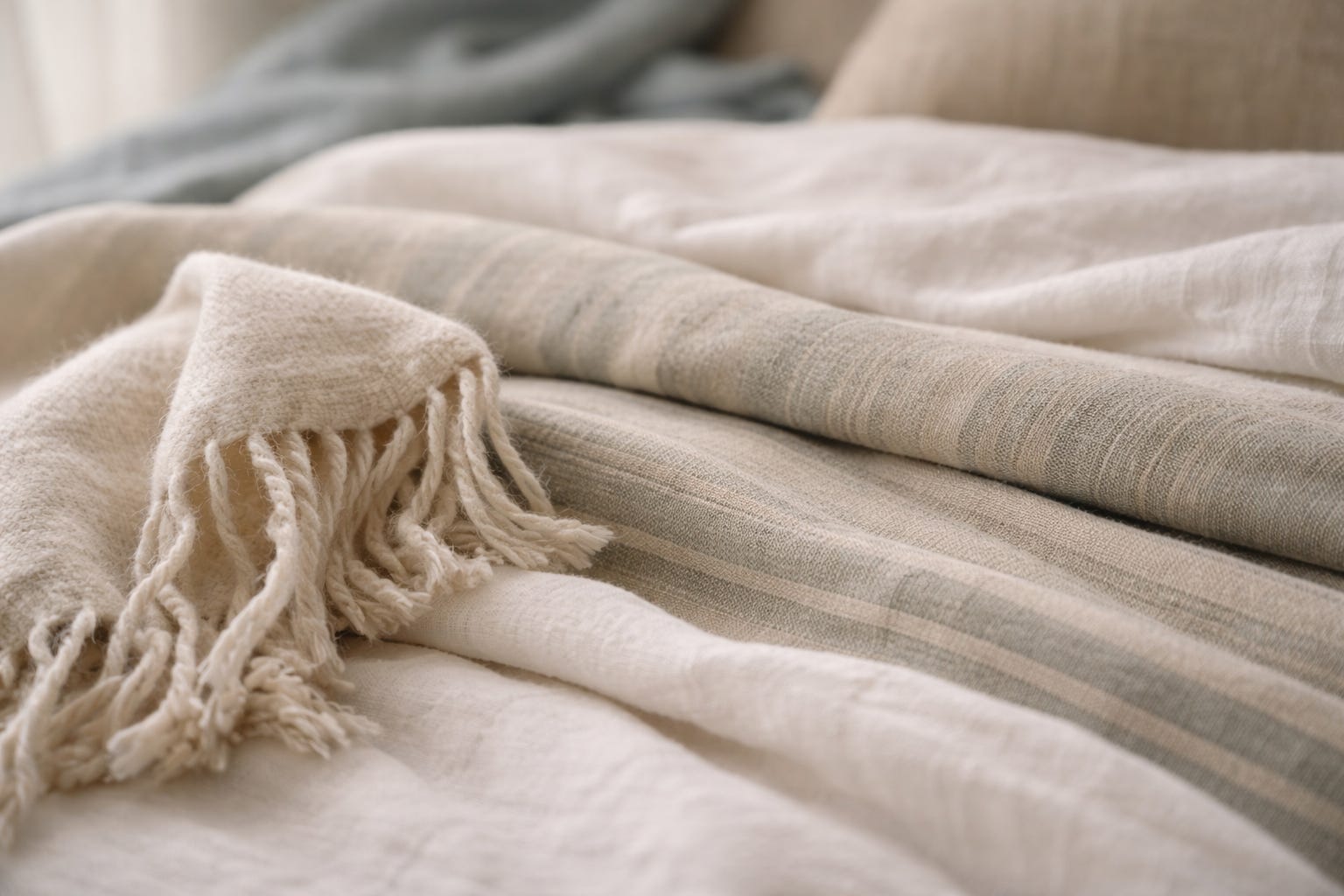
I like to add a throw or blanket near the foot of the bed, usually in wool or cotton. It adds warmth when needed, but it also brings texture and depth.
This is also where I allow a bit of color to come in.
A soft blue, a muted green, something drawn from nature. Just enough to create interest without disrupting the calm.
I’ve found that this layer often becomes the most used. Easy to pull up, easy to adjust, and always within reach.
Over time, this is also the layer that evolves the most.
It’s easy to swap seasonally or shift tones slightly without changing the entire bed.
Use Pillows to Balance Support and Softness
Pillows are often overlooked in layering, but they shape how the bed feels just as much as anything else.
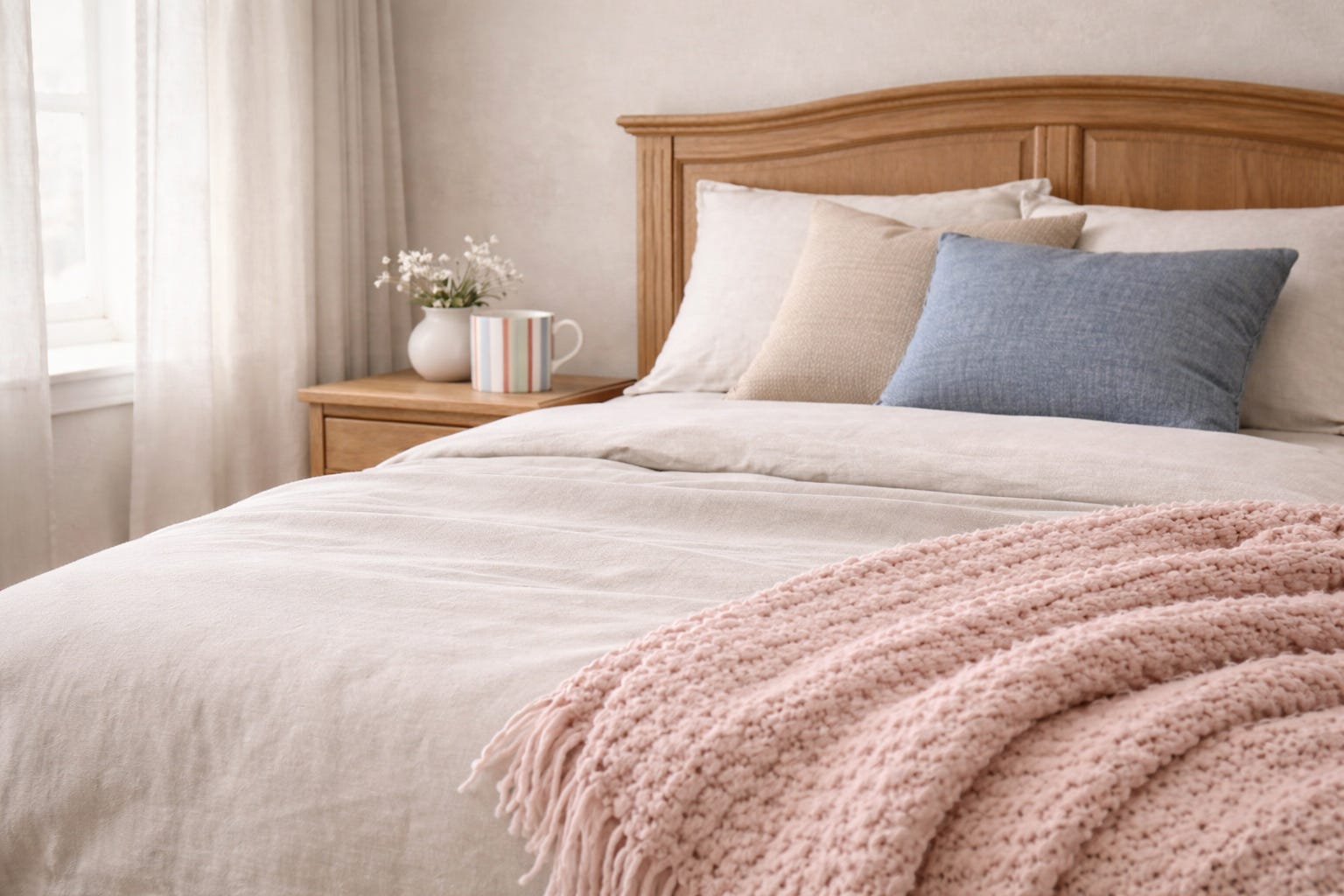
I tend to keep a balance between supportive sleeping pillows and softer decorative ones. Not too many, just enough to create a sense of softness without clutter.
Natural fills like wool or latex tend to feel more breathable and consistent over time.
I’ve found that when pillows are simplified, the entire bed feels calmer. There’s less visual noise and more intention.
When the pillow setup is right, the bed feels complete without feeling overdone.
Keep the Bed Light, Breathable, and Easy to Live With
It’s easy to over-layer a bed.
I’ve done it before, adding more and more, thinking it would feel better. But the result was often the opposite.
Heavier, warmer, less breathable.
Now I try to keep things simple. Each layer has a purpose. Each material contributes to comfort.
Sometimes removing a layer creates more comfort than adding one. I’ve learned to step back and notice how the bed actually feels, not just how it looks.
The goal isn’t to create a perfect display.
It’s to create a bed that feels easy to step into at the end of the day and easy to stay in once you’re there.
The Difference You Can Feel Every Night
When a bed is layered with natural materials, the difference isn’t loud.
It’s subtle.
It shows up in how the air feels, how your body settles, how the night passes without interruption.
I didn’t expect layering to change so much. But once I experienced it, it became something I didn’t want to undo.
And over time, those small choices become part of how a home supports rest in a deeper, more lasting way.
When you look at your own bed, do the layers feel supportive or simply decorative?
Some links in this article may be affiliate links. By clicking on them, you help support my work. Don’t worry. I only share materials and brands I do/would use in my own home.
Did you like this article? Subscribe for ~free~ and get my next post in your inbox.