
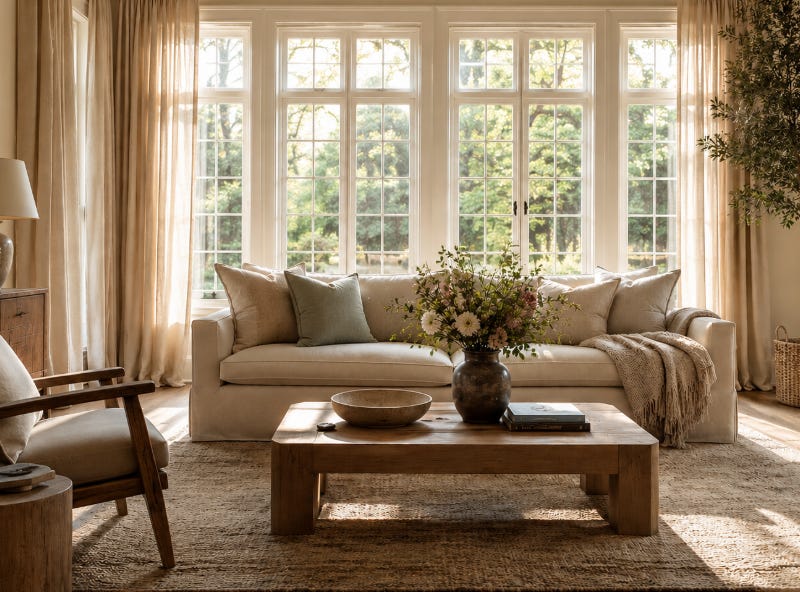
Why Rushed Home Decisions So Often Lead to Regret
I think many home regrets begin in a very ordinary moment.
A room feels unfinished.
A corner feels awkward.
A sofa is taking too long to arrive.
Someone is coming over next weekend, and suddenly the empty wall feels louder than it did yesterday.
So we buy something.
Not always because it is right.
Sometimes because the blank space has started to feel uncomfortable.
I’ve done this before, and I’ve noticed the pieces I rushed almost always revealed themselves later. They were not always terrible choices.
They simply never settled into the room. They looked fine, but they did not feel inevitable.
That is the quiet difference.
A home you won’t regret later is rarely built from panic decisions. It is built from choices that have been given enough time to become clear.
Rushed decisions often come from trying to solve a feeling quickly. The feeling may be impatience, embarrassment, comparison, or the subtle pressure of seeing finished homes everywhere.
A room online can appear complete in a single image, but real homes are lived forward slowly.
The lamp you choose after noticing where the evening shadows fall will usually serve you better than the lamp chosen only because the table looked empty.
The chair you buy after watching where your family naturally gathers will usually last longer emotionally than the chair selected to match a saved photo.
This is where regret often softens.
Not through perfection.
Through patience.
When I stopped asking, “How do I finish this room?” and started asking, “What does this room actually need from us?” my choices became calmer.
And calmer choices tend to last.
Start With the Life You Actually Live
The most timeless homes are not designed around an imaginary version of life.
They are designed around the real one.
The shoes that collect by the back door.
The child who always curls into the same chair.
The dog who follows the patch of sun across the floor.
The dining table that becomes homework, breakfast, folded laundry, birthday candles, and late-night conversations.
These details matter because they tell the truth about a home.
Before choosing furniture, materials, or decor, I like to observe the rhythm of a space. Where does everyone land at the end of the day?
Which light gets turned on first in the evening?
Where do bags pile up?
Which room feels too sharp, too echoing, too dim, or too precious?
A home that supports real life will almost always age better than a home arranged only for appearance.
This is something I learned again and again in boutique hospitality. The spaces guests loved most were not always the most dramatic. They were the ones where people instinctively exhaled.
A deep chair near a window. A small table beside a reading lamp. A quiet entry with somewhere to set things down.
The same is true at home.
Regret often appears when we ignore function because beauty is pulling harder. The dining chairs are lovely but uncomfortable.
The sofa has the perfect silhouette but the fabric feels cold. The storage piece looks elegant but cannot hold what daily life actually requires.
A calmer home begins when beauty and use are no longer competing.
The right piece should support the life happening around it.
It should make the room easier to live in, not harder to maintain.
That is one of the simplest ways to avoid regret later: choose for the family you have, the routines you repeat, and the atmosphere you want everyone to come home to.
Choose Materials That Age With You
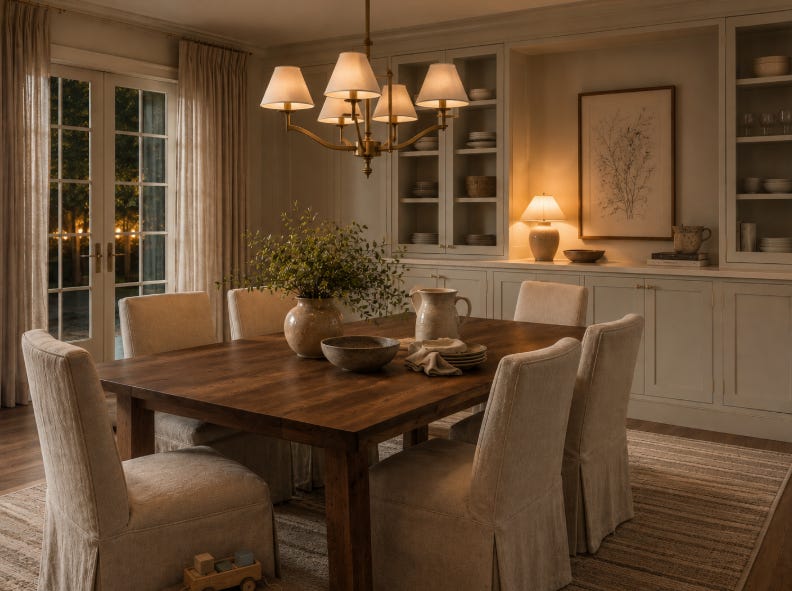
If you want a home you won’t regret later, begin with materials that can live a full life.
Solid wood.
Wool.
Linen.
Cotton.
Stone.
Ceramic.
Brass.
These materials are not beautiful only because they look refined. They are beautiful because they participate in daily life without losing their dignity.
A solid wood table does not need to remain untouched to stay meaningful. It can gather small marks, deepen in color, and become more itself over time.
A wool rug can soften a room both visually and acoustically.
Linen curtains can move gently with the air instead of hanging stiffly.
Unlacquered brass can patina slowly, recording touch in a way that feels human rather than flawed.
I tend to trust materials more when they can be repaired, refreshed, washed, refinished, or allowed to age honestly.
That is a very different feeling from living with pieces that must remain perfect to remain beautiful.
Low-tox living adds another layer to this decision. It is not only about what looks timeless. It is also about what a material brings into the air, onto the skin, and into the rhythms of everyday life.
Choosing more natural materials, low-VOC finishes, breathable textiles, and better-constructed furniture can make a home feel calmer in both visible and invisible ways.
This does not mean every piece must be expensive.
It means every piece should be considered.
There is often more long-term luxury in one well-made wood dresser than in several temporary pieces that chip, peel, off-gas, or fall apart before the room has had time to mature.
The question I come back to is simple:
Will this material become more beautiful with life, or will life quickly make it feel worn out?
That question has saved me from more regret than almost any design rule.
Because a home is not meant to be preserved like a showroom.
It is meant to hold mornings, seasons, guests, children, quiet evenings, and the small repetitions that become memory.
The best materials know how to do that gracefully.
Let Timelessness Be Personal, Not Generic
Timeless does not mean plain.
It does not mean empty.
It does not mean choosing the safest possible version of everything until your home loses its warmth.
A timeless home should still feel specific.
It should hold your family’s preferences, your history, your rituals, your architecture, your climate, your inherited pieces, your collected objects, and the colors that make you feel settled.
This is where many people get stuck. They are afraid of trend regret, so they remove too much personality.
The result may look clean, but it can feel emotionally thin.
I personally believe the most enduring homes have a certain layered honesty to them.
A framed piece of art that reminds you of a trip.
A chair that does not match perfectly but always gets used.
A dark wood cabinet that grounds a pale room.
A stone lamp with quiet weight.
A quilt folded at the end of a bed.
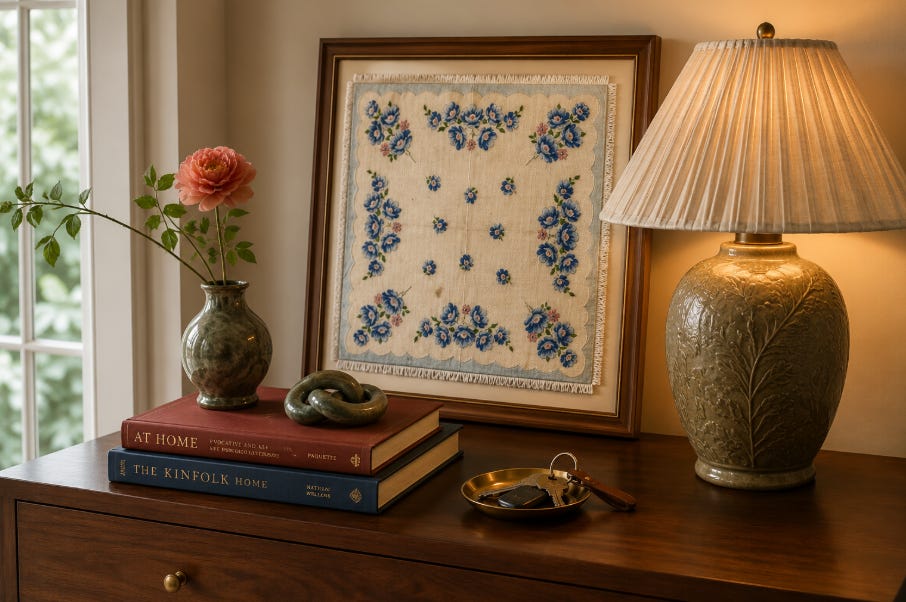
A hallway table that holds keys, flowers, mail, and the ordinary evidence of a family coming and going.
These are the details that keep a home from feeling generic.
Trends often become regrettable when they are copied too literally. But personal style, when built slowly, has more staying power because it comes from recognition rather than performance.
You are not trying to make your home look like everyone else’s saved folder.
You are trying to make it feel like a place your family will remember.
And often, they will not remember the exact decor.
They will remember the feeling.
The lamp that made winter evenings softer.
The table where everyone gathered longer than expected.
The bedroom that felt cool, breathable, and quiet at the end of a demanding day.
The living room where no one felt afraid to put their feet up.
That is the kind of timelessness worth pursuing.
Not generic perfection.
Personal permanence.
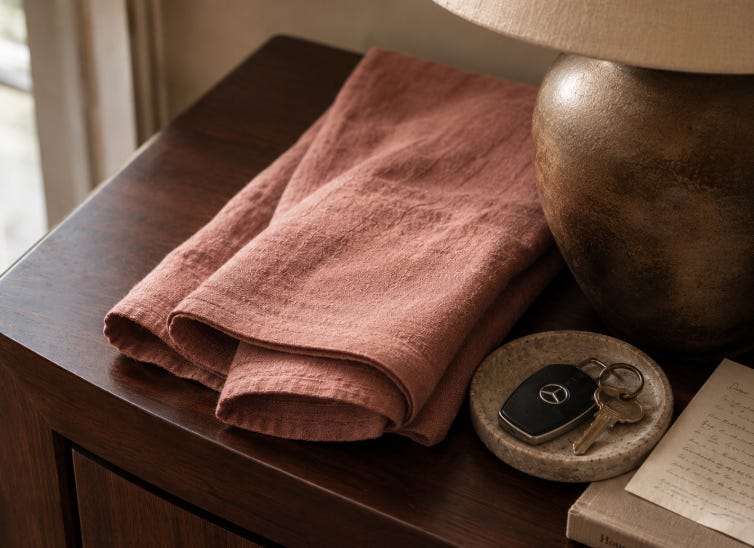
Use the Pause as Part of the Design Process
The pause is not wasted time.
The pause is where the better decision forms.
I rarely rush important home choices anymore because I have learned that rooms reveal themselves slowly.
Morning light tells one story. Evening light tells another.
A room that feels empty in spring may feel crowded in winter once blankets, books, coats, and indoor life return.
Living with a space before filling it can feel uncomfortable at first.
But discomfort is often informative.
It shows you what is actually missing.
Maybe the room does not need another accent chair. Maybe it needs warmer lighting.
Maybe the entry does not need more decor. Maybe it needs closed storage.
Maybe the bedroom does not need a dramatic new color. Maybe it needs breathable bedding, softer lamps, and fewer hard surfaces.
A slower process allows you to separate visual desire from daily need.
Before making a purchase, I like to ask a few quiet questions.
Will this still feel appropriate in five years?
Does it support the way we live?
Is the material healthy, durable, and repairable?
Does it add calm, or does it add maintenance?
Would I choose this if no one else ever saw it?
That last question is especially clarifying.
So many regrettable home decisions are made for an imagined audience. But your home is not primarily for guests, neighbors, followers, or future buyers.
It is for the people who wake up there.
It is for the person making coffee before sunrise.
It is for the child padding down the hallway half-awake.
It is for the spouse coming home with a tired mind.
It is for the quiet hour after everyone else has gone to bed.
When you design for those moments, the home begins to feel less performative and more protective.
And that is where regret loosens its grip.
A Home With Less Regret Is Usually More Honest
Creating a home you won’t regret later is not about making flawless choices.
No one does that.
It is about slowing down enough to make honest ones.
The kind of choices that reflect how you live, what you value, what your body responds to, what your family needs, and what you are willing to care for over time.
A calmer home is often built through restraint, but not cold restraint.
It is the restraint of waiting for the right table instead of filling the room with the available one.
The restraint of choosing breathable bedding over something that only photographs well.
The restraint of letting a wall stay empty until you find art that means something.
The restraint of trusting that a home does not have to be finished quickly to be beautiful.
In many ways, slower decorating is an act of care.
Care for your budget.
Care for your health.
Care for the materials you bring indoors.
Care for the future version of yourself who will live with today’s decisions.
And care for the people who will remember not whether every corner was styled, but how the home made them feel.
A home becomes more timeless when it is allowed to become more honest.
That may be the real luxury.
Not having everything immediately.
But living with less regret because you chose with patience.
A Few Questions I’m Often Asked
How do I avoid regretting furniture purchases?
The best way to avoid regretting furniture purchases is to slow down, measure carefully, and choose around your real daily life.
Pay attention to comfort, scale, material quality, and how the piece will age. A beautiful piece that does not support your routines often becomes frustrating over time, even if it looked perfect when you bought it.
Is it better to decorate slowly?
Yes, decorating slowly often leads to fewer regrets because you have time to understand what a room truly needs.
When you live with a space before filling it, you notice patterns. You learn where storage is missing, where lighting feels harsh, and which pieces would genuinely improve daily life.
What makes a home feel timeless instead of trendy?
A timeless home usually feels balanced, personal, and grounded in quality materials.
Natural textures, thoughtful proportions, traditional details, meaningful objects, and comfortable furniture often age better than rooms built around one highly specific trend. Timelessness comes from restraint, but also from personal warmth.
What materials are best for a low-tox timeless home?
Solid wood, wool, linen, organic cotton, stone, ceramic, and low-VOC finishes are often strong choices for a low-tox timeless home.
These materials tend to feel tactile, breathable, durable, and emotionally warmer than many synthetic or temporary alternatives. They also often age in a more graceful, repairable way.
Pieces I Trust
When I think about creating a home with fewer regrets, these are the categories I return to most often.
Solid wood furniture for pieces that can be repaired, refinished, and lived with for decades.
Wool rugs for softness underfoot, natural texture, and a quieter feeling in busy rooms.
Linen or organic cotton curtains for breathable window treatments that soften light without feeling heavy.
Low-VOC paint for rooms that feel refreshed without overwhelming the air you live in.
Organic cotton bedding for a bedroom that supports rest in a simple, tactile way.
Ceramic table lamps for warm pools of evening light and a grounded, handmade feeling.
Unlacquered brass hardware for details that patina slowly instead of pretending time does not exist.
Natural fiber baskets for storage that feels useful, warm, and easy to live with.
What is one home decision you’re glad you waited on — or one you wish you had paused before making? I’d genuinely love to hear what mistakes you’ve made and what they’ve taught you.
Some links in this article may be affiliate links. By clicking on them, you help support my work. Don’t worry. I only share materials and brands I do/would use in my own home.
Did you like this article? Subscribe for free and get my next post in your inbox.