
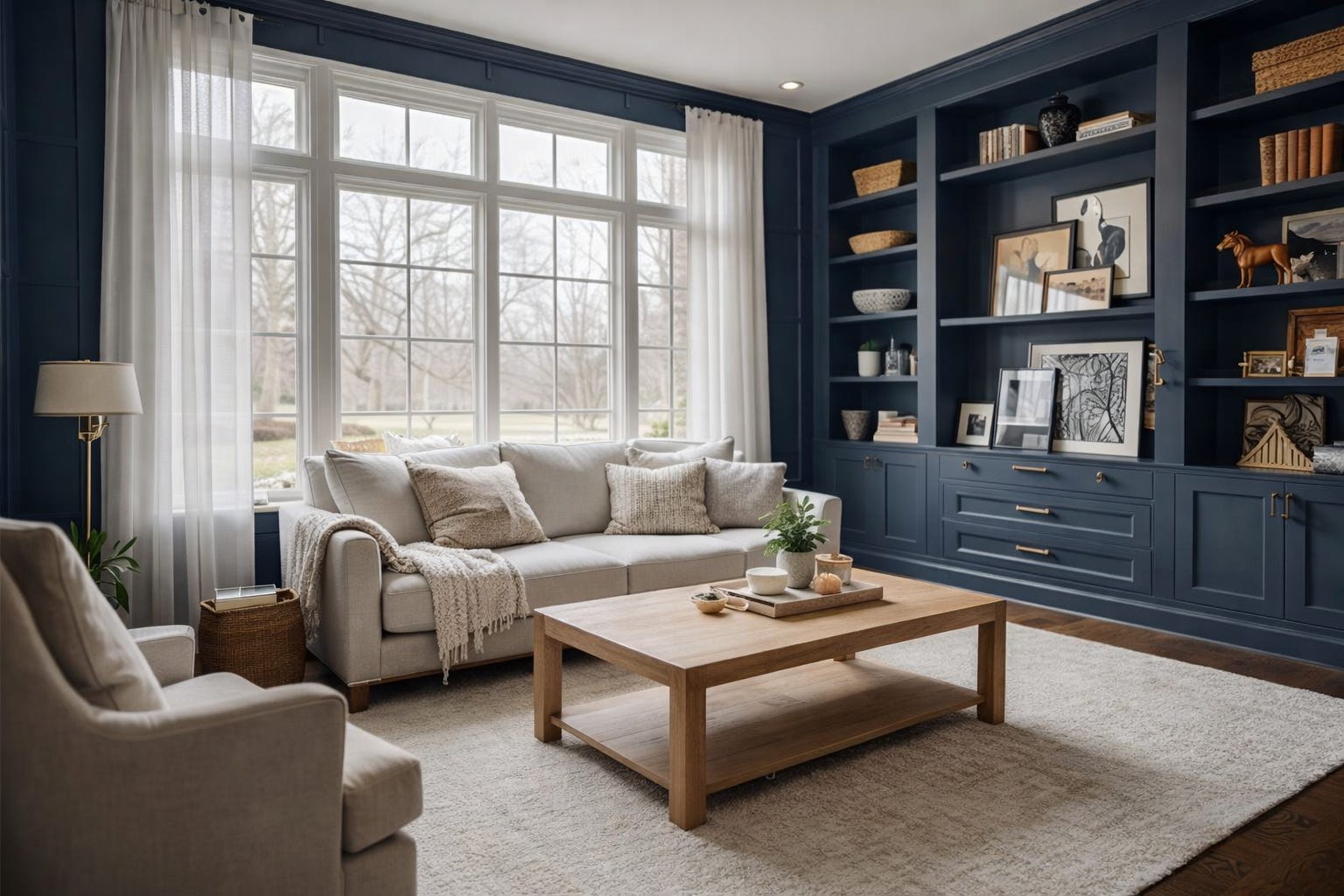
A Living Room That Feels Calm Without Trying Too Hard
There was a time when I thought a calm living room came down to color alone.
Softer tones, fewer contrasts, a quieter palette. And while that helps, I’ve come to realize that calm isn’t something you simply see.
It’s something you feel the moment you sit down.
For me, the shift happened when I began paying attention to materials instead of just appearance.
The difference between a synthetic rug and a wool one.
The way a linen sofa softens a room without trying too hard.
The subtle grounding that wood brings when everything else feels light.
A living room is where life unfolds in the most natural way. It’s where we sit, rest, talk, and sometimes do nothing at all. I’ve found that when the materials in that space feel right, everything else follows.
What I reach for now is not perfection, but comfort that feels honest. A room that breathes a little. A room that settles around you instead of performing for you.
Why Natural Materials Create a Calmer Living Room
When I began shifting toward natural materials, I didn’t expect the emotional difference it would make. But it’s surprisingly noticeable.
Spaces built with real, breathable materials tend to feel quieter, even when nothing else changes.
Natural fibers like linen, wool, and cotton absorb light differently than synthetic ones. They soften it. Instead of reflecting harsh brightness, they create a gentle diffusion that makes the room feel more relaxed throughout the day.
There’s also a tactile difference that’s hard to ignore.
I’ve noticed that I linger longer in rooms where textures feel soft but substantial. A wool rug underfoot or a linen cushion at your back changes the way a space supports you.
Over time, I’ve come to see that calm isn’t about removing things. It’s about choosing materials that don’t compete for attention.
They simply exist, quietly doing their job.
Choosing a Sofa with Natural Upholstery (Linen, Cotton, and Soft Structure)
The sofa is where I always start, because it quietly anchors the entire room.
If it feels off, everything around it struggles to settle.
I tend to look for sofas upholstered in linen or cotton blends, especially those with a slightly relaxed weave. Linen, in particular, has a way of softening both visually and physically over time, which I find makes the space feel more lived-in and less staged.
Structure matters just as much as fabric.
I prefer sofas that feel supportive without being rigid. A slightly deeper seat, soft but not overly plush cushions, and a silhouette that doesn’t feel bulky or overly sculpted.
In our home, I’ve found that a neutral, breathable sofa becomes a quiet backdrop for everything else. It doesn’t need to stand out.
It just needs to feel right the moment you sit down.
Layering Natural Rugs for Warmth and Texture (Wool, Jute, and Cotton)
Rugs are one of the most transformative elements in a living room, and I’ve learned not to underestimate them.
A wool rug is often where I begin.
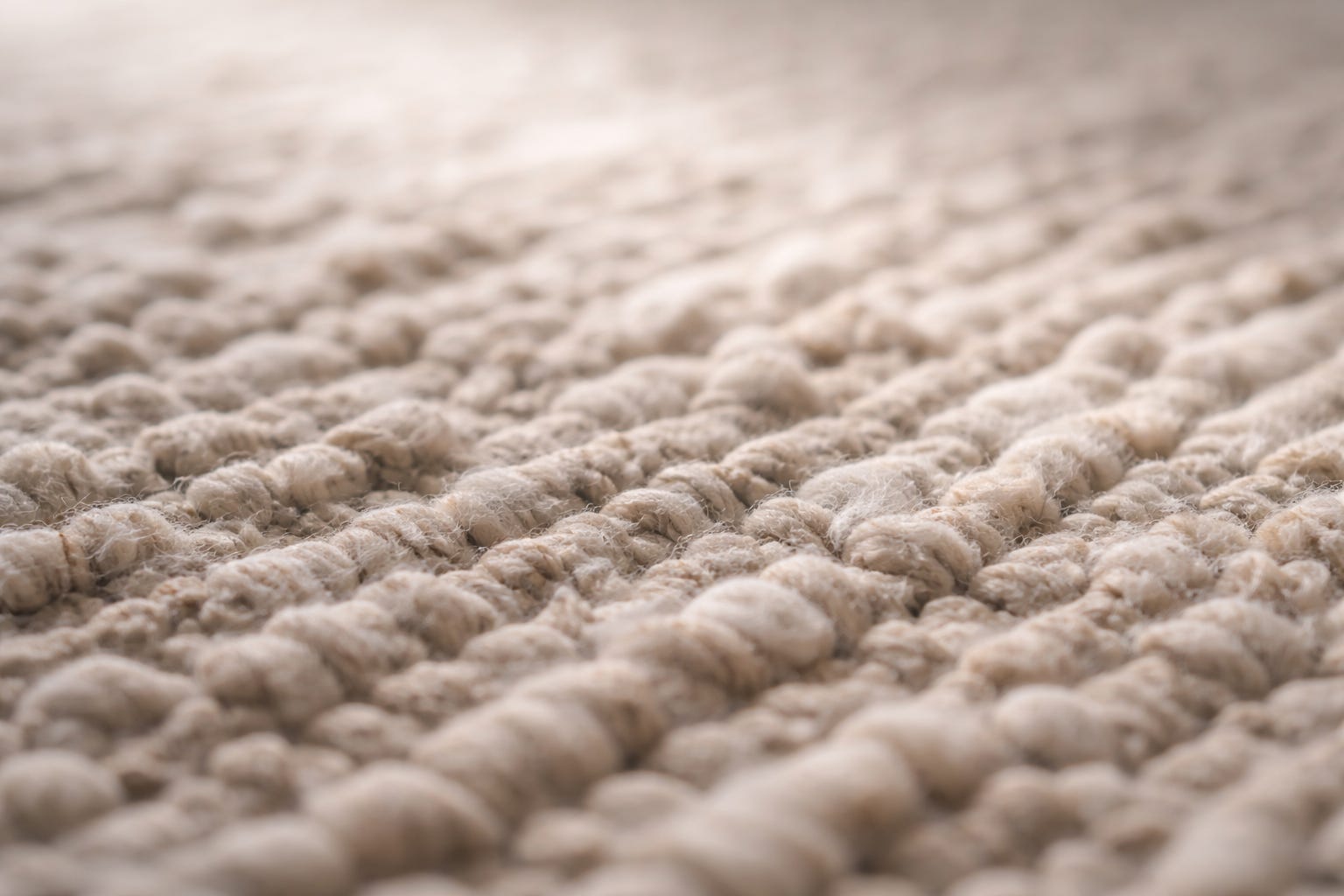
It brings softness, warmth, and a subtle sense of weight that helps ground the entire space. Wool also wears beautifully over time, which makes it feel like a long-term part of the home rather than something temporary.
In some spaces, I like layering a flatter weave underneath, like jute or cotton. That base layer adds texture without overwhelming the room, while the top layer creates comfort where it matters most.
I’ve noticed that when rugs feel natural underfoot, the room immediately becomes more inviting.
It’s a quiet shift, but one that changes how often you want to be there.
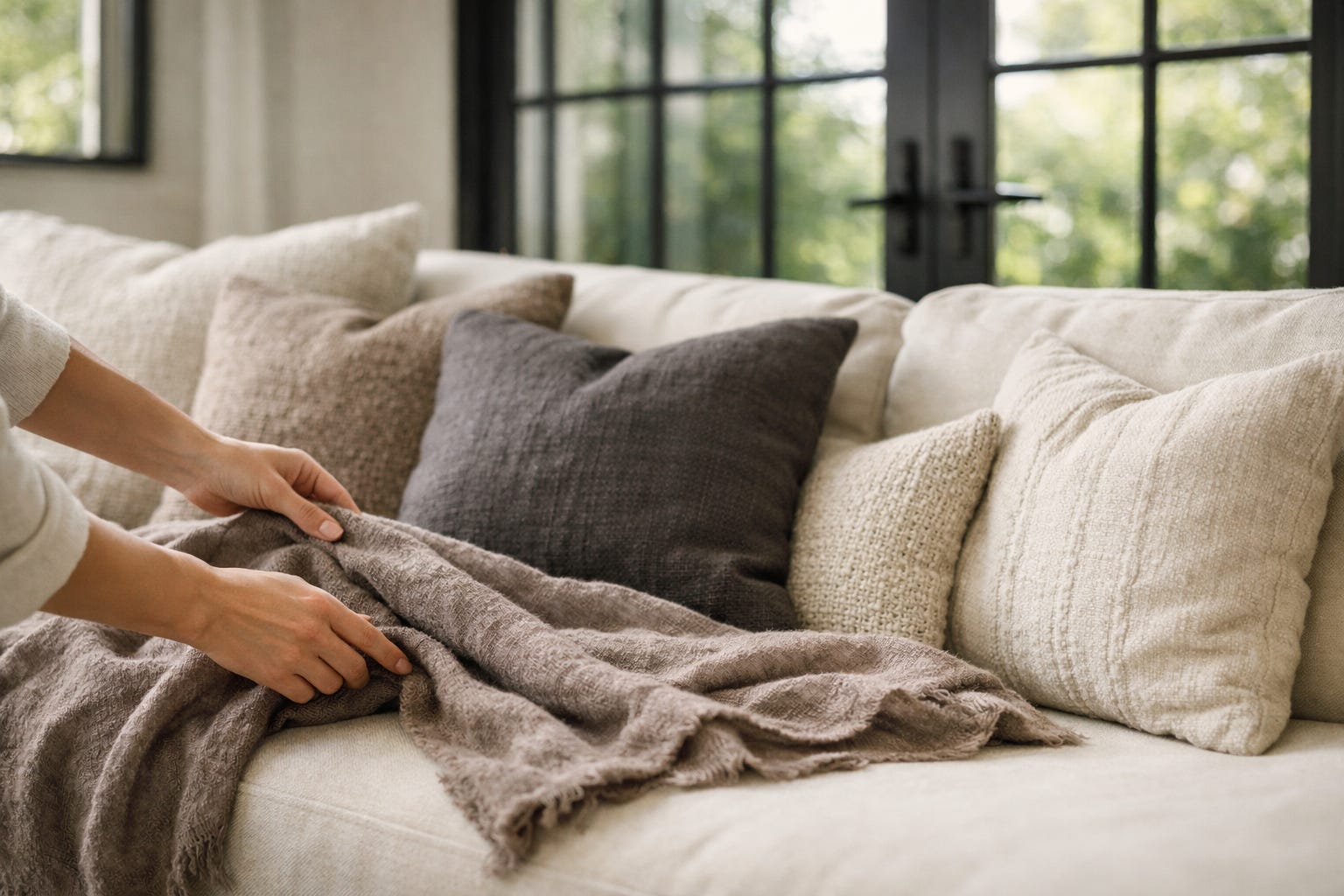
Balancing Wood, Stone, and Soft Textiles in the Living Room
Once the larger pieces are in place, the balance between materials becomes what shapes the atmosphere.
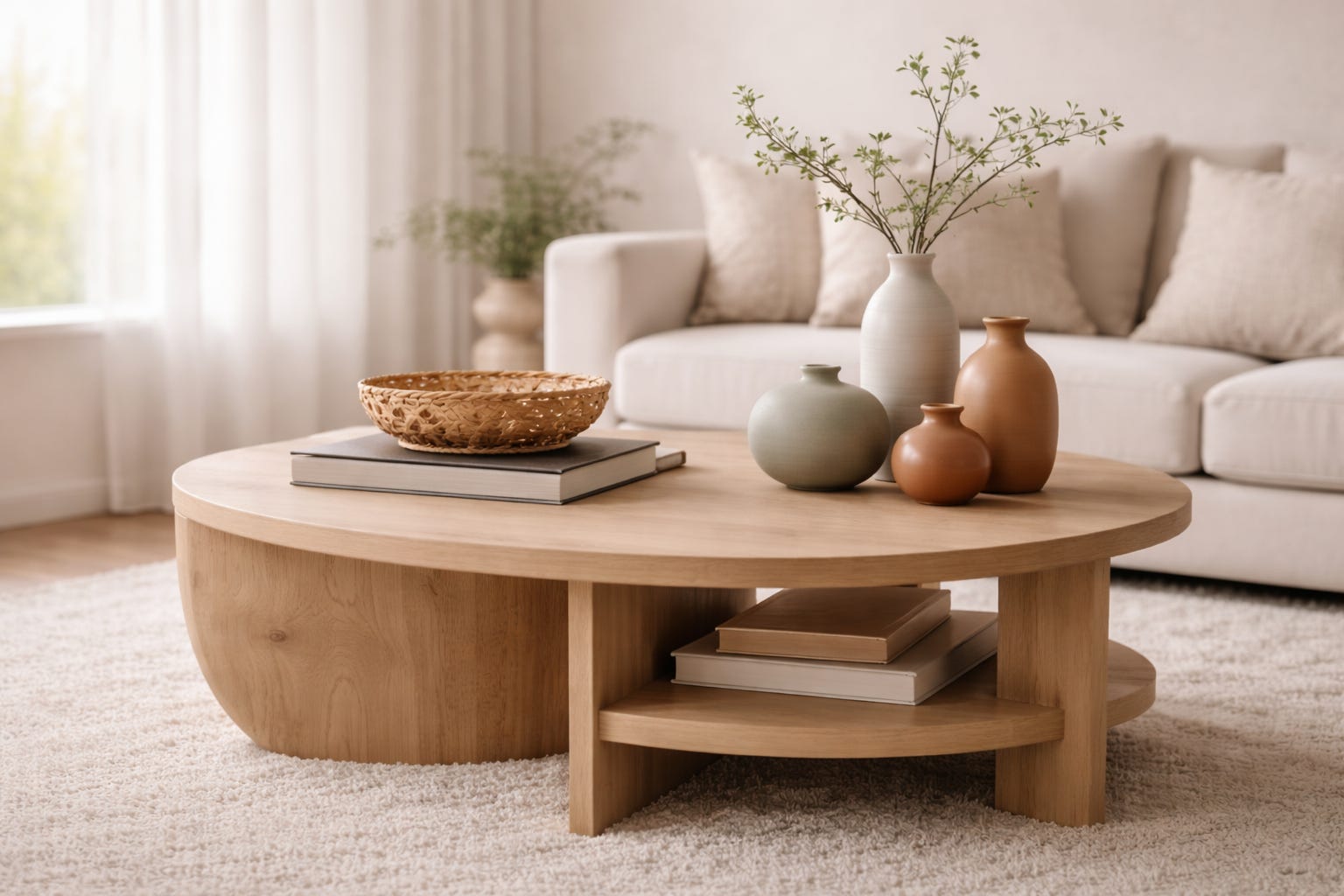
I’m drawn to solid wood for grounding elements like coffee tables or side tables.
There’s something about real wood grain that brings a sense of steadiness to a space, especially when everything else feels soft.
Stone and ceramic can add contrast in a gentle way.
A simple ceramic lamp or a stone tray introduces variation without disrupting the calm. I try to keep these elements understated, allowing their texture to speak rather than their shape.
Soft textiles are where the room becomes personal.
Linen throws, wool blankets, and cotton cushions create layers that invite use. I’ve found that when these pieces are slightly imperfect, a little rumpled or casually placed, the room feels more welcoming.
Keeping the Space Breathable (What I Choose to Leave Out)
Creating a calm living room isn’t only about what I bring in.
It’s just as much about what I choose to leave out.
I’ve learned to be selective with materials that feel overly synthetic or overly polished. Glossy finishes, plastic-heavy decor, and anything that feels too uniform can quietly disrupt the atmosphere I’m trying to create.
Clutter also plays a role.
I don’t aim for minimalism, but I do aim for intention. When every piece has a purpose or a place, the room naturally feels more open.
In our home, I’ve noticed that the spaces I return to most often are the ones that feel breathable. Not empty, but gently edited.
A room where nothing feels like it’s trying too hard.
Pieces I Trust in My Own Home
When I choose pieces for a living room, I find myself returning to the same qualities again and again.
I’m less interested in trends and more drawn to materials that feel steady, breathable, and quietly beautiful over time.
• I tend to look for sofas upholstered in linen or cotton blends that feel soft but structured, never overly stiff or overly plush

 • I prefer wool rugs with a slightly imperfect texture that soften the space and wear in naturally

 • I’m drawn to solid wood tables with visible grain, especially in lighter or medium natural finished

 • I often choose ceramic or stone accents that feel handmade or gently irregular

 • I like textiles that feel lived-in from the start, such as linen throws or cotton cushions with subtle variation
These are the kinds of pieces that don’t ask for attention, but quietly shape how a room feels every day.
The Kind of Living Room You Want to Stay In
I don’t think a calm living room is ever about getting everything just right.
It’s about creating a space that feels easy to return to, again and again.
For me, that comes from materials that age well, textures that soften over time, and a layout that allows the room to breathe. When those pieces come together, the space doesn’t just look calm.
It becomes a place where you can actually rest.
When you look around your living room, do the materials feel as calm and supportive as you want your space to be?
Some links in this article may be affiliate links. By clicking on them, you help support my work. Don’t worry. I only share materials and brands I do/would use in my own home.
Did you like this article? Subscribe for ~free~ and get my next post in your inbox.