
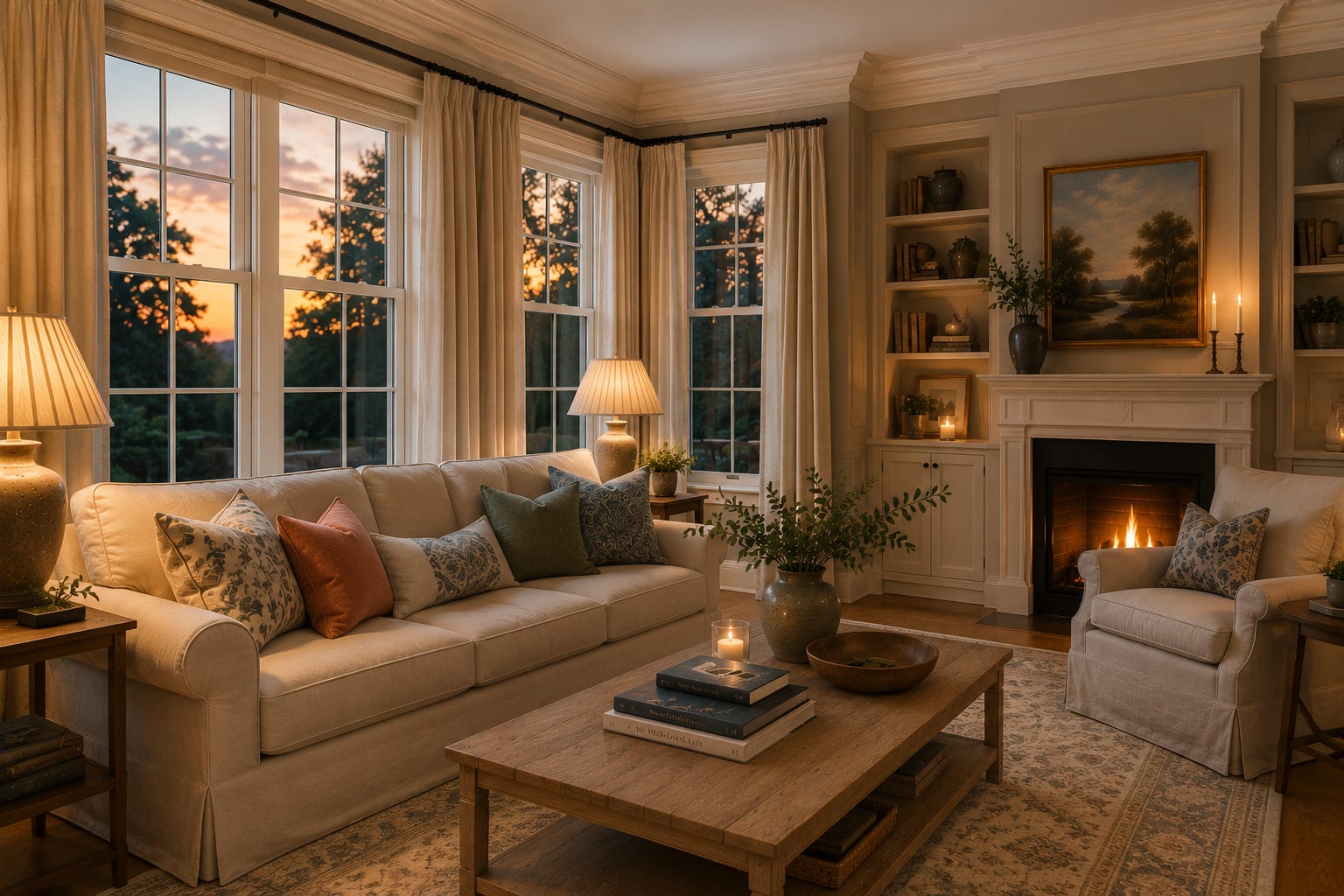
Why Evening Atmosphere Matters More Than I Realized
For a long time, I did not think much about the transition from day to evening inside the home.
The lights stayed bright long after sunset. Screens remained on in the background. The energy of the day simply carried straight into the night.
Eventually, I realized how overstimulating that felt.
Even after finishing work or slowing down physically, the atmosphere of the house still felt active. Bright overhead lighting, visual clutter, and constant noise made it difficult for my mind to fully settle.
I noticed I was ending the day feeling mentally restless even when I was physically tired.
That awareness slowly changed the way I approach evenings at home.
Now, I think of evening atmosphere as something intentional.
I try to create small visual and sensory cues that tell both my body and the home itself that the day is winding down. The shift is subtle, but it changes the emotional feeling of the entire space.
Warm lamps replace overhead lighting.
Softer textures appear in the living room.
The kitchen becomes quieter after dinner is cleaned up. Even the corners of the house feel dimmer and calmer.
What surprised me most is how quickly the nervous system responds to those changes.
The home starts feeling quieter before anyone even says a word.
And honestly, I think many of us are craving that softness now. Modern life already feels loud enough.
I no longer want our evenings to feel like an extension of daytime productivity.
I want the home to feel restorative.
The First Thing I Change Is the Lighting
The simplest thing I do every evening is turn off most overhead lights.
That one shift changes the atmosphere almost immediately.
I used to keep bright ceiling lights on until bedtime without realizing how harsh they felt at night. Once I started replacing them with smaller pools of warm light, the entire home began feeling noticeably calmer.
Now, I rely much more on table lamps, soft ambient lighting, and indirect glow throughout the evening. The rooms feel gentler this way.
Shadows soften.
Textures become warmer.
Even conversation feels quieter somehow.
I especially love the feeling of warm light reflecting against natural materials like wood, linen, and matte ceramics. The house feels more grounded and less visually overstimulating.
Candles also play a role for me, though I keep them simple.
A small beeswax candle in the kitchen or living room adds warmth without making the home feel overly styled. I think the gentle movement of natural light helps create a sense of stillness that artificial lighting often lacks.
What I find interesting is how quickly lighting affects mood physically.
Bright lighting tends to keep me mentally alert, while softer light signals that it is time to slow down. I sleep better now partly because the entire house feels calmer long before bedtime actually arrives.
And honestly, I think creating a relaxing home at night has far less to do with decoration than people assume.
The atmosphere usually begins with light.
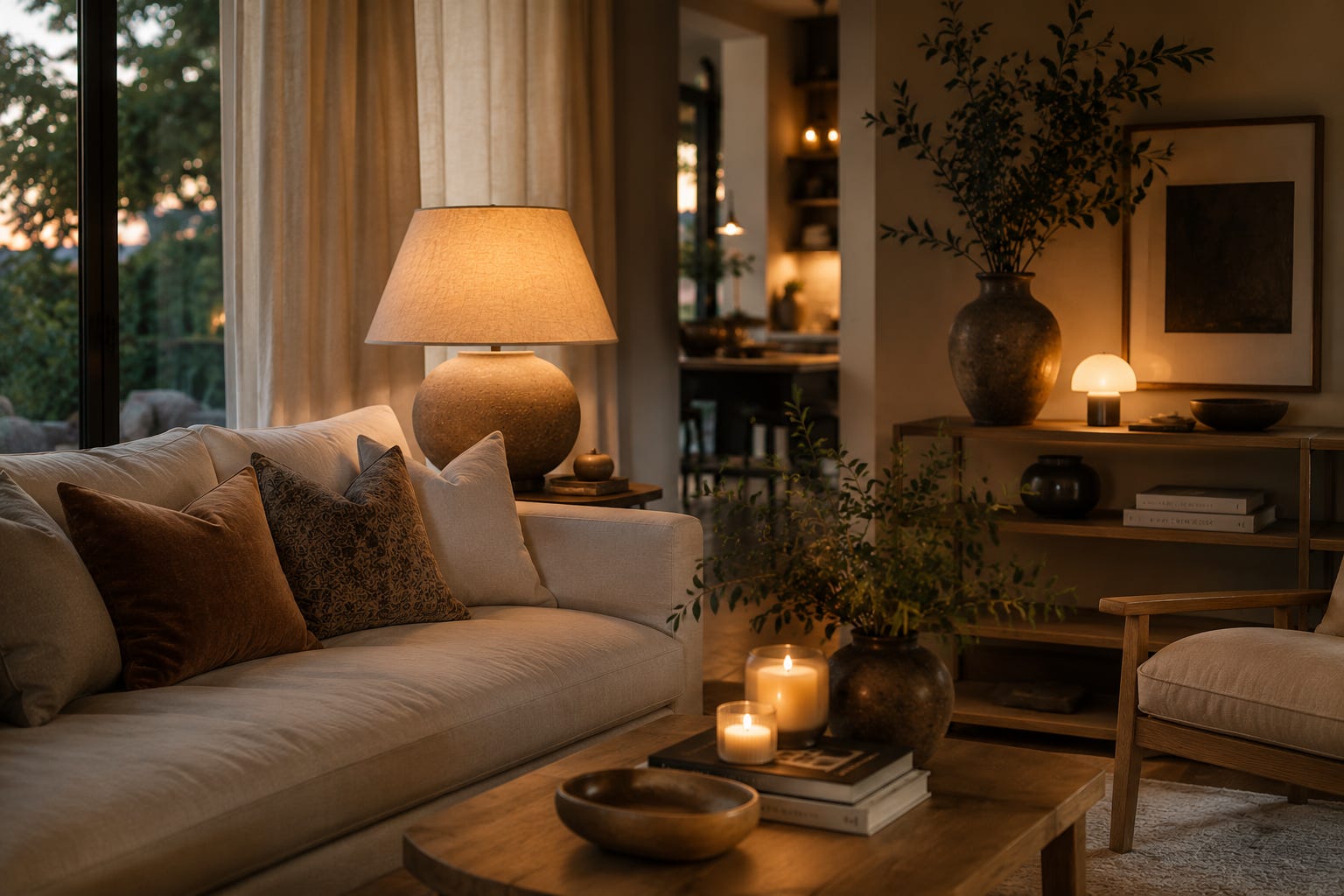
Natural Materials Make a Home Feel Quieter
The materials inside a home affect atmosphere more than I once realized.
I notice this most in the evening, when the house becomes quieter and textures feel more present.
Washed linen throws, soft wool blankets, warm wood furniture, and natural cotton fabrics all seem to absorb visual noise instead of adding to it.
The rooms feel softer emotionally because of those materials.
I used to buy more synthetic home décor without thinking much about it. But over time, I noticed certain textures felt oddly overstimulating at night.
Shiny fabrics, harsh finishes, and overly artificial materials reflected light differently and created a feeling I can only describe as visually “loud.”
Natural materials feel calmer to me now.
Linen wrinkles softly instead of looking rigid.
Wood develops warmth as lamps glow against it in the evening.
Cotton and wool create texture without feeling heavy or excessive. The home feels layered in a quieter way.
I also think this is where quiet luxury becomes misunderstood sometimes.
To me, quiet luxury is not about expensive objects or perfectly styled rooms. It is about creating a home that feels emotionally restful. Breathable materials, softer textures, and spaces that do not demand constant attention all contribute to that feeling.
And honestly, some of the calmest evenings in our home happen when very little is happening at all.
A folded linen blanket.
A warm lamp near the sofa.
Tea steeping quietly in the kitchen.
Soft shadows moving across wood floors.
Those details shape the feeling of the home more than decorative perfection ever could.
Rhythm Changes the Feeling of a Home
I have realized that atmosphere is not created only through design.
It is also created through rhythm.
Certain evening habits completely change the emotional tone of our home now, even though they are incredibly simple.
Cleaning the kitchen before bed is one of the biggest examples. I do not mean deep cleaning everything perfectly.
I simply reset the counters, wash dishes, and leave the room feeling calm for the next morning. Walking into a quiet kitchen the next day changes the entire pace of the morning for me.
I also try to slow sound down at night.
Sometimes that means soft instrumental music while folding laundry. Other nights, it means turning everything off completely and letting the house become quiet. I think silence itself has become underrated.
Even small repeated habits start signaling comfort over time.
Dimming lamps after dinner.
Closing curtains.
Folding blankets back onto the sofa.
Making tea before bed.
These routines are not complicated, but they create emotional predictability. And honestly, predictability can feel deeply comforting in a world that constantly demands stimulation.
I notice this especially during stressful weeks.
The home feels steadier when certain rhythms remain the same. Evening becomes less about rushing toward bedtime and more about slowly transitioning into rest.
That slower transition has changed my sleep more than I expected.
The entire house feels like it exhales at night now.
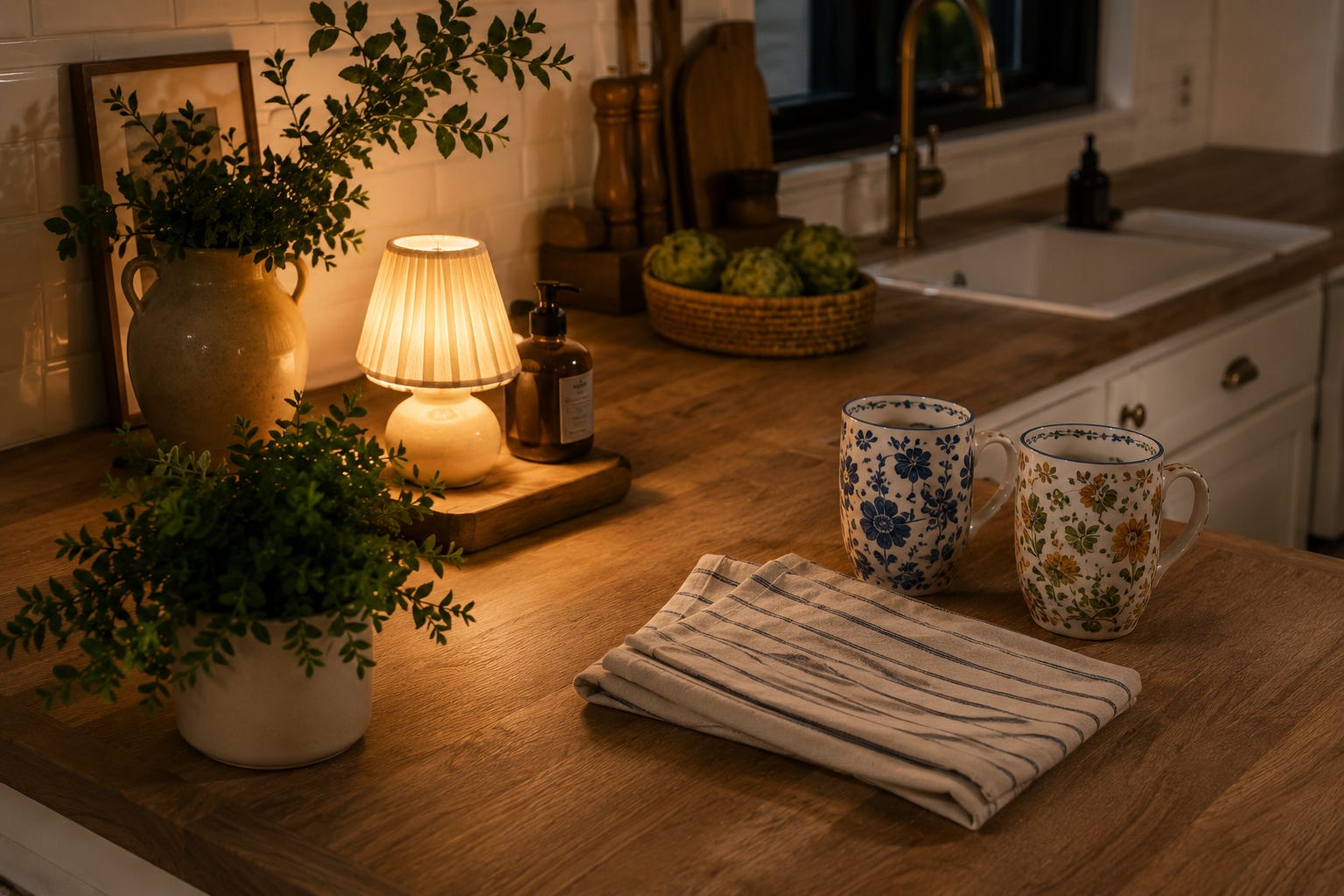
Creating Restful Evenings Without Buying More
One thing I care deeply about is avoiding the idea that calm must be purchased.
I think social media often turns restfulness into another form of consumption.
New candles, new décor, new lounge sets, new trends. But the most meaningful shifts in our home rarely came from buying more things.
They came from simplifying what already existed.
Turning off brighter lights earlier.
Keeping surfaces clearer at night.
Choosing softer fabrics over harsher textures. Opening windows when the weather allows. Creating quieter corners instead of constantly adding visual stimulation.
Most of these changes cost little or nothing.
I also think there is something comforting about resisting the pressure to make every room look perfectly curated.
A calm home feels lived in. There are books stacked beside the sofa, slightly wrinkled linen pillows, and familiar routines repeated each evening.
That softness matters more than perfection.
And honestly, I think people often underestimate how much atmosphere affects emotional well-being.
The way a home feels at night can either support rest or quietly fight against it. Harsh lighting, clutter, noise, and overstimulation linger in the nervous system long after the day ends.
Small shifts create a surprisingly large emotional impact over time.
Especially when they are repeated consistently.
For me, creating a relaxing home naturally has become less about aesthetics alone and more about protecting the feeling I want the home to hold at the end of the day.
A Calm Home Is Often Built Through Small Repeated Habits
The older I get, the more I believe calm is created gradually.
Not through dramatic transformations, but through small repeated habits that quietly shape the feeling of home over time.
A softer lamp beside the sofa.
A kitchen reset before bed.
Linen bedding layered onto the bed in the evening.
The decision to let the house become quieter at night instead of brighter and busier.
None of these things are complicated on their own. But together, they create an atmosphere that supports rest in a very real way.
And honestly, I think our homes affect us emotionally far more than we realize.
The spaces we spend time in either encourage nervous system calm or constant stimulation. Once I started noticing that difference, it became difficult to ignore.
Now, I want our evenings to feel slower, softer, and more breathable.
Not perfectly styled.
Just peaceful enough to rest inside comfortably.
And increasingly, I think those quiet feelings are what make a home feel truly luxurious in the first place.
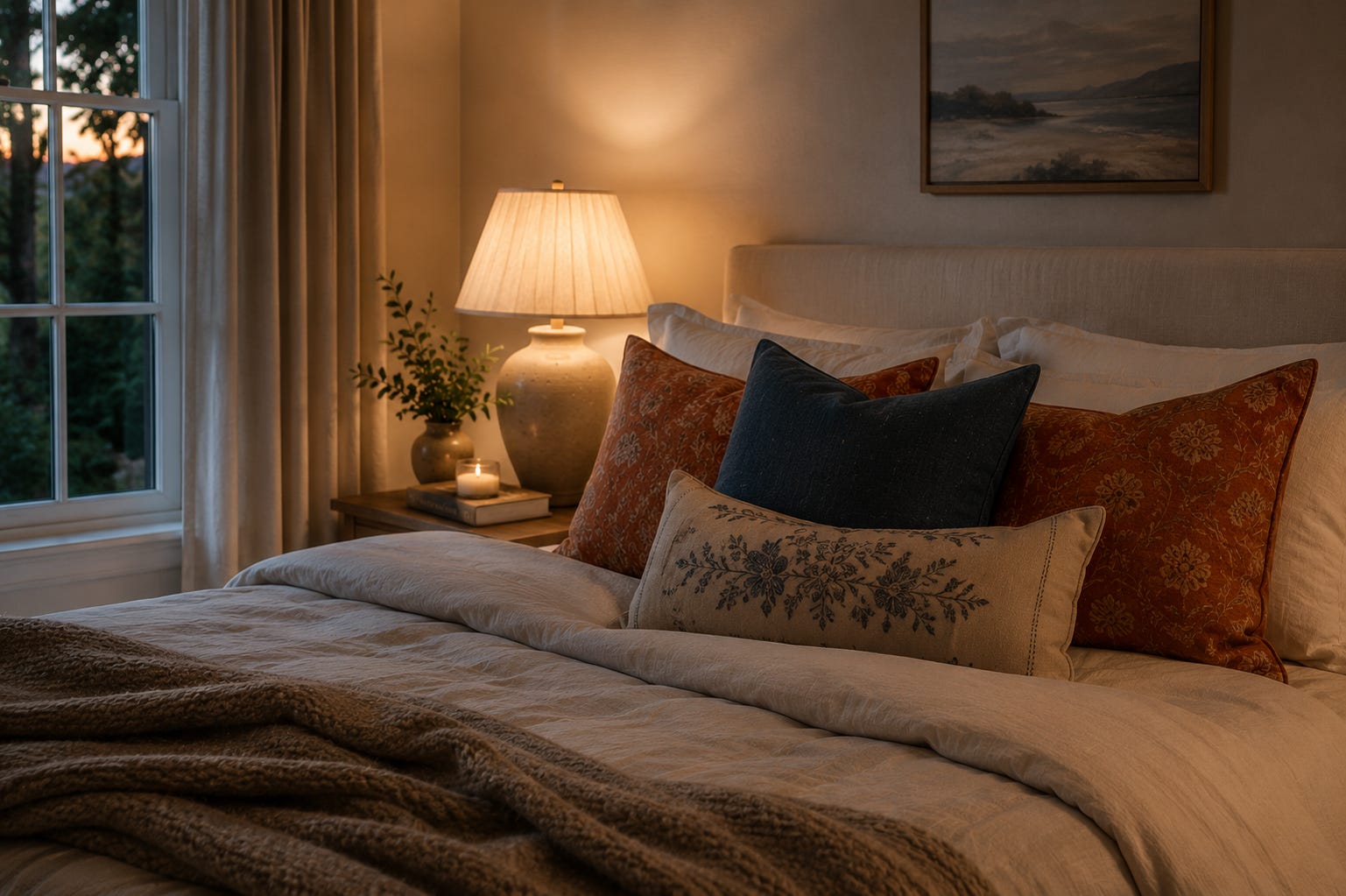
Pieces I Trust
Over time, I’ve realized that the calmest evenings are usually shaped by the softest details:
Warm table lamps that create smaller pools of light instead of flooding the room with brightness
Linen throws that make the living room feel relaxed and lived in at the end of the day
Beeswax candles that add warmth without overwhelming fragrance or visual heaviness
Wool blankets layered onto sofas and chairs for texture that feels grounding and comforting
Dimmable lighting that helps the house slowly transition away from daytime energy
Ceramic diffusers and matte natural materials that soften the atmosphere visually
Unscented candles for evenings when I want warmth without additional stimulation
Organic cotton lounge textiles that feel breathable, quiet, and easy to settle into
None of these pieces are dramatic on their own.
But together, they completely change the emotional tone of our evenings.
The house feels slower.
Softer.
More restful.
Almost like the rooms themselves are quietly exhaling after the day ends.
Calm Evenings Are Usually Built Gently
I used to think relaxation happened automatically once the workday ended.
Now, I think rest often requires transition.
The lighting shifts.
The home becomes quieter.
The textures soften.
Small habits repeat themselves night after night until the atmosphere itself begins signaling comfort and calm.
And honestly, those rhythms matter more to me now than perfectly styled spaces ever did.
I no longer want evenings that feel overstimulating or visually loud.
I want rooms that feel breathable enough to fully slow down inside.
A warm lamp glowing beside the sofa.
A kitchen reset before bed.
Linen blankets loosely folded nearby.
Silence replacing background noise.
Those small repeated details have changed the feeling of our home more than any dramatic redesign ever could.
What small evening habit helps your home feel calmer or more restful for you or your home?
Some links in this article may be affiliate links. By clicking on them, you help support my work. Don’t worry. I only share materials and brands I do/would use in my own home.
Did you like this article? Subscribe for ~free~ and get my next post in your inbox.