
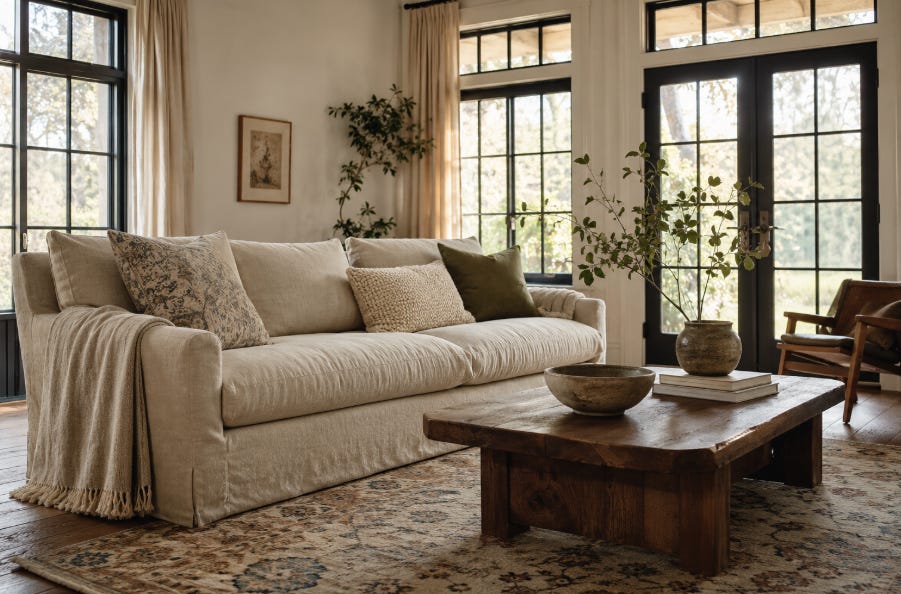
Why Upholstery Fabric Deserves More Attention
Upholstery is one of those home decisions that can look simple from the outside.
A color.
A texture.
A fabric grade.
A few swatches held up in pretty light.
But in real life, upholstery is intimate.
It is the sofa your child climbs onto after a bath with damp hair and sleepy eyes.
It is the chair someone chooses every evening without thinking.
It is the bench at the end of the bed where clothes are folded, shoes are tied, and quiet morning conversations happen before the house is fully awake.
Fabric lives very close to the body.
That is why I think it deserves more attention than we often give it.
Choosing natural upholstery fabric is not only about whether a sofa photographs beautifully. It is about how the fabric feels under your hand, how it breathes, how it wears, what may have been added to it, and whether it supports the kind of home you are trying to create.
For a low-tox home, the visible fabric is only part of the story.
There may be backing materials, stain treatments, water-repellent finishes, dyes, adhesives, foam, batting, and frame materials beneath the surface.
That does not mean every upholstered piece needs to be perfect. It simply means the decision deserves a little more curiosity.
I’ve found that better questions often lead to calmer choices.
Not fear-based choices.
Not rigid choices.
Just more informed ones.
A sofa is where real life lands at the end of the day.
The fabric should feel beautiful when you choose it and peaceful when your family lives close to it.
Natural Fibers: What They Offer and Where They Need Support
Natural upholstery fabrics often have a warmth that is difficult to imitate.
They feel less slick.
Less sealed-off.
More tactile and familiar.
Linen, cotton, wool, hemp, and leather can all have a place in a thoughtful home, but each one behaves differently.
Linen is one of the most beautiful choices when you want a room to feel breathable and quietly relaxed. It has that soft, slubby texture that catches light in a gentle way.
It wrinkles.
It softens.
It rarely looks frozen in place.
That is part of its charm.
Cotton feels familiar and approachable. It can be soft, comfortable, and versatile, especially when woven with enough weight for upholstery.
But cotton can stain more easily, depending on the weave and finish, so it is worth thinking honestly about where the piece will live.
Wool is one of the fibers I trust most for its resilience. It has natural texture, warmth, and a grounded feeling.
It can be wonderful on chairs, benches, and more tailored upholstery.
It often costs more, but it brings a depth that feels very at home in traditional and transitional interiors.
Hemp is strong, earthy, and quietly beautiful.
It is not always as easy to find in upholstery, but when blended thoughtfully, it can offer durability and texture without feeling overly polished.
Leather is a natural material too, though it requires a little more discernment.
The tanning, dyes, and finishes matter.
A beautiful leather chair can become one of the most beloved pieces in a room, but I would rather know how it was finished than assume natural always means low-tox.
The important thing to remember is this: natural fiber does not automatically mean untreated.
A linen or cotton fabric may still have synthetic backing, stain protection, chemical finishes, or blended fibers.
OEKO-TEX STANDARD 100, for example, is a textile label that tests for harmful substances, and OEKO-TEX has also moved to ban intentional PFAS use across its standards.
So the question is not only, “Is this natural?”
It is also, “What else has been added?”
That one question can change everything.
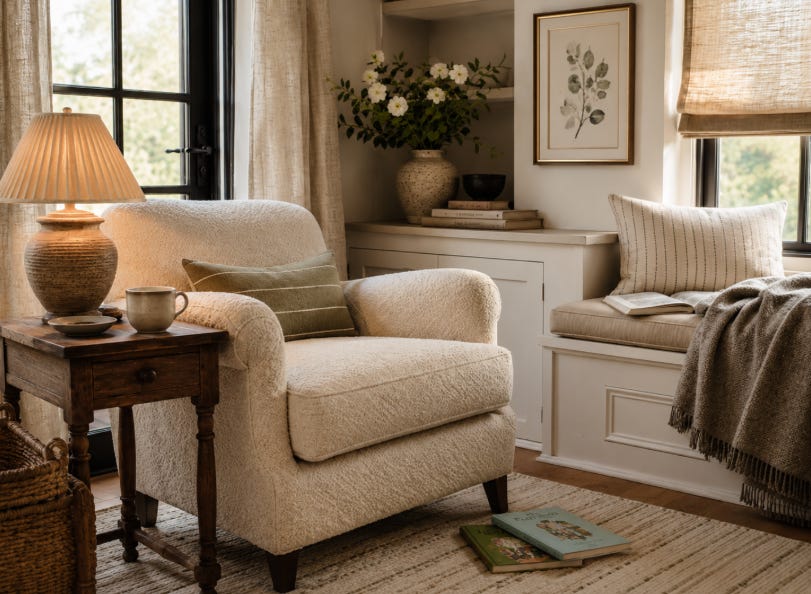
Be Careful With the Word “Performance”
Performance fabric can sound wonderfully reassuring.
And sometimes, it is useful.
A family room sofa needs to survive more than a rarely used formal chair.
A breakfast banquette may need more stain resistance than a bedroom bench.
A house with children, pets, guests, and everyday meals may genuinely need fabric that can handle life.
But “performance” is not a single material.
It is a broad marketing word.
Sometimes it refers to a tightly woven fabric.
Sometimes it refers to synthetic fibers.
Sometimes it refers to a topical finish.
Sometimes it may involve stain-resistant or water-repellent chemistry.
This is where I like to slow down.
Not because performance fabrics are always wrong, but because vague claims are not enough when a fabric will live close to your family.
PFAS have been used in consumer products for water-, grease-, and stain-resistant properties, and the EPA describes PFAS as a large group of manufactured chemicals used in industry and consumer products since the 1940s.
That does not mean every stain-resistant upholstery fabric contains PFAS.
It means the question is worth asking.
Is this fabric PFAS-free?
Is the stain resistance inherent to the fiber or applied as a finish?
Has the fabric been third-party tested?
What cleaning method is recommended?
Will the protection wear off over time?
I prefer this kind of calm, practical questioning over assuming that every beautiful natural fabric is too delicate or every performance fabric is automatically the safer choice.
The truth is more nuanced.
A carefully vetted PFAS-free performance fabric may be reasonable for a hard-working family sofa.
A natural linen may be perfect for a bedroom chair.
A wool blend may be ideal for a bench that needs structure and softness.
A slipcovered cotton or linen sofa may offer the washability a young family needs without relying only on stain-repellent claims.
The goal is not to reject practicality.
The goal is to understand what kind of practicality you are inviting into your home.
Look Beneath the Beautiful Surface
Upholstery has layers.
That is both the beauty and the challenge of it.
The fabric may be the part you see, but beneath it there may be foam, batting, adhesives, webbing, plywood, engineered wood, dust covers, decking fabric, and finishes that affect the overall low-tox quality of the piece.
This is especially important with sofas and deep lounge chairs because they are large items with a lot of material inside them.
If you are buying new upholstered furniture, I would ask about more than the fabric.
Ask whether the piece contains added flame retardants.
Ask about the foam.
Ask about the cushion fill.
Ask about the frame.
Ask whether the wood is solid, plywood, or composite.
Ask whether the product has any low-emission or textile certifications.
GREENGUARD Certification is focused on chemical emissions and healthier indoor environments, while CertiPUR-US certified foam is tested for emissions, content, and durability, including low VOC emissions and screening for certain harmful chemicals.
Certifications are not a perfect substitute for asking questions, but they can give you a clearer starting point.
This also matters if you are reupholstering.
Reupholstery can be a beautiful, lower-waste way to preserve a well-made frame. I love the idea of giving a solid old chair a second life instead of replacing it with something temporary.
But the inside matters.
Old foam may need replacing.
Batting may need refreshing.
The fabric may be new, but the piece may still hold materials you would not choose today.
There is something deeply satisfying about restoring a good frame with more thoughtful materials.
A bench that once looked tired can become the place where a child sits to pull on rain boots.
A chair with new wool upholstery can become the reading chair everyone quietly competes for.
That is the kind of investment I find meaningful.
Not simply making something look new.
Making it worthy of being lived with longer.
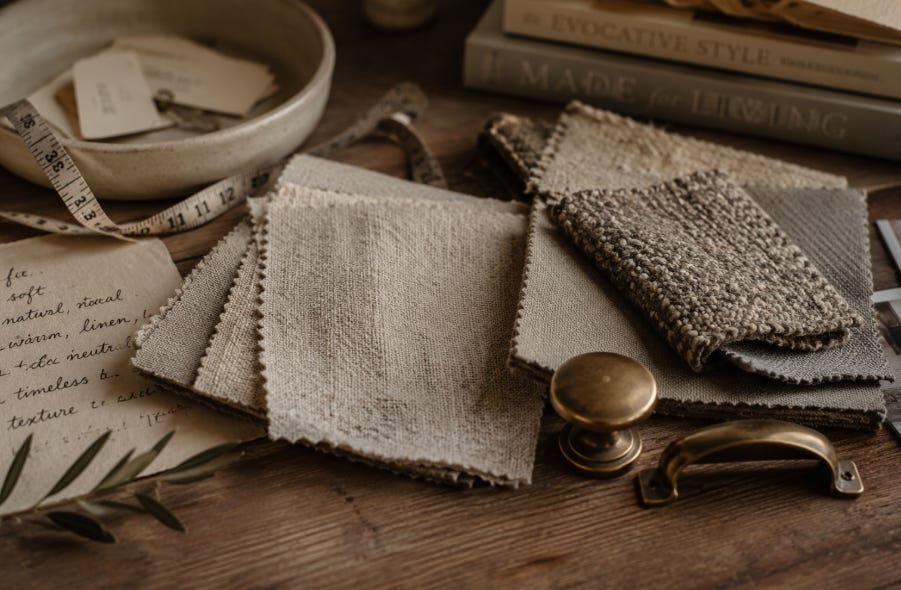
How to Choose the Right Upholstery Fabric for Your Real Life
The best upholstery fabric is not the same for every room.
That is why I like to begin with the life around the piece.
A family room sofa has different responsibilities than an occasional chair in a quiet bedroom.
A dining banquette needs different resilience than a bench at the foot of a guest bed.
An entry bench may need a forgiving texture because it will meet coats, bags, shoes, and the ordinary rush of coming home.
Before committing, order swatches.
Live with them for a few days.
Hold them in morning light and evening light.
Place them near the flooring, wall color, wood tones, and rugs already in the room. Rub the fabric between your fingers.
Notice whether it feels soft, scratchy, stiff, slippery, warm, cool, breathable, or oddly coated.
Your hand will often tell you what a product description does not.
Then think about pattern and weave.
A textured weave can be more forgiving than a flat, pale fabric.
A medium tone may show less daily life than bright white or very dark upholstery.
A slipcover may be a beautiful solution where washability matters.
A tighter weave may make more sense for pets.
A more delicate linen may be better on a chair than on the sofa where everyone eats popcorn during movies.
I also like to ask one quiet question:
How do I want this piece to feel five years from now?
Not just how do I want it to look when it arrives.
Five years from now, the sofa may have held sick days, movie nights, guests, children, pets, naps, conversations, and ordinary evenings when everyone needed somewhere soft to land.
The fabric should be able to meet that life with some grace.
Low-tox choices become much easier when they are rooted in reality.
Not perfection.
Reality.
Choose the fabric for how it will be touched, cleaned, used, and remembered.
That is where the better decision usually lives.
The Fabric Your Family Lives Closest To
Choosing natural upholstery fabric is not about becoming anxious over every detail.
It is about becoming more awake to the materials that shape daily life.
The sofa is not just a silhouette.
The chair is not just an accent piece.
The bench is not just something to fill the end of a bed or the space beneath a window.
These pieces hold the body.
They soften the room.
They absorb sound.
They invite people to stay a little longer.
They become part of the emotional temperature of a home.
When I think about low-tox luxury, this is where it becomes very practical. Luxury is not only the beautiful fabric chosen in a showroom.
It is the relief of sinking into something comfortable at the end of the day and knowing you chose it with care.
Natural upholstery does not have to be fragile.
Low-tox choices do not have to feel clinical.
A healthier home can still feel layered, traditional, tactile, and deeply beautiful.
The most important thing is to slow the decision down enough to ask better questions.
What is the fiber?
What has been added?
How will it age?
Can it be cleaned?
Does it feel good against the skin?
Does it support the way we actually live?
A fabric that answers those questions well is far less likely to become a regret.
And far more likely to become part of the quiet comfort your family remembers.
A Few Questions I’m Often Asked
What is the best natural upholstery fabric for a sofa?
The best natural upholstery fabric for a sofa is usually a durable linen, cotton, wool, hemp blend, or carefully vetted natural-performance blend that suits your household’s daily use.
For a high-traffic family room, I would look for texture, durability, cleanability, and clear information about finishes or treatments.
Are performance fabrics toxic?
Not all performance fabrics are toxic, but some rely on synthetic fibers or stain-resistant finishes that deserve closer questioning.
Ask whether the fabric is PFAS-free, whether the stain resistance is inherent or topical, and whether the fabric has been tested by a credible third party.
Is linen a good upholstery fabric for sofas?
Linen can be a beautiful upholstery fabric for sofas, especially in calmer rooms or slipcovered designs.
It feels breathable, relaxed, and tactile, but it may wrinkle, soften, and show wear more than some synthetic performance fabrics. That lived-in quality can be lovely if you expect it.
What should I ask before buying upholstered furniture?
Ask about fiber content, fabric backing, PFAS, stain treatments, flame retardants, foam, cushion fill, frame materials, adhesives, and third-party certifications.
The fabric matters, but the entire upholstered piece affects how low-tox, durable, and comfortable it feels over time.
Can natural upholstery fabric still work for families?
Yes, natural upholstery fabric can work beautifully for families when the weave, color, cushion construction, and cleaning expectations match real life.
Slipcovers, textured fabrics, wool, heavier linen, and carefully chosen cotton blends can all make natural upholstery feel more practical.
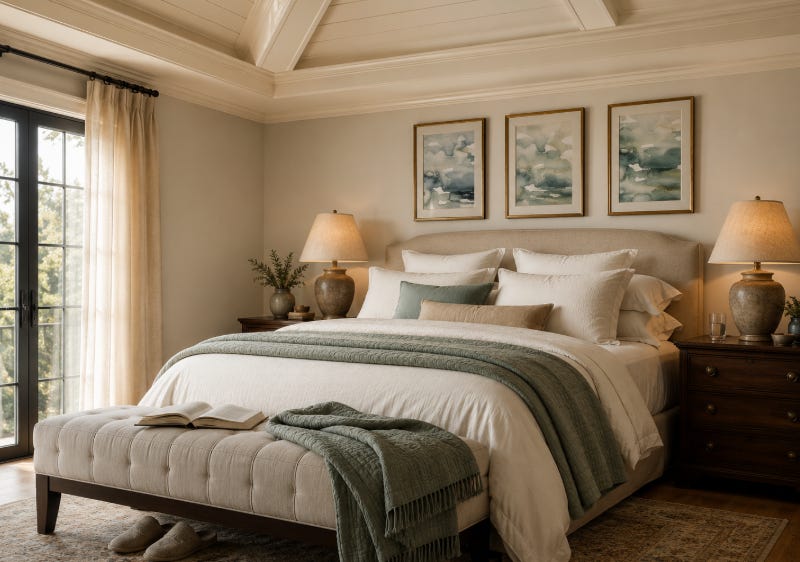
Pieces I Trust
When I’m choosing upholstery for a calmer, healthier home, these are the categories I return to most often.
Natural linen upholstery for relaxed texture, breathable softness, and a quietly elegant look that does not feel overly polished.
Organic cotton upholstery for familiar comfort, especially when the fabric has enough weight and structure for daily use.
Wool upholstery fabric for resilience, texture, warmth, and a grounded feeling that works beautifully on chairs and benches.
Hemp blend upholstery for strength, earthy texture, and a more natural hand when the blend is thoughtfully made.
PFAS-free performance fabric for high-use family pieces where cleanability matters, but only when the brand is transparent about its finish.
Slipcovered sofas for homes where washability brings more peace than perfection.
Solid wood framed upholstered pieces because the hidden structure matters as much as the visible fabric.
Low-emission certified furniture for pieces that support a more thoughtful indoor environment.
I’d genuinely love to hear how you think about the fabric your family lives closest to. Have you ever chosen upholstery that looked beautiful at first, but didn’t feel right once you lived with it?
Some links in this article may be affiliate links. By clicking on them, you help support my work. Don’t worry. I only share materials and brands I do/would use in my own home.
Did you like this article? Subscribe for free and get my next post in your inbox.