
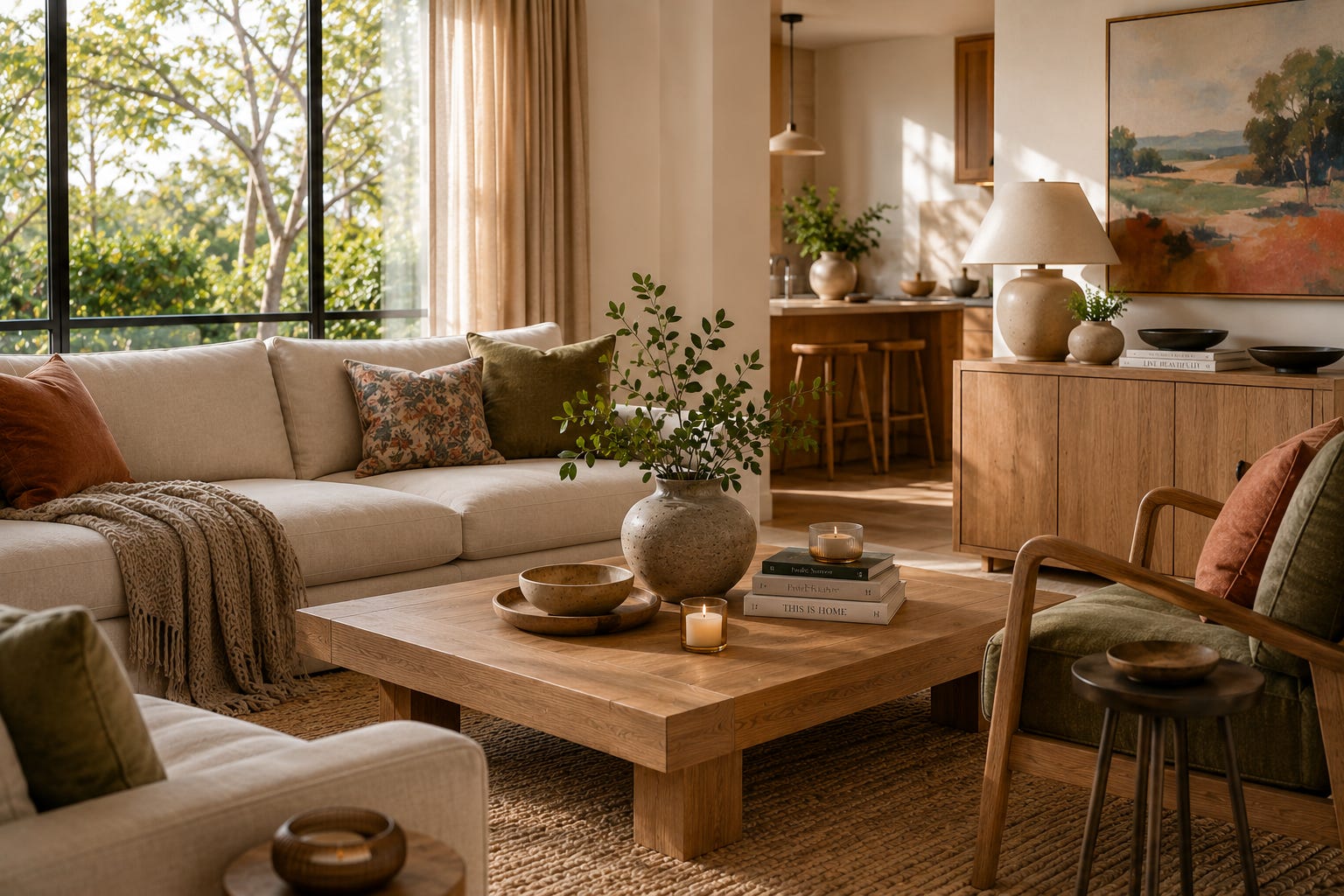
Why I Started Looking More Closely at Furniture Materials
For years, I chose furniture mostly based on appearance.
If a piece fit the overall style I wanted, I rarely looked deeper into the materials or finishes being used. Like many people, I focused on shape, color, and trend appeal far more than composition.
But eventually, I started noticing how differently certain furniture pieces felt inside a room.
Some spaces looked beautiful in photographs but still felt visually heavy or oddly uncomfortable to live with daily. Other rooms felt calm almost immediately, even when the styling itself was very simple. Over time, I realized much of that feeling came down to materials.
Coffee tables especially began standing out to me.
They sit at the center of a living room and quietly shape the atmosphere around them. We touch them constantly throughout the day. They reflect light, hold visual weight, and influence how grounded the room feels emotionally.
Warm wood grain feels completely different than glossy laminate. Matte finishes soften a room while reflective surfaces often make it feel busier. Even texture changes how relaxed a space feels.
I noticed this most during slower evenings at home.
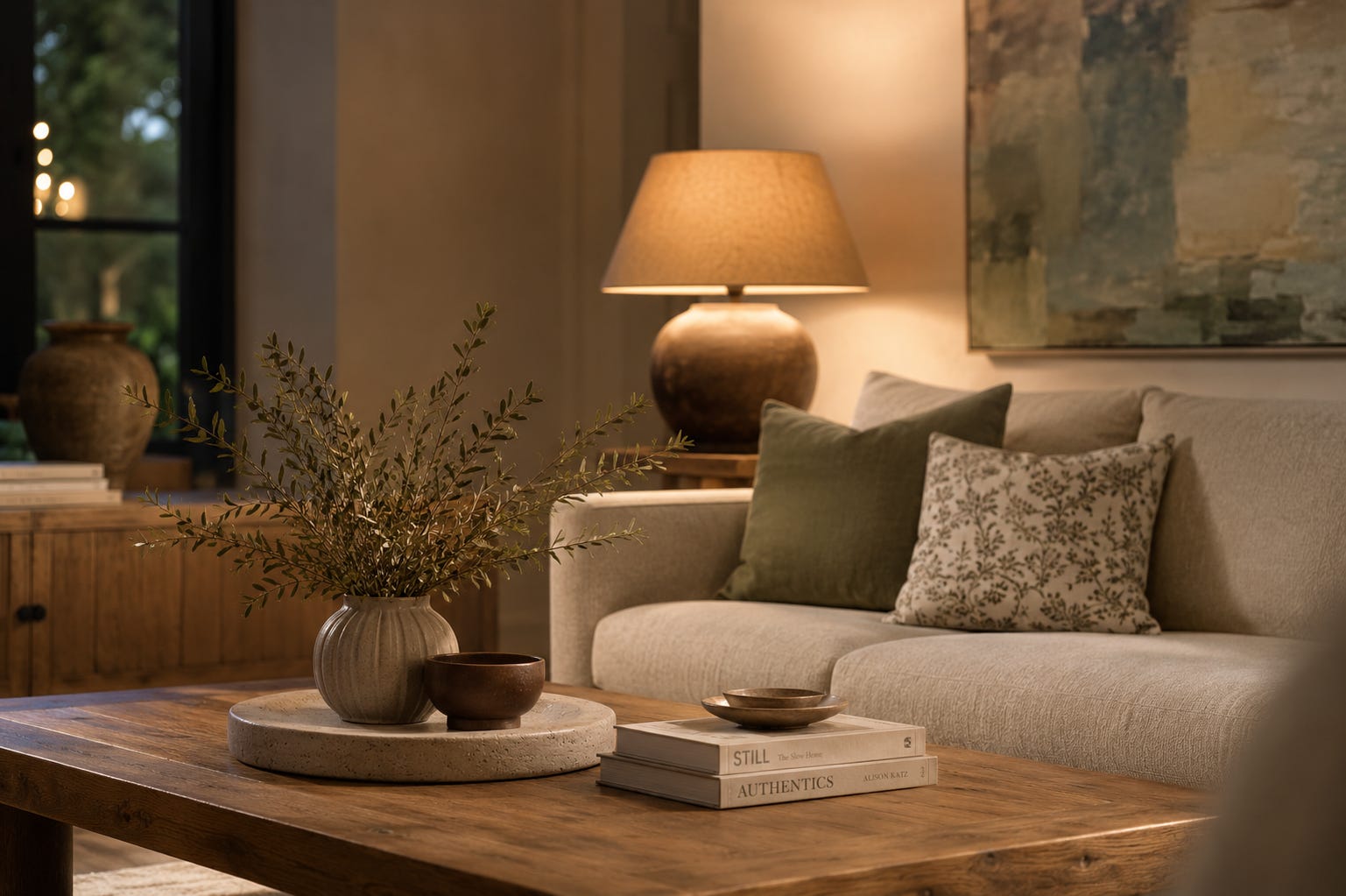
Soft lamplight against natural oak. Linen resting beside stone trays. Rounded wood edges that feel warm instead of sharp or synthetic. Those details affect the nervous system in subtle but meaningful ways.
The more I simplified our home, the more I started choosing furniture that felt calmer rather than simply looking impressive.
And honestly, that shift changed the atmosphere of our living room more than I expected.
Materials I Avoid in Coffee Tables Now
One of the biggest things I pay attention to now is avoiding materials that feel overly synthetic or heavily processed.
Particleboard is probably the clearest example. Many furniture pieces today are built from compressed wood materials covered in veneers or laminates designed to imitate natural wood. While they may look similar initially, they rarely feel the same long term.
I started noticing this especially through texture and scent.
Some furniture arrived with a strong chemical odor that lingered for weeks. Certain glossy finishes reflected light harshly throughout the room, making the space feel visually louder than I wanted.
Faux wood surfaces also tended to feel flat or artificial once I began comparing them with solid wood pieces.
I also avoid overly shiny finishes whenever possible now.
High-gloss surfaces often create visual stimulation that feels overwhelming to me in spaces meant for rest and conversation. Even when minimalist, those finishes can still make a room feel colder emotionally.
Instead, I gravitate toward materials that age naturally and feel honest in their texture.
That does not mean every piece in a home must be perfectly natural or expensive. I try to avoid perfectionism around healthy homes.
But I do think furniture feels more low-tox and emotionally grounding when materials breathe well, finishes are softer, and surfaces are not constantly trying to imitate something else.
And honestly, I think people can usually sense that difference immediately when they walk into a room.
Certain spaces simply feel calmer.
The Natural Materials I Reach for Instead
These days, I almost always gravitate toward natural materials when choosing larger furniture pieces.
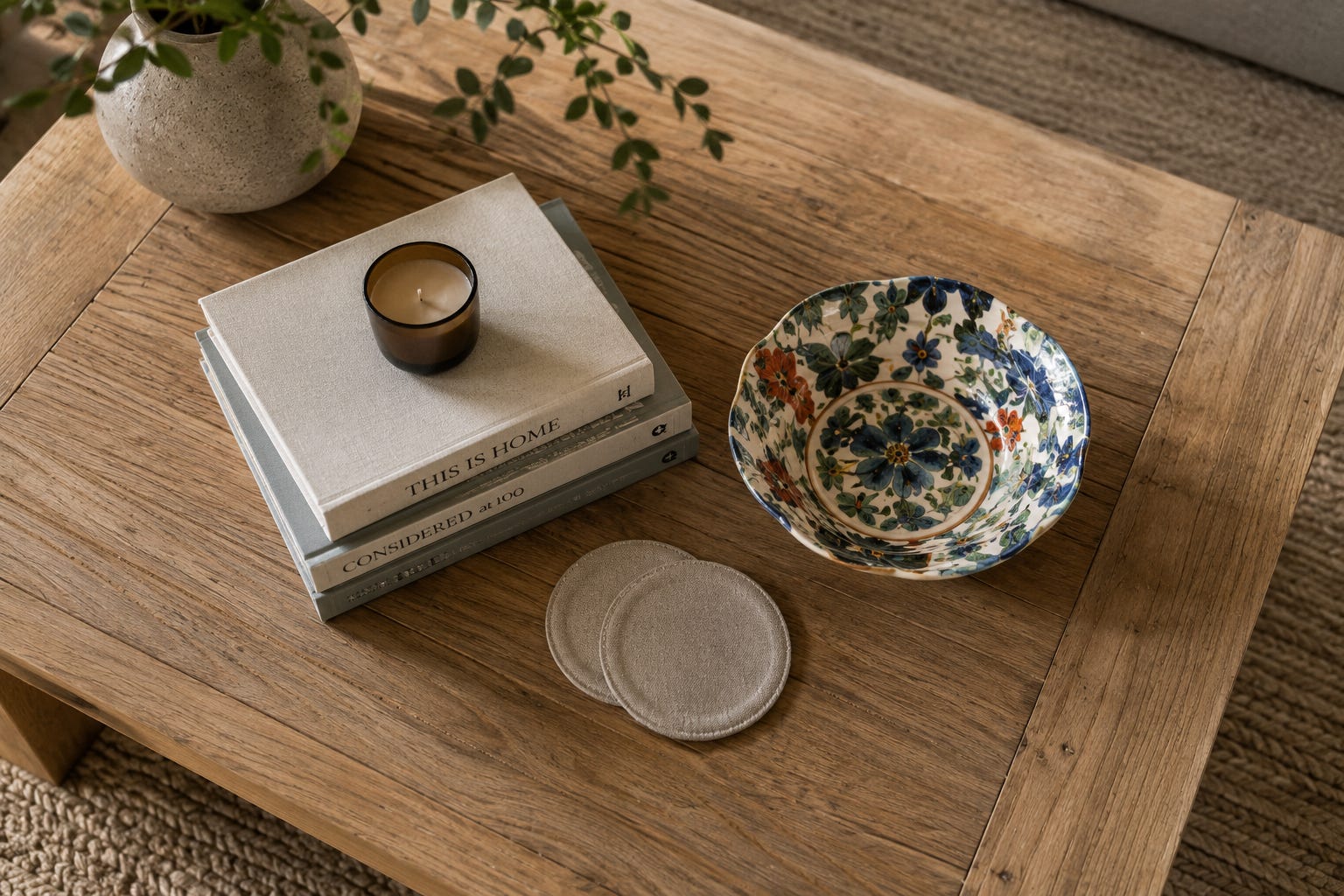
Solid wood is probably the material I trust most for coffee tables because it brings warmth and softness into a room so naturally.
Oak, walnut, maple, and ash all age beautifully over time, and they develop character instead of simply wearing out.
I especially love matte or lightly oiled finishes.
Natural oils and waxes allow the texture of wood to remain visible and tactile rather than sealed beneath heavy gloss. The surface reflects light softly, which immediately changes the emotional atmosphere of the room.
Stone is another material I’ve come to appreciate more.
Travertine, limestone, and softer matte stone finishes create grounding weight without feeling visually heavy.
I think natural stone works beautifully when paired with linen upholstery, wool rugs, and softer organic textures nearby.
I also find myself drawn toward rounded organic shapes now instead of sharp geometric pieces.
Rounded edges feel calmer emotionally somehow. They soften movement through a room and create a quieter visual rhythm overall. Even small curves in a coffee table can completely change how relaxed a living room feels.
And honestly, I think this is what quiet luxury actually looks like in practice.
Not overly designed furniture.
Not trendy statement pieces.
Just honest materials that feel timeless, tactile, and naturally comfortable to live beside every day.
Shape and Texture Matter as Much as Material
I used to think furniture selection was mostly about finding the “right” style.
Now, I think shape and texture influence atmosphere just as much as the material itself.
A room filled with sharp lines, reflective surfaces, and rigid shapes often feels visually tense to me now, even if the furniture is technically beautiful. Softer silhouettes create a completely different emotional response.
I notice this especially in coffee tables because they sit so centrally within the room.
Rounded corners feel gentler when moving through the space. Textured wood grain softens the visual weight of larger pieces. Matte finishes absorb light quietly rather than constantly pulling attention.
Even the way objects rest on the table changes the feeling.
A ceramic bowl beside linen coasters feels relaxed. A stone tray layered over warm wood creates texture without clutter. Everything feels quieter when materials and shapes complement one another naturally.
I also think slower interiors are becoming more appealing because so much of modern life already feels overstimulating.
At the end of the day, I do not want our living room to feel aggressively styled. I want it to feel breathable and emotionally restful.
Furniture plays a huge role in creating that atmosphere, whether we consciously notice it or not.
And honestly, the calmest rooms are usually the ones where nothing is trying too hard.
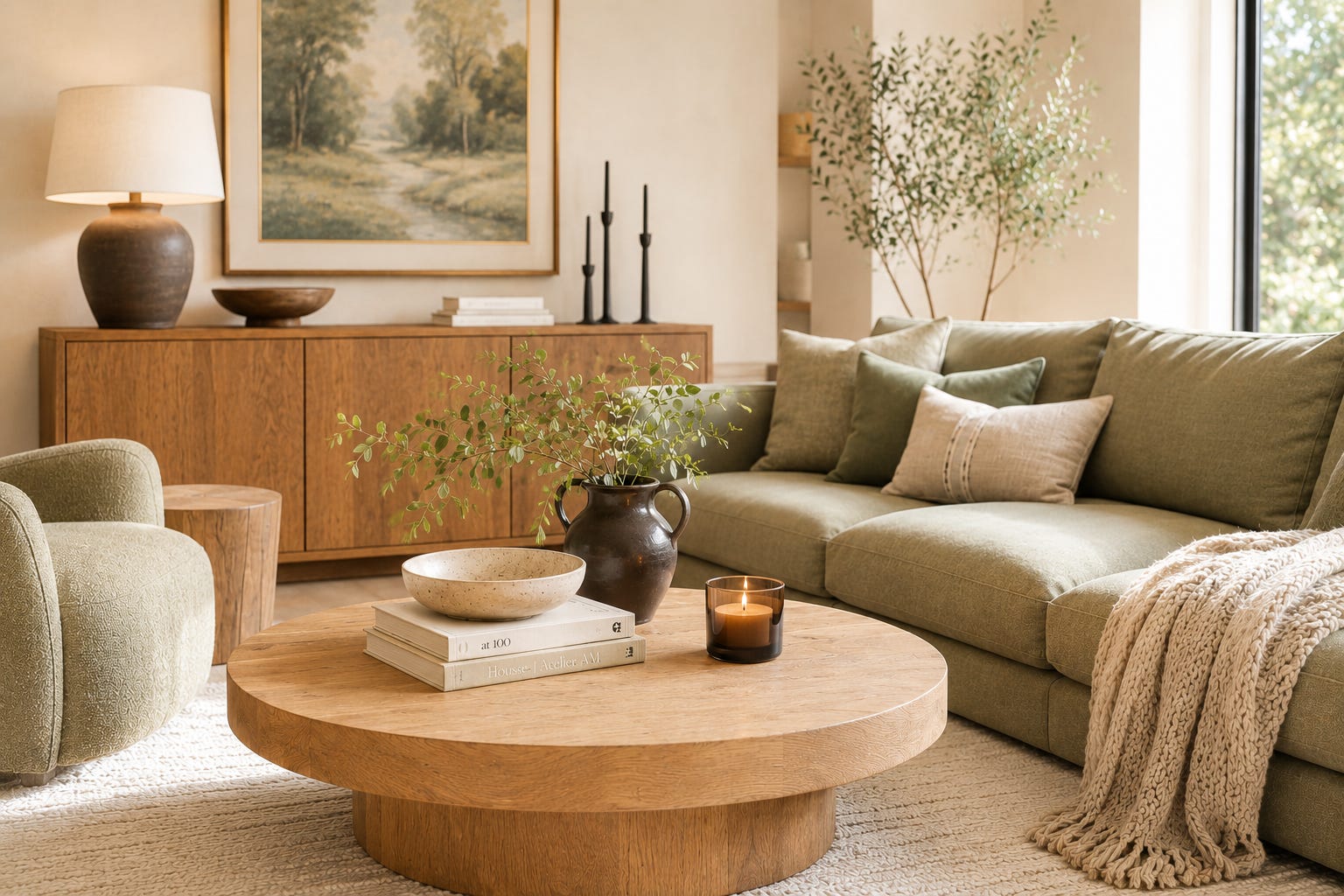
Choosing Furniture More Slowly Has Changed Our Home
One of the healthiest changes I’ve made in our home has been learning to buy furniture more slowly.
I used to feel pressure to finish rooms quickly. If a space looked incomplete, I rushed decisions just to make everything feel done.
But those fast purchases rarely became the pieces I loved most long term.
Now, I wait.
I pay attention to how materials feel, how finishes interact with light, and whether a piece creates calm instead of visual noise. Sometimes that means living with empty space longer, but I’ve realized empty space often feels better than filling a room with furniture that does not truly belong there.
That slower approach has completely changed how our home feels emotionally.
Rooms feel more grounded because fewer items compete for attention. The materials connect naturally instead of following random trend cycles.
There is a consistency to the atmosphere now that feels noticeably calmer.
I also think timeless furniture naturally supports healthier homes because it reduces the constant urge to replace things.
Solid wood ages beautifully. Stone develops character. Linen and wool soften over time. These materials evolve alongside daily life instead of constantly demanding replacement.
And honestly, I trust slower decisions much more now.
Especially when choosing larger foundational pieces like coffee tables that quietly anchor an entire room.
A Coffee Table Should Feel Quietly Grounding in a Room
The older I get, the more I believe furniture should support the emotional atmosphere of a home rather than dominate it.
Coffee tables may seem like simple functional pieces, but they shape the center of a living room in very real ways. They hold texture, light, movement, and visual weight all at once.
For me, the best coffee tables feel grounding rather than attention-seeking.
Natural wood, softer finishes, rounded edges, and tactile materials create a room that feels calmer almost immediately. The atmosphere becomes quieter without needing excessive decoration or styling.
And honestly, I no longer want furniture that feels disposable or overly manufactured.
I want pieces that feel breathable, timeless, and comfortable to live beside every day.
Not perfect.
Just honest enough to help the home feel softer and more restful over time.
Pieces I Trust
When it comes to furniture, I’ve realized I trust the same kinds of materials over and over because they consistently make a room feel calmer and more grounded:
Solid oak and walnut coffee tables with visible natural grain and softer matte finishes
Natural wood oils and low-tox finishes that allow furniture to feel breathable instead of heavily sealed
Linen coasters and textiles that soften the harder surfaces around a living room
Stone trays and organic materials that add quiet texture without visual clutter
Organic cotton throws layered onto sofas and chairs for warmth that feels relaxed instead of overly styled
Matte ceramic bowls and handmade pieces that create softness through texture rather than excess decoration
Wool rugs that absorb sound gently and make the room feel more settled emotionally
Furniture finishes that feel honest and understated instead of glossy or overly manufactured
None of these pieces feel dramatic on their own.
That is part of why I love them.
Together, they create a living room that feels slower, softer, and easier to rest inside. The materials work quietly in the background instead of constantly demanding attention.
And honestly, I think that quiet feeling is what makes a home feel timeless in the first place.
The Right Furniture Changes More Than the Way a Room Looks
I used to think furniture was mostly about style.
Now, I think it shapes atmosphere just as much.
The warmth of solid wood beneath lamplight. The softness of rounded edges. The calm texture of linen beside matte ceramics and wool. Those details affect how a room feels emotionally every single day, even when we are not consciously noticing them.
And increasingly, I find myself wanting furniture that feels grounding rather than impressive.
Not trend-driven pieces designed for quick visual impact.
Not rooms filled with glossy surfaces and constant stimulation.
Just materials that feel breathable, tactile, and quietly comfortable to live beside long term.
I think that is why natural furniture ages so beautifully.
It softens instead of becoming outdated.
It develops warmth instead of feeling disposable.
And over time, those quieter choices have completely changed how our home feels to live in every day.
What furniture material has made the biggest difference in how your home feels for you or your home?
Some links in this article may be affiliate links. By clicking on them, you help support my work. Don’t worry. I only share materials and brands I do/would use in my own home.
Did you like this article? Subscribe for ~free~ and get my next post in your inbox.