
The Pressure to Finish a Home Too Quickly
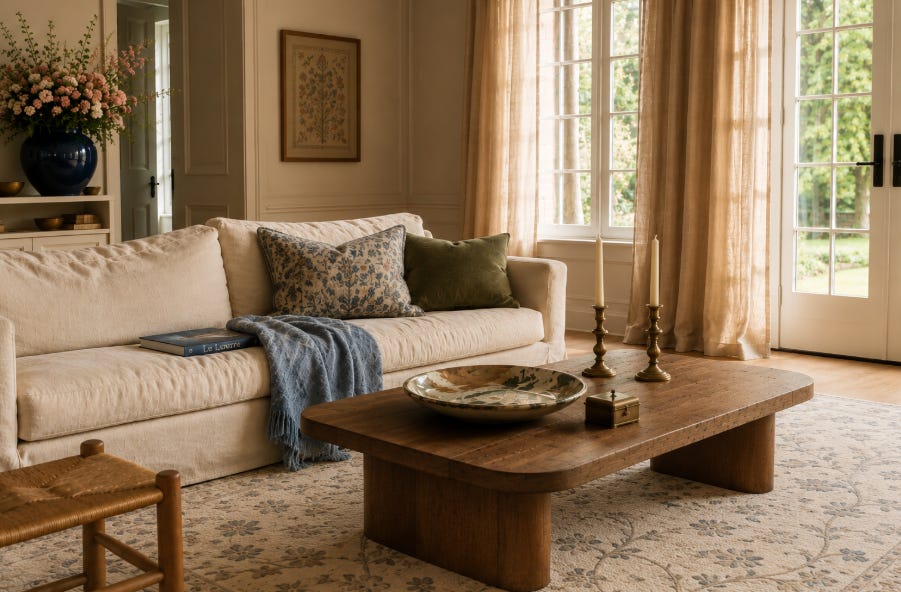
There is a particular kind of discomfort that comes from an unfinished room.
The empty wall.
The missing rug.
The awkward corner where nothing has quite landed yet.
The lamp you know you need, but haven’t found.
I understand that feeling. A room can start to feel almost accusatory when it has been sitting incomplete for too long, especially if guests are coming, photos are being saved, or you are already tired from making too many decisions.
So we buy.
Not always because we found the right thing.
Sometimes because the absence has become too loud.
I think this is where many design regrets begin. Not with bad taste, but with pressure.
A quick purchase can give the immediate relief of progress, but it may not give the lasting relief of belonging.
There is a difference between filling a space and choosing something that truly belongs there.
One solves the room for a moment.
The other supports the home for years.
Buying less for your home does not mean living in rooms that feel bare, cold, or unfinished forever. It means refusing to confuse urgency with clarity.
It means letting your home become known to you before you ask it to be complete.
That can feel slow at first.
But often, it is the beginning of loving your home more.
Waiting Helps You Notice What the Room Is Asking For
Rooms reveal themselves gradually.
Morning light may make one corner feel beautiful.
Evening shadows may make that same corner feel dim and forgotten.
A chair that seemed useful may go untouched for weeks, while everyone keeps gathering on the floor beside the coffee table.
A console you thought you needed may turn out to be less important than closed storage, softer lighting, or a better place to set down school papers and keys.
This is why waiting can be so clarifying.
When you live with a space first, you begin to see the difference between what you imagined the room needed and what your real life keeps asking for.
The basket that migrates to the bottom of the stairs.
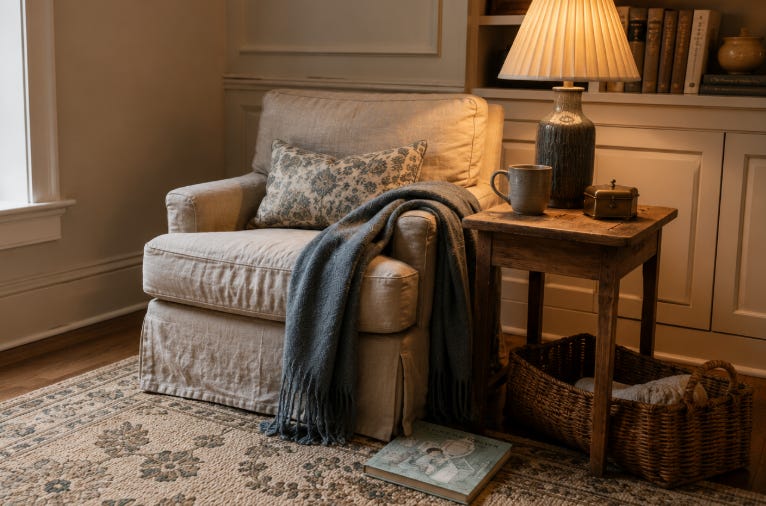
The blanket that always ends up on the same chair.
The lamp no one turns on because the light feels too sharp.
The entry bench that becomes the place where everyone drops bags, ties shoes, and pauses before leaving the house.
These small details are not clutter in the design process.
They are clues.
I’ve noticed that the most useful purchases often come after a period of paying attention.
You may realize the room does not need more decor. It needs warmth. Or sound softness. Or a better surface.
Or fabric that feels good against the skin. Or a piece with enough weight to ground everything else.
Buying slowly helps prevent design regret because it gives you time to understand what a room actually needs before investing in furniture, lighting, rugs, or decor.
The pause is not indecision.
It is observation.
And observation usually leads to better choices.
Better Materials Usually Ask for More Patience
Fast purchases often lead to fast compromises.
A temporary table because the better one costs more.
A synthetic rug because it can arrive by Friday.
A cabinet made from materials you would not have chosen if you had given yourself another month to look.
A sofa that fits the budget today but not the way your family wants to live with it over time.
I don’t say that with judgment. Most of us have made those choices at some point. Homes are expensive, life is full, and sometimes a room really does need to function quickly.
But when the purchase is not urgent, waiting often opens better options.
It gives you time to look for solid wood instead of a fragile veneer.
Wool instead of a rug that feels plasticky underfoot.
Linen or cotton instead of a fabric that feels sealed and stiff.
Ceramic, stone, brass, and natural fibers instead of pieces chosen only because they were available immediately.
Natural materials often require more patience.
They may need a longer lead time, a better budget, a vintage search, a local maker, or simply more discernment.
But they also tend to carry a different emotional weight once they enter a home.
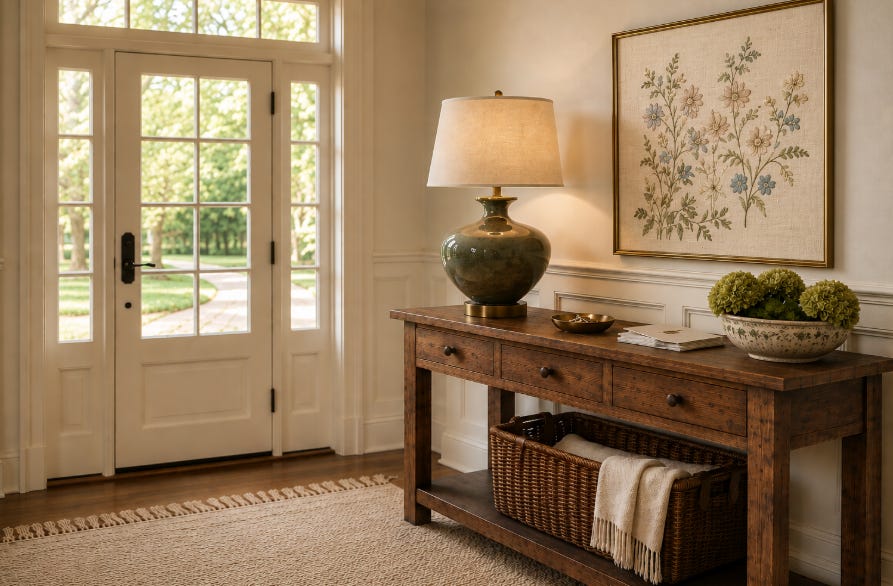
A solid wood console found after months of looking can become more than storage.
It becomes the place where keys land, where garden flowers sit in a small vase, where birthday cards are propped for a week before anyone has the heart to put them away.
That is the kind of piece that begins to collect life.
And that is the quiet luxury of buying less.
Not deprivation.
Not minimalism for the sake of emptiness.
Just fewer things chosen with greater care.
When you buy more slowly, you give yourself the chance to choose materials that can age, soften, repair, and remain beautiful through ordinary use.
Those are usually the pieces you love longer.
Stop Buying for an Imaginary Audience
One of the kindest things we can do for our homes is stop decorating for people who do not live there.
The imagined guest.
The person who might judge the unfinished wall.
The relative coming for the holidays.
The version of ourselves who thinks the house should already look complete.
So many purchases happen under the pressure of an invisible audience.
The guest room gets furnished all at once before company arrives.
The entry table is bought because the hallway looks bare, even though no one has figured out what the entry actually needs.
Art is chosen because a wall feels empty, not because the piece means anything.
A set of matching furniture arrives quickly, but somehow the room feels more staged than settled.
Buying slowly gives you room to separate outside pressure from real desire.
It lets you ask: Would I choose this if no one else ever saw it?
That question has become one of my favorite filters.
Because your home is not primarily for visitors, social media, or comparison.
It is for the people who wake up there.
The person making coffee before sunrise.
The child curled into the same corner of the sofa.
The spouse coming home after a demanding day.
The family moving through the house in socks, carrying laundry, opening windows, turning on lamps, looking for somewhere soft to land.
A home chosen for those people feels different.
It may not be finished quickly.
It may not impress instantly.
But it often feels more honest.
And honestly chosen rooms have a quiet confidence that rushed rooms rarely do.
A Gentle Framework for Buying More Slowly
Buying less does not mean never buying.
It means buying with more clarity.
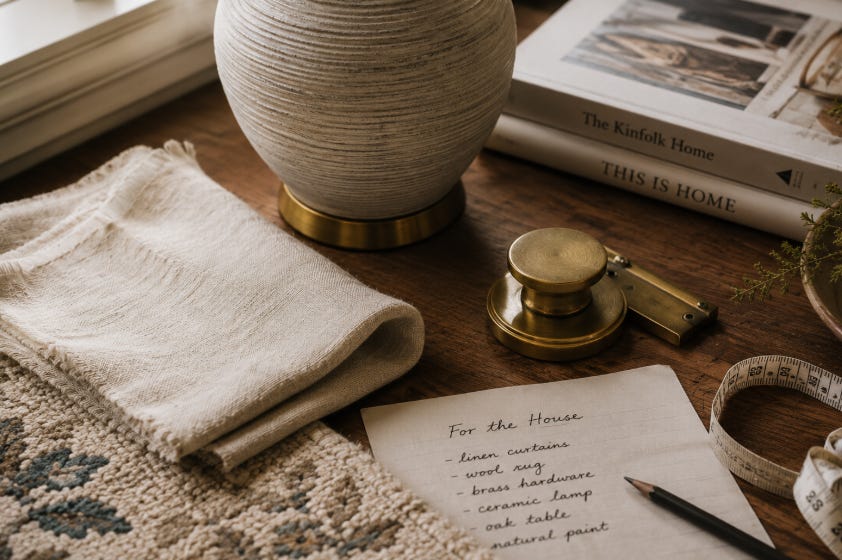
One of the simplest ways to begin is to keep a “not yet” list for your home. When you notice something you think you need, write it down instead of purchasing immediately.
A lamp for the living room.
A runner for the hallway.
A better entry basket.
A bedroom chair.
A new coffee table.
Then live with the list for a little while.
Some needs will become stronger. Others will fade. A few may transform entirely once you understand the room better.
Before making a purchase, I like to ask:
What problem am I solving?
Is this piece healthy enough to live with closely?
Will the material age well?
Can it be repaired, cleaned, or refreshed?
Does it support the way we actually use this room?
Would I buy it again in five years?
The five-year question is especially helpful because it moves the decision out of the urgency of today.
It reminds me that the home is not only being designed for this weekend.
It is being designed for future mornings, future holidays, future sick days, future ordinary evenings, and future versions of the people who live here.
Samples help too.
Fabric swatches.
Paint samples.
Wood finishes.
Rug samples.
Hardware finishes.
There is so much a small screen cannot tell you. Texture, undertone, weight, sheen, and softness all matter more once something is inside your actual home.
The goal is not to delay every decision until it becomes exhausting.
The goal is to buy with enough understanding that the piece feels like it belongs when it arrives.
That is when buying less starts to feel less like restriction and more like relief.
The Home Begins to Feel More Like Yours
There is a particular comfort in looking around a room and knowing the pieces were not chosen in a rush.
The table was waited for.
The rug was sampled in three different lights.
The lamp replaced a harsh overhead glow that never felt right.
The chair was chosen because someone in the family actually needed a quiet place to read.
The basket was not decorative at first. It simply solved the daily pile by the stairs.
These are not dramatic decisions, but they are the decisions that make a home feel trustworthy.
Buying less for your home and loving it more is not about creating an empty house.
It is about creating a more honest one.
A home with fewer impulse purchases.
Fewer temporary fixes.
Fewer pieces you secretly want to replace.
Fewer things that looked good in a cart but never felt right in the room.
And in their place, you begin to gather objects that support your real life.
A wool rug that softens the sound of the family room.
A solid wood dresser that can be repaired instead of discarded.
Linen curtains that make morning light feel gentler.
A ceramic lamp that turns the evening into something softer.
A home becomes more meaningful when it is allowed to become more specific.
Not finished overnight.
Not perfectly styled.
Not filled for the sake of being filled.
Just slowly, carefully, and with enough patience that the choices begin to feel like they could not belong anywhere else.
That is the quiet reward.
You buy less.
But you love more of what remains.
A Few Questions I’m Often Asked
Is slow decorating worth it?
Yes, slow decorating is often worth it because it helps you avoid impulse purchases and understand your rooms more clearly before investing.
When you wait, you notice how light, movement, storage, comfort, and daily routines actually work in the space. That usually leads to better purchases and fewer regrets.
How do I stop impulse buying home decor?
The best way to stop impulse buying home decor is to create a waiting period before purchasing anything non-essential.
Keep a running list of what you think you need, then revisit it later. Ask what problem the item solves, where it will live, and whether you would still want it several years from now.
How long should I live with a space before buying furniture?
For major furniture purchases, it often helps to live with a space for several weeks if you can.
That gives you time to observe traffic flow, lighting, comfort, storage needs, and how your family naturally uses the room. Even a short pause can prevent a rushed mistake.
Does buying less for your home save money?
Buying less for your home can save money because it reduces duplicate purchases, temporary fixes, returns, and pieces that need replacing quickly.
It also allows you to invest more thoughtfully in fewer, better pieces that are more likely to last.
Pieces I Trust
When I’m trying to buy less and love more of what I bring home, these are the categories I return to most often.
Solid wood case goods for storage pieces, consoles, dressers, and cabinets that can be repaired and lived with for decades.
Wool rugs for softness, texture, sound absorption, and a grounded feeling underfoot.
Linen curtains for softening light without making a room feel heavy or overly decorated.
Ceramic lamps for warm evening light and a tactile, handmade quality.
Antique or vintage accent furniture for character, better materials, and a collected-over-time feeling.
Natural fiber storage for baskets and bins that solve real household needs without adding visual harshness.
Low-VOC paint samples because undertones change dramatically once they are inside your own light.
Organic cotton or wool throws for warmth, comfort, and the kind of softness people actually reach for.
I’d genuinely love to hear about a time when you waited before buying something for your home and felt grateful later. What did the pause help you notice?
Some links in this article may be affiliate links. By clicking on them, you help support my work. Don’t worry. I only share materials and brands I do/would use in my own home.
Did you like this article? Subscribe for free and get my next post in your inbox.