
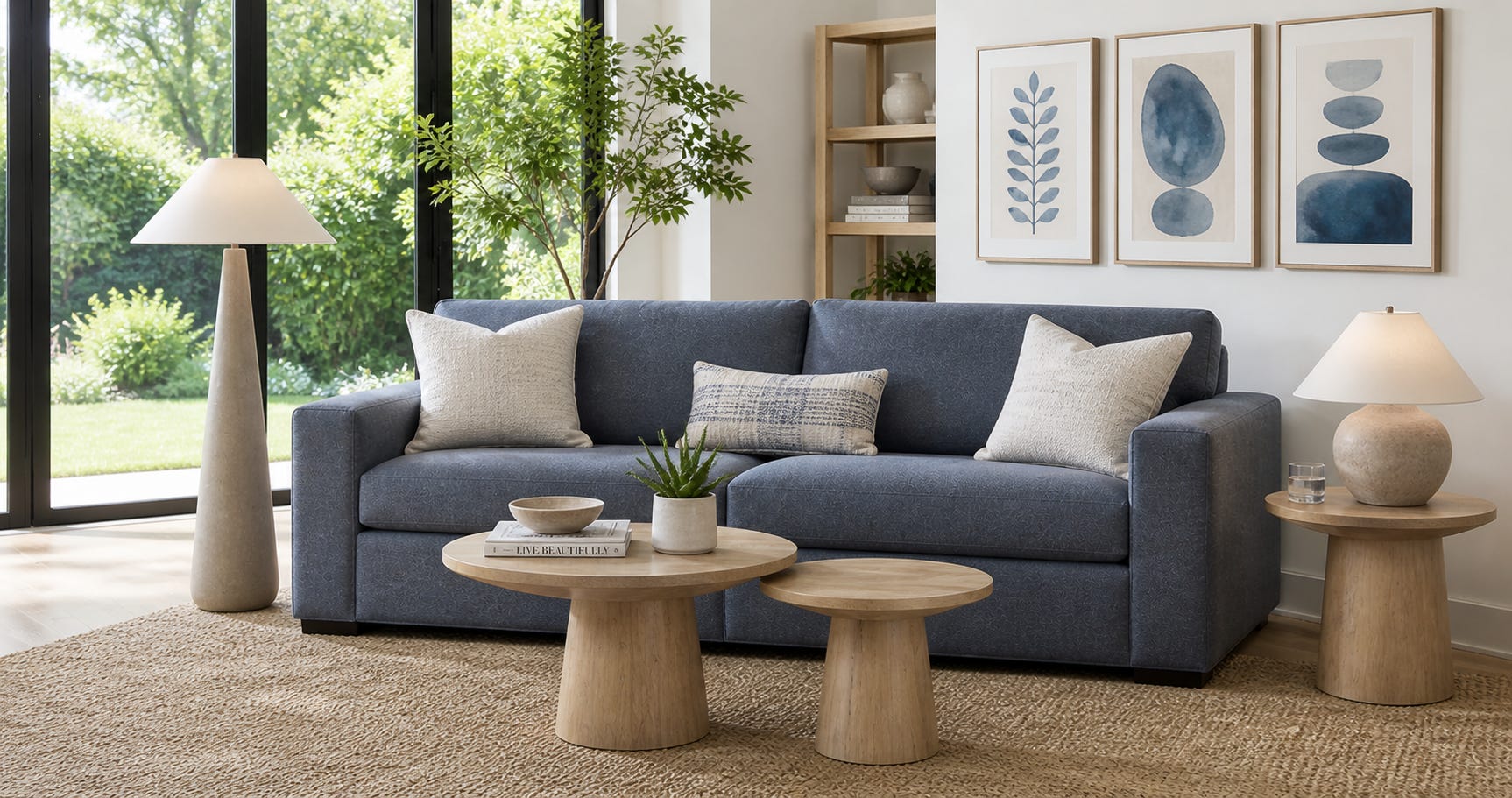
A Living Room That Feels as Good as It Looks
For a long time, I focused almost entirely on how my living room looked.
I paid attention to color palettes, layout, and whether everything felt visually balanced. On the surface, it all worked. The space looked calm, cohesive, and thoughtfully put together.
But something about it didn’t fully settle.
There was a subtle tension I couldn’t quite name. The room felt finished, but not entirely comfortable to spend long stretches of time in.
It wasn’t until I began paying closer attention to the materials themselves—the way they felt under my hand, how they responded to light, how they aged—that the room began to shift.
That’s when it started to feel calm in a deeper, more lasting way.
Why Natural Materials Change How a Living Room Feels
There’s a quiet but noticeable difference between a room that looks beautiful and one that feels genuinely good to live in.
I began to notice how certain materials carried a kind of stillness, while others introduced a low level of visual or physical noise. Some surfaces reflected light in a soft, diffused way, while others felt sharper or more artificial.
Natural materials tend to soften a space without trying to.
They hold warmth differently. They don’t feel sealed off or overly processed. There’s a kind of openness to them that allows the room to breathe.
Over time, I also noticed how they respond to daily life.
They don’t resist it. They adapt to it.
And that subtle shift changes how the entire room feels, even when nothing else has changed.
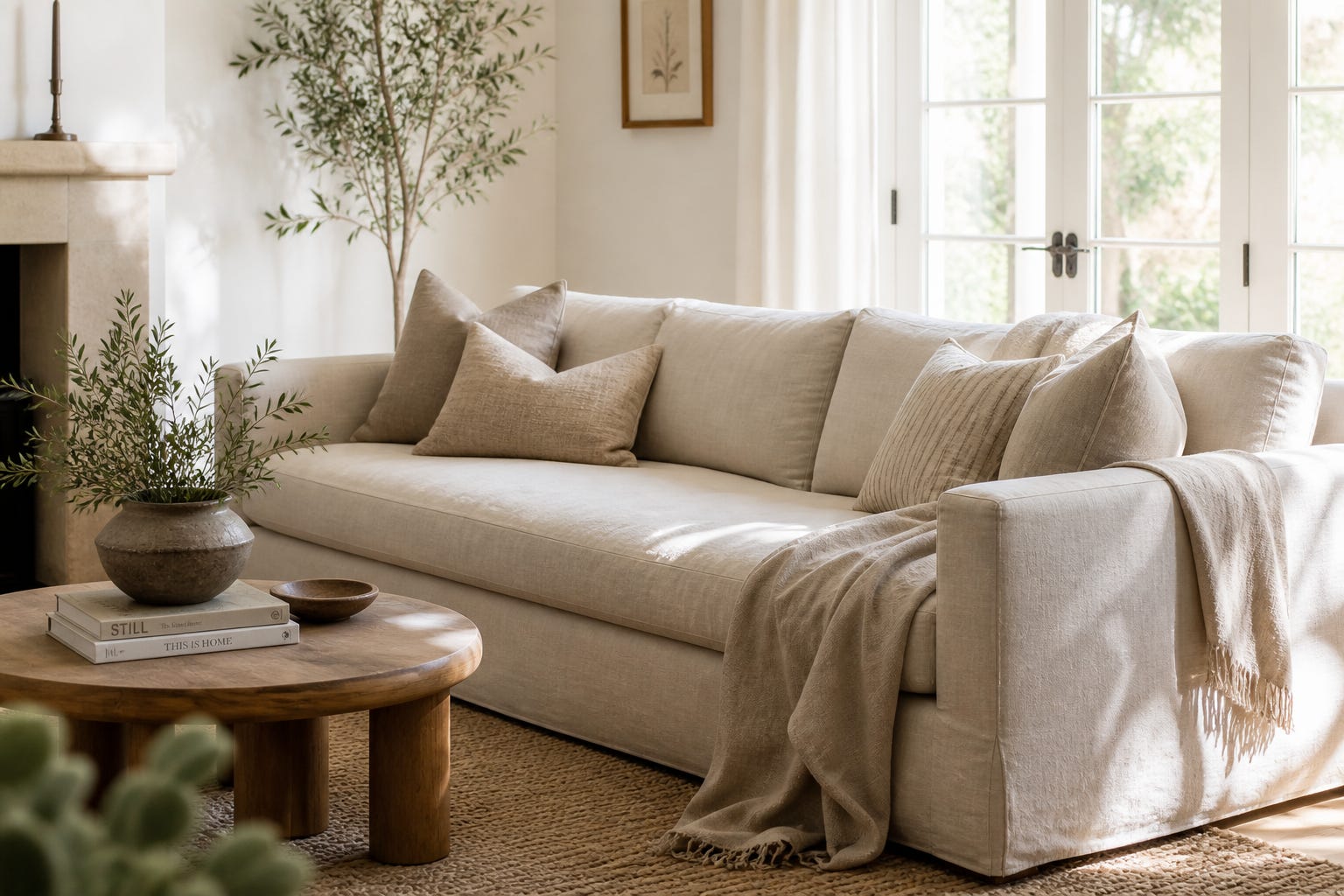
Starting with Soft Foundations (Linen, Cotton, and Wool)
When I began rethinking my living room, I didn’t start with furniture.
I started with what I touched the most.
Rugs, upholstery, curtains—these are the layers that shape how a space feels before anything else has a chance to register.
I found myself drawn to linen first.
There’s something about the way linen falls, slightly relaxed and never too perfect, that immediately softens a room. It doesn’t feel stiff or overly styled. It just exists quietly in the space.
Cotton brings a similar ease, especially in lighter layers like pillow covers or drapery. It feels breathable, especially in rooms that get a lot of light.
And wool adds a different kind of comfort.
A wool rug, especially one with a simple weave, adds warmth underfoot without making the room feel heavy. It grounds the space in a way that feels subtle but steady.
I don’t worry about matching these materials exactly.
I just pay attention to how they feel together.
Adding Structure with Wood and Grounded Materials
Once the softer layers are in place, I start to think about balance.
Too much softness can make a room feel undefined.
That’s where wood becomes important.
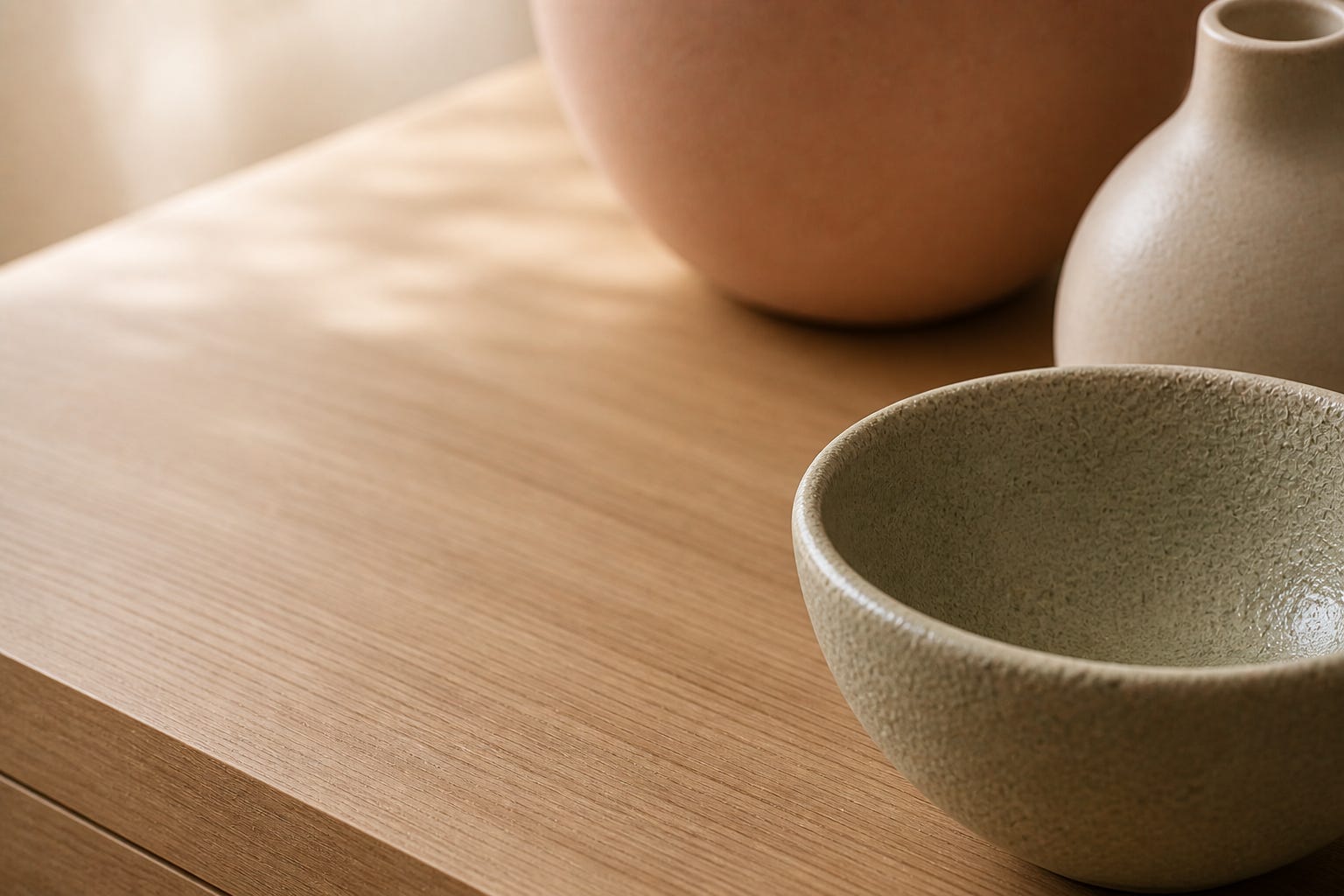
Wood brings structure, but in a way that still feels warm and natural. I tend to look for pieces where the grain is visible, where the material hasn’t been overly coated or altered.
There’s a quiet honesty to that.
A solid wood coffee table, for example, can anchor the entire room. It creates a visual center without feeling heavy or dominant.
Shelving, side tables, and even smaller accents in wood help carry that grounded feeling throughout the space.
I’ve learned to avoid finishes that feel too glossy or synthetic.
The more natural the surface feels, the more it seems to settle into the room over time.
Small Layers That Make a Big Difference (Texture + Touch)
The smallest pieces are often the ones I notice the most as I move through the room.
A linen throw draped casually over the arm of the sofa.
A ceramic bowl sitting in a place where it catches the light in the late afternoon.
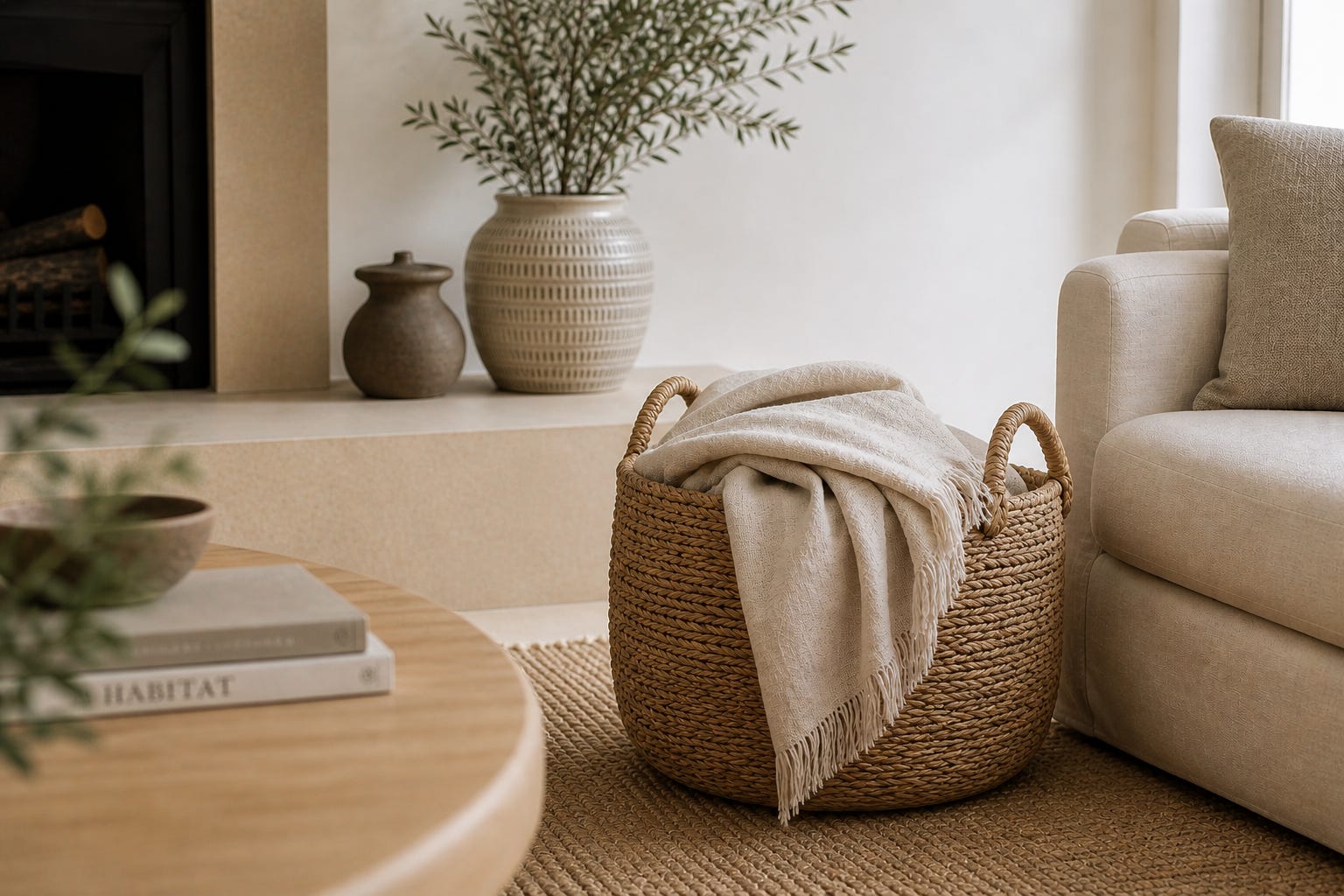
A woven basket holding things I reach for every day.
These details don’t stand out on their own.
But together, they create a quiet rhythm of texture.
I’ve realized that texture isn’t just visual—it’s something you experience as you live in the space. The feel of a fabric, the weight of a material, the way something softens over time.
That’s what makes a room feel layered.
Not more things—just more intention in the things that are already there.
What I Avoid Now (And Why It Matters More Than I Expected)
As I started paying more attention to materials, I also became more aware of what didn’t feel right.
Synthetic materials were the first thing I noticed.
Plastics, acrylic finishes, and heavily processed fabrics often felt disconnected from the rest of the room. Even when they looked similar at a glance, they didn’t respond to light or touch in the same way.
At first, I didn’t think it was a big difference.
But over time, it became more noticeable.
These materials didn’t soften. They didn’t age in a way that felt natural. They stayed slightly separate from everything around them.
Now, I don’t try to remove everything all at once.
I just make slower, more thoughtful choices.
And that has made more of a difference than I expected.
A Space That Feels Calm Without Trying Too Hard
What I appreciate most now is how subtle the shift has been.
There wasn’t a single change that transformed the room.
It was the layering.
The quiet combination of materials that work together without competing for attention.
And once that feeling of calm is there, everything else begins to feel easier.
The space doesn’t need to be perfect.
It just needs to feel good to live in.
Pieces I Trust in My Own Home
When I’m choosing pieces for our living room, I tend to look for materials that feel natural, simple, and easy to live with over time.
• I’m drawn to linen throws that soften with use and never feel overly styled

 • I prefer wool rugs that feel warm underfoot but still breathable

 • In our home, I would choose a solid wood coffee table with a natural, matte finish

 • I often reach for woven baskets made from natural fibers for everyday storage

 • I’m always pulled toward ceramic pieces that bring quiet texture into the room
These are the kinds of pieces that don’t demand attention.
They just make the space feel more settled.
Have you noticed certain materials in your living room that feel better to live with over time?
Some links in this article may be affiliate links. By clicking on them, you help support my work. Don’t worry. I only share materials and brands I do/would use in my own home.
Did you like this article? Subscribe for ~free~ and get my next post in your inbox.