
There are seasons when life feels beautifully manageable.
And there are seasons when it doesn’t.
Work becomes demanding.
Schedules overlap.
Children need more of us.
Unexpected challenges arrive without warning.
During those periods, I’ve noticed that what matters most about our home isn’t how it looks—it’s how it feels.
A calm home isn’t necessarily a perfectly organized home.
It isn’t a home where every surface is styled or every room is magazine-ready.
In my experience, the homes that feel most restorative are the ones that quietly support the people living inside them.
Over the years, both through my background in hospitality design and through creating a home for my own family, I’ve become increasingly aware of how deeply our surroundings influence our emotional wellbeing.
The right rhythms, materials, and sensory details can make a home feel steady even when life feels uncertain.
And often, the smallest things make the biggest difference.
The Difference Between a Beautiful Home and a Restorative One
Beautiful homes are easy to admire.
Restorative homes are different.
A restorative home creates an immediate sense of ease.
Your shoulders soften.
Your breathing slows slightly.
The space feels welcoming rather than impressive.
During my years working with wellness-focused hospitality spaces, I learned that guests rarely remembered individual design details.
What they remembered was how the environment made them feel.
That lesson stayed with me.
Today, when I’m making decisions about our home, I ask a different question than I once did.
Instead of asking whether something looks beautiful, I ask whether it contributes to the atmosphere I want our family to experience.
Warmth.
Comfort.
Calm.
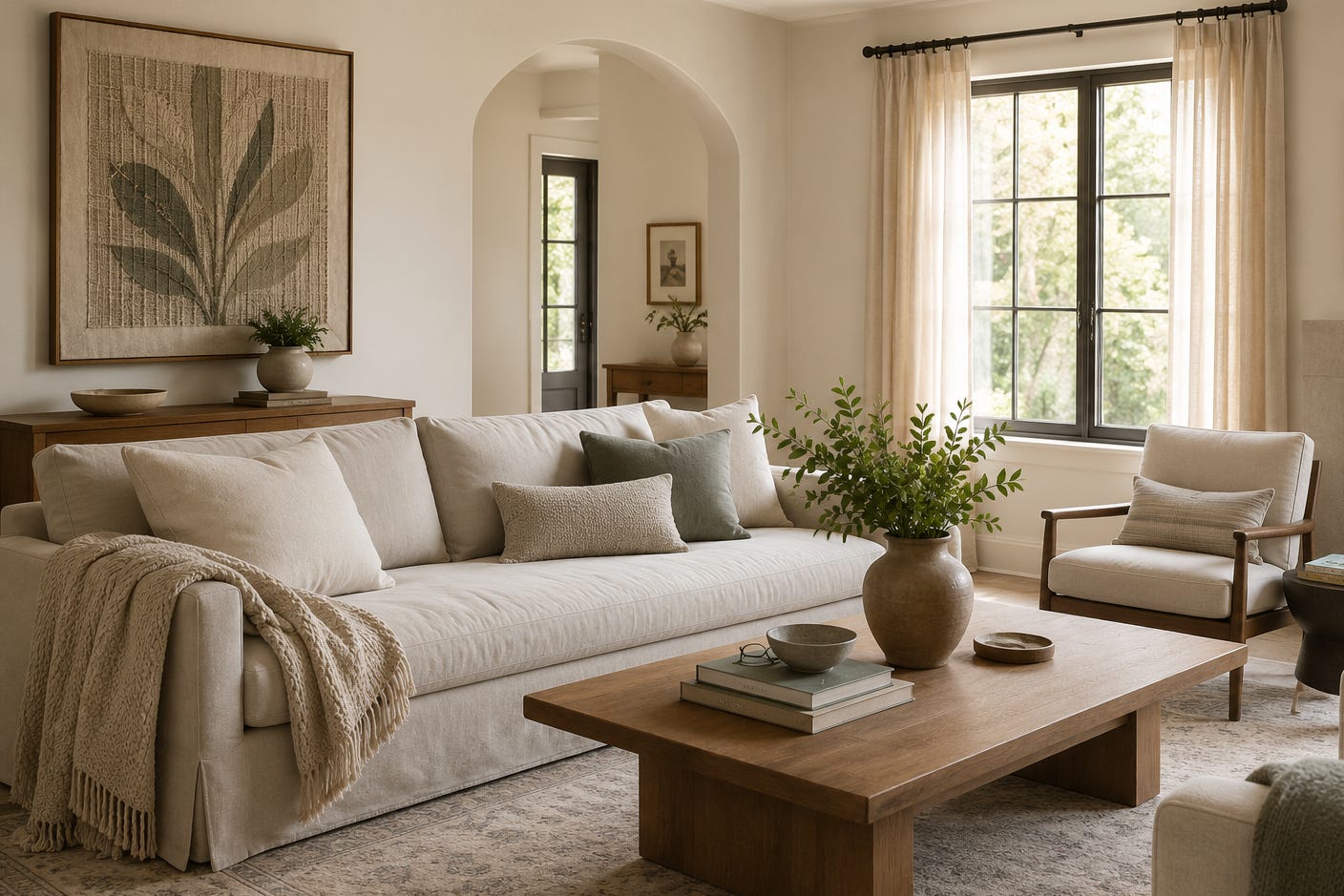
A room filled with natural light, comfortable seating, and soft textures often feels more restorative than a perfectly curated room designed primarily for visual impact.
The emotional atmosphere matters most.
The Small Rhythms That Create Stability
When life feels busy, routines become surprisingly powerful.
Not rigid schedules.
Gentle rhythms.
Every morning, I open a few windows whenever the weather allows.
Fresh air moving through the house instantly changes how the space feels. The rooms seem lighter and more awake.
In the evenings, we follow a different rhythm.
Overhead lights are switched off.
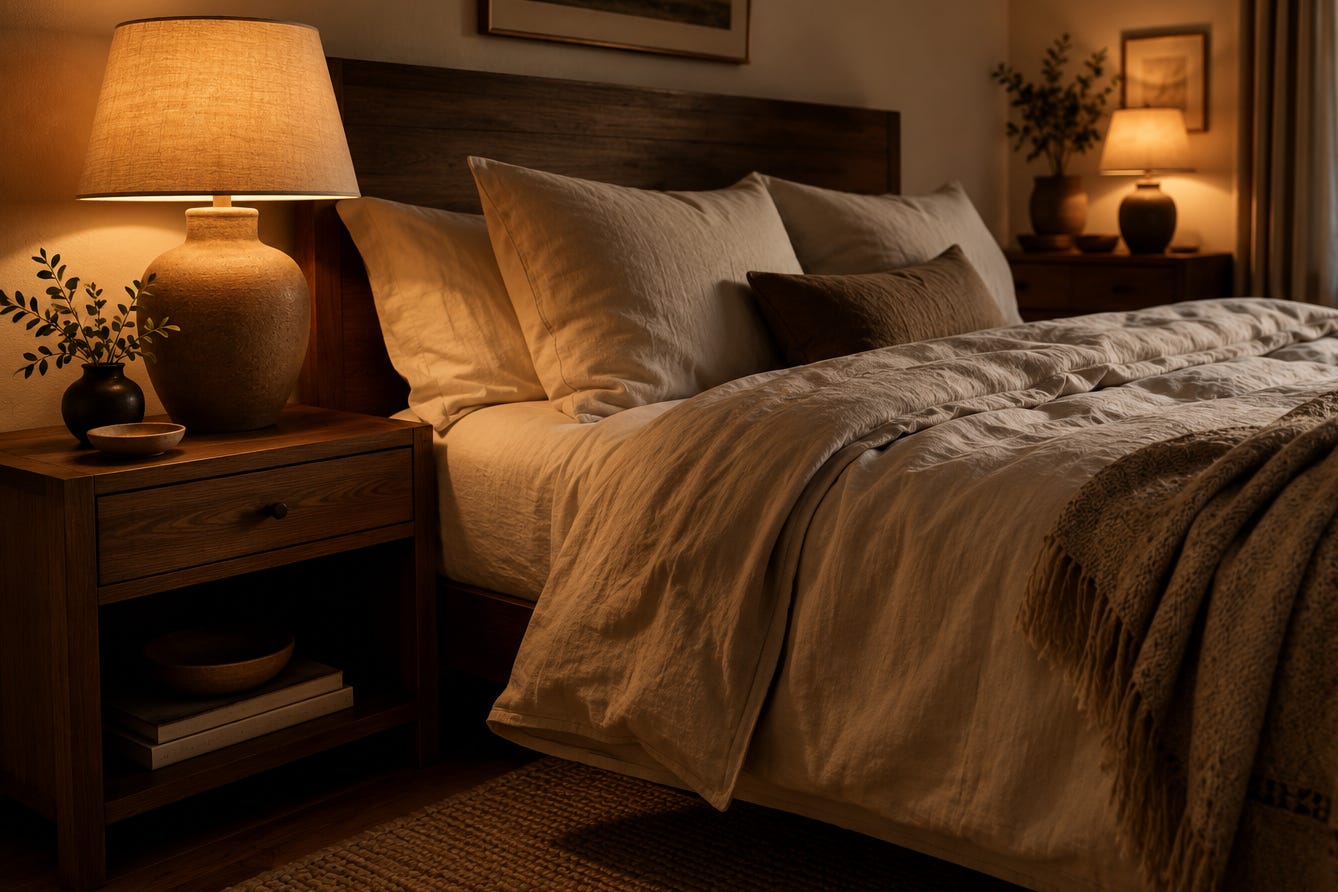
Lamps are turned on.
The atmosphere becomes softer and quieter almost immediately.
I’ve found that these small transitions help signal to our nervous systems that the day is changing. They create a sense of predictability, even during demanding weeks.
Other simple rhythms matter too.
A quick kitchen reset after dinner.
Making the beds each morning.
Lighting a candle while preparing dinner.
Closing laptops at a consistent time each evening.
None of these habits are dramatic.
Together, however, they create a feeling of steadiness that helps our home remain emotionally grounding.
Sometimes calm isn’t something we decorate with.
Sometimes it’s something we practice.
Natural Materials That Quietly Change How a Home Feels
Certain materials simply feel better to live with.
Not because they’re trendy.
Because they’re deeply comforting.
Natural materials tend to bring a softness and authenticity that synthetic alternatives often struggle to replicate.
Linen wrinkles gently.
Solid wood develops character.
Wool feels grounding underfoot.
These materials engage the senses in subtle ways.
A linen curtain moving slightly in a breeze.
The smooth edge of a well-made wood table.
A soft cotton throw draped across a chair.
These details may seem small, yet they contribute to the overall sensory experience of a home.
I’ve gradually replaced household items over time rather than all at once, and one thing I’ve consistently noticed is that natural materials often make a space feel calmer without demanding attention.
They aren’t loud.
They’re reassuring.
There’s something deeply comforting about materials that feel honest and tactile.
The result is a home that feels more settled and more connected to everyday living.
Why Lighting Shapes Emotional Comfort More Than Decor
If I could change only one thing in most homes, it would be the lighting.
Lighting influences mood more than many people realize.
Bright overhead lighting serves an important purpose during certain tasks, but it rarely creates the atmosphere most people associate with comfort and relaxation.
Layered lighting tells a different story.
Table lamps.
Floor lamps.
Wall sconces.
Warm pools of light placed throughout a room.
These smaller light sources create visual softness while reducing the harshness that can make spaces feel overstimulating.
In our home, evening lighting has become one of the most important tools for creating calm.
As daylight fades, lamps begin to glow throughout the house. The transition feels natural and comforting.
I’ve personally found that softer evening lighting helps signal the end of the day in a way that feels gentle rather than abrupt.
The room doesn’t just look different.
It feels different.
And that feeling matters.
Letting Go of Perfection
One of the most calming decisions I’ve ever made was letting go of the idea that a peaceful home must be a perfect home.
Perfection creates pressure.
Calm creates room to breathe.
Homes are meant to be lived in. Blankets end up unfolded.
Books gather on tables. Children’s projects appear in unexpected places.
Life leaves evidence.
And that’s okay.
I’ve found that the most welcoming homes rarely feel untouched. Instead, they feel cared for.
There’s a difference.
A cared-for home reflects attention without demanding perfection.
It supports real life while still offering comfort and beauty.
My youngest child settles more easily in spaces with softer lighting and familiar textures, and moments like that continually remind me that emotional comfort often matters far more than visual perfection.
The goal isn’t flawless.
The goal is supportive.
When we release unrealistic expectations, our homes become gentler places to live.
And often, we become gentler with ourselves too.
Returning To What Matters Most
When life feels especially busy, I return to the same reminder.
Calm rarely arrives all at once.
It grows through small choices repeated over time.
A lamp switched on at dusk.
Fresh air moving through a room.
Natural materials that feel comforting to touch.
A simple evening routine.
These details may seem ordinary, yet together they create something meaningful: a home that helps us feel grounded even when the world outside feels less predictable.
True luxury isn’t perfection.
It’s creating a space that quietly supports the people you love every single day.
A Few Questions I’m Often Asked
Can a home really affect stress levels?
Yes. While a home cannot eliminate stress, our surroundings can influence how we experience it.
Factors such as lighting, noise, clutter, texture, and daily routines all contribute to emotional comfort and can help create a greater sense of ease.
What’s the quickest way to make a room feel calmer?
Start with lighting.
Replacing bright overhead lighting with warm layered lighting often creates an immediate shift in atmosphere. It’s one of the simplest changes with the greatest impact.
Do natural materials really make a difference?
In my experience, they do.
Natural materials often feel softer, more breathable, and more grounding. They add warmth and texture while creating a sensory experience that feels comfortable and authentic.
Is a calm home possible with children?
Absolutely. Calm doesn’t require perfection or silence.
A calm family home simply supports daily life while offering comfort, predictability, and moments of softness amid the activity.
Pieces I Trust
Linen bedding
Wool area rugs
Solid wood side tables
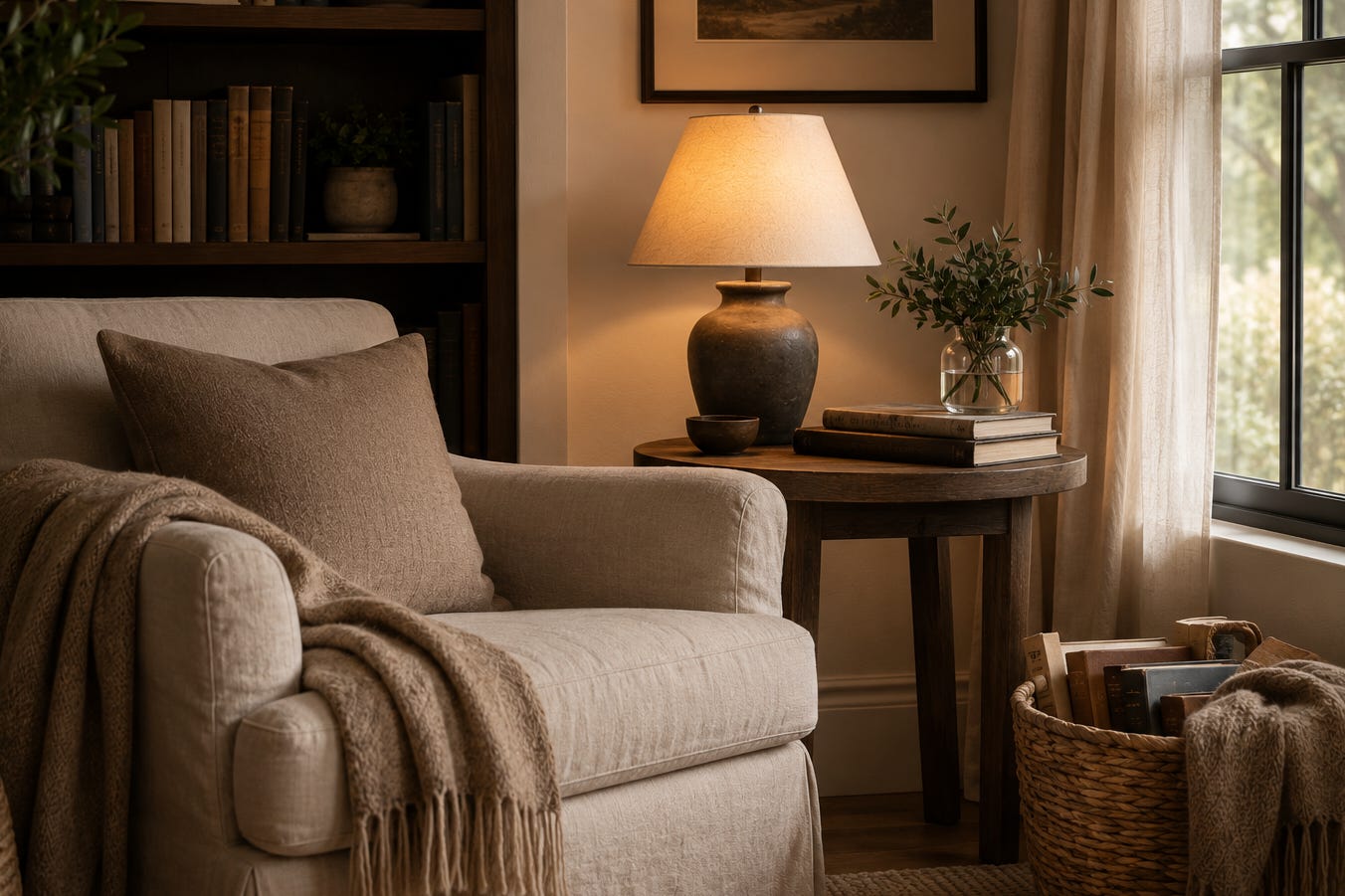
Warm table lamps
Organic cotton throws
Air purifiers
Natural beeswax candles
Woven storage baskets
What is one small ritual or sensory detail that helps your home feel calmer? I’d love to hear what brings a sense of comfort and steadiness to your home.
Some links in this article may be affiliate links. By clicking on them, you help support my work. Don’t worry. I only share materials and brands I do/would use in my own home.
Did you like this article? Subscribe for free and get my next post in your inbox.