

A home quietly shapes how a family feels each day.
Not just visually, but emotionally and physically as well.
The light in the morning, the textures we touch, the air that moves through a room. These small details influence our sense of calm more than we often realize.
Over time I began to notice that certain spaces felt peaceful while others felt slightly tense. The difference was rarely about decoration.
More often it came down to materials, colors, and how much the space was allowed to breathe.
Designing a calm, healthy home is not about perfection. It’s about creating an environment that gently supports everyday life.
Choosing Calming Materials
The materials we surround ourselves with quietly influence how a home feels.
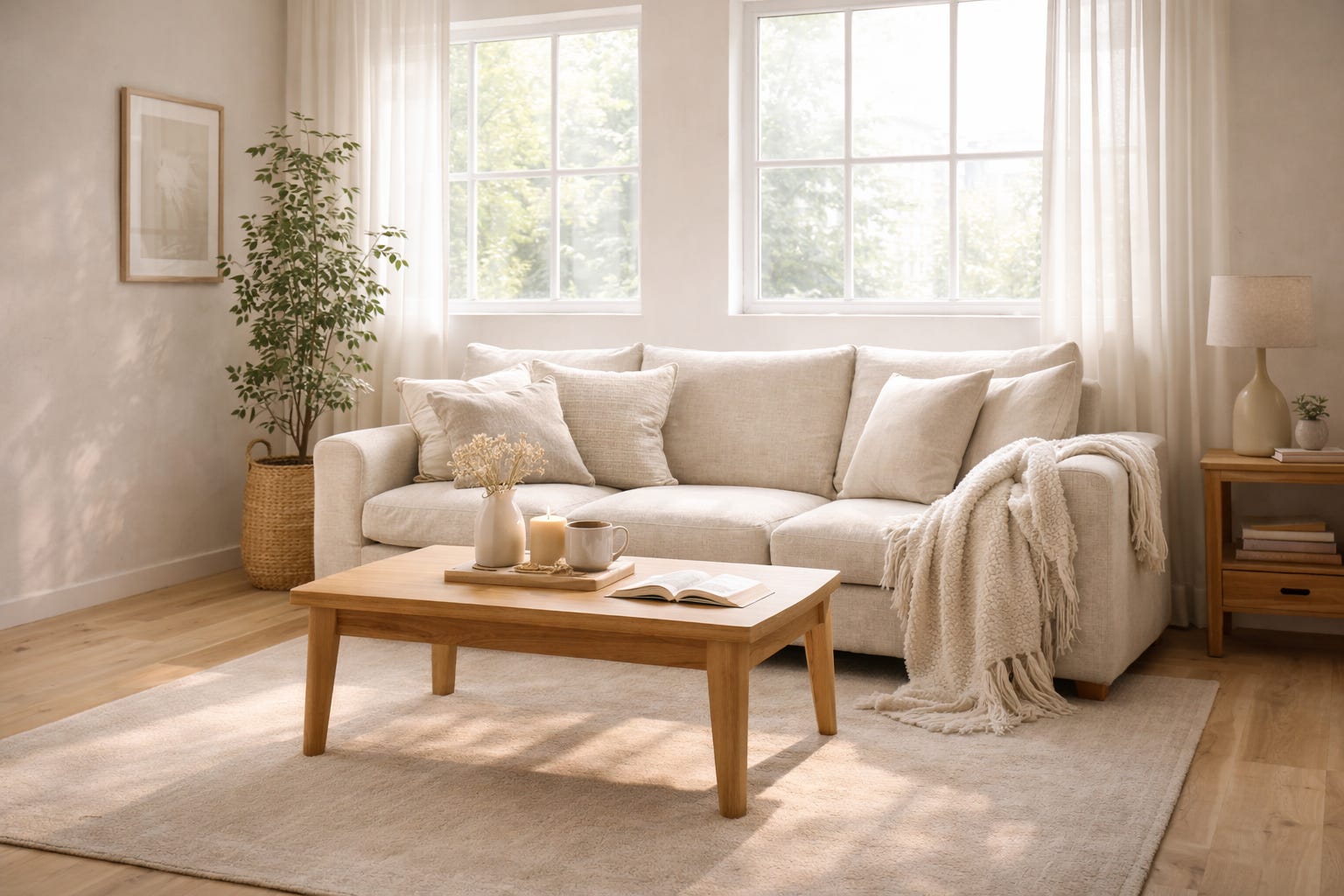
Natural fibers such as linen, cotton, and wool have a softness that synthetic fabrics rarely achieve. Wood furniture feels warm to the touch, while stone and ceramic bring a grounded quality to a room.
These materials also age gracefully. Instead of wearing out quickly, they tend to develop character over time.
A linen throw becomes softer with each wash. A wooden table gathers small marks that tell the story of family meals and daily life.
Choosing natural materials is one of the simplest ways to create a home that feels both beautiful and supportive.
(Internal link suggestion: Why Natural Materials Matter)
Neutral Colors and Sensory Balance
Color affects the nervous system more than we often realize.
Rooms filled with intense contrasts or bright artificial colors can feel stimulating, even when we’re hoping for relaxation.
Neutral palettes offer a different experience.
Soft whites, warm creams, gentle earth tones, and muted greens create visual quiet. These colors allow the eye to rest.
When paired with natural textures like linen curtains, wool rugs, and wooden furniture, the room begins to feel balanced rather than busy.
The goal is not to eliminate color completely, but to allow it to appear in gentle, natural ways.
Reducing Synthetic Exposure
Another important aspect of designing a healthier home is paying attention to materials that release unnecessary chemicals or synthetic particles.
Synthetic textiles, plastic furniture, and mass-produced décor often introduce elements that simply weren’t common in homes a generation ago.
Replacing everything at once isn’t necessary.
Small changes gradually shift the environment.
Glass storage containers instead of plastic. Natural fiber rugs instead of polypropylene. Solid wood furniture rather than pressed composites.
Each change is small on its own, but together they create a home that feels cleaner and more breathable.

Spaces That Support Rest and Connection
Perhaps the most meaningful design choices are the ones that support how a family actually lives.
Comfortable seating that encourages conversation. A dining table where everyone gathers at the end of the day. Bedrooms designed for rest rather than stimulation.
Lighting plays an important role here as well.
Soft lamps and warm evening light help signal the body that it is time to slow down.
Rooms don’t need to be large or elaborate. What matters is that they invite people to linger.
Designing with Wellbeing in Mind
Over time I’ve realized that home design is not just about aesthetics.
It quietly influences health, mood, and daily habits.
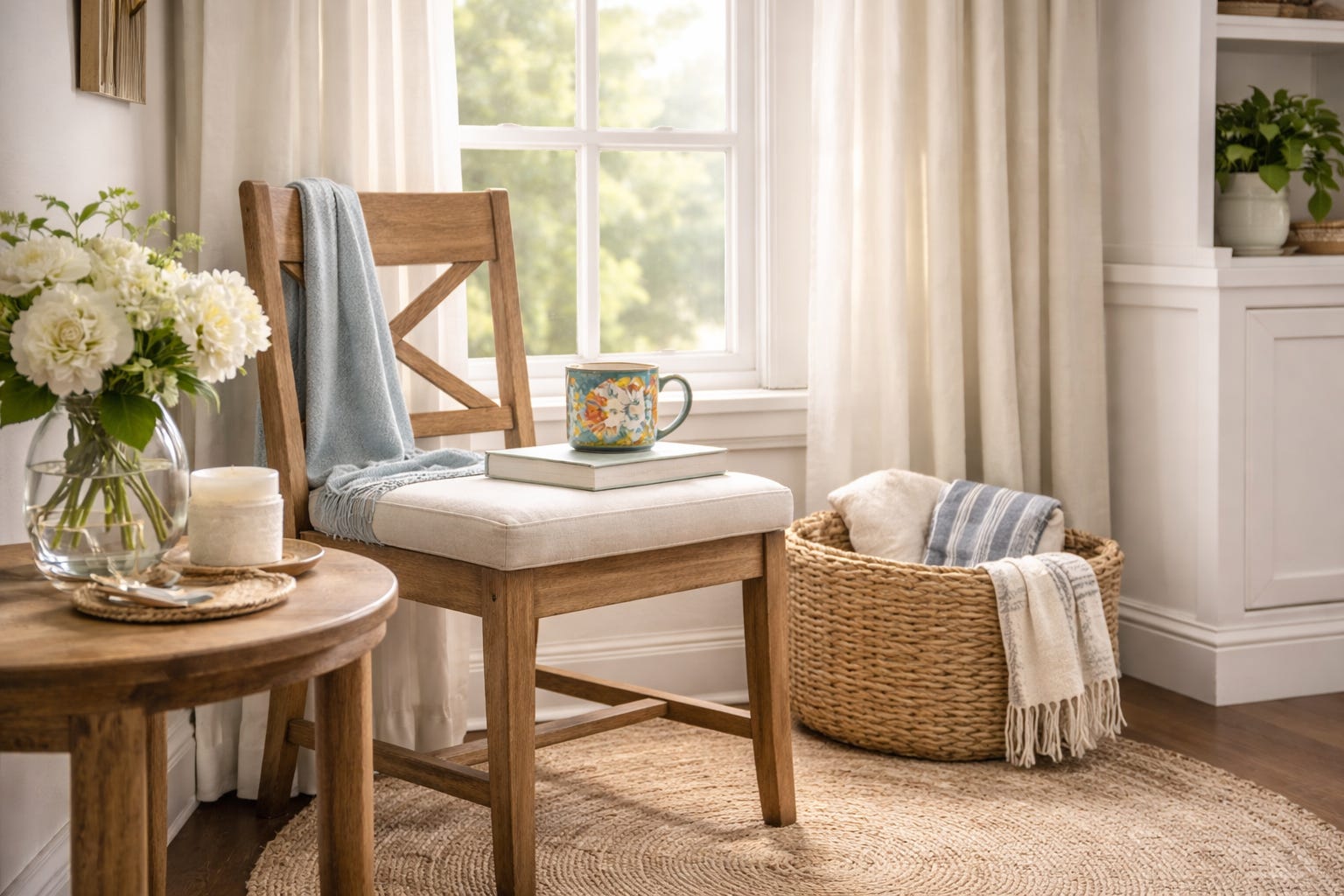
When a home feels calm, routines slow down. Conversations linger a little longer. Even simple moments begin to feel restorative.
In a world that often feels rushed and overstimulating, our homes can become quiet places of recovery. Soft textures, natural light, and intentional choices create an environment that gently encourages balance rather than chaos.
True luxury, I’ve found, is not simply about how a home looks.
It’s about how it feels to live in it every day.
A home designed with wellbeing in mind becomes more than a backdrop for life; it becomes an active part of living well.
Small Choices Make the Difference
Design choices shape more than the appearance of a home.
They influence how we move through our days and how our families feel within the spaces we share.
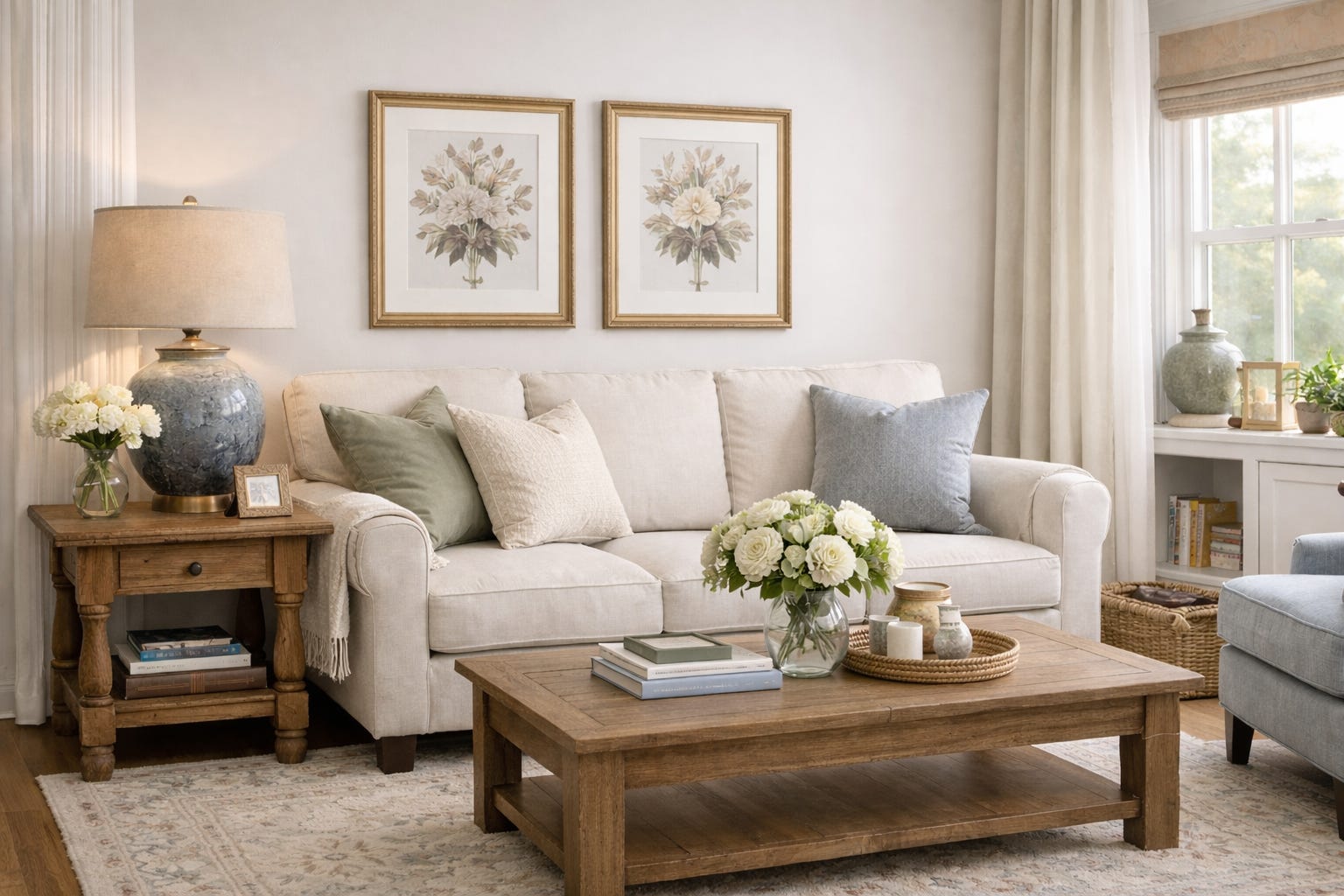
When materials are natural, colors are soft, and rooms are allowed to breathe, the atmosphere shifts in subtle ways.
The house becomes quieter. Warmer. More supportive of the rhythms of daily life.
Often the most meaningful changes are not dramatic renovations.
They are the quiet decisions that slowly transform a home into a place of rest.
What small change would you like to make to improve your home?
Some links in this article may be affiliate links. I only share materials and brands I do/would use in my own home.
Did you like this article? Subscribe for free and get my next post in your inbox.