
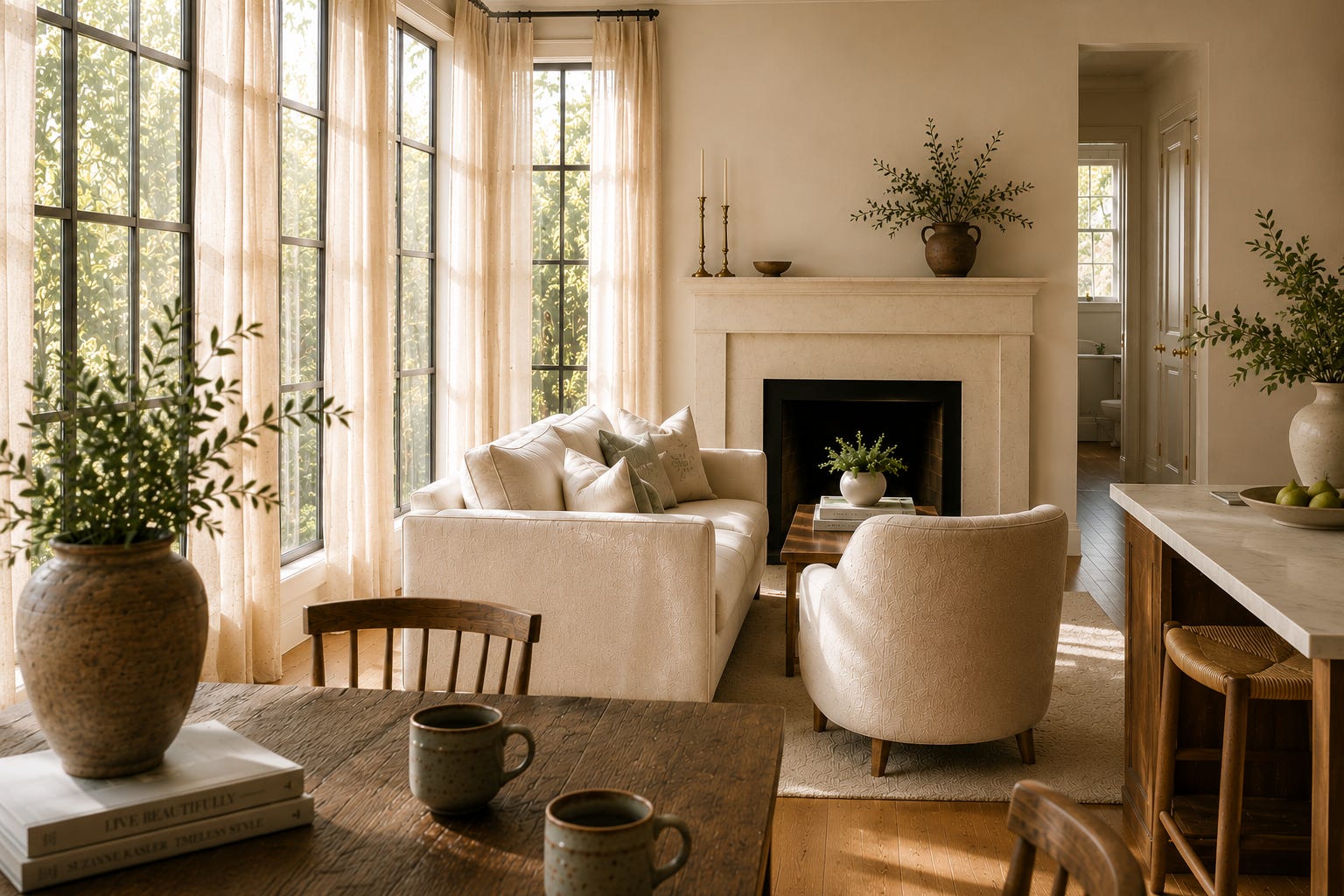
I’ve come to believe that mornings are shaped just as much by atmosphere as they are by routine.
Certain homes seem to wake up gently.
The light feels softer. The sounds feel quieter. Even simple rituals like making tea or opening curtains somehow feel calmer and less rushed.
Other spaces can feel overstimulating almost immediately.
Bright overhead lighting, visual clutter, harsh textures, noise, screens, urgency. The nervous system notices all of it long before we consciously process why the morning already feels stressful.
Over the years, I’ve become much more intentional about how our home feels during the first hour of the day.
Not in a rigid or perfection-focused way. More in the sense of creating softer transitions that help the house — and everyone inside it — wake up more gradually.
Working in boutique hospitality taught me how deeply environments affect emotional regulation. Restorative spaces rarely shocked people awake. They guided them gently into the day.
I think our homes deserve that same softness.
Especially now, when so much of the outside world already feels loud and demanding.
I Try to Let the House Wake Up Slowly
I don’t love abrupt mornings anymore.
I used to turn on bright overhead lights immediately, check my phone too quickly, and move through the morning with a kind of unconscious urgency that left the entire house feeling rushed before the day had even properly started.
Now, I try to let the home wake up more slowly.
I usually begin by opening curtains gradually and relying on natural morning light as much as possible.
During darker seasons, I prefer small layered lamps with warm bulbs instead of sharp overhead lighting first thing in the morning.
The difference feels surprisingly emotional.
Soft lighting changes how people move through a space.
Conversations feel quieter.
The kitchen feels calmer.
Even simple tasks like making breakfast seem less overstimulating when the environment itself feels gentle.
I also think sound matters more than we realize.
A softly running kettle, quiet music, birds outside an open window — these details create rhythm inside a home without overwhelming it.
The nervous system responds to that softness almost immediately.
Homes can either rush us into the day or soften us into it.
And I’ve found that slower transitions create a completely different emotional atmosphere over time.
Natural Materials Make Mornings Feel Softer
One of the things I notice most in the morning is texture.
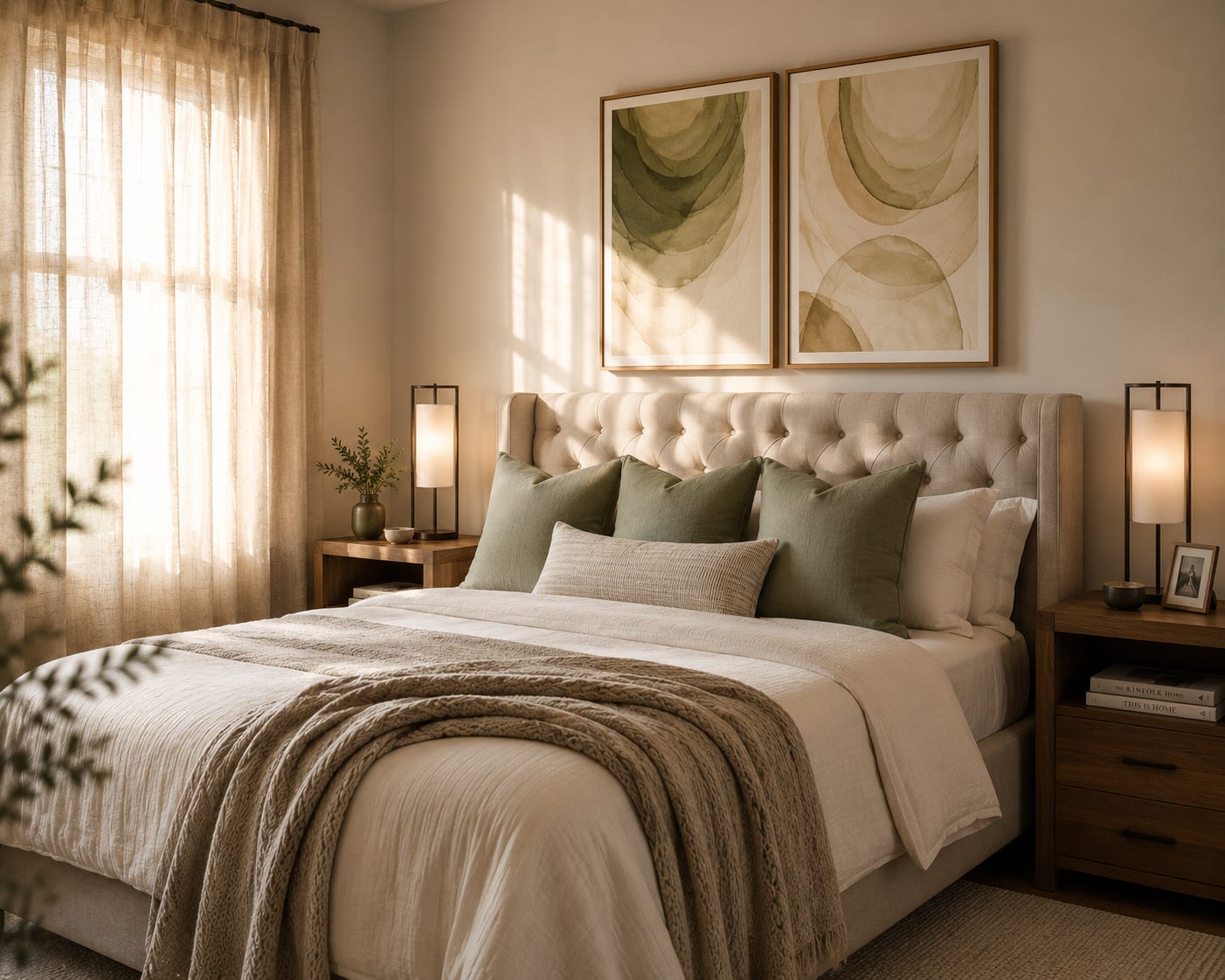
The feel of linen bedding.
Warm wood floors under bare feet.
A ceramic mug that holds heat differently than something overly manufactured. Wool throws draped across a chair in softer winter light.
Natural materials seem to absorb mornings more gently.
I’ve personally noticed that heavily synthetic textures often feel harsher first thing in the morning, especially under natural light. Rooms layered with breathable materials tend to feel quieter visually and emotionally before the day fully begins.
That softness matters more than people sometimes expect.
I think tactile comfort affects emotional regulation in very subtle ways.
Bedrooms with linen bedding and warm wood tones often feel noticeably calmer than spaces filled with glossy surfaces or overly artificial materials.
The same is true in kitchens and living spaces.
Natural textures create warmth without requiring visual excess. They help rooms feel lived in, grounded, and emotionally settled rather than overly styled or performative.
And honestly, I think many of us are craving that feeling right now.
Not necessarily perfection.
Just spaces that feel softer to exist inside each morning.
Lighting Changes Everything
I think lighting is one of the most overlooked parts of creating a calm home atmosphere.
Especially in the morning.
Harsh overhead lighting can immediately create tension inside a space, even beautifully designed ones.
Warm layered lighting, on the other hand, tends to create emotional softness almost instantly.
I’ve become much more intentional about using smaller pools of light throughout the house instead of relying entirely on ceiling fixtures.
Table lamps, dimmable sconces, soft kitchen lighting, and even candlelight during darker winter mornings all create a slower emotional rhythm.
The atmosphere changes completely.
In boutique hospitality spaces, restorative environments almost never relied on aggressive lighting first thing in the morning.
Instead, they allowed natural light and layered warmth to gradually shape the space as the day unfolded.
I still think about that often at home.
Natural materials also interact with light differently than synthetic finishes do.
Linen softens brightness. Wood reflects warmth. Matte textures create visual calm instead of glare.
These details seem small individually.
But together, they quietly shape how a home feels to live in every day.
Quiet Routines Shape the Feeling of a Home
I think homes begin to absorb the rhythms we repeatedly create inside them.
A rushed atmosphere eventually feels permanent. But calmer routines can slowly reshape a home emotionally over time too.
For me, that often looks very simple.
Opening windows when the weather allows.
Making tea before checking emails.
Keeping music soft. Letting the kitchen stay quieter for a little while before the day fully begins.
I’ve also become more protective about phone usage in the mornings.
Even a few minutes of slower quiet before immediately absorbing outside information seems to change the emotional tone of the entire house.
Children notice this too.
I’ve found that calmer pacing in the morning often creates a softer atmosphere for everyone, even when schedules are still busy and real life remains imperfect. The nervous system responds to steadiness more than perfection.
That’s part of why I think atmosphere matters so much.
A calm home usually isn’t created through elaborate routines.
More often, it’s built through repeated small choices that help daily life feel a little gentler over time.

I Think Calm Mornings Begin the Night Before
I’ve realized that calmer mornings are often created quietly the evening before.
Not through rigid routines or unrealistic productivity habits.
More through reducing friction and visual overwhelm wherever possible.
A softly lit kitchen at night.
Counters cleared enough to feel emotionally calm in the morning.
Warm bedside lighting instead of harsh brightness before sleep. Small preparations that allow the next day to begin more gently.
These things accumulate emotionally over time.
I also think visual noise affects mornings more than people realize.
Cluttered surfaces, harsh lighting, overstimulation, and rushed transitions can make a home feel stressful before the day has even properly begun.
That’s why I try to keep our mornings rooted in softness rather than efficiency whenever possible.
Not perfectly.
Just intentionally.
Because I don’t think calm homes are created through control. I think they’re built through repeated gentle choices that support how people actually want to feel inside their spaces.
And for me, that feeling is almost always some version of grounded, warm, and able to exhale.
A Home That Greets You Gently
I think the atmosphere of a home affects us far more deeply than we often acknowledge.
Especially in the morning, when the nervous system is still tender and receptive to everything surrounding it — light, sound, texture, rhythm, visual calm, emotional pace.
The homes that feel most restorative rarely begin the day with urgency.
Instead, they create softer transitions into waking life through warmth, quietness, natural materials, and thoughtful routines that gently support the people living there.
And while no home feels calm every single morning, I’ve found that even small shifts toward softness can change the emotional tone of daily life over time.
A warmer lamp.
Linen bedding.
Quieter music.
A slower first hour of the day.
These things seem small.
But together, they help a home feel like a place where people can truly exhale before stepping back into the world again.
A Few Questions I’m Often Asked
How can I make my mornings feel calmer at home?
I usually recommend starting with atmosphere first rather than rigid routines.
Softer lighting, reduced phone usage, natural textures, quieter sounds, and slower transitions often create a much calmer emotional feeling immediately.
What lighting is best for a calm morning atmosphere?
Warm layered lighting tends to feel much gentler than bright overhead fixtures first thing in the morning.
Table lamps, dimmable sconces, soft kitchen lighting, and natural sunlight all help create a more restorative atmosphere.
Do natural materials really affect mood?
I personally believe they do.
Natural materials like linen, wood, wool, and ceramic tend to create warmth, tactile comfort, and visual softness that can help a home feel calmer and more grounding emotionally.
How can I create a slower morning routine realistically?
I think simplicity matters more than perfection.
Even small shifts like opening curtains slowly, avoiding screens immediately, making tea quietly, or reducing visual clutter can change the emotional pace of a morning significantly.
Why do some homes feel stressful first thing in the morning?
Often it’s a combination of overstimulation — harsh lighting, clutter, noise, rushed pacing, screens, and visual tension.
Homes tend to feel calmer when the sensory environment itself feels softer and more breathable.
Pieces I Trust
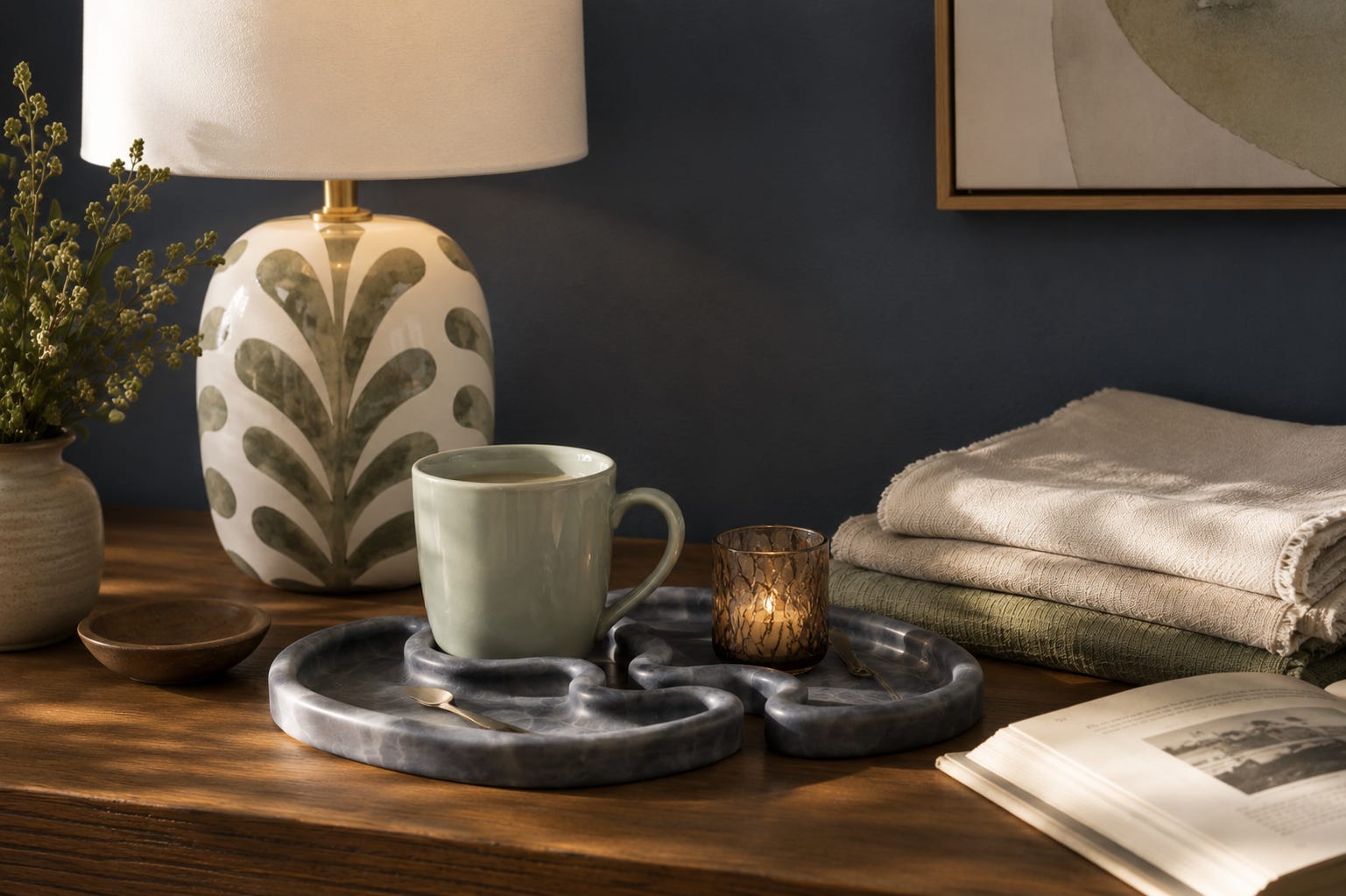
Over time, I’ve found myself returning to pieces that make mornings feel softer, quieter, and emotionally grounding in very subtle ways. These are the kinds of materials and home details that help create a slower atmosphere without requiring anything elaborate or overly curated.
Linen bedding
Handmade ceramic mugs
Warm bedside lighting
Natural wood trays and accents
Wool throws
Soft neutral curtains
Layered lamps with warm bulbs
Calm kitchen textiles
I truly think the smallest sensory details shape the emotional feeling of daily life more than we realize. A softer texture, warmer light, or quieter rhythm can gently change how a home holds you each morning.
What helps your home feel calmest in the morning? I’d genuinely love to hear the routines, textures, or quiet details that help your mornings feel softer and more grounding over time.
Some links in this article may be affiliate links. By clicking on them, you help support my work. Don’t worry. I only share materials and brands I do/would use in my own home.
Did you like this article? Subscribe for ~free~ and get my next post in your inbox.