
Intro
For a long time, I thought of the kitchen as a purely functional space. A place to cook, clean, and move quickly through the day.
But the more I paid attention to how a home feels, the more I realized how much time we actually spend there. Early mornings, slow afternoons, small in-between moments. The kitchen quietly holds so much of daily life.
And yet, many kitchens are designed for efficiency first and feeling second. Bright lights, hard surfaces, too many things competing for attention.
Creating a calm luxury kitchen isn’t about removing function. It’s about softening it. Letting the space breathe. Choosing materials that feel natural, grounded, and quietly beautiful.
Natural Materials That Create a Calm Kitchen Foundation
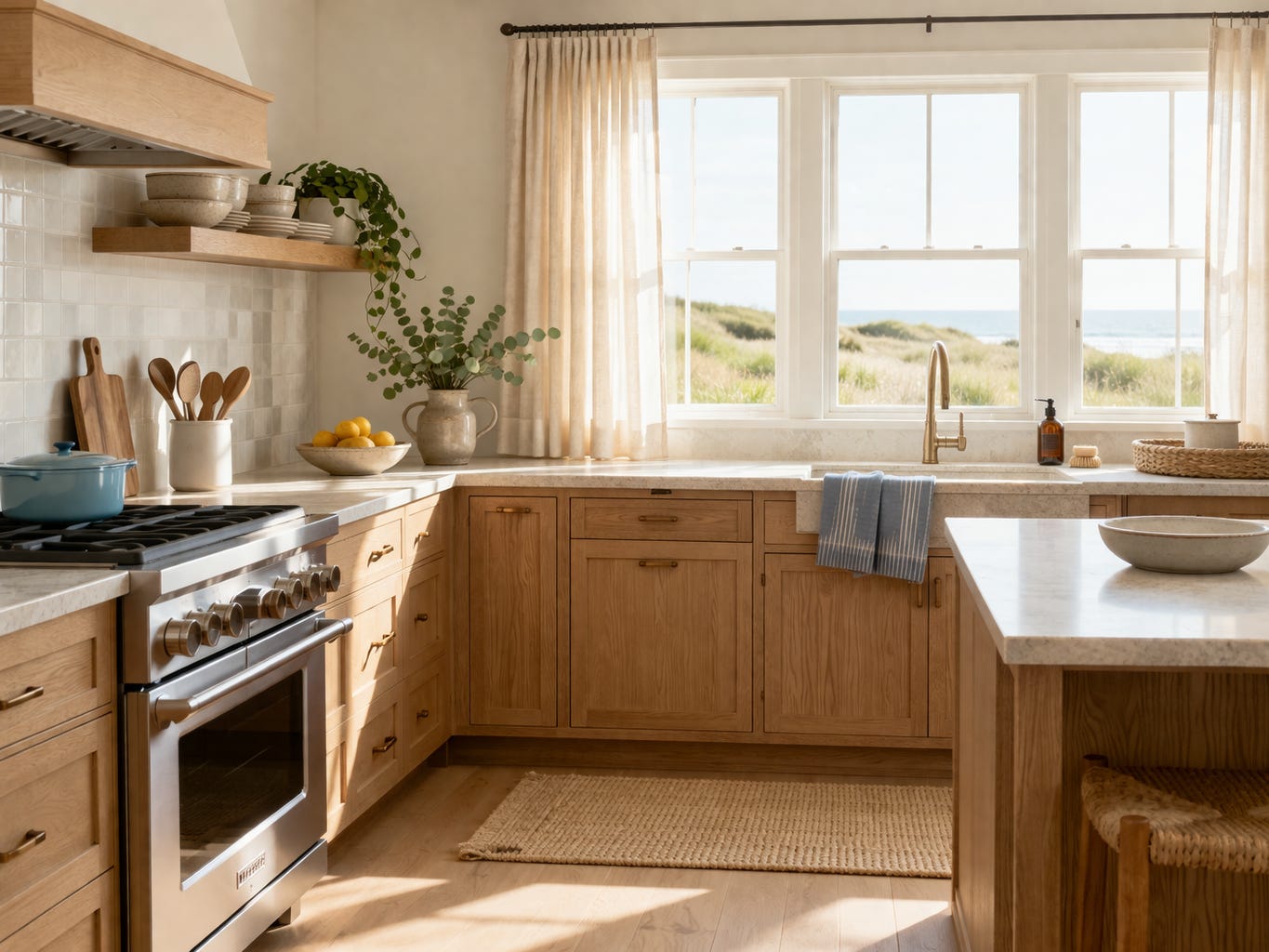
The feeling of a kitchen often begins with its materials. Before décor, before styling, there’s the foundation beneath everything.
Wood brings warmth in a way that feels immediate and grounding. Oak, walnut, or lighter woods create softness against harder surfaces like stone or tile. Even small touches of wood can shift the atmosphere.
Stone adds a quiet sense of permanence. A stone countertop or backsplash doesn’t demand attention, but it anchors the space. It feels steady and enduring.
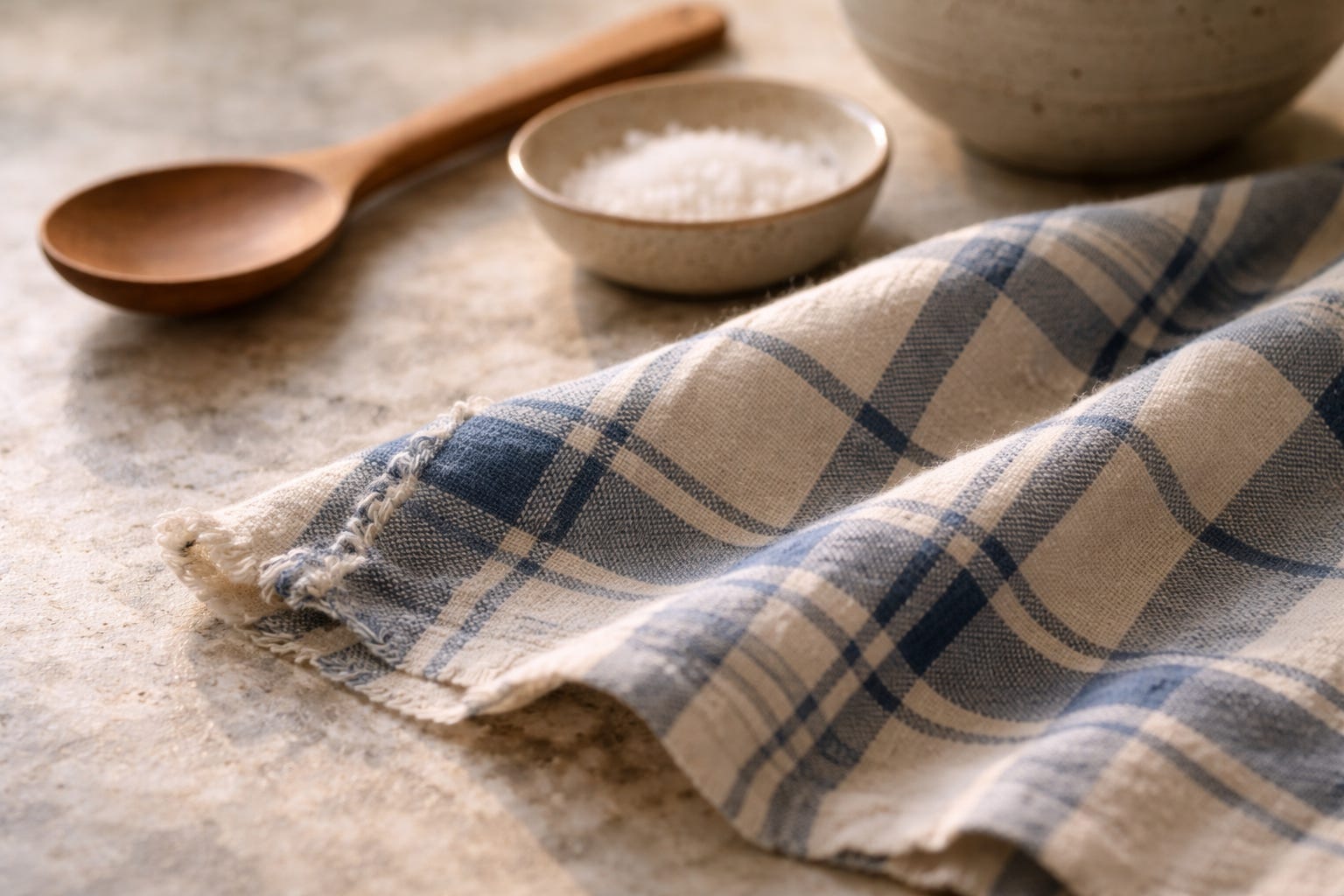
And then there’s linen and cotton, materials that introduce softness into a room that often leans hard and structured. A simple linen towel or curtain can change how the light moves and how the space feels.
Simplifying the Countertop for Visual Calm
One of the biggest shifts I made in my own kitchen was simply removing things.
Not everything. Just enough to let the space rest.
When countertops are filled edge to edge, the eye never settles. But when there’s space, intentional space, the kitchen begins to feel calmer, even if nothing else changes.
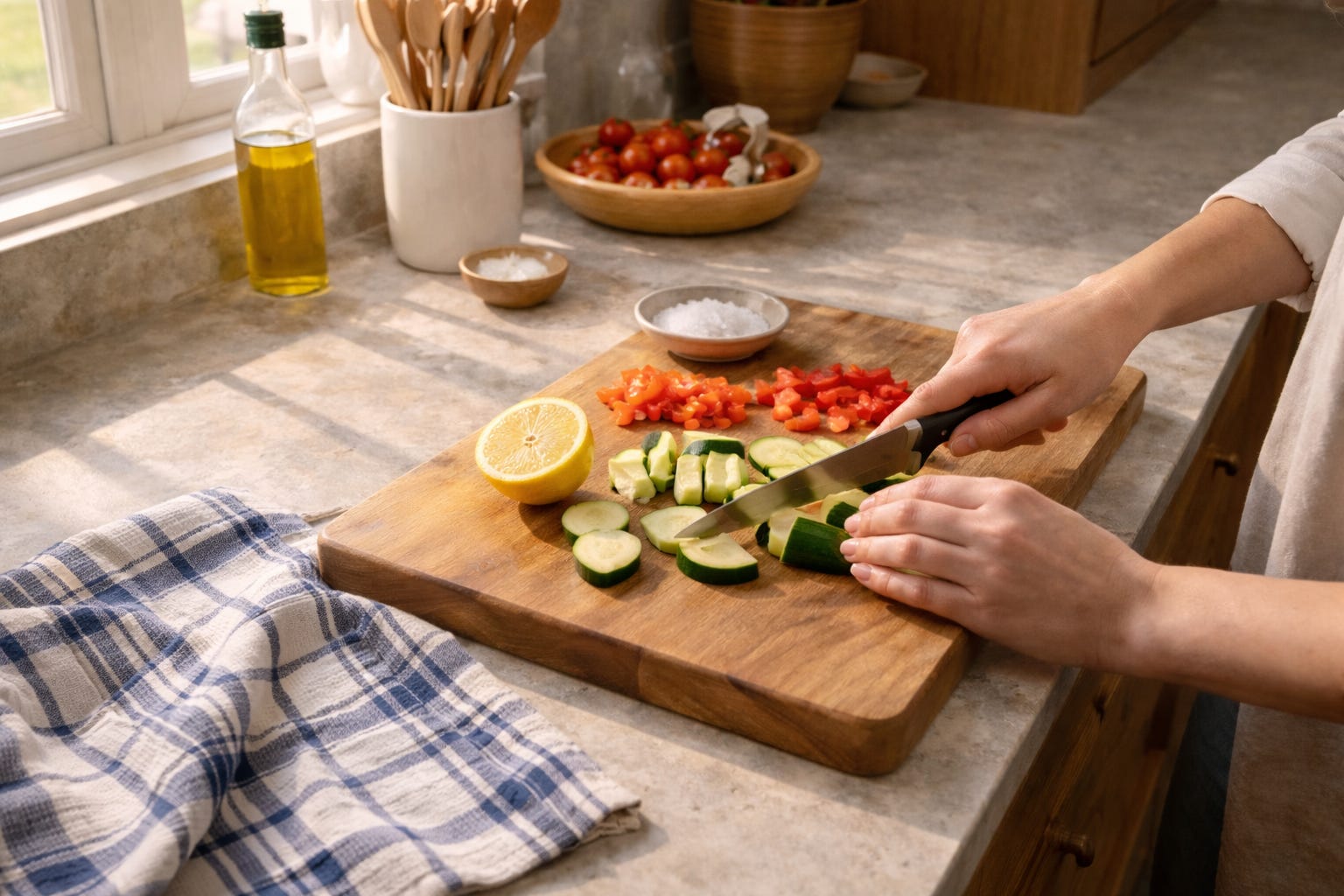
A wooden cutting board leaning against the wall. A ceramic bowl holding fruit. A glass jar with something used daily. These small, useful objects can become part of the design without creating noise.
It’s less about minimalism and more about clarity. Letting what remains feel purposeful.
Everyday Objects That Feel Beautiful to Use
The objects we reach for every day have a quiet influence on how a kitchen feels.
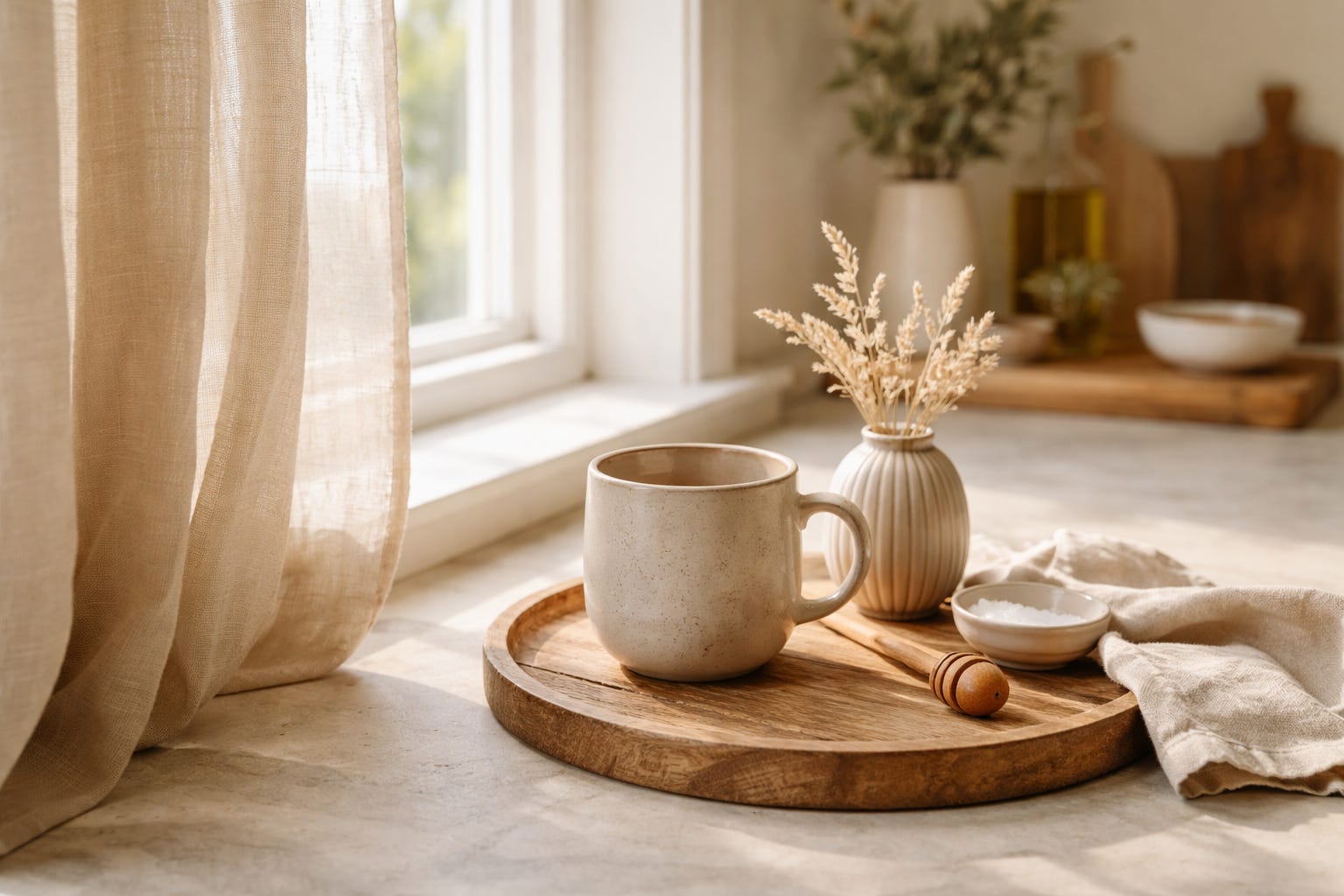
A ceramic mug instead of something disposable. A wooden spoon that softens with time. A glass container that catches the light.
These are small things, but they change the rhythm of daily routines. They slow things down, even slightly. They make ordinary moments feel more intentional.
It’s not about having perfect objects. It’s about choosing materials that feel good to use and that age well over time.
Light, Space, and Letting the Kitchen Breathe
Light plays a quiet but powerful role in how a kitchen feels.
Soft natural light changes everything. It softens edges, highlights textures, and creates a sense of openness that artificial lighting rarely achieves on its own.
If possible, letting light move freely through the space, through windows, across countertops, into corners, helps the kitchen feel less confined and more connected to the rest of the home.
Even small adjustments can help. Lighter curtains. Fewer barriers. Surfaces that reflect rather than absorb light.
It isn’t about brightness. It’s about softness.
Creating a Kitchen That Feels Calm to Live In
A calm luxury kitchen isn’t about perfection. It isn’t about having everything match or look untouched.
It’s about how the space feels when you’re standing in it.
A place where materials are natural, surfaces are clear, and light moves gently throughout the day. A space that supports daily life without overwhelming it.
Over time, these choices add up. The kitchen becomes quieter. More grounded. More comfortable to be in.
And that shift often begins with just one or two thoughtful changes.
Quiet Luxury
A kitchen doesn’t need to be busy to be functional.
When the materials are natural, the surfaces are allowed to rest, and the light is soft, the space begins to feel different. Calmer. More open.
There’s a quiet kind of luxury in that.
Not something added, but something revealed when the space is given room to breathe.
And often, it begins with noticing what’s already there—and choosing a little more carefully over time.
Which natural materials do you think would be easiest to add to your home?
Some links in this article may be affiliate links. By clicking on them, you help support my work. Don’t worry. I only share materials and brands I do/would use in my own home.
Did you like this article? Subscribe for ~free~ and get my next post in your inbox.