
For a long time, I thought of a sofa as something purely visual. Something that anchored the room, set the tone, and tied everything together.
But the more I began to think about the materials in my home, the more the sofa stood out, not just as a design choice, but as something we live with very closely.
We sit on it every day.
We rest there, read, gather, and sometimes even sleep.
It’s one of the most used pieces in a home, and yet it’s often one of the least examined when it comes to what it’s actually made of.
Choosing a non-toxic sofa isn’t about perfection.
It’s about understanding what’s inside, what’s touching your skin, and how the piece will live with you over time.
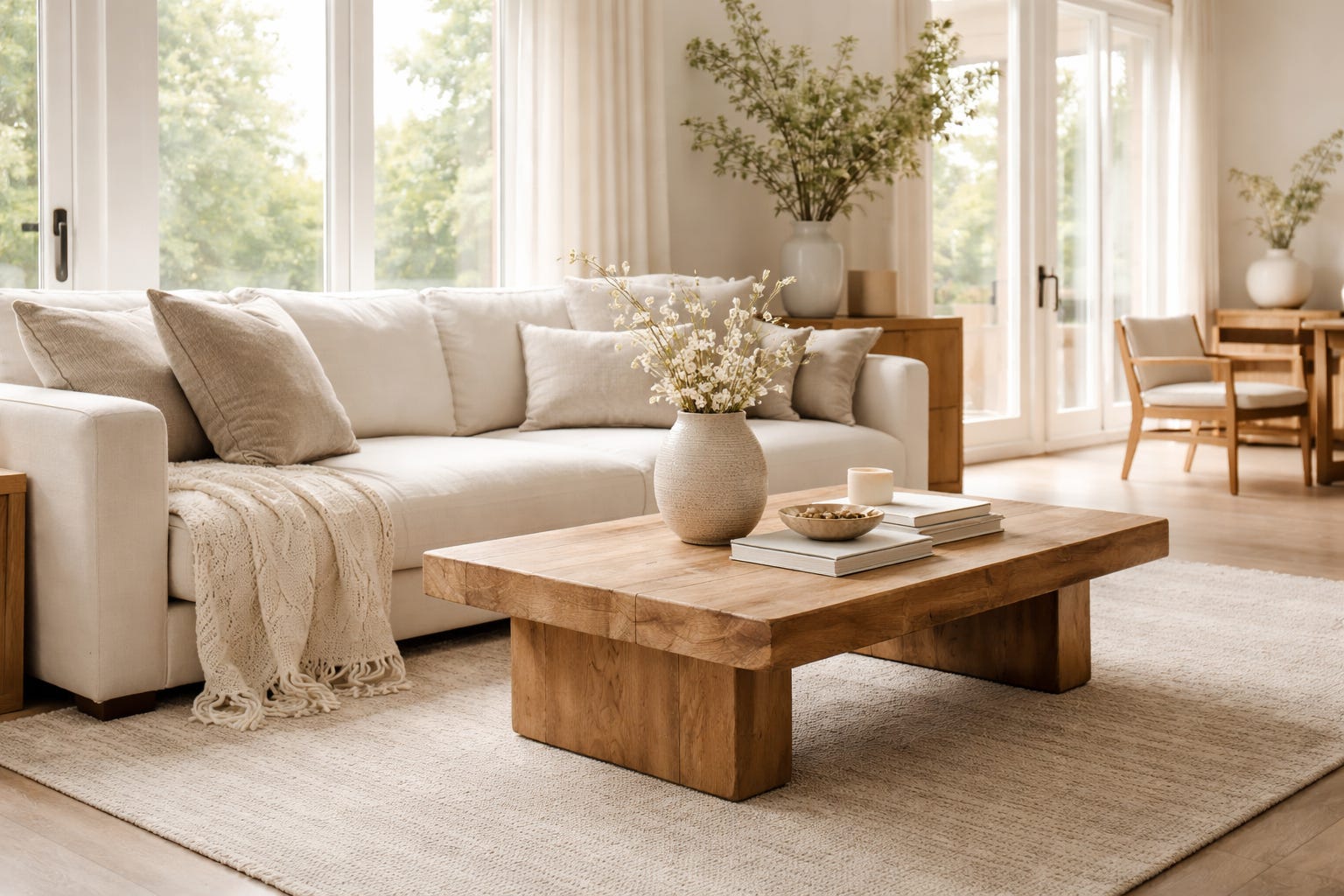
What “Non-Toxic Sofa” Really Means
When I first started looking into non-toxic furniture, I realized how many layers are involved in something as simple as a sofa.
It’s not just the fabric you see. Inside, there can be foam, adhesives, flame retardants, and synthetic materials that aren’t always obvious at first glance.
A non-toxic sofa typically focuses on simplifying those layers.
Natural latex instead of conventional foam. Solid wood frames instead of engineered composites. Fabrics like linen, cotton, or wool instead of synthetic blends.
It doesn’t have to be all or nothing. Even small shifts like choosing natural upholstery can make a meaningful difference.
Natural Materials to Look for in a Sofa
When I began narrowing down options, I found it helpful to focus on materials rather than brands.
Solid wood frames are one of the most important elements. They provide durability and avoid the adhesives often used in engineered wood.
For cushioning, natural latex is a common alternative to polyurethane foam. It has a different feel, slightly firmer, more supportive, but it also tends to hold its shape longer.
Upholstery is where you’ll notice the biggest sensory difference.
Linen feels breathable and relaxed. Cotton feels familiar and soft. Wool adds warmth and texture while naturally resisting wear.
These materials don’t just change how the sofa looks. They change how it feels to live with.
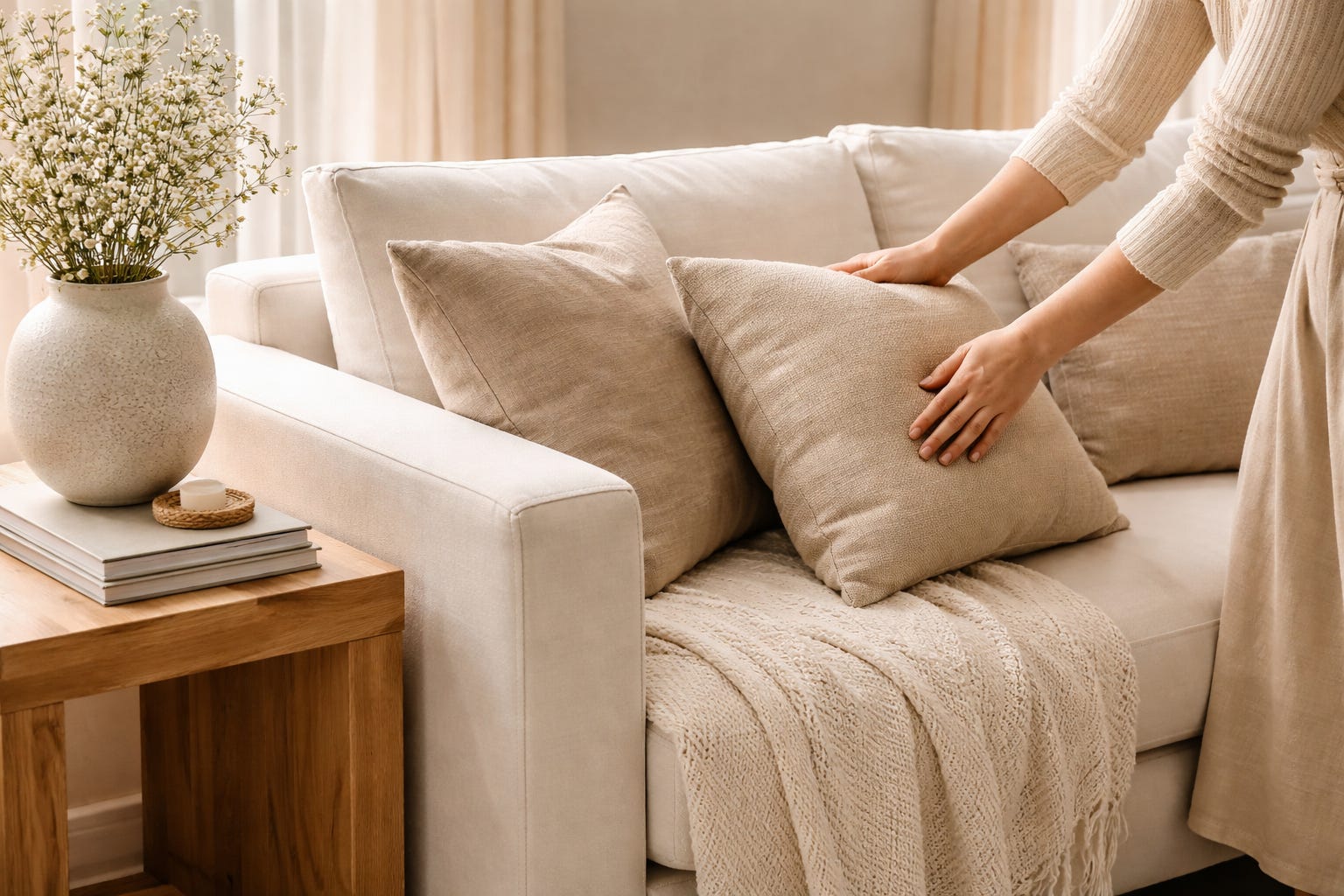
Comfort Without Compromise
One concern that often comes up is comfort. There’s a perception that natural materials might feel less soft or less forgiving.
In my experience, comfort is still very much there; it’s just different.
A natural latex cushion feels supportive rather than sink-in soft.
Linen upholstery feels breathable rather than plush.
Over time, I’ve come to prefer that kind of comfort. It feels more stable, more consistent, and less prone to flattening or breaking down.
And there’s something reassuring about knowing that what you’re sitting on is made from simpler, more natural materials.
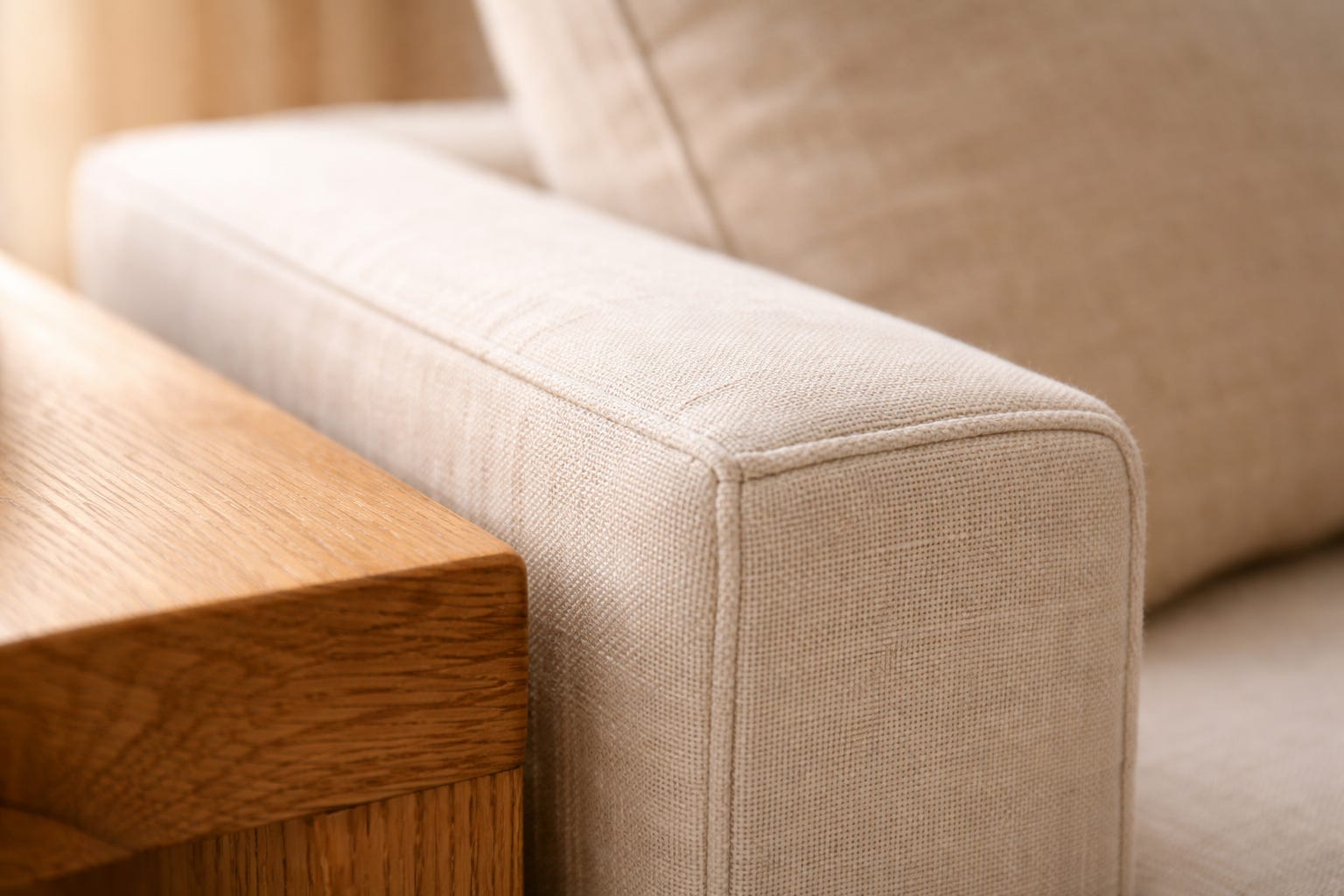
Longevity and How a Sofa Ages Over Time
A well-made sofa should feel like something you can live with for years, not something that needs to be replaced quickly.
Natural materials tend to age differently. Linen softens. Wood deepens in tone. The piece begins to feel more integrated into your home rather than worn out.
Synthetic-heavy sofas, on the other hand, often show wear in a way that feels more abrupt—flattened cushions, pilling fabric, visible breakdown.
Choosing a non-toxic sofa is often also choosing a longer relationship with a piece of furniture.
Creating a Living Room That Feels Calm and Grounded
The sofa is often the center of a living room, both visually and emotionally.
When it’s made from natural materials, it changes the atmosphere of the entire space. The room feels quieter. More settled. Less reactive.
You don’t need everything to be perfect or fully “non-toxic” overnight. But starting with a piece as central as the sofa can shift the feeling of a room in a meaningful way.
And from there, the rest of the space can evolve more naturally.
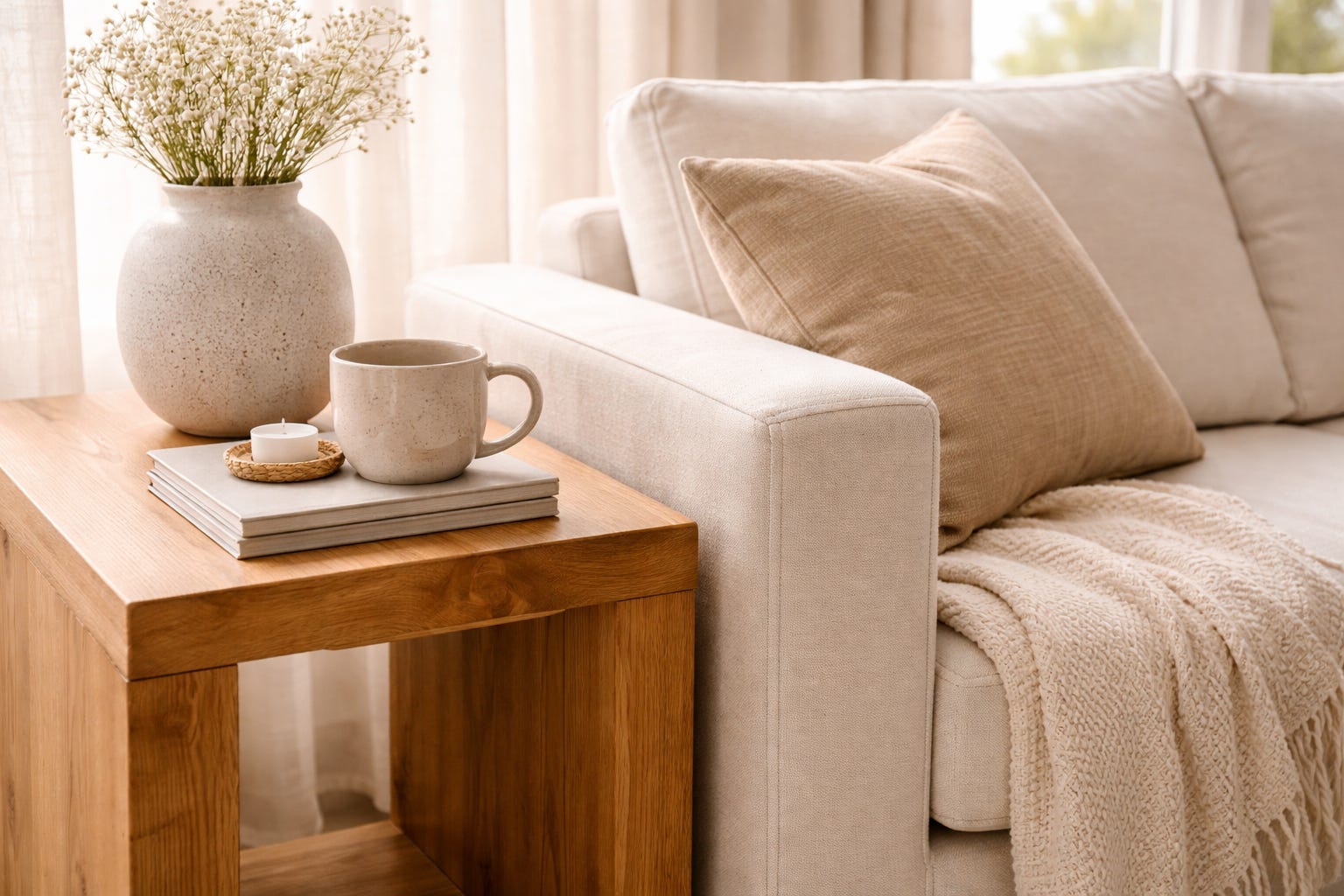
A Healthier Home
A sofa is something we return to, again and again, without thinking much about it.
But when the materials are chosen with care, that everyday experience begins to feel different. More comfortable in a deeper way. More aligned with how we want our homes to feel.
Not louder. Not more styled.
Just calmer. Softer. More natural.
And sometimes, that’s where a healthier home begins.
Would you consider buying a sofa with more natural materials for your home?
Some links in this article may be affiliate links. By clicking on them, you help support my work. Don’t worry. I only share materials and brands I do/would use in my own home.
Did you like this article? Subscribe for ~free~ and get my next post in your inbox.