
The Table That Quietly Shapes Daily Life
There’s something about a dining table that feels more permanent than other pieces of furniture.
I’ve noticed that it becomes a place where routines settle in. Morning coffee, quick meals, longer conversations that stretch into the evening.
It holds more than just objects. It holds time.
When I first started paying attention to materials in my home, I didn’t think much about the table.
It seemed solid, finished, complete.
But once I looked closer, I realized how many tables are made with engineered cores, synthetic finishes, and adhesives that aren’t immediately visible.
I remember running my hand across a surface that looked like wood but felt slightly hollow underneath. That was the moment I started asking better questions about what I was actually bringing into my home.
A dining table is something you live with every day.
The materials matter more than they first appear.
Solid Wood Tables as the Foundation of a Low-Tox Dining Space
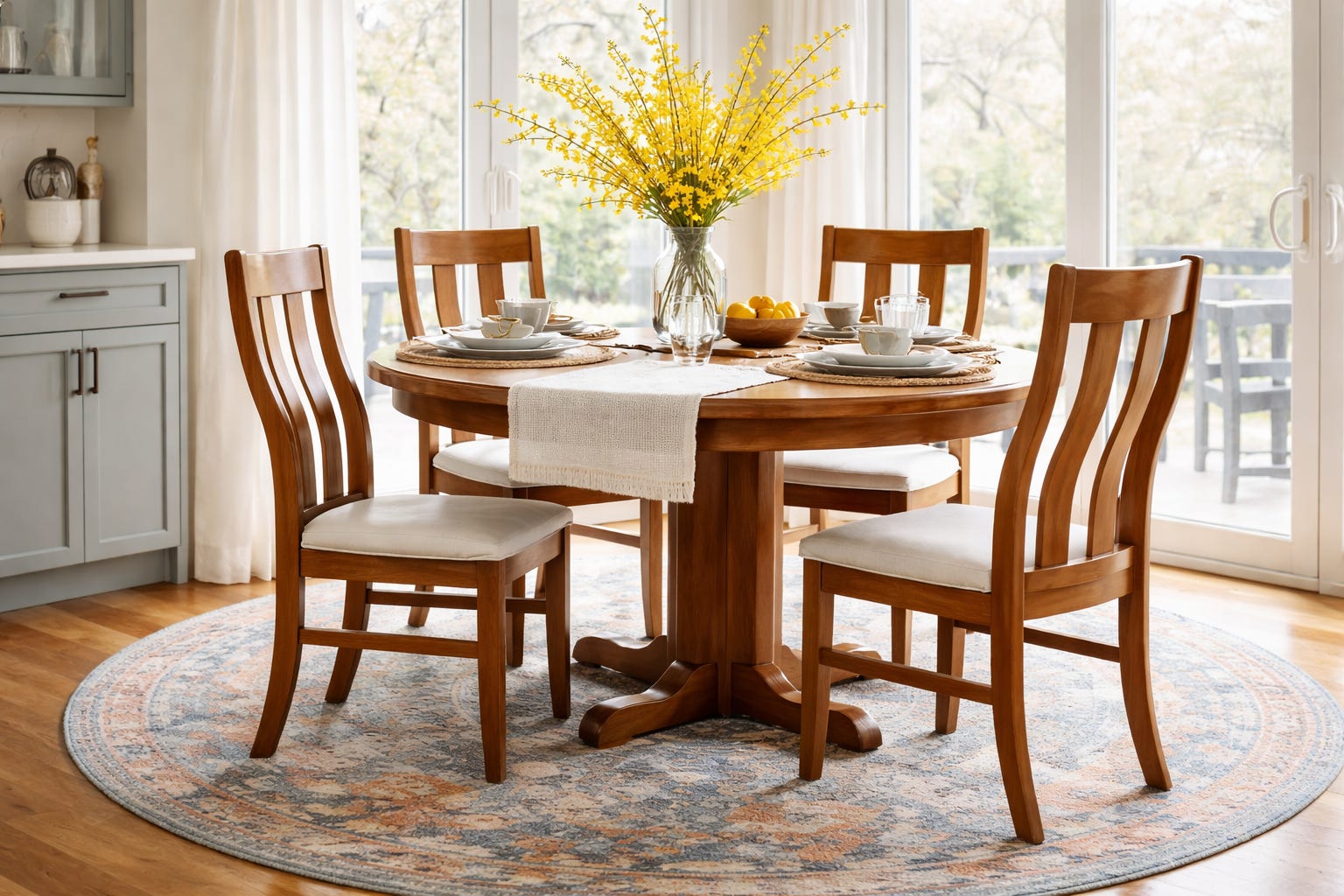
Solid wood is often the most reliable place to start.
I’ve found that a true solid wood table feels steady in a way that engineered materials don’t quite replicate.
It has a density and presence that makes the entire room feel more grounded.
Hardwoods like oak, maple, walnut, and cherry tend to perform especially well for dining tables because they can handle daily use while developing character over time.
When I began choosing solid wood pieces, I noticed how differently they aged. Instead of wearing out, they seemed to soften and deepen.
Small marks became part of the story rather than flaws.
This is what makes solid wood such a strong foundation. It’s not just durable. It’s adaptable to real life.
Understanding Finishes and What Comes in Contact with Your Food
The surface of a dining table is where interaction happens most directly.
I’ve learned that finishes matter just as much as the wood itself. Some finishes create a heavy seal over the surface, while others allow the wood to remain more breathable and tactile.
Low-VOC finishes, natural oils, and waxes tend to feel more aligned with a low-tox home.
They protect the wood while still allowing its texture and variation to come through.
I’ve also become more aware of how often hands, plates, and food come into contact with this surface.
It’s not just visual.
It’s functional in a very immediate way.
Choosing a finish that feels clean, simple, and well-considered adds another layer of comfort to the space.
Avoiding MDF, Veneers, and Hidden Composite Materials
Many dining tables are designed to look like solid wood while using engineered materials underneath.
I didn’t always recognize the difference.
A surface could look beautiful while hiding MDF or particleboard beneath a thin veneer.
Over time, I started to notice how these pieces behaved. They felt lighter, less stable, and more prone to wear.
Edges would chip. Surfaces would lose their consistency.
Avoiding these materials doesn’t require perfection, but it does require awareness.
I’ve found it helpful to look at edges, undersides, and joinery. These details often reveal what the surface alone cannot.
Considering Shape, Size, and Everyday Use
Material is only part of the decision. How the table fits into your life matters just as much.
I try to think about how the table will actually be used. Daily meals, occasional gatherings, quick moments between tasks.
A larger table creates space for connection, but it also changes how a room flows.
A smaller table can feel more intimate and easier to live with day to day.
I’ve also noticed that rounded edges and softer shapes tend to feel more relaxed, while sharper lines feel more structured. Neither is right or wrong, but they create different experiences.
When the size and shape align with how you live, the table feels natural in the space instead of imposed.
Choosing a Table That Will Age Well Over Time
The best dining tables don’t stay the same.
I’ve come to appreciate how wood changes with use. The slight softening of edges, the way light interacts differently with the surface over time.
Instead of trying to preserve perfection, I now look for materials that improve with age.
This shift changed how I think about buying furniture. It’s less about finding something flawless and more about choosing something that can evolve.
A well-chosen table becomes part of the home in a way that feels lasting.
The Difference You Notice Every Day
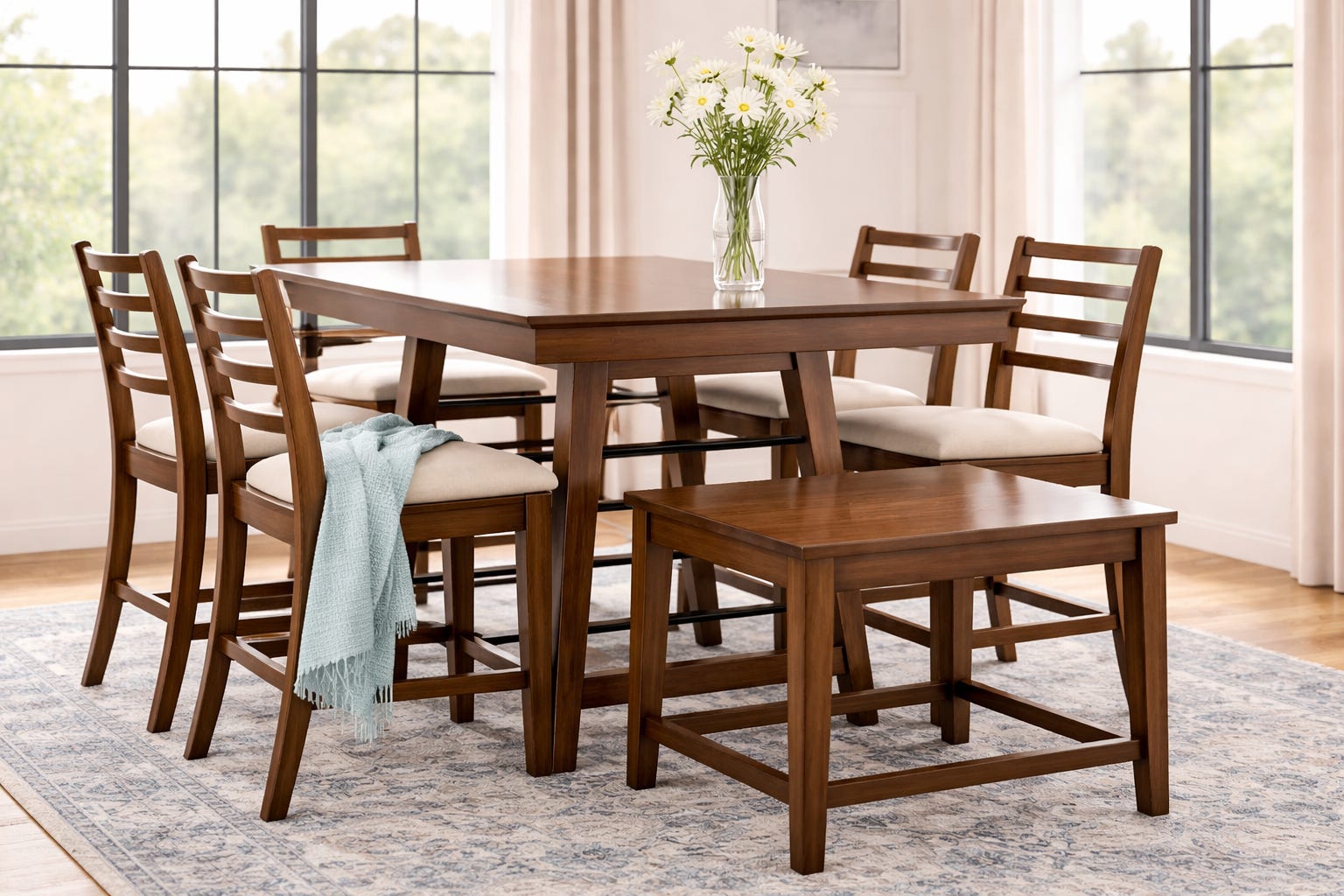
A dining table is one of the most used surfaces in a home.
I didn’t fully realize how much that mattered until I chose one made from natural materials. The difference wasn’t dramatic, but it was consistent.
It felt more stable, more comfortable, more aligned with how I wanted the space to function.
And over time, that consistency becomes something you rely on without thinking about it.
In a home built around natural materials and quiet luxury, even a single piece like this can shift the entire atmosphere.
When you think about your own table, does it feel like something that will last, or something that will need replacing?
Some links in this article may be affiliate links. By clicking on them, you help support my work. Don’t worry. I only share materials and brands I do/would use in my own home.
Did you like this article? Subscribe for ~free~ and get my next post in your inbox.