
The kitchen is one of the most intimate spaces in a home.
It’s where water boils slowly on the stove in the early morning.
Where soup simmers on quiet winter afternoons.
Where wooden spoons scrape the bottom of a pan while something simple comes together.
Because cookware sits directly between heat and food, the materials we cook with matter more than we often realize.
For many years I used whatever pots and pans were available — nonstick skillets, lightweight aluminum pans, inexpensive coated cookware sets. They worked well enough, but over time I began noticing how quickly they scratched, warped, or wore down.
The more I learned about cookware materials, the more I understood that some surfaces simply weren’t designed to last decades.
And when cookware doesn’t last, it often means coatings slowly degrade into the food we’re cooking.
Gradually, I began replacing pieces with cookware made from simpler materials — the kinds that have been used in kitchens for generations.
Cast iron.
Stainless steel.
Ceramic.
Glass.
These materials feel reassuring in a way that synthetic coatings rarely do.
They age well.
They perform beautifully with heat.
And most importantly, they allow cooking to remain simple.
A healthy kitchen doesn’t require dozens of specialized tools.
Just a few well-chosen pieces made from materials that can quietly serve for years.
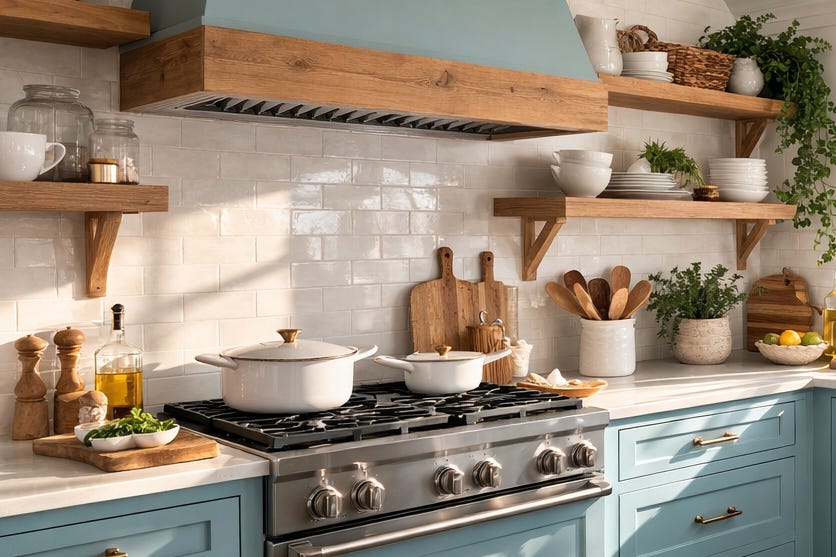
Stainless Steel Cookware: The Everyday Workhorse
If I had to choose one material that quietly handles almost everything in the kitchen, it would be stainless steel.
It’s remarkably durable, resistant to corrosion, and completely free from synthetic coatings.
Stainless steel pans heat evenly when layered with aluminum or copper cores, which is why many professional kitchens rely on them every day.
What I appreciate most about stainless steel cookware is its versatility.
It works beautifully for:
• sautéing vegetables
• simmering sauces
• boiling pasta
• browning meat
• cooking grains and soups
Unlike nonstick surfaces, stainless steel doesn’t degrade over time. It simply develops a patina of use — subtle marks that tell the story of many meals cooked over the years.
Learning how to cook with stainless steel does take a little practice.
The secret is heat control and allowing the pan to warm properly before adding oil.
Once you understand the rhythm, it becomes one of the most reliable tools in the kitchen.
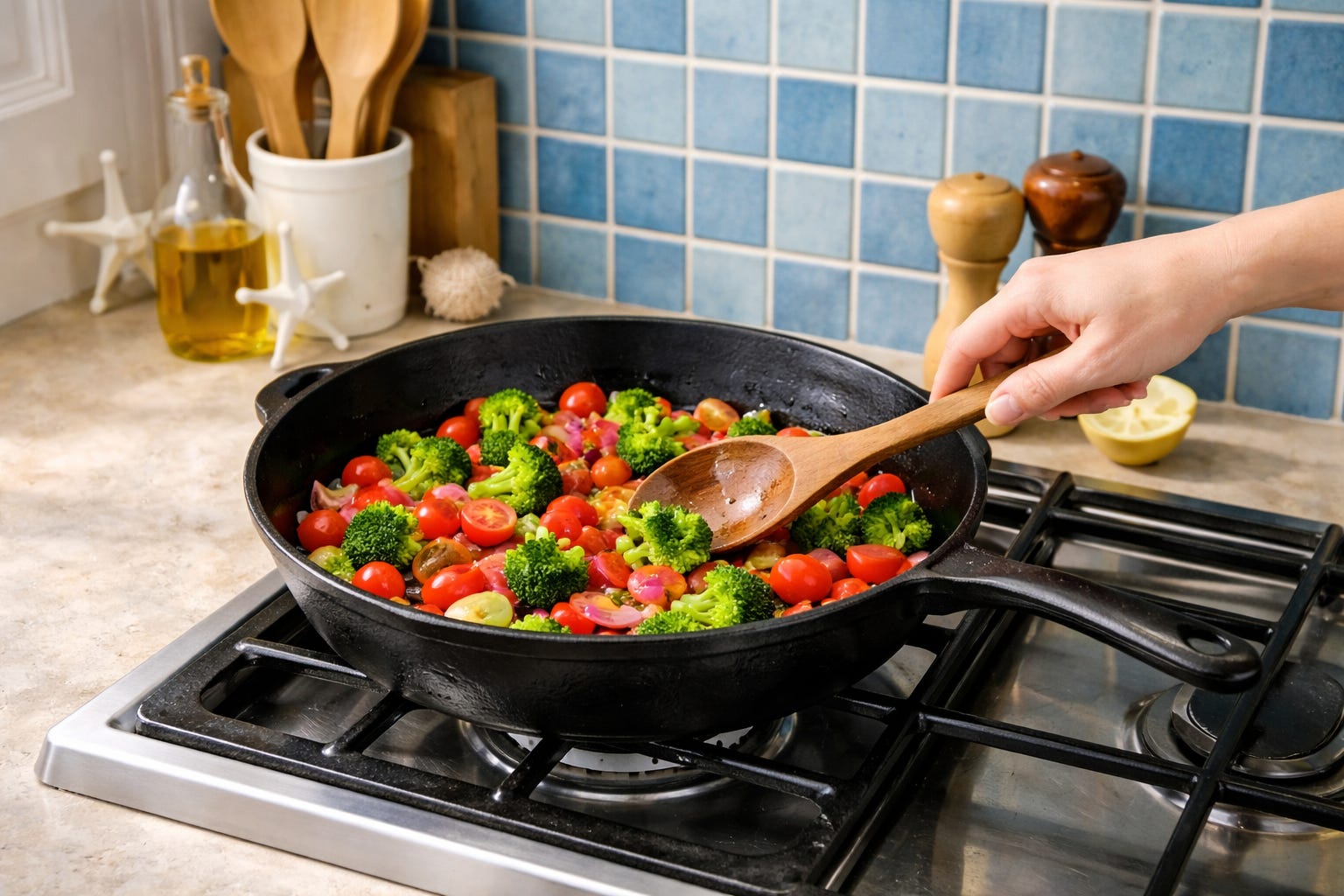
Cast Iron: Timeless and Incredibly Durable
Cast iron cookware has been trusted in kitchens for centuries.
And once you begin cooking with it, the reason becomes obvious.
It holds heat beautifully.
That steady heat makes it ideal for foods that benefit from strong searing or slow cooking.
A cast iron skillet can move effortlessly from stovetop to oven, making it perfect for dishes like:
• roasted vegetables
• cornbread
• skillet dinners
• frittatas
• baked desserts
When properly seasoned with oil, the surface gradually becomes naturally nonstick.
Unlike synthetic coatings, this seasoning improves with use.
Cast iron also lasts generations.
It’s not unusual for families to pass down skillets that are fifty or even one hundred years old.
There’s something reassuring about cookware that can outlast trends, technology, and kitchen redesigns.
Ceramic Cookware: A Smooth and Simple Surface
Ceramic cookware has become increasingly popular in recent years as an alternative to traditional nonstick pans.
High-quality ceramic-coated cookware uses a mineral-based surface rather than synthetic fluoropolymer coatings.
This creates a naturally smooth cooking surface that releases food easily with minimal oil.
Ceramic cookware tends to be lighter than cast iron, which makes it easier for everyday use.
It’s particularly well suited for delicate foods such as:
• eggs
• fish
• pancakes
• crepes
However, ceramic cookware benefits from gentle care.
Using wooden or silicone utensils and avoiding high heat can help preserve the surface for many years.
When treated thoughtfully, ceramic pans can become a beautiful, practical part of daily cooking.
Enameled Cast Iron: Beauty Meets Strength
Enameled cast iron offers many of the strengths of traditional cast iron while adding a colorful protective coating.
The enamel surface prevents rust and eliminates the need for seasoning.
What makes these pieces special is how well they handle slow cooking.
Dutch ovens made from enameled cast iron create a steady environment for foods like:
• soups and stews
• braised vegetables
• homemade bread
• slow-cooked sauces
The heavy lid traps moisture while the thick walls distribute heat evenly.
These pots also happen to be among the most beautiful items in a kitchen.
Deep blues, warm terracotta reds, and soft greens often sit quietly on the stove, ready for the next meal.
Cookware becomes part of the room’s character rather than something hidden in a cabinet.
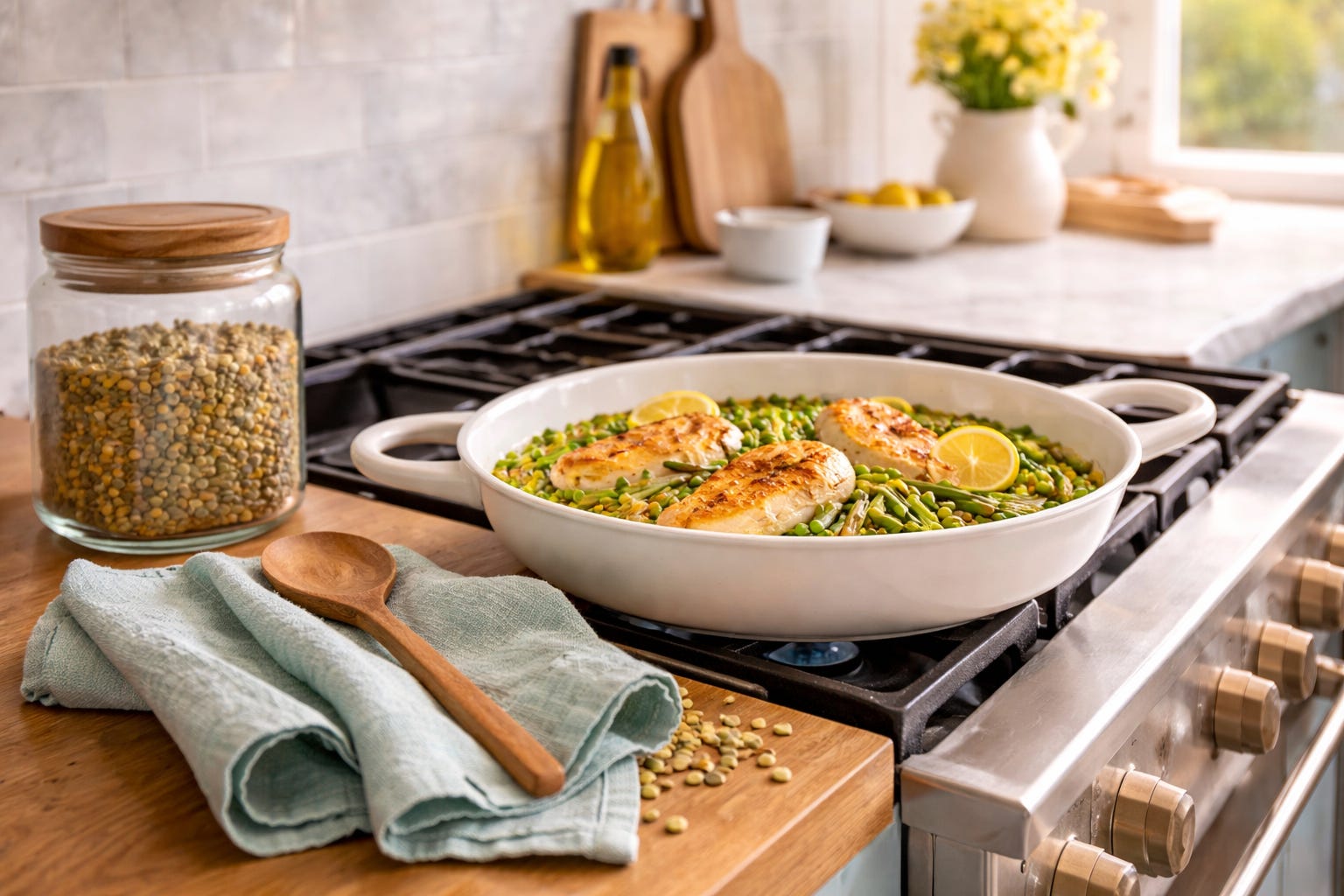
Glass and Stoneware for Baking
While stovetop cookware gets most of the attention, baking dishes also deserve thoughtful materials.
Glass and stoneware are two of the most reassuring options.
Glass baking dishes are wonderfully simple.
They contain no coatings, and their transparency allows you to see how food cooks from the sides and bottom.
Stoneware, on the other hand, holds heat beautifully and produces evenly baked casseroles, breads, and roasted dishes.
Both materials bring something else into the kitchen as well — visual warmth.
A stoneware dish filled with roasted vegetables or a bubbling fruit crumble feels deeply comforting.
Cooking becomes less about equipment and more about the experience of sharing food.
Building a Thoughtful Non-Toxic Cookware Collection
A healthy cookware collection doesn’t need to be large.
In fact, most kitchens work beautifully with just a few core pieces.
Over time I’ve found that these essentials cover nearly every meal:
• stainless steel saucepan
• stainless steel sauté pan
• cast iron skillet
• enameled cast iron Dutch oven
• ceramic nonstick pan for delicate foods
• glass or stoneware baking dish
With these pieces, cooking becomes simple again.
There’s less clutter in the cabinets.
Fewer coatings to worry about.
And a quiet sense of reliability every time a pan touches the stove.
Cookware should feel steady in the hand.
Not disposable.
Not temporary.
Just something you trust.
A Kitchen That Feels Good to Cook In
What I’ve come to appreciate most about natural cookware materials is how they change the feeling of the kitchen itself.
Heavy cast iron resting on the stove.
A stainless steel pot warming slowly with soup.
A ceramic dish cooling on the counter.
These objects aren’t flashy.
They simply belong.
Over time they collect small marks from use — a faint seasoning on a skillet, a soft patina on stainless steel, the gentle wear of wooden utensils.
And those marks tell a quiet story.
A healthy kitchen isn’t really about perfection.
It’s about creating a space where cooking feels calm, nourishing, and uncomplicated.
Sometimes the best cookware is simply the kind that lets the food (and the moment ) speak for itself.
Some links in this article may be affiliate links. By clicking on them, you help support my work. Don’t worry. I only share materials and brands I do/would use in my own home.
Did you like this article? Subscribe for <free> and get my next post in your inbox.