
A Bed That Feels Different the Moment You Lie Down
There’s a certain kind of quiet you notice when a room is working the way it should.
I remember the first time I lay down on a truly natural mattress. It didn’t feel dramatically different at first. But within a few minutes, something shifted. The air felt lighter.
The surface felt steady instead of artificial.
It wasn’t about softness or firmness. It was about how everything settled.
Most conventional mattresses are built with synthetic foams, adhesives, and chemical treatments.
And while you don’t see them, you do experience them. Heat that lingers. Air that feels slightly heavy. A surface that doesn’t quite breathe.
Natural mattresses work differently. They rely on materials that allow airflow, regulate temperature, and support the body without sealing it in.
Once I understood what was actually inside a mattress, it became impossible to ignore. The structure matters. The materials matter.
And over time, they shape how well you rest.
Latex Mattresses and the Foundation of Natural Support
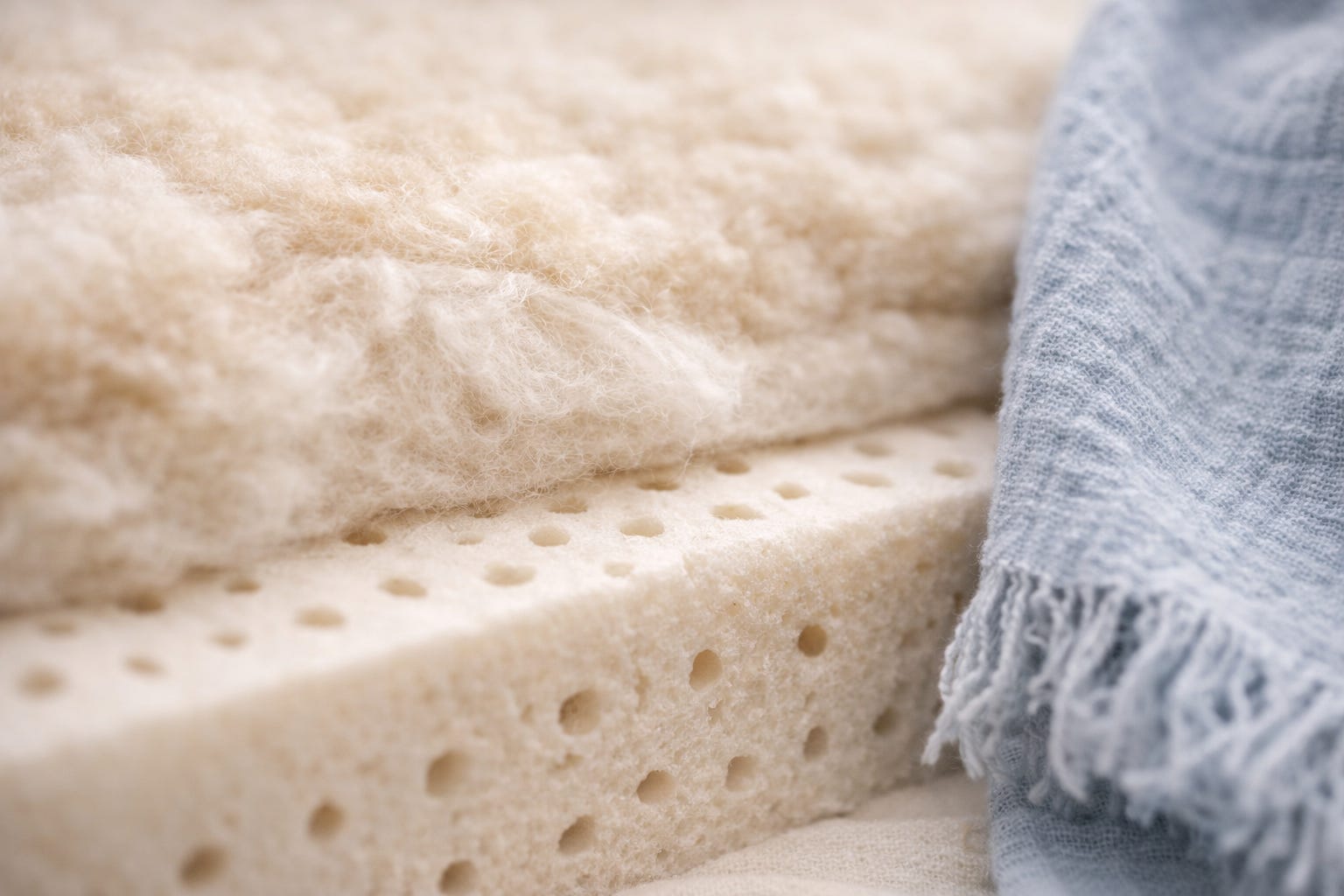
Natural latex is often the starting point for a low-tox mattress.
It’s derived from rubber tree sap and processed without the need for synthetic foams.
The result is a material that feels both supportive and responsive, gently lifting rather than sinking.
What I appreciate most about latex is how balanced it feels. It doesn’t trap heat the way memory foam often does, and it allows air to move through the mattress more freely.
There’s also a durability to it.
Latex tends to hold its structure over time, which means the mattress doesn’t break down in the same way many conventional options do.
For many people, this becomes the foundation of a natural sleep setup.
It’s steady, breathable, and quietly supportive in a way that feels easy to live with.
Wool Layers and Natural Temperature Regulation
Wool is one of the most underrated materials in a mattress.
It’s often used as a comfort layer or quilting material, and it plays a critical role in how the bed feels throughout the night.
Wool naturally regulates temperature.
It can absorb moisture without feeling damp, which helps keep the sleep environment dry and comfortable.
I’ve found that this is where a lot of the “calm” feeling comes from. The bed doesn’t overheat. It doesn’t feel sealed in. It simply adjusts, quietly, in the background.
It also replaces the need for chemical flame retardants in many natural mattresses, which is another layer of simplicity that matters when you’re trying to create a low-tox space.

Innerspring and Hybrid Mattresses with Natural Materials
Not every natural mattress is all latex.
Many are built as hybrids, combining natural latex, wool, and cotton with an innerspring support system.
This structure creates a different kind of feel. There’s more airflow, more lift, and a slightly more traditional mattress experience.
I think of these as a bridge between worlds.
They offer the familiarity of a classic mattress while still using natural materials that reduce exposure to synthetics.
For some people, especially those transitioning from conventional beds, this can feel like the most comfortable place to start.
What to Avoid in Conventional Mattress Materials
Understanding what to look for is only part of the picture.
It’s equally important to understand what you’re moving away from.
Most conventional mattresses rely on polyurethane foam, memory foam, and synthetic blends. These materials can trap heat, limit airflow, and often include chemical additives or adhesives.
I didn’t realize how much this affected my sleep until I experienced something different.
Once I did, the contrast was clear.
Avoiding these materials isn’t about perfection.
It’s about reducing what feels unnecessary and choosing what supports a more breathable environment.
Choosing the Right Natural Mattress for Your Sleep Style
The best natural mattress isn’t one-size-fits-all.
It depends on how you sleep, what you prefer, and what feels supportive to your body.
If you want a more responsive, buoyant feel, latex-forward mattresses are often the best choice.
If you prefer airflow and a slightly more traditional structure, hybrid mattresses with coils may feel more comfortable.
And if temperature regulation is a priority, wool layers make a meaningful difference.
I’ve found that once you begin paying attention to how materials behave, the decision becomes clearer.
It’s less about marketing and more about how your body responds over time.
The Difference a Natural Mattress Makes Over Time
The materials we sleep on shape more than comfort.
They shape how deeply we rest.
Natural mattresses create an environment that feels lighter, more breathable, and more aligned with how the body naturally regulates itself.
Once you notice the difference, it’s hard to go back.
And in a home built around quiet luxury, that difference becomes part of how the space supports you every day.
When you think about your own bed, are there materials you’re ready to rethink or replace?
Some links in this article may be affiliate links. By clicking on them, you help support my work. Don’t worry. I only share materials and brands I do/would use in my own home.
Did you like this article? Subscribe for ~free~ and get my next post in your inbox.