
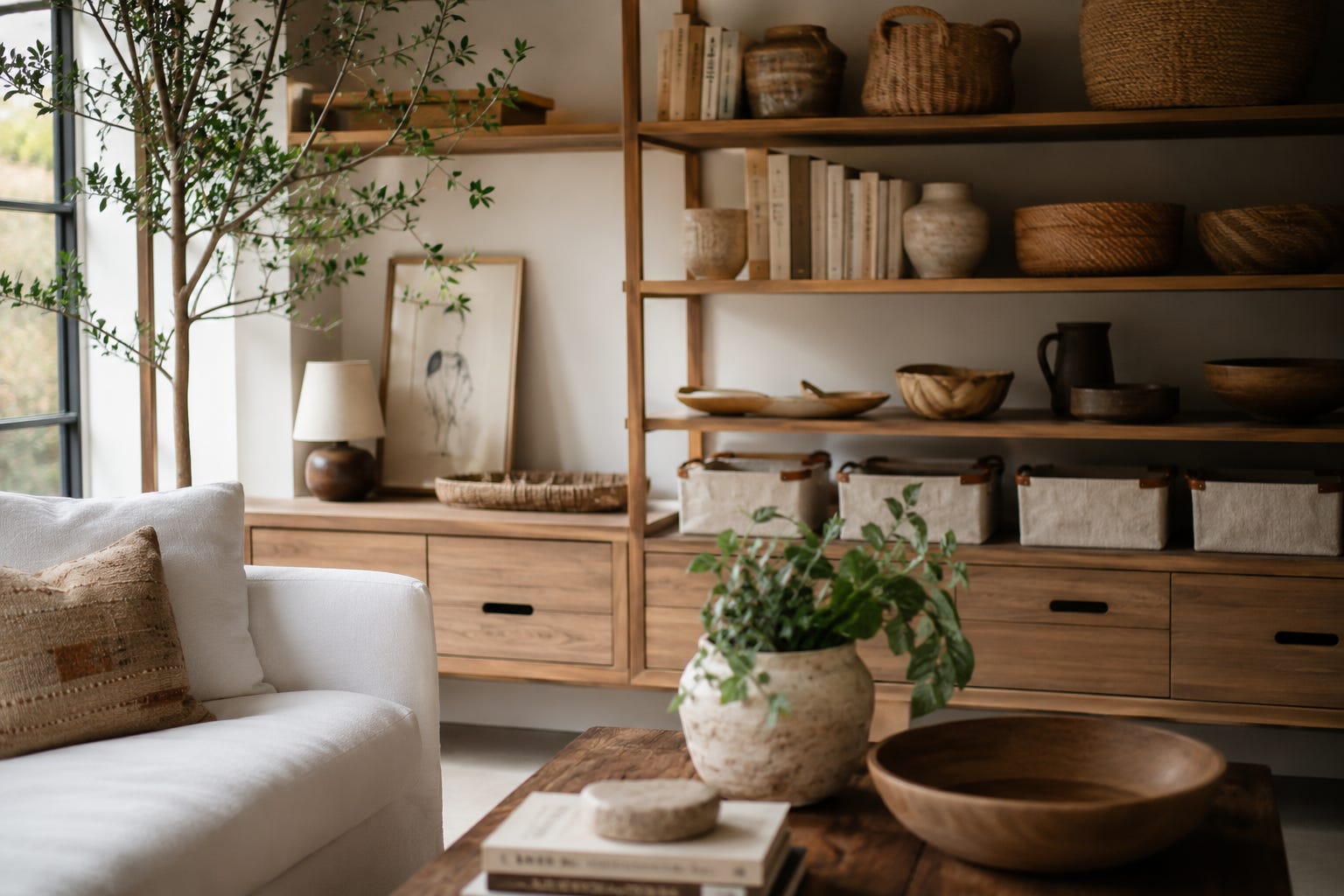
Storage: More Than Functional
I didn’t expect storage to change how my home feels.
For a long time, I treated it as purely functional—something to solve clutter, hide things away, keep everything in order. And for the most part, it worked. But something always felt slightly off. The bins were practical, the systems were efficient, yet the experience of using them felt cold and disconnected.
I started noticing it in small ways.
The sound of plastic lids snapping shut. The artificial sheen of acrylic boxes. The way certain materials felt under my hands—light, hollow, temporary.
Over time, I realized that storage isn’t neutral. It’s something we touch every day, something we see constantly, something that quietly shapes the rhythm of how we move through our homes.
When I began replacing synthetic storage with natural materials, the shift was immediate.
Not dramatic. Just softer.
And somehow, that softness changed everything.
Why Storage Materials Matter More Than We Think
Storage is one of the most repeated interactions we have with our home.
We reach for it without thinking—placing, retrieving, adjusting throughout the day. And because it’s so constant, the materials we use begin to influence how those moments feel.
I didn’t fully understand that at first.
But once I started paying attention, I noticed how certain materials created subtle tension. Plastic bins that felt brittle. Fabric cubes made from synthetic blends that held onto a faint chemical scent. MDF drawers that looked solid but felt hollow when opened.
There’s also the question of what these materials carry into the space.
Many conventional storage solutions are made with adhesives, coatings, or plastics that can off-gas over time. It’s not always something you can see, but you can often feel it—especially in enclosed spaces like closets or entryways.
When I began choosing natural materials instead, I noticed a difference not just in how things looked, but in how the space held itself.
It felt quieter.
More settled.
And over time, I realized that storage isn’t just about organizing what we own—it’s about shaping the atmosphere we live in.
Woven Natural Fibers That Bring Warmth and Breathability
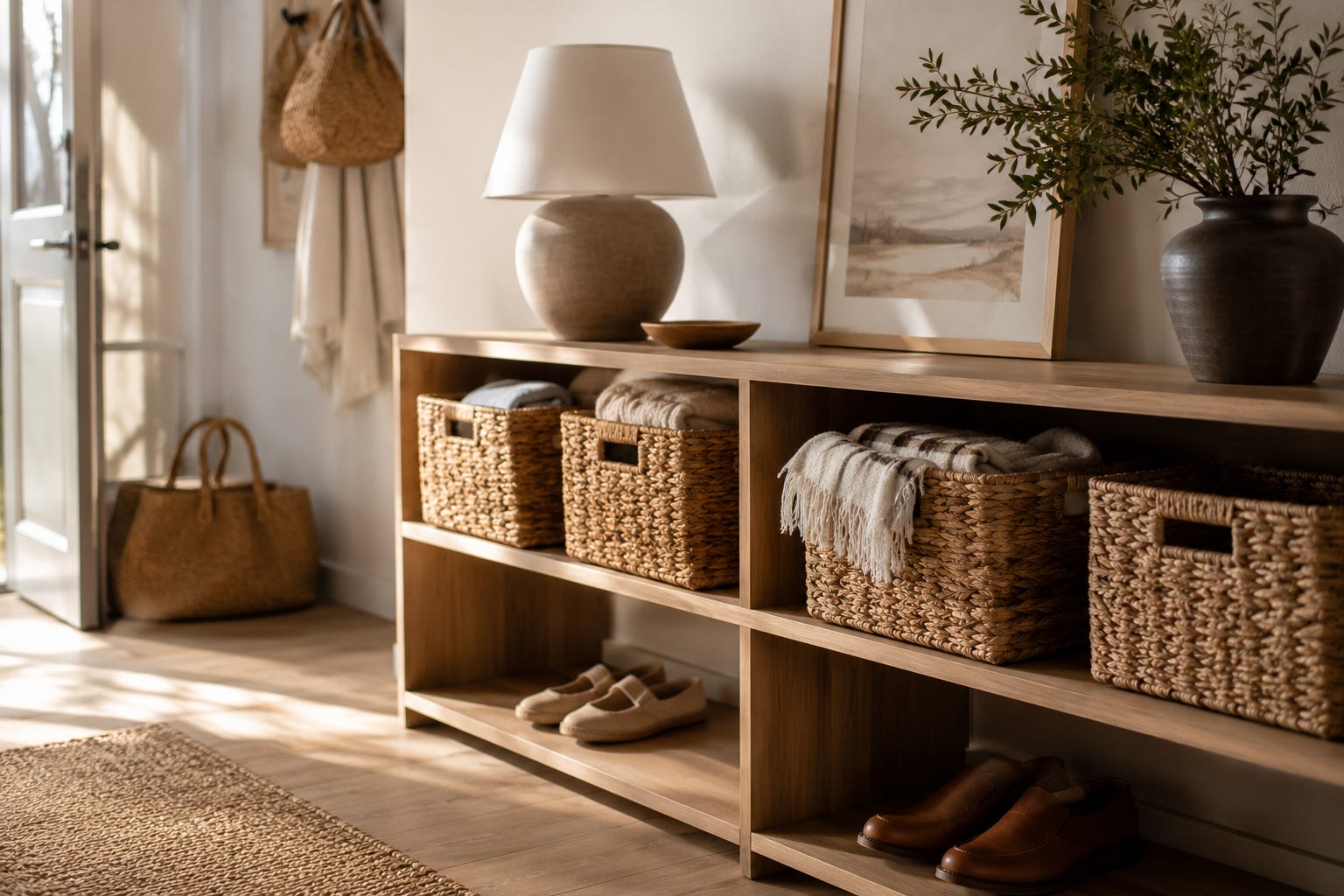
The first shift I made was toward woven baskets.
Seagrass, rattan, water hyacinth—materials that feel alive in a way plastic never does. There’s an irregularity to them, a softness in how they hold shape, that immediately changes the tone of a space.
I use them everywhere now.
In the entryway for shoes. In the living room for blankets. On open shelves where storage becomes part of what you see rather than something you try to hide.
What I appreciate most is their breathability.
Unlike sealed plastic bins, woven baskets allow air to move. Fabrics don’t feel trapped. Shoes don’t hold onto lingering odors in the same way. Everything feels a little more open, a little less contained.
There’s also a tactile comfort to them.
The slight texture under your fingertips. The quiet weight when you lift one. Even the way light moves across the surface—it feels warmer, less reflective, more grounded.
I’ve found that investing in higher-quality, handwoven pieces makes a noticeable difference. They hold their shape better, age more beautifully, and feel more intentional.
Over time, they don’t just store things.
They become part of the atmosphere.
Solid Wood Storage That Grounds a Space
If woven fibers bring softness, wood brings stability.
There’s something about solid wood storage that feels immediately grounding. The weight of it. The visible grain. The way it holds presence in a room without needing to stand out.
I started with small pieces—wooden crates, simple drawers—and slowly replaced anything made from particleboard or MDF.
The difference was subtle but undeniable.
Opening a solid wood drawer feels different. It moves with more intention. It carries a quiet sturdiness that you don’t get from lighter, engineered materials.
And over time, it only gets better.
Small marks, slight variations in tone, the way the surface softens with use—these details don’t feel like wear. They feel like history.
From a low-tox perspective, solid wood also tends to be a safer choice, especially when finished with low-VOC oils or left untreated. It avoids the adhesives and synthetic binders found in many composite materials.
But beyond that, it simply feels better to live with.
I’ve noticed that when storage has weight and presence, the entire space feels more anchored.
Less temporary.
More considered.
Soft Storage: Linen, Cotton, and Wool
Not everything needs structure.
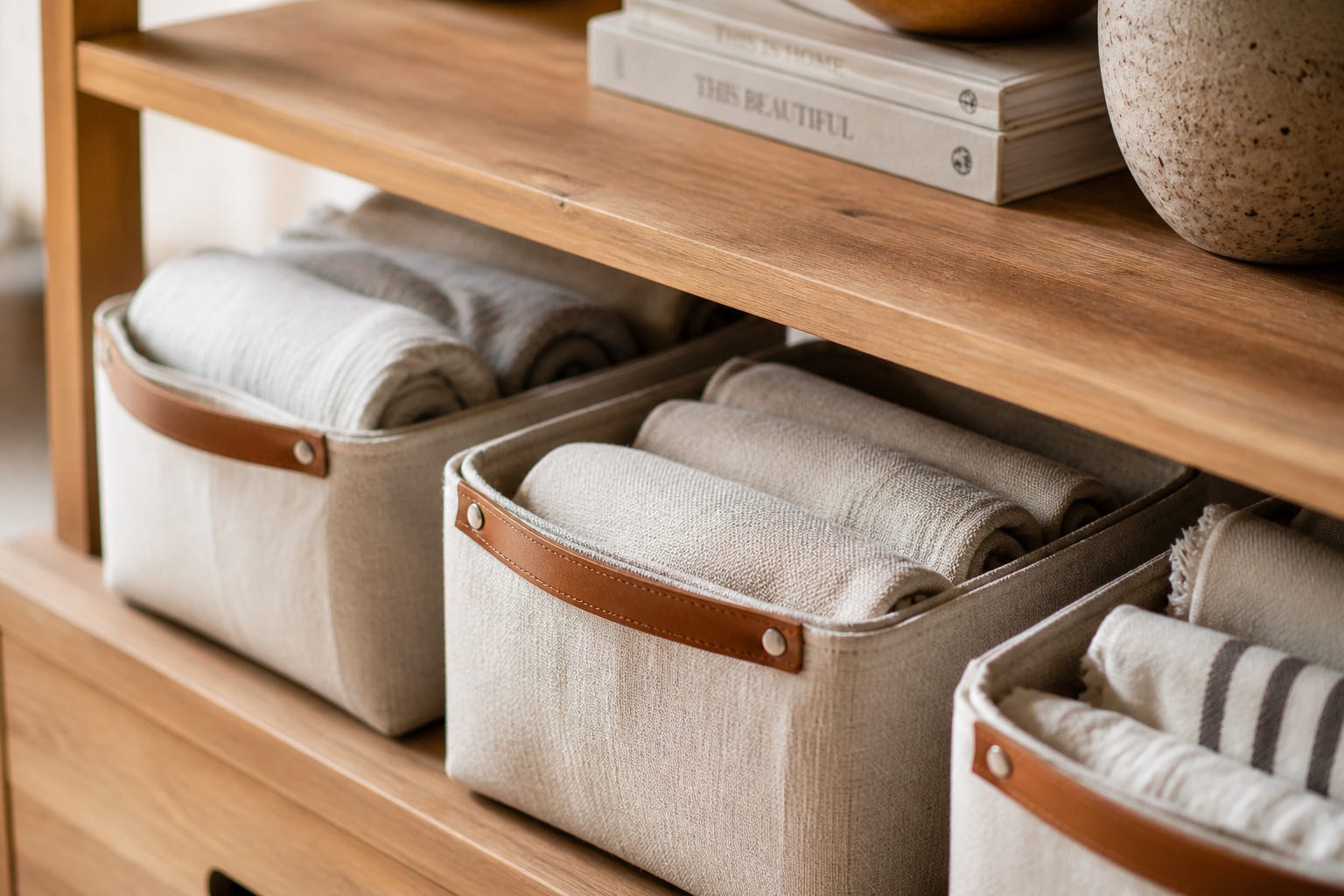
Some of the most calming storage I use now is soft—linen bins, cotton bags, wool baskets that hold their shape just enough while still feeling flexible and forgiving.
I use these mostly in more personal spaces.
Closets, bedrooms, drawers where the experience of touch matters more. Where I’m reaching for things slowly, not rushing.
There’s a quiet comfort in natural fabrics.
Linen has a slightly textured feel that softens over time. Cotton feels clean and familiar. Wool adds warmth in a way that’s subtle but noticeable.
Unlike synthetic fabrics, these materials breathe.
They don’t trap heat or hold onto artificial scents. They feel neutral in the best possible way.
I’ve also found that they create a softer visual rhythm.
Where plastic or acrylic can feel sharp and defined, fabric storage feels more relaxed. Edges are less rigid. The space feels less controlled, more lived in.
And that balance—between structure and softness—is what makes a home feel real.
What I No Longer Use (And Why I Let It Go)
Letting go of certain storage materials wasn’t immediate.
At first, it felt impractical. Plastic bins are easy. Acrylic organizers look clean. Synthetic fabric cubes are everywhere.
But over time, I started noticing how they made the space feel.
Too sharp. Too artificial. Too closed off.
Plastic, especially, began to stand out in a way I couldn’t ignore. The way it reflects light. The way it feels under your hands—smooth, but not in a comforting way. And sometimes, the faint scent that lingers, even when everything is clean.
Acrylic felt similar.
Visually lighter, but still hard. Still synthetic. Still slightly disconnected from the rest of the materials in my home.
And MDF or composite storage pieces, while common, never quite held up. They looked solid, but didn’t feel it. Over time, that disconnect became more noticeable.
So I stopped bringing those materials in.
Not all at once. Gradually. Piece by piece.
And as I replaced them, the space shifted.
It felt warmer. Quieter. More cohesive.
I realized I wasn’t just changing storage.
I was changing how my home felt to live in, every single day.
Pieces I Trust
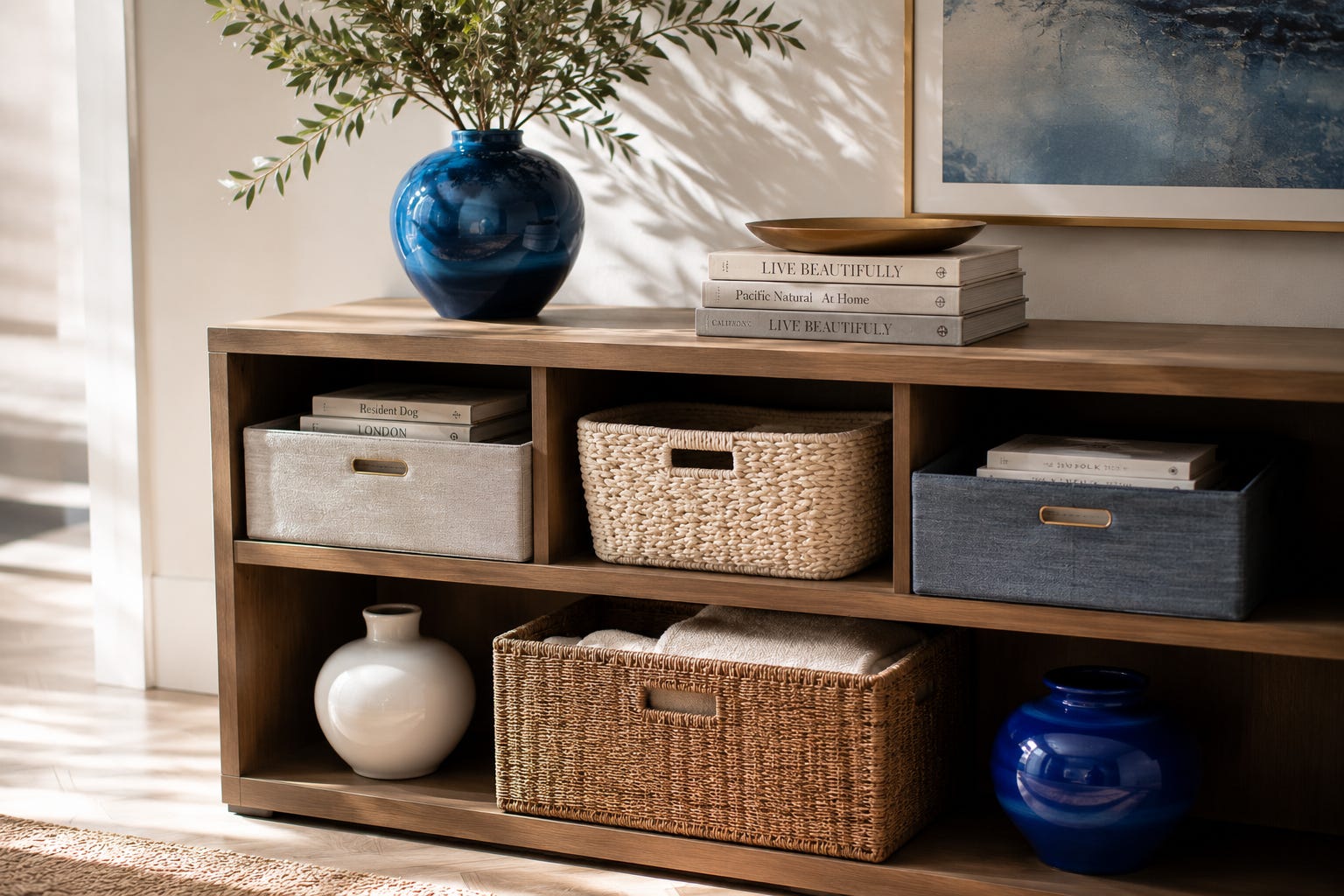
Over time, I’ve come back to the same materials again and again:
Handwoven seagrass, rattan, and water hyacinth baskets
Solid wood crates, drawers, and shelving
Linen storage bins and organizers
Cotton canvas bags and soft containers
Wool baskets for added warmth
Minimal, uncoated metal accents when needed
These pieces don’t just store what I own.
They shape how my home feels—calm, breathable, and quietly elevated.
Storage as Style
I no longer think of storage as something separate from design.
It is design.
It’s part of the visual landscape, part of the sensory experience, part of the rhythm of daily life.
And when the materials feel right—when they’re natural, breathable, and made with care—everything becomes just a little bit easier.
A little softer.
A little more grounded.
I didn’t expect something as simple as storage to have that kind of impact.
But now, I notice it every single day.
Which storage pieces in your home feel good to use—and which ones are you ready to quietly replace?
Some links in this article may be affiliate links. By clicking on them, you help support my work. Don’t worry. I only share materials and brands I do/would use in my own home.
Did you like this article? Subscribe for ~free~ and get my next post in your inbox.