
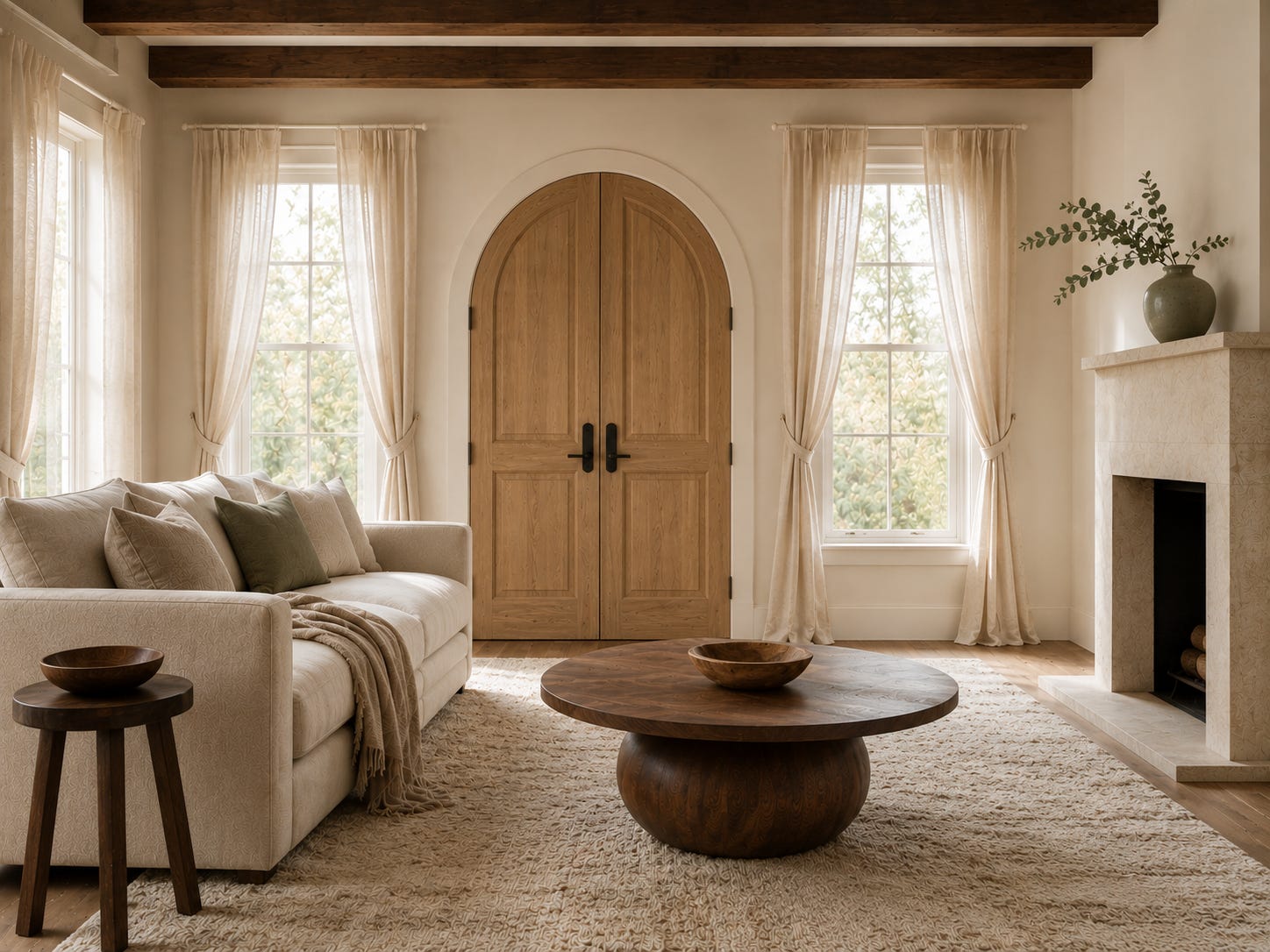
When I was younger, I thought creating a beautiful home was mostly about finding the right things.
The right furniture. The right decor. The right finishing touches.
Over time, I’ve come to believe that a calm, restorative home is shaped just as much by what we choose not to bring in.
Some of my biggest home regrets weren’t necessarily expensive purchases. They were the items I bought quickly because they looked beautiful online, seemed like a good deal, or solved a temporary desire in the moment. A few months later, many of those things no longer felt quite right.
Now, before anything new enters our home, I pause and ask a handful of quiet questions.
Not because I’m trying to create a perfect home.
And certainly not because I think every purchase needs to be endlessly analyzed.
I simply want the things we live with every day to support the feeling we’re trying to create here: calm, comfort, ease, and wellbeing.
These are the questions that help guide me.
Will This Improve Daily Life?
Beauty matters to me.
But I’ve learned that beauty alone rarely justifies a purchase.
Before bringing something home, I try to imagine how it will actually function within our daily routines. Will it solve a problem? Make a task easier? Add genuine comfort? Support the way we live?
Years working in boutique hospitality taught me that the most memorable spaces aren’t always the most visually impressive. They’re the spaces that quietly anticipate your needs and make life feel a little easier.
The same principle applies at home.
A purchase doesn’t have to be life-changing to be worthwhile. Sometimes a thoughtfully designed storage basket, a better reading lamp, or a set of breathable sheets can improve everyday life more than a dramatic design statement ever could.
The best pieces tend to earn their place through use.
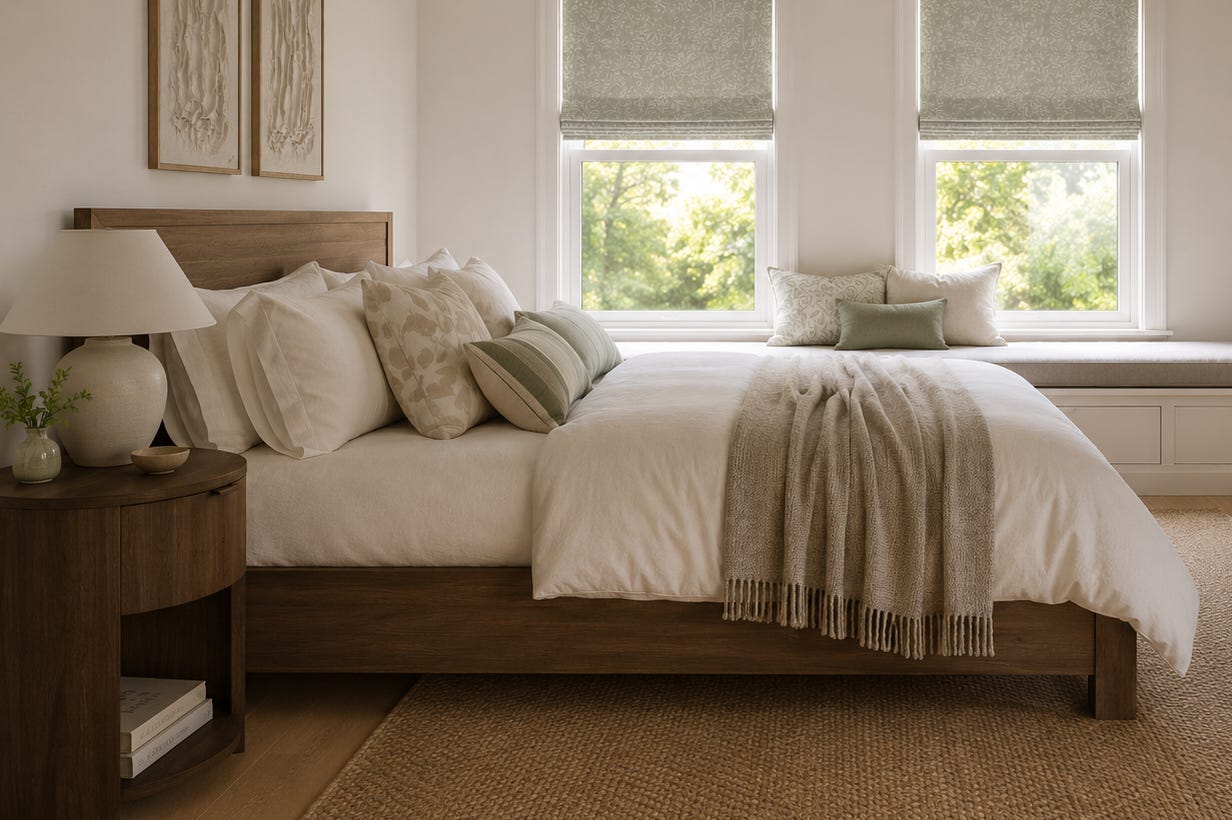
What Is It Made From?
This is often one of the first questions I ask.
I don’t believe every item in a home must be made from perfect materials, but I do pay attention to what something is made from and how it might feel to live with over time.
Whenever practical, I find myself drawn to natural materials like solid wood, linen, cotton, wool, stone, glass, and ceramic.
There’s something inherently grounding about them.
They age beautifully, develop character, and often bring a warmth that synthetic alternatives struggle to replicate.
I’ve also become increasingly aware of how materials influence the sensory experience of a room. Texture, scent, temperature, and even sound can affect how comfortable a space feels.
For me, creating a low-tox luxury home isn’t about fear or perfection.
It’s about gradually choosing materials that feel good to live with.
Will It Last Long Enough to Be Worth Bringing Home?
I’ve become much less interested in asking whether something is inexpensive.
Instead, I often ask whether it’s worth living with for years.
Longevity changes the entire conversation.
A piece that lasts ten years usually feels very different from a piece that lasts ten months.
I look for signs of quality whenever I can: solid construction, durable finishes, repairability, and timeless design. Not because everything needs to become an heirloom, but because replacing the same item repeatedly rarely feels economical—or calming.
Some of my favorite pieces in our home aren’t new at all.
They’re the items that have quietly remained useful year after year.
That kind of longevity feels luxurious in a way that trends never quite do.
How Will This Feel to Live With Every Day?
This may be the most overlooked question of all.
When we’re shopping, it’s easy to focus on how something looks.
What often matters more is how it feels on an ordinary Tuesday afternoon.
Will this fabric feel comfortable against my skin?
Will this surface constantly show fingerprints?
Will this storage solution actually make life easier?
Will this chair still feel inviting after an hour?
I often think about maintenance here as well. Beautiful things become less beautiful when they’re frustrating to care for.
The homes that feel most peaceful usually aren’t filled with perfect objects. They’re filled with objects that work well for the people living there.
The everyday experience matters.
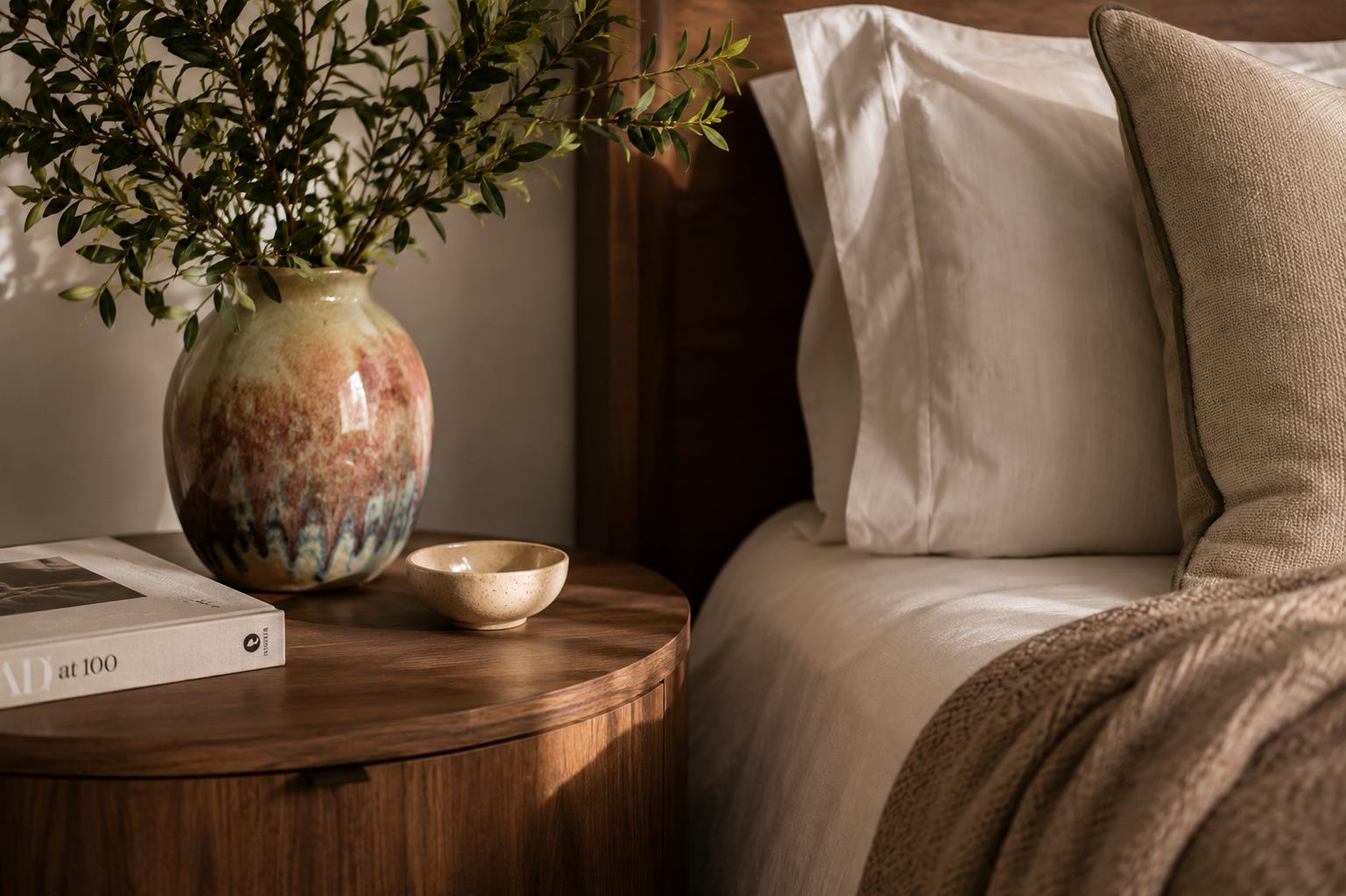
Does It Support the Feeling I Want Our Home to Have?
Every home has an atmosphere.
Some spaces feel energizing.
Others feel creative.
Some feel busy.
The feeling I continually return to is restorative.
I want our home to feel like a place where nervous systems can soften a little after a long day.
That desire influences far more purchasing decisions than I once realized.
When considering something new, I often ask whether it contributes to that feeling or competes with it. Does it add visual calm? Practical ease? Comfort? Warmth?
Or does it simply add more noise?
I’ve found that protecting the feeling of a home is often more important than filling every corner.
Is This Filling a Temporary Want or a Long-Term Need?
I rarely buy larger items immediately anymore.
Instead, I wait.
Sometimes for a few days.
Sometimes for a few weeks.
Occasionally much longer.
I’ve found that time has a remarkable way of clarifying what actually matters.
The pieces that continue calling me back after the initial excitement fades are usually the ones worth paying attention to.
Meanwhile, many impulse purchases lose their appeal surprisingly quickly.
Waiting isn’t about denying yourself something you love.
It’s about giving yourself enough space to determine whether you truly love it.
Would I Still Choose This a Year From Now?
This final question has saved me from countless purchases.
Trends move quickly.
Algorithms move even faster.
But our homes have to live with those decisions long after the trend cycle has passed.
I try to imagine the piece a year from now. Will it still feel relevant? Useful? Beautiful? Will it still fit the home we’re creating?
The answer isn’t always obvious.
But asking the question helps me separate temporary excitement from lasting appreciation.
The goal isn’t to create a home that feels trendy.
It’s to create a home that continues to feel right.
Choosing What Truly Belongs
I’ve learned that intentional purchasing isn’t really about owning less.
It’s about choosing more carefully.
Every item we bring into our homes contributes something to the atmosphere around us. Some add comfort. Some add function. Some add beauty. The best pieces tend to offer a little of all three.
These questions don’t guarantee perfect decisions.
I certainly still make mistakes from time to time.
But they have helped me create a home that feels more settled, less cluttered, and more supportive of daily life.
And for me, that’s what luxury has come to mean: not excess, but ease.
Not more things, but the right things.
The pieces that quietly make everyday life feel better.
A Few Questions I’m Often Asked
Do I only buy natural materials?
Not at all. I simply try to prioritize them when practical.
Progress is often more sustainable than perfection, and I believe gradual improvements are more realistic for most households.
How long do I wait before making a purchase?
It depends on the item. Smaller purchases might get a few days.
Larger investments often sit on my list for several weeks before I decide.
What if something is beautiful but not practical?
Ideally, I look for both.
But if I have to choose, practicality usually wins. Beautiful things tend to stay beautiful longer when they genuinely support daily life.
Is intentional buying more expensive?
Not necessarily. In many cases, buying fewer replacement items over time can actually save money while creating a home filled with things you genuinely enjoy using.
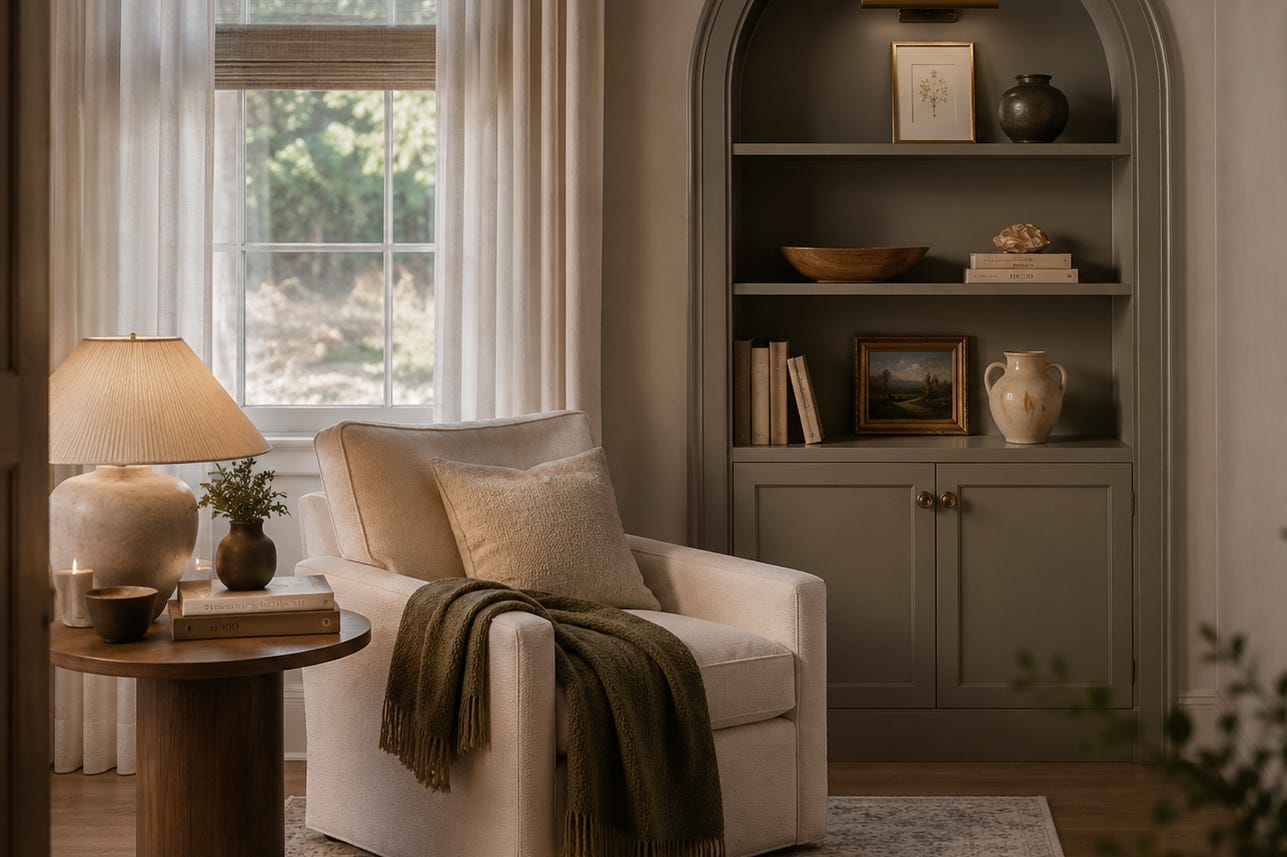
Pieces I Trust
Organic cotton bedding
Linen curtains
Solid wood furniture
Wool rugs
Warm layered lighting
Glass food storage
Natural cleaning essentials
Air quality support products
Before bringing something new into your home, which question matters most to you—and has it changed over the years? I’d love to hear what helps you make thoughtful decisions for your home.
Some links in this article may be affiliate links. By clicking on them, you help support my work. Don’t worry. I only share materials and brands I do/would use in my own home.
Did you like this article? Subscribe for ~free~ and get my next post in your inbox.