

Creating a healthier home often sounds like a large project.
People imagine replacing everything at once or completely redesigning their living spaces.
In reality, the most meaningful changes usually happen through small decisions.
One item replaced here. Another material swapped there.
Over time these small changes begin to reshape the atmosphere of a home.
A lower-tox home isn’t built overnight. It grows quietly through everyday choices.

Beeswax Candles Instead of Paraffin
Many candles sold today are made from paraffin, a petroleum byproduct.
While they are inexpensive and widely available, they can release soot and synthetic fragrance into the air.
Beeswax candles offer a different experience.
They burn with a warm golden glow and often carry a faint natural honey scent. The light they produce feels softer and more calming.
A simple beeswax candle placed on a ceramic dish or wooden tray can transform an evening routine into something more peaceful.
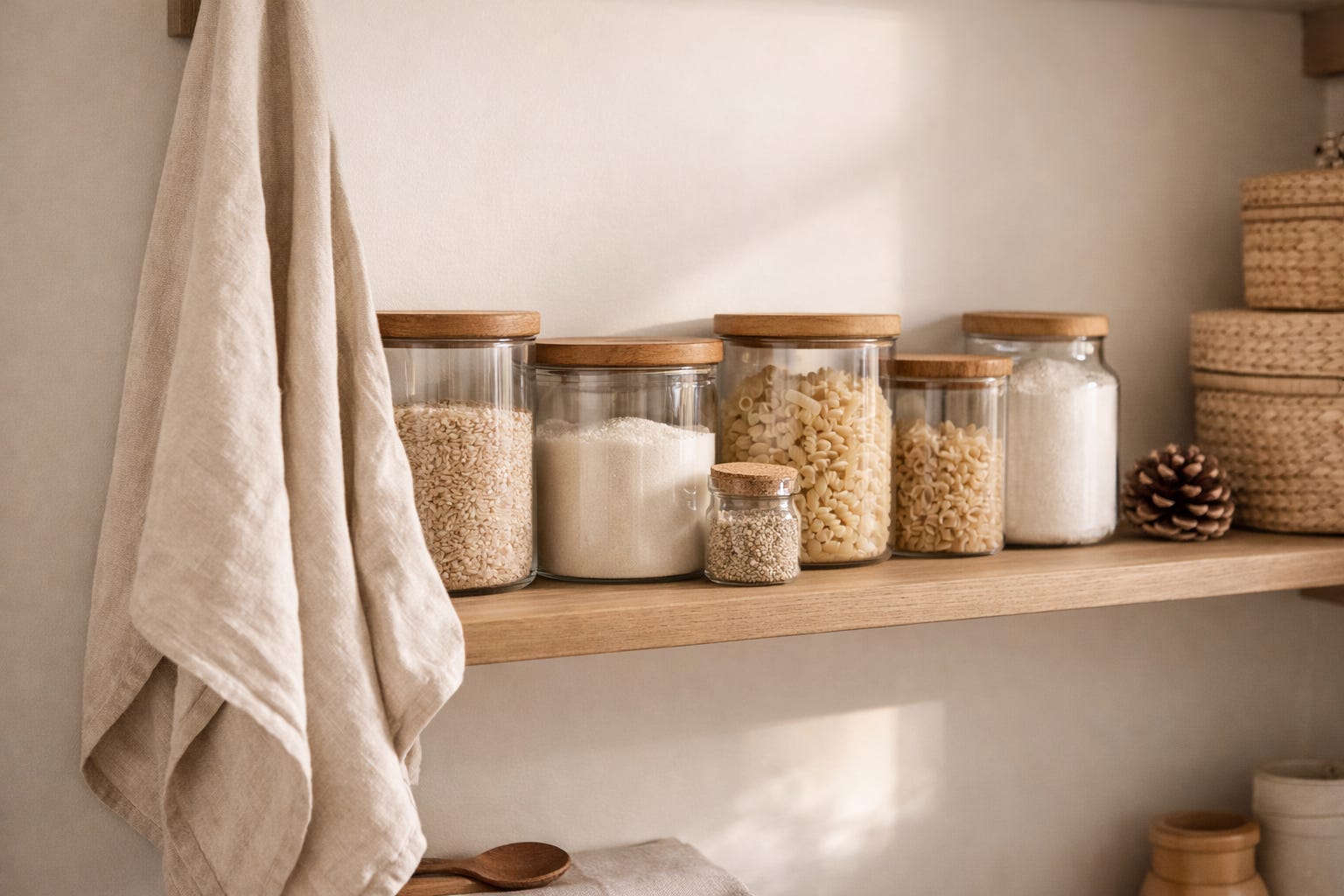
Glass Storage Instead of Plastic
Plastic storage containers appear in nearly every room of the home.
Kitchen containers, bathroom organizers, pantry bins, and storage jars often default to plastic simply because it is common.
Glass offers a beautiful alternative.
Clear jars allow you to see ingredients and household items easily while creating a cleaner visual environment.
Glass also ages well. It doesn’t scratch or cloud in the same way plastic often does.
Linen Bedding Instead of Polyester
Few materials influence comfort more than bedding.
Polyester sheets are common because they are inexpensive and durable. Yet they rarely breathe well and often feel slightly slick against the skin.
Linen bedding offers a completely different experience.
The fibers allow air to circulate naturally, helping regulate temperature throughout the night.
Over time linen becomes softer, creating a relaxed, lived-in texture that feels both comfortable and quietly luxurious.
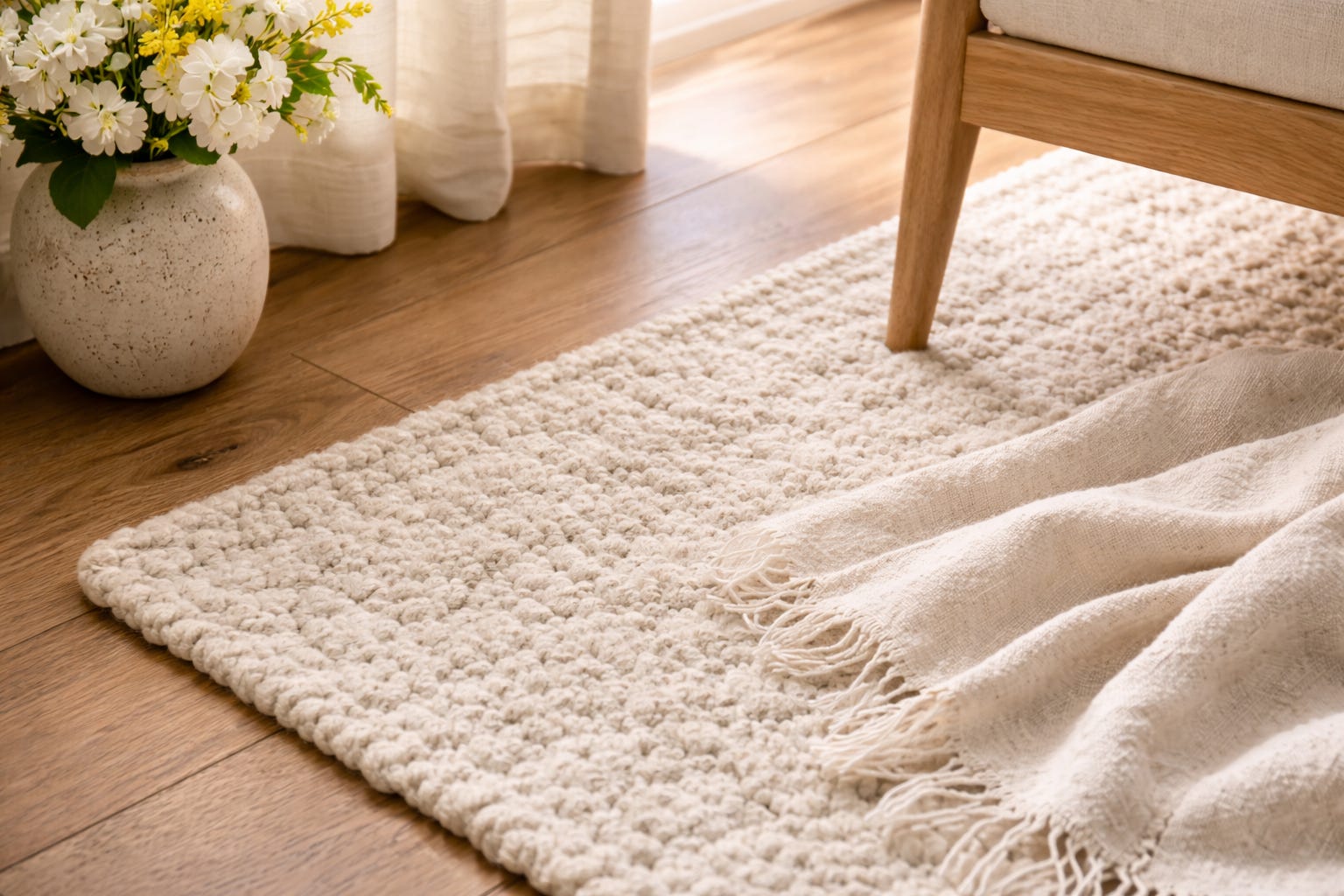
Wool Rugs Instead of Synthetic Fibers
Rugs are often made from synthetic fibers such as polypropylene or polyester.
While these materials can be durable, they don’t offer the same natural qualities as wool.
Wool rugs are naturally resilient, breathable, and comfortable underfoot.
They add warmth to a room while maintaining a simple, understated elegance.
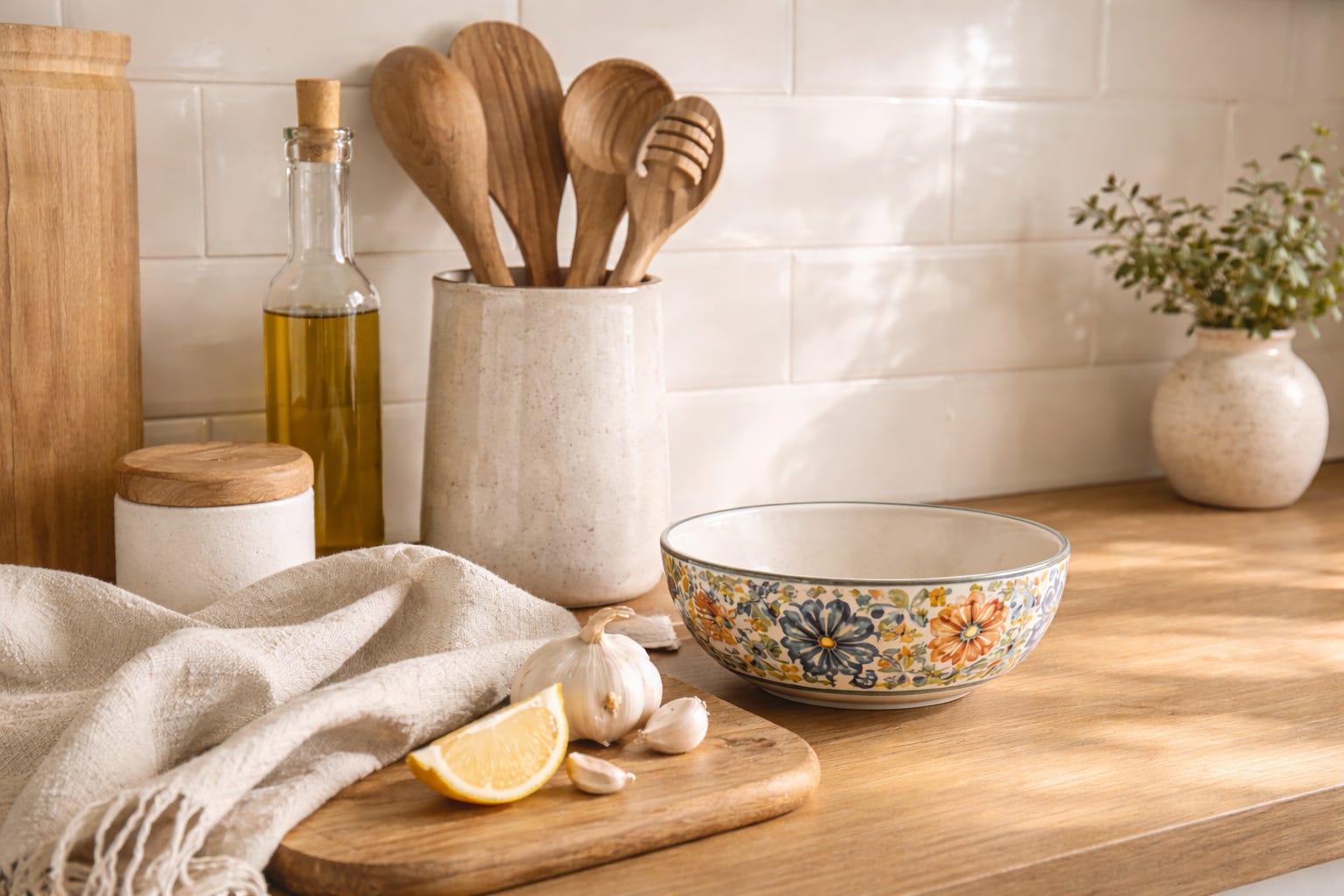
Solid Wood Kitchenware
Many kitchen tools are now produced using plastic or synthetic coatings.
Replacing them with simple wooden alternatives can make a noticeable difference in the feel of the kitchen.
Wooden spoons, cutting boards, and serving tools bring warmth to the space while avoiding unnecessary synthetic materials.
These items also tend to last for many years when cared for properly.
One Small Step at a Time
A healthier home rarely appears through one dramatic change.
Instead it grows slowly through quiet decisions made over time.
A candle made from beeswax rather than paraffin. Glass jars in the pantry. Linen sheets on the bed.
Each swap may seem small on its own.
Yet together they create a home that feels calmer, cleaner, and more natural.
Often the path to a healthier home begins exactly this way.
One thoughtful choice at a time.
Which swap sounds easiest for you to begin in your home?
Some links in this article may be affiliate links. I only share materials and brands I do/would use in my own home.
Did you like this article? Subscribe for free and get my next post in your inbox.