

For a long time, I thought the things that made a room beautiful were the obvious things.
The furniture.
The colors.
The lighting.
The art.
And of course, all of those things matter.
But eventually I started noticing something else.
The rooms I wanted to stay in longest usually had something quieter in common.
Real materials.
Linen moving softly at the windows.
A wood table with grain you could actually see.
A wool rug underfoot.
Stone that felt cool and substantial.
A ceramic bowl that wasn’t perfectly symmetrical.
None of those things demanded attention.
But together, they changed the entire feeling of the room.
That was when I began to understand that sometimes the materials themselves are doing far more of the design work than we realize.
And once I noticed it, I started seeing it everywhere.
When I Started Looking at Materials Differently
There is a particular feeling I get in a room filled with natural materials.
It feels quieter somehow.
Not necessarily visually quieter.
Just less artificial.
Less shiny.
Less perfect.
Less like everything arrived yesterday.
I think part of that comes from variation.
Real wood has grain.
Linen wrinkles.
Stone has veining.
Wool has texture.
Handmade ceramic carries the smallest evidence of the hands that shaped it.
Natural materials don’t give us identical surfaces.
And I’ve come to believe that our homes are better for that.
There was a time when I thought luxury meant flawless finishes.
The smoother the surface, the more polished the room, the more expensive it must feel.
I don’t think that anymore.
Now, some of the most luxurious rooms to me are the ones where the materials are allowed to look like themselves.
Wood looks like wood.
Stone looks like stone.
Linen isn’t pressed into submission.
Ceramic doesn’t need to be perfectly uniform.
There is a kind of confidence in that.
The room doesn’t need to prove anything.
The materials are beautiful enough on their own.
If I were simplifying interior design down to its most essential ingredients, these are the five natural materials I would reach for first.
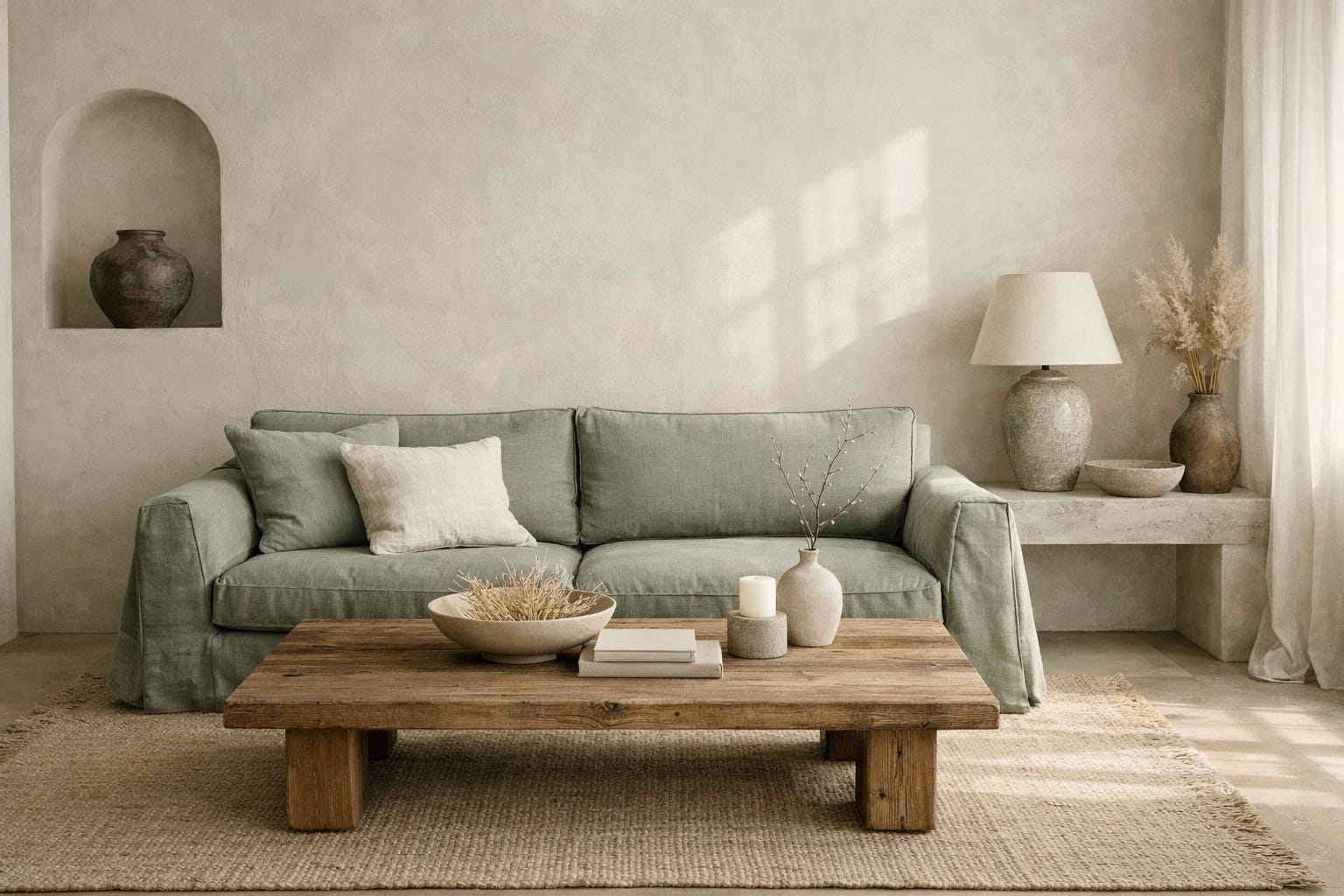
1. Linen: The Softness a Room Often Needs
Linen was one of the first natural materials I really fell in love with.
Not because it’s perfect.
Almost because it isn’t.
It creases.
It relaxes.
It changes throughout the day.
A linen curtain in morning light looks different from that same curtain late in the afternoon.
And when a window is cracked open, it moves.
That movement matters more than I once realized.
It makes a room feel alive.
I especially love linen in places where I want softness without fussiness.
Curtains.
Bedding.
Slipcovers.
Pillows.
Table linens.
Even one linen element can take the edge off a room that feels slightly too polished.
And linen becomes more appealing with use.
That may be one of my favorite things about it.
We are surrounded by products designed to look pristine until the moment they begin showing age.
Linen does something different.
It relaxes into the home.
It gets softer.
More familiar.
More itself.
There is something deeply comforting about a material that doesn’t require you to keep it looking brand-new in order for it to remain beautiful.
If you’re beginning to build a more breathable bedroom, you might also enjoy my article Organic Bedding Worth Investing In (And What to Avoid).
Solid Wood: Warmth You Can Feel
If linen brings softness, solid wood brings grounding.
I notice this especially with larger pieces.
A dining table.
A dresser.
A coffee table.
A bed.
A substantial piece of real wood has weight.
Presence.
Permanence.
It gives the eye somewhere to rest.
And unlike many manufactured surfaces, wood isn’t completely uniform.
The grain changes.
The color shifts.
A knot appears where you weren’t expecting one.
No two boards are exactly alike.
I used to think those variations were simply part of buying wood furniture.
Now I think they’re part of the reason wood furniture feels so good in a home.
It gives us visual complexity without visual clutter.
And then there is the way it ages.
A small mark on a synthetic surface can make something feel damaged.
A small mark on a wood table can eventually become part of its story.
Not every scratch is charming, of course.
I’ve had enough furniture to know that.
But I like materials that leave room for life to happen.
A dining table shouldn’t make everyone nervous.
A bedside table shouldn’t require perfection.
A home needs materials that can live with us.
Solid wood does that beautifully.
When I’m choosing it, I usually prefer simple forms and finishes that allow the grain to remain the interesting part.
The wood doesn’t need much help.
That’s rather the point.
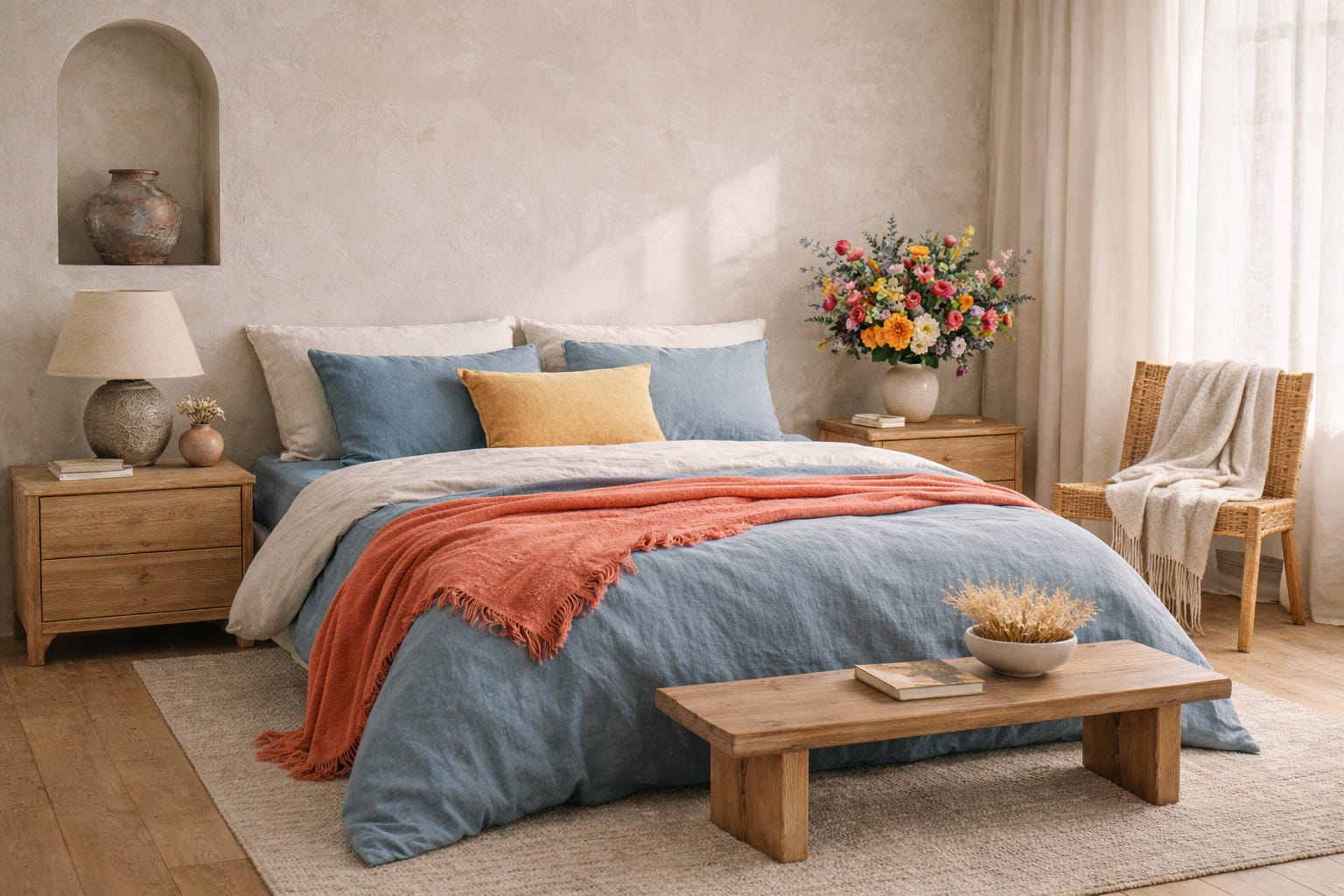
Wool: Comfort Without The Fluff
Wool is one of those materials you may not consciously notice when you enter a room.
But your body notices.
Especially underfoot.
There is a particular softness to a good wool rug that changes the way a room feels immediately.
The space becomes quieter.
Warmer.
More settled.
And I don’t mean “warm” only in the temperature sense.
Wool has visual warmth too.
A wool rug beneath a wood table.
A wool throw folded across the end of a bed.
A softly upholstered wool chair.
These things make a room feel comfortable without making it feel overly decorated.
That distinction has become important to me.
I want comfort.
I just don’t want to have to manufacture it with piles of accessories.
The right materials can create that feeling on their own.
Wool is also remarkably practical.
It has long been valued for temperature regulation, durability, and resilience.
And good wool tends to hold its beauty in a way that makes sense for real homes.
For me, that makes it one of the easiest places to invest in a natural material.
Especially with rugs.
A rug covers a tremendous amount of visual space.
Changing that one material can change the entire room.
Stone: A Little Weight Changes Everything
Stone does almost the opposite of linen.
Linen moves.
Stone stays.
And I think beautiful rooms often need both.
Stone brings a sense of permanence that is difficult to imitate.
Marble.
Limestone.
Travertine.
Soapstone.
Each has its own personality.
Each has color variation and markings created long before it ever entered our homes.
That alone makes stone feel different from something printed to resemble it.
You don’t need acres of marble to get the effect, either.
In fact, I often prefer stone in smaller doses.
A marble tray in a bathroom.
A limestone bowl on a table.
A stone lamp base.
A small side table.
A soapstone object on a wood shelf.
Just enough to introduce coolness and weight among softer materials.
I also love that real stone refuses to be completely controlled.
The veining goes where it goes.
The color varies.
One piece will never look exactly like another.
There is honesty in that.
And I’ve become increasingly drawn to honest materials.
Not materials pretending to be more expensive materials.
Not surfaces printed to imitate nature.
Just the real thing, used thoughtfully.
Stone doesn’t need to shout “luxury.”
It has been quietly doing that for centuries.
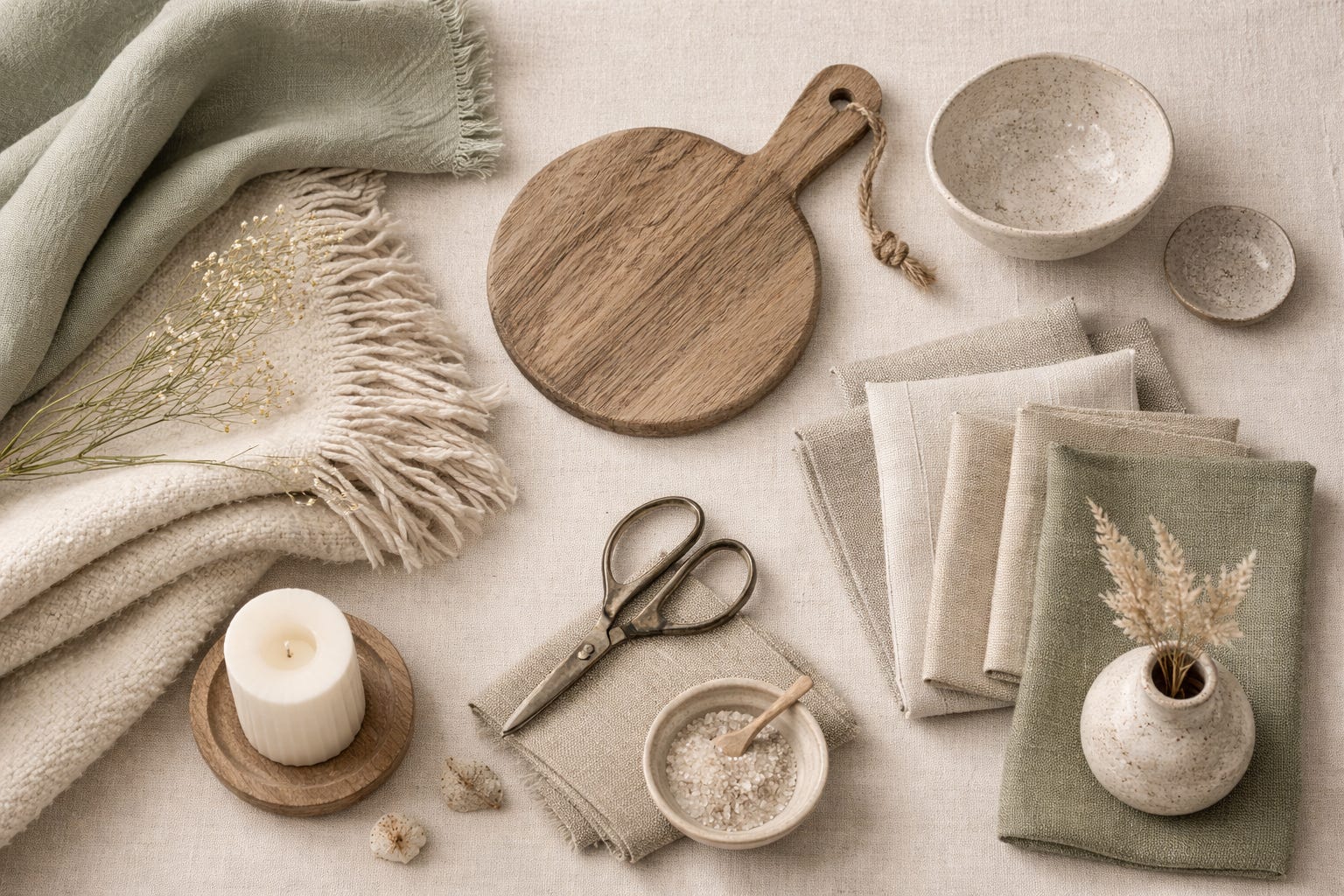
Ceramic: Where The Personality Comes In
This may be the material I have the most fun with.
Because ceramic gives us permission to be a little less serious.
A handmade mug.
A slightly irregular bowl.
A lamp with a beautiful glazed base.
A vase in a color you couldn’t stop thinking about.
These are often the pieces that make a room feel like someone’s home rather than a beautifully arranged showroom.
I especially love ceramics that show some evidence of how they were made.
A glaze that changes slightly around the edge.
A tiny irregularity in the shape.
Subtle variations in color.
Nothing dramatic.
Just enough that the object feels individual.
That individuality matters.
We live in a world where thousands of identical objects can appear in thousands of identical homes.
A handmade or beautifully crafted ceramic piece interrupts that sameness.
Quietly.
And because ceramics are so easy to introduce in small ways, they’re one of my favorite places to experiment.
You don’t have to redesign anything.
You don’t need an entire new room.
Sometimes one beautiful lamp or bowl is enough.
Those small pieces are often what give the larger natural materials around them personality.
Why These Materials Feel So Good Together
This is where I think natural materials become especially interesting.
They balance one another.
Linen is soft.
Wood is warm.
Wool is comforting.
Stone is substantial.
Ceramic is expressive.
Put all five together and suddenly a room has variation without needing a lot of decoration.
That changed the way I think about creating a layered home.
For years, I assumed layering meant adding things.
More pillows.
More accessories.
More objects.
More styling.
But materials can create layers too.
A linen sofa beside a solid wood table.
A wool rug beneath both.
A stone bowl on the table.
A ceramic lamp nearby.
Very little has actually been added.
And yet the room feels complete.
The interest comes from contrast.
Smooth beside textured.
Soft beside hard.
Matte beside gently reflective.
Cool stone beside warm wood.
Nothing has to compete.
The materials simply make one another more beautiful.
Natural Doesn’t Automatically Mean Better
This is worth saying.
I don’t believe something becomes wonderful simply because the word natural appears on the label.
Materials still need to be chosen thoughtfully.
Wood can be covered in finishes I don’t want in my home.
Wool can be heavily treated.
Stone may require sealants.
Even textiles made from natural fibers can go through extensive processing.
So I still look beyond the front of the label.
What is it made from?
How is it finished?
What treatments have been added?
What will I actually be living with?
I don’t expect every object in my home to be perfectly pure.
That’s not realistic.
But I do think the material itself is a very good place to start.
When I have a choice between something genuinely made from a beautiful natural material and something created to imitate one, I find myself choosing the real material more and more often.
Not only because of what it may contain.
Because of how it lives.
How it ages.
How it feels.
How long I want to keep it.
Those things matter too.
The Part of Luxury I’ve Come to Value Most
My definition of luxury has changed over the years.
I still love beautiful things.
Very much.
But beauty alone isn’t quite enough for me anymore.
I want the object to feel good to live with.
I want the sheets to become softer.
I want the table to survive dinner.
I want the rug to feel wonderful under bare feet.
I want the stone to develop a little character.
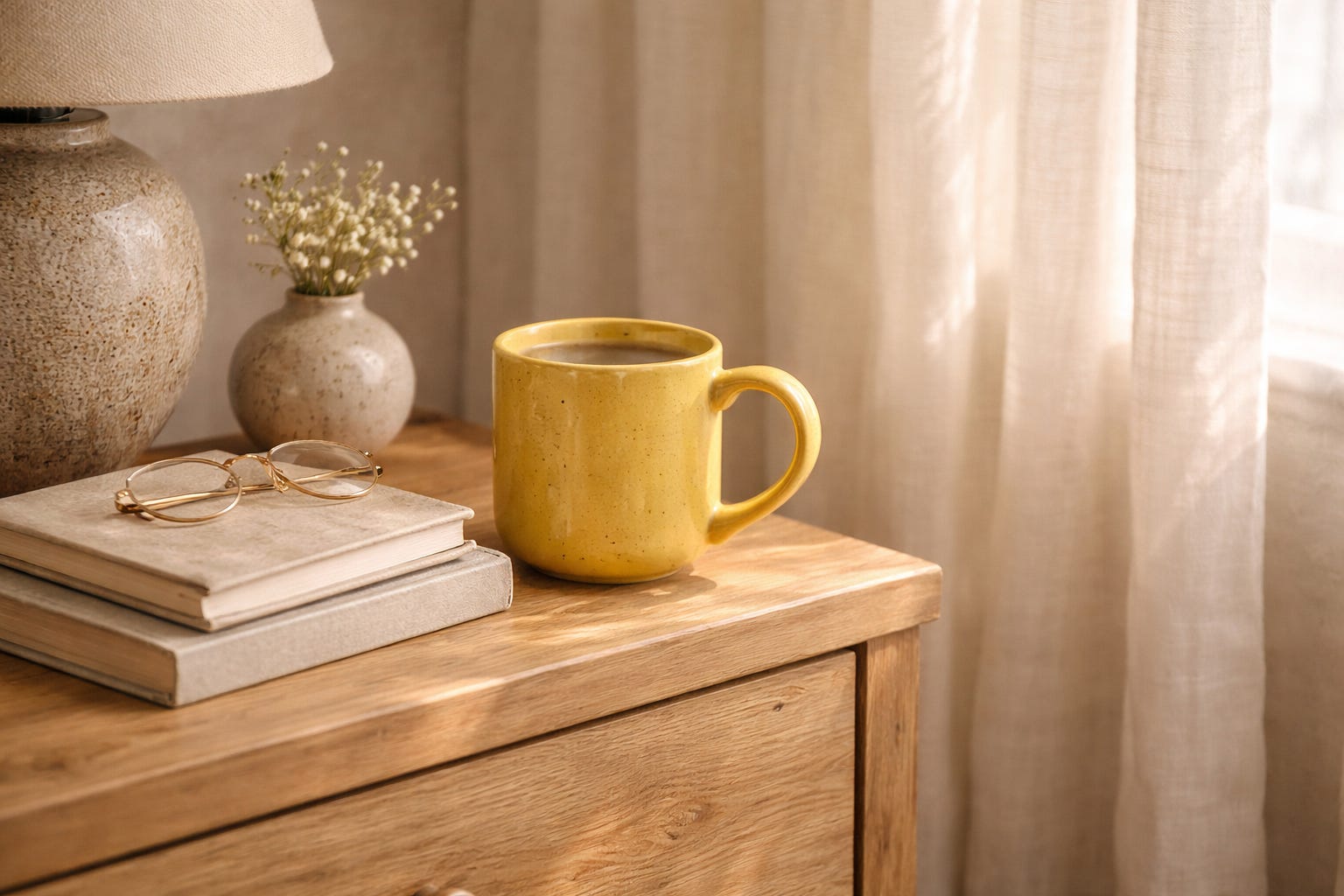
I want the mug I reach for every morning to be the one that fits my hand just right.
That kind of luxury is quieter.
It doesn’t always photograph as dramatically.
It may not have a recognizable logo.
But you experience it every day.
And perhaps that is the difference.
Some luxury is meant to be seen.
The kind I love most is meant to be lived with.
A Few Questions I’m Often Asked
Do I need to replace everything synthetic in my home?
Not at all.
I wouldn’t approach a home that way.
Start with the places where materials make the biggest difference to you.
Bedding.
A rug.
Curtains.
A dining table.
The things you touch and use constantly.
A home can change gradually.
In fact, I usually think that’s the better way to do it.
Which natural material should I introduce first?
If you want the biggest visual change, I would look at linen, wool, or solid wood.
They tend to occupy more space in a room.
Linen curtains can soften an entire wall.
A wool rug can change everything underfoot.
A substantial wood table can anchor the whole room.
Choose whichever solves the problem your room currently has.
Are natural materials harder to care for?
Sometimes they require different care.
But “different” doesn’t necessarily mean difficult.
Linen wrinkles.
Wood develops marks.
Stone may need sealing.
Wool needs appropriate cleaning.
Part of choosing these materials is becoming comfortable with the fact that they age.
For me, that has become part of their appeal.
Can natural materials still work in a polished or luxury home?
Absolutely.
Some of the most refined interiors rely heavily on them.
The luxury comes from quality.
Proportion.
Craftsmanship.
Texture.
A beautifully made solid wood table or hand-knotted wool rug doesn’t need embellishment to feel sophisticated.
What if I like color?
So do I.
Natural materials do not require a beige home.
Ceramic is an especially wonderful place to bring in color.
So are textiles.
Wood and stone can actually make color feel more grounded because they give the room a natural foundation beneath it.
“Natural” and “neutral” are not the same thing.
Pieces I Trust
When I want to introduce more natural material into a room, these are the kinds of pieces I return to again and again:
Linen curtains and Roman shades
Linen bedding and duvet covers
Solid wood dining and coffee tables
Solid wood bedside tables and stools
Hand-knotted wool rugs
Wool throws and blankets
Marble, limestone, travertine, and soapstone accents
Stone trays and bowls
Ceramic table lamps
Handmade ceramic mugs and bowls
Ceramic vases with subtle glaze variation
I don’t think a home needs all of them.
And certainly not all at once.
Sometimes one is enough to begin changing the way a room feels.
A Home That Feels Better to Live In
I used to look at beautiful rooms and wonder what had been added.
Now I often wonder what they’re made from.
That has been a surprisingly useful shift.
Because sometimes the answer isn’t more decorating.
It’s better materials.
A curtain that moves with the air.
A table that feels substantial beneath your hands.
A rug that softens your footsteps.
Cool stone beside warm wood.
The familiar ceramic mug you somehow choose over every other one in the cabinet.
These aren’t dramatic things.
But homes are built from thousands of undramatic moments.
Morning coffee.
Bare feet.
Dinner at the table.
Pulling a blanket around your shoulders.
Opening the curtains.
Setting down a book at night.
The materials surrounding those moments matter.
Maybe more than we realize.
And when I think about what makes a home feel genuinely elevated now, I keep coming back to the same idea.
Not perfection.
Not more.
Just beautiful, honest materials that feel good to live beside.
Which of these appeal to you most? Which would fit most comfortably inside your home? I’d love to hear what made those spaces unforgettable for you.
Some links in this article may be affiliate links. I only share materials and brands I do/would use in my own home.
Did you like this article? Subscribe for free and get my next post in your inbox.